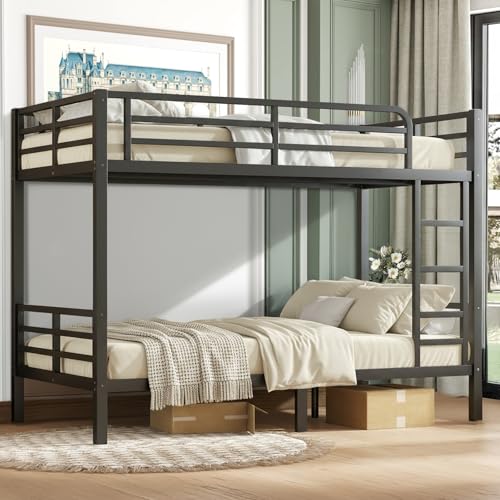
Bunk Beds for Adults Twin Over Twin: The Complete Buyer's Guide
Two full-size sleeping spaces in a single footprint. Learn how to choose a sturdy, safe, adult-rated twin over twin bunk bed that fits your room, your sleepers, and your long-term plans.
Twin over twin bunk beds are no longer just a kids' room solution. A growing number of adults choose them for guest rooms, shared apartments, vacation cabins, dorms, and multi-generational households where floor space is limited but sleeping capacity is not. The appeal is simple: two complete twin sleeping surfaces stacked vertically, using roughly the footprint of one bed.
The catch is that not every twin over twin bunk bed is built for adult bodies and adult use patterns. Youth frames often carry per-bunk weight ratings that fall short of what adults need, and lighter-duty slats and guardrails can flex or loosen over time. This guide walks through the specifications, materials, and design choices that separate genuinely adult-capable bunks from models better suited to children. If you are still comparing bunk configurations in general, start with our broader bunk bed buying guide and then return here for the twin over twin specifics.
Why Adults Choose Twin Over Twin Bunks
Adult twin over twin bunks solve several practical problems at once. Understanding which problem you are solving helps you narrow the field quickly.
- Space efficiency in shared rooms: Two adults sharing a room, whether roommates, siblings, or guests, can each have a dedicated bed without dedicating the floor area of two separate beds.
- Guest room flexibility: A single bunk footprint lets a guest room sleep two people comfortably, which is valuable in homes where the room also serves as an office or hobby space.
- Cabins and vacation properties: Bunks maximize sleeping capacity in seasonal homes and short-term rentals where square footage is at a premium and turnover is high.
- Dorm and transitional housing: Adult twin over twin bunks are standard in student housing, staff quarters, and temporary accommodations because they combine durability with compact dimensions.
- Convertible long-term value: Many adult bunks separate into two standalone twin beds, so the same purchase works as a stacked unit now and as a pair of independent beds later. Models in our roundup of bunk beds that can be separated illustrate this flexibility well.
If your priority is maximizing sleepers in a tight footprint but you want extra storage or a third sleeping surface, compare twin over twin with adult bunks with a trundle and adult bunks with storage. Those configurations trade a little floor space for drawers or a pull-out bed.
Key Specifications That Matter for Adult Use
When you shop for an adult twin over twin bunk, five specifications do most of the work in determining whether the bed is genuinely suitable. Ignore marketing language and check the actual numbers on the product specification sheet.
Per-Bunk Weight Capacity
Look for a stated weight limit for each bunk individually, not a combined figure. Adult-capable twin over twin bunks typically rate each level at 400 pounds or more, while heavy-duty and commercial-grade models often reach 600 pounds per bunk. A frame rated for 250 pounds per bunk is a youth model regardless of how it is marketed.
Upper Bunk Guardrail Height and Coverage
The top bunk needs a guardrail on every open side, with the top edge sitting at least 5 inches above the mattress surface. Full-length rails that run most of the bed's length are safer than short accent rails. For adult sleepers, guardrail attachment points should be bolted or through-bolted rather than clipped.
Ladder Design and Attachment
Adult bodies put more stress on ladders. Choose a ladder that hooks over the top rail and locks in place, with flat, wide rungs rather than round bars. A ladder that merely leans against the frame will shift under adult weight. Some adult bunks use an integrated stair-step design, which is easier on knees and ankles.
Clearance Between Bunks and to the Ceiling
Aim for at least 30 inches of clearance between the bottom mattress and the underside of the top bunk, and at least 30 to 34 inches between the top mattress and the ceiling. Standard twin over twin bunks need roughly 7 to 8 feet of ceiling height for comfortable use. If your room is shorter, look at low-profile or staggered designs.
Frame Footprint and Mattress Fit
A standard twin mattress measures 38 by 75 inches, so an adult twin over twin bunk frame is typically around 42 to 44 inches wide and 78 to 80 inches long. Confirm the frame accepts standard twin mattresses rather than requiring a proprietary size, and check the maximum recommended mattress thickness for the upper bunk, usually 6 to 8 inches to keep guardrails effective.
Quick check: If a listing does not state a per-bunk weight limit, assume the frame is not rated for adults and move on. A reputable adult bunk manufacturer always publishes this figure.
Frame Materials Compared
The frame material drives durability, weight capacity, assembly complexity, and how the bed feels when someone climbs into the top bunk. Here is how the main options compare for adult use.
Heavy-Duty Metal
Steel frames with reinforced corner joints and high-grade steel tubing are the most common choice for adult twin over twin bunks. They tend to offer the highest weight capacities, resist wobble well, and are straightforward to disassemble for moves. Look for powder-coated or rust-proof finishes and thick, squared posts rather than thin round tubing. Metal bunks can squeak if joints loosen, so check that the frame uses locking bolts rather than friction-fit connections.
Solid Wood
Solid wood frames, particularly in hardwood species, deliver a warm look and a very stable feel. They are heavier and more difficult to move, and quality varies widely: a solid hardwood bunk with reinforced slats is a long-term investment, while a softwood frame with thin slats may not hold up to adult use. Examine the slat thickness and the joinery method, and prefer models with corner blocks or metal brackets reinforcing the joints.
Metal-and-Wood Combinations
Hybrid frames use a metal structural core with wood panels or accents. They can balance the strength of steel with the visual warmth of wood, but the quality depends on how the two materials are joined. Check that the metal structure carries the load and the wood is decorative rather than structural.
Upholstered Frames
Upholstered adult bunks soften the visual impact and can work well in guest rooms, but the padding adds bulk and the fabric requires maintenance. Confirm that the underlying frame is metal or solid hardwood rated for adult weight, since upholstery can hide a lightweight structure.
For a closer look at how adult-capable frames are constructed, including load-bearing details, see our guide to bunk beds that can hold adults. If you prefer the industrial look, the black metal twin over twin bunk beds category covers the most popular adult-oriented metal designs.
Popular Adult Twin Over Twin Bunk Bed Designs
Beyond materials, the design of the bunk determines how it fits into a room and how easy it is to live with day to day. These are the configurations most relevant to adult buyers.
Standard Stacked Twin Over Twin
The classic configuration: one twin bunk directly above another, with a ladder at one end or on the side. It is the most space-efficient option and the easiest to fit into a standard bedroom. A straight ladder is typical, though some models offer an angled ladder for easier climbing.
Convertible Twin Over Twin
A convertible bunk separates into two independent twin beds when you no longer need or want a stacked unit. This design costs a little more in structural complexity but pays off in flexibility, especially in rooms that may be rearranged as household needs change. Explore options in our collection of bunk beds that convert to two singles.
Stair-Step and Staircase Bunks
Instead of a ladder, these bunks use a built-in staircase, often with storage in the steps. They are easier for adults to climb, safer in the dark, and useful in rooms where a leaning ladder would block traffic. The trade-off is a wider footprint on the stair side.
Loft-Style Twin Over Twin
Some twin over twin designs raise the top bunk higher to open up more usable space underneath, sometimes accommodating a desk or seating area. These overlap with loft configurations; if you are weighing the two approaches, our guide to built-in loft beds for adults covers the loft side in detail.
Bunks with Integrated Storage or Seating
Adult bunks increasingly incorporate drawers, shelving, or a small seating nook. These features help in small rooms but add to the footprint and weight. If storage is your priority, the bunk beds for small rooms with storage roundup focuses on exactly this trade-off.
Safety Checklist for Adult Sleepers
Adult weight and adult movement patterns put different demands on a bunk than children do. Run through this checklist before you commit to a frame.
- Per-bunk weight rating confirmed: Verify the individual upper and lower bunk ratings meet or exceed the weight of the heaviest intended sleeper, with margin to spare.
- Guardrails on all open sides of the upper bunk: The rail should extend most of the bed's length and rise at least 5 inches above the mattress surface.
- Locking ladder: The ladder should attach firmly to the frame and not shift when weight is applied. Prefer wide, flat rungs.
- Reinforced slats: Slats should be thick, closely spaced, and supported by a center rail or cross-brace on larger frames. Thin, widely spaced slats are a sign of a lightweight build.
- Bolted joints: Look for through-bolts and lock washers rather than friction-fit or clipped connections. Re-check and retighten bolts after the first few weeks of use.
- Wall anchoring: Many adult bunks recommend or require anchoring to the wall for stability. Follow the manufacturer's instructions.
- Ceiling clearance: Confirm there is enough headroom above the top bunk for an adult to sit up without contact, and enough gap to the ceiling to avoid a cramped feel.
If the room has unusually low or sloped ceilings, the geometry changes significantly. Our guides to bunk beds for rooms with low ceilings and bunk beds for sloped ceilings cover the measurements and design adjustments involved.
Matching the Bunk to Your Room
A twin over twin bunk saves floor space, but it still needs room to be used comfortably. Before ordering, measure the following in your room:
- Wall length: The frame is roughly 78 to 80 inches long, plus any ladder or stair overhang. Leave at least a few inches of clearance at each end for bedding changes and frame access.
- Ceiling height: Measure floor to ceiling at the exact spot where the bunk will stand. Aim for at least 7 feet of ceiling height for a standard adult bunk.
- Ladder side clearance: The ladder needs open floor space at its base and enough room to climb safely, typically 24 to 30 inches of clear width.
- Door and window clearance: Confirm the bunk does not block a door swing, closet access, or a window that needs to open. Window proximity matters for safety, so avoid placing the upper bunk directly against a window.
- Walkway width: Leave at least 24 inches of walkway between the bunk and other furniture, and more if the room is used by two people at once.
In very small rooms, the bunk's footprint may fit but the surrounding clearances may not. Our collection of bunk beds for small rooms highlights designs that minimize the footprint and ladder intrusion.
Choosing the Right Mattress for a Twin Over Twin Bunk
Bunk beds place specific demands on mattresses, especially on the upper level. The right choice protects the guardrail's effectiveness and keeps the frame stable.
Thickness
For the upper bunk, stick to the manufacturer's recommended thickness, typically 6 to 8 inches. A mattress that is too thick raises the sleeper above the guardrail's protective height. For the lower bunk, thickness is less critical, but a very deep mattress can make climbing in and out awkward.
Firmness and Support
Adult sleepers generally benefit from a medium to medium-firm mattress that distributes weight evenly across the slats. Very soft mattresses concentrate weight and can stress the slat system. If you are shopping on a tighter overall project scope, our budget mattresses guide covers entry-level options that still meet bunk-safety thickness requirements.
Edge Support
Edge support matters more on a bunk than on a floor-level bed, because the sleeper is closer to the rail and the drop. A mattress with firmer edges helps the sleeper stay centered and reduces the sense of instability.
Mattress-in-a-Box Considerations
Compressed mattresses are convenient for tight stairwells and small rooms, but allow them to fully expand before use, and confirm the expanded thickness matches the bunk's upper-level recommendation. Check that the mattress is compatible with the slat spacing; some compressed foam mattresses need a solid or closely spaced base.
Buying Mattresses Together with the Frame
Some adult twin over twin bunks are sold with two mattresses included, which simplifies the thickness and compatibility question. Our guide to bunk beds for adults with mattresses included reviews what to look for in those bundles.
Tier Comparison at a Glance
The market for adult twin over twin bunks breaks into recognizable tiers. Use this table to orient yourself before comparing specific models. Tiers describe relative market position and build intent, not currency amounts.
| Tier | Typical Build | Per-Bunk Rating | Best For |
|---|---|---|---|
| Entry-Level | Lighter-gauge metal or softwood frame, basic slats, straight ladder | Often lower; verify carefully before adult use | Occasional guest use in a secondary room |
| Mid-Range | Heavier steel or solid wood frame, reinforced slats, locking ladder | Generally adult-capable; confirm the stated figure | Everyday adult use in a shared bedroom or guest room |
| Premium | Thick high-grade steel or hardwood, through-bolted joints, integrated stairs or storage | High per-bunk ratings with margin | Long-term primary sleeping arrangement for adults |
| Commercial-Grade | Reinforced institutional construction, heavy-duty hardware, replaceable components | Highest ratings, built for frequent turnover | Rentals, cabins, dormitories, staff housing |
As a rule, mid-range models offer a meaningfully more stable feel than entry-level frames, largely through thicker posts, better joint hardware, and closer slat spacing. If the bunk will be used nightly by adults, the mid-range and premium tiers are the sensible starting points.
Frequently Asked Questions
Are twin over twin bunk beds suitable for adults?
Yes, when the frame is specifically rated for adult use. Look for heavy-duty metal or solid wood construction, a per-bunk weight capacity of at least 400 pounds, and reinforced guardrails. Adult-rated bunks use thicker posts, stronger slats, and more secure ladder attachments than youth models.
What weight capacity should an adult bunk bed have?
At least 400 pounds per bunk for typical adult use, with premium and commercial-grade models rated for 600 pounds or more per level. Always check the per-bunk figure rather than a combined total, and confirm the upper bunk is explicitly rated for adult sleeping.
How much ceiling height do I need for a twin over twin bunk bed?
Roughly 7 to 8 feet of ceiling height for standard comfort. Aim for at least 30 to 34 inches between the top mattress and the ceiling, and at least 30 inches between the bottom mattress and the underside of the top bunk. Low-ceiling and staggered designs can work in rooms with 8-foot ceilings or lower.
Do twin over twin bunk beds come with mattresses?
Most are sold as frames only, with mattresses purchased separately. Some bundles include two twin mattresses. When buying separately, match the mattress thickness to the bunk's recommendation, typically 6 to 8 inches for the upper bunk so the guardrails remain effective.
Can twin over twin bunk beds be separated into two beds?
Many can. Convertible models separate into two independent twin beds, which is useful for guests or future room rearrangements. Check the product specifications for a "separates into two beds" or "convertible" feature before buying.
Ready to Compare Adult Twin Over Twin Bunks?
Review our curated selection of adult-rated twin over twin bunk beds, filtered for sturdy frames, adult weight ratings, and space-saving designs. Check availability and explore the options that fit your room and your sleepers.
Explore Top Picks