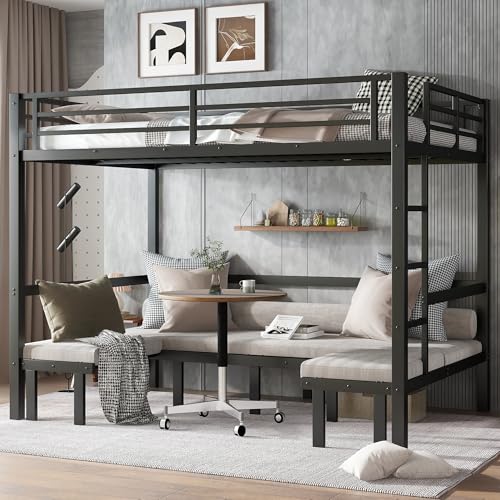
Bunk Beds with a Couch: The Ultimate Space-Saving Sleep and Lounge Solution
Looking for furniture that sleeps, seats, and saves space? A bunk bed with a couch combines a top sleeping platform with a comfortable lower seating area — perfect for guest rooms, dorms, kids' bedrooms, and compact apartments. This guide walks you through everything you need to know before you buy.
What Is a Bunk Bed with a Couch?
A bunk bed with a couch is a hybrid furniture piece that stacks a sleeping surface on top of a seating area. Instead of the traditional two-mattress arrangement, the lower level is built as a sofa, futon, or lounge space. Many models feature a futon base that folds flat, giving you a seat by day and an extra bed by night.
The concept solves a common problem: how to fit both a bed and a comfortable place to sit in a room without sacrificing floor space. By going vertical, these beds free up the footprint that a separate sofa and bed would otherwise consume. The result is a room that feels open, functional, and ready for both rest and relaxation.
You will find these beds in a wide range of configurations, from compact twin-over-futon units for children to full-over-sofa designs for adults and guests. Some models include a couch that pulls out into a sleeper, while others use a fixed sofa base with storage underneath.
Who Should Consider a Bunk Bed with a Couch?
This style of bed is remarkably versatile. Here are the most common scenarios where it makes a real difference:
- Small bedrooms and studios: When every square foot counts, combining sleeping and seating in one vertical unit is a smart move.
- Guest rooms and vacation homes: A sofa below and a bed above means you can host overnight guests without dedicating an entire room to a bed.
- Children's and teenagers' rooms: A lounge area underneath the bed gives kids a place to read, play, or hang out with friends.
- Dormitories and shared housing: These beds maximize personal space in shared living arrangements.
- Home offices with occasional guests: The couch doubles as a workspace seat, and the top bunk serves visitors when needed.
Common Design Configurations
Not every bunk bed with a couch is built the same way. Understanding the main configurations helps you match the furniture to your room and your lifestyle.
Twin-over-Futon
The most popular layout. A twin sleeping surface sits above a futon-style sofa that folds flat into a second sleeping area. This configuration is ideal for children's rooms and guest spaces where flexibility matters. The futon mechanism ranges from simple fold-down styles in entry-level models to smoother, more refined mechanisms in mid-range and premium tiers.
Full-over-Sofa
A larger top bunk paired with a full-width sofa or futon below. These designs suit teens and adults who want a more generous sleeping surface without giving up the lounge area. The frame is typically reinforced to handle the additional weight of a full-size mattress.
Loft Bed with a Couch Underneath
Technically a loft rather than a true bunk, this design raises the sleeping platform higher and places a standalone couch or sectional beneath it. The extra height creates a more spacious feeling underneath and allows for a larger seating area. Many loft beds with couches include space for a desk or shelving alongside the sofa.
Stair-Stepped and Built-In Models
Some premium designs integrate stairs instead of a ladder, often with built-in storage drawers. These are easier for younger children and older adults to use safely. Built-in models may also include shelving, a desk nook, or additional storage compartments.
Frame Materials and Build Quality
The frame determines how stable, durable, and quiet the bed will be over time. Here is how the main material categories compare:
| Material | Best For | Key Characteristics |
|---|---|---|
| Solid Wood | Long-term family use | Heavy-duty construction, warm appearance, repairable finish |
| Metal | Modern interiors, easy cleaning | High-grade steel frames, slim profile, rust-proof finish options |
| Engineered Wood | Entry-level and mid-range options | Consistent finish, lighter weight, solid build when properly reinforced |
| Upholstered Frames | Premium and luxury interiors | Fabric-covered surfaces, integrated sofa cushions, softer visual lines |
For the lower seating area, the cushion quality matters just as much as the frame. Look for high-density foam that holds its shape, removable and washable covers, and a futon mechanism that operates smoothly without excessive force. Premium tiers often use pocket-spring or layered foam cushions that feel closer to a traditional sofa.
Pay attention to the connection points between the upper and lower levels. Reinforced brackets, thick bolts, and cross-bracing are signs of a solid build. If the bed will be used by adults, confirm that the frame is rated accordingly — many entry-level models are designed primarily for children.
Safety Features That Matter
Safety should be the first filter in your decision. Whether the bed is for a child or an adult, these features are non-negotiable:
- Full-length guardrails: The top bunk must have guardrails on both sides, with no more than a small gap between the rail and the mattress surface.
- Secure ladder or stairs: The ladder should attach firmly to the frame, with wide, flat steps and a handhold. Stair-stepped designs are easier for younger users.
- Weight capacity: Check the manufacturer's rating for both the top bunk and the sofa base. Do not assume the lower level can handle the same weight as a standard sofa.
- Mattress thickness limits: An overly thick mattress raises the sleeper above the guardrail, creating a fall hazard. Follow the specified maximum thickness.
- Wall anchoring: Many frames include anti-tip hardware. Use it. Anchoring the bed to the wall prevents tipping if someone climbs or leans on the frame.
- Smooth edges and non-toxic finishes: Especially important for children's furniture. Look for rounded corners and low-emission finishes.
Children under six should generally sleep on the lower level, and the top bunk should never be shared by two people. Establish clear rules about climbing, jumping, and hanging on the frame. For households with very young children, consider a model with integrated stairs rather than a vertical ladder.
Choosing the Right Mattress
The top bunk requires a mattress that fits the frame snugly and stays within the guardrail. A six- to eight-inch thick mattress is typically the sweet spot for most bunk beds, though you should always verify the manufacturer's recommendation.
For the lower sofa area, the cushioning system depends on the design. Futon-style bases often use a single folding mattress that serves as both seat and sleeper. Fixed sofa bases may use removable cushions. In either case, look for supportive foam that will not compress permanently after repeated use.
If the bed will be used by adults, consider a mid-range or premium mattress with better pressure relief and durability. Entry-level mattresses are fine for occasional guest use but may not hold up to nightly sleeping over several years.
Pros and Cons at a Glance
Advantages
- Consolidates sleeping and seating into one vertical footprint
- Frees up floor space for play, study, or storage
- Futon bases often convert into an extra bed for guests
- Available in designs that suit children, teens, and adults
- Encourages a tidy, multi-purpose room layout
Considerations
- Top bunk height may not suit rooms with low ceilings
- Assembly can be time-consuming and may require two people
- Futon cushions may need periodic replacement with heavy use
- Ladder access requires care, especially for younger children
- Some models are heavier and harder to move than a standard bed
Buying Tips and Checklist
Before you commit, run through this practical checklist. It will help you avoid the most common mistakes and choose a bed that fits your room and your household.
- Measure the room and ceiling height: Account for the bed's total height plus clearance for the person on the top bunk. Leave enough space for the ladder and for opening any futon mechanism.
- Confirm the weight ratings: Check both the top bunk and the sofa base. If adults will use the bed, choose a model rated for adult weight.
- Decide on the ladder type: A vertical ladder saves space; integrated stairs are safer and easier for children and older adults.
- Check the mattress size specification: Buy the mattress the frame was designed for. A poor fit creates gaps and safety risks.
- Review the futon mechanism: If the couch converts into a sleeper, test how smoothly it folds and unfolds. Look for locking mechanisms that hold the seat securely.
- Plan for assembly: Most models ship flat-packed. Check whether tools are included and whether the manufacturer recommends professional assembly.
- Consider storage: Some designs include drawers, shelving, or space under the sofa. Storage is a major advantage in small rooms.
If you are furnishing a very compact room, our bunk beds for small rooms guide offers additional layout ideas. For rooms with limited headroom, see bunk beds for rooms with low ceilings.
Frequently Asked Questions
What is a bunk bed with a couch?
A bunk bed with a couch is a multi-functional sleeping structure where the lower level is designed as a seating area instead of a second mattress. The top bunk remains a standard sleeping surface, while the bottom converts into a sofa, futon, or lounge space that can often fold out into an extra bed for guests.
Are bunk beds with a couch safe for children?
Yes, when properly assembled and used according to the manufacturer's guidelines. Look for models with full-length guardrails on the top bunk, a secure ladder or integrated stairs, and a weight capacity that matches the intended users. Children under six should generally use the bottom level, and the top bunk should never be shared.
How much space does a bunk bed with a couch save?
A bunk bed with a couch consolidates sleeping and seating into a single vertical footprint, typically freeing up the floor area that a separate sofa and bed would occupy. In small rooms, this can effectively double the usable living space, making it a practical choice for studios, dorms, guest rooms, and children's bedrooms.
Can adults use bunk beds with a couch?
Absolutely. Adult-rated models are built with reinforced frames, higher weight capacities, and larger sleeping surfaces. Many designs pair a full or queen-size top bunk with a sofa or futon below, making them suitable for guest rooms, vacation homes, and small apartments where flexible furniture is essential.
What mattress thickness works best for the top bunk?
Most bunk bed manufacturers specify a maximum mattress height to keep the guardrail effective. A mattress between six and eight inches thick is typically ideal for the top bunk, as it preserves the safety rail height while still providing adequate comfort. Always check the product manual for the recommended range.