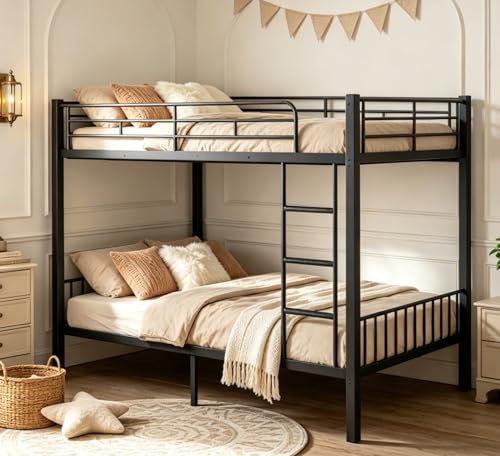
Bunk Beds With a Queen on the Bottom: The Complete Guide
Maximize your space without compromising comfort. Learn how a queen-bottom bunk bed delivers generous sleeping room, sturdy support, and smart storage for adults, teens, and growing families.
EXPLORE OPTIONSWhy a queen-bottom bunk bed? A queen-size lower bunk pairs full-width adult comfort with a raised upper bed, making it an excellent solution for guest rooms, shared bedrooms, vacation homes, and multigenerational households where floor space is limited but sleep quality matters.
What Exactly Is a Bunk Bed With a Queen on the Bottom?
A bunk bed with a queen on the bottom is a stacked sleeping system where the lower berth accommodates a standard queen mattress, while the upper berth is typically a twin, twin XL, or full. This configuration is part of the broader family of queen-bottom bunk designs that prioritize adult-sized comfort on the lower level. Unlike traditional twin-over-twin bunks built for children, these models are engineered with reinforced frames, higher weight capacities, and taller clearance to support adults comfortably.
The appeal is straightforward: you get two sleeping surfaces in roughly the footprint of one queen bed. For households that host overnight guests, this means a couple can sleep on the generous lower level while a child, teen, or single adult uses the upper bunk. Many designs also integrate storage stairs, drawers, or under-bed compartments to further reduce clutter in compact rooms.
Common Size Configurations Explained
Queen-bottom bunks are not one-size-fits-all. The upper berth varies widely, and each combination suits a different household. Here is how the most common configurations compare:
If the upper berth needs to be a full size, explore full-over-queen bunk beds for added upper-level width. For households where the lower berth must be a queen but the top can be a twin, the classic twin-over-queen adult bunk remains one of the most popular layouts.
Why Choose a Queen-Bottom Bunk Bed?
1. Adult-grade comfort on the lower level. A queen mattress gives couples and taller sleepers the room to stretch out. No more compromising on a cramped twin when hosting guests or sharing a room.
2. Efficient use of vertical space. Stacking beds frees up floor area for a desk, dresser, or play zone. This makes queen-bottom bunks especially valuable in small apartments, cabins, and bunk beds for small rooms.
3. Flexible sleeping arrangements. Couples can share the lower queen while a child or friend sleeps above. Many models even separate into two freestanding beds, which you can learn about in our guide to bunk beds that can be separated.
4. Built for real life. Modern queen-bottom frames use high-grade steel or solid wood with reinforced slats and center supports. These are not flimsy children's bunks — they are heavy-duty, adult-rated structures designed for daily use.
Safety Considerations Before You Buy
Safety is the single most important factor when shopping for any bunk bed, and queen-bottom models are no exception. Pay close attention to these points:
- Weight capacity: Confirm both the lower and upper berth ratings. Adult-rated frames should clearly state their capacity per bunk, not just for the whole unit.
- Guardrails: The upper bunk should have full-length guardrails on both sides, with gaps small enough to prevent a child from slipping through.
- Ladder or stairs: Look for wide, securely attached steps. Staircase models with handrails offer the safest access, particularly for children and older adults.
- Ceiling clearance: The upper sleeper needs enough headroom to sit up without hitting the ceiling. Our guide to bunk beds for 8-foot ceilings explains how to measure this properly.
- Mattress thickness: A too-thick upper mattress can raise the sleeper above the guardrail. Check the manufacturer's recommended mattress height and see our notes on bunk beds for thick mattresses.
- Assembly and anchoring: Follow the instructions precisely, tighten all hardware, and anchor the frame to the wall where recommended.
Choosing the Right Mattresses for Each Level
The lower berth requires a standard queen mattress, which is widely available in memory foam, hybrid, innerspring, and latex constructions. For the upper berth, you will need a twin, twin XL, or full mattress depending on the configuration. Upper mattresses should be relatively thin — typically in the 6- to 8-inch range — so the sleeper stays safely below the guardrail. Firm support is generally preferable on the top bunk because it minimizes sagging and keeps the mattress from shifting.
If the lower sleeper needs extra cushioning or pressure relief, a quality mattress topper can transform a firm queen into a plusher surface without replacing the entire mattress. Just make sure the topper does not push the mattress above the guardrail on the upper level.
Room Planning and Clearance
Before ordering, measure your room carefully. A queen-bottom bunk bed occupies a footprint close to a standard queen bed, but the vertical stacking changes how the room feels. Key measurements include:
- Overall height: Most queen-bottom bunks stand between 60 and 72 inches tall. Add the mattress thickness on top to confirm ceiling clearance.
- Lower clearance: The space between the bottom mattress and the upper frame should be comfortable for sitting up. Aim for at least 30 to 36 inches.
- Door and hallway access: Bunk frames ship flat-packed but assembled units are bulky. Check that the boxes and the final frame can fit through doorways and stairwells.
- Wall placement: Position the bed away from windows, ceiling fans, and heat sources. If the room has sloped ceilings, see our guide to bunk beds for sloped ceilings.
Who Benefits Most From a Queen-Bottom Bunk?
Guest rooms and vacation homes: A queen-bottom bunk turns a single-guest room into a flexible space that sleeps a couple plus one or two additional people. It is a smart choice for cabins, beach houses, and rental properties.
Shared kids' bedrooms: When siblings share a room but have an age or size gap, a queen on the bottom gives the older child or teenager adult-scale comfort while the younger child uses the top bunk. Browse bunk beds for kids for child-focused safety features.
Multigenerational households: Grandparents or visiting relatives can sleep on the lower queen with easier access, while the upper bunk serves younger family members.
Adult roommates: In apartments where two adults share a room, a queen-bottom bunk offers privacy and personal space far beyond a shared double bed. See twin-over-full adult bunks for alternative layouts.
Small homes and studios: The vertical design preserves floor space for living and working. Explore bunk beds for small rooms with storage if you need to maximize every inch.
Features Worth Prioritizing
Not all queen-bottom bunks are created equal. When comparing models, look for these value-adding features:
- Storage stairs: Staircase designs with built-in drawers combine safe access with practical storage. See built-in bunk beds with stairs for inspiration.
- Under-bed drawers: Rolling or built-in drawers beneath the lower queen keep bedding and clothing organized.
- Convertibility: Some frames split into two independent beds, extending their usefulness as needs change. Learn more about bunk beds that convert to two singles.
- Solid wood or high-grade steel: These materials offer the best long-term durability and stability. Avoid frames with thin slats or lightweight connectors.
- Easy-clean finishes: A rust-proof or scratch-resistant finish keeps the frame looking new through years of daily use.
- Tool-free or simplified assembly: Clear instructions and labeled hardware make a weekend assembly far less stressful.
Understanding Product Tiers
Queen-bottom bunk beds span a wide range of market positioning. To help you compare without getting lost in numbers, we categorize models into three practical tiers:
- Entry-level tier: Basic metal or composite-wood frames with straightforward ladder access. Suitable for light use, guest rooms, or temporary setups. Expect simpler finishes and fewer integrated storage options.
- Mid-range tier: Solid wood or reinforced steel frames with better weight capacities, smoother finishes, and often some storage features. A solid choice for daily use in family homes.
- Premium and luxury tier: Heavy-duty construction, integrated staircases with drawers, convertible designs, and high-grade materials. These models are long-term investments built for frequent, intensive use.
Within each tier, compare features rather than labels. A well-specified mid-range model can outperform a poorly designed premium frame for your specific needs. Look for clear weight ratings, warranty terms, and verified customer feedback on stability and assembly.
Quick Comparison: Which Layout Suits Your Home?
Frequently Asked Questions
Is a bunk bed with a queen on the bottom sturdy enough for adults?
Yes, provided the frame is explicitly rated for adults. Look for a stated weight capacity for each berth, reinforced slats, and a center support rail on the lower level. Entry-level frames may have lower ratings, while mid-range and premium models are typically engineered for adult use. Always verify the manufacturer's specifications before purchasing.
What mattress thickness is safe for the top bunk?
Most manufacturers recommend a top mattress no thicker than 8 inches, and many suggest 6 to 7 inches. The key rule is that the mattress surface must sit below the top edge of the guardrail by at least 5 inches. If you use a thicker mattress, the sleeper risks rolling over the rail.
Can queen-bottom bunk beds be separated into two beds?
Some models are designed to split into two freestanding beds, which is a major advantage for long-term flexibility. Check the product description for terms like "convertible" or "separates into two beds." Not all bunks offer this feature, so confirm before ordering.
How much ceiling height do I need?
For comfortable use, aim for at least 30 to 36 inches of clearance between the top mattress and the ceiling, plus enough space for the upper sleeper to sit up. In rooms with low ceilings, look for low-profile designs or consider a bunk bed for rooms with low ceilings.
Are stairs safer than a ladder?
Generally, yes. Stairs with handrails and wide treads are easier and safer to use than vertical ladders, especially for children and older adults. They also often incorporate storage drawers, adding practical value. The trade-off is a larger footprint, so measure your room accordingly.
Do I need a box spring for a queen-bottom bunk?
Most modern bunk beds use a slat system that supports the mattress directly, eliminating the need for a box spring. Using a box spring can raise the mattress height and interfere with guardrails. Always follow the manufacturer's recommendation for the specific frame.
Final Thoughts: Sleeping Wisely in Less Space
A bunk bed with a queen on the bottom is one of the most practical investments for households that need to sleep more people without sacrificing comfort. By combining an adult-sized lower berth with a raised upper bunk, these designs deliver generous sleeping space, smart storage potential, and genuine flexibility — whether for guests, teens, roommates, or multigenerational families.
Before you commit, prioritize safety ratings, mattress compatibility, ceiling clearance, and frame durability. Choose a tier that matches your intended frequency of use, and confirm whether the model separates into two beds or includes integrated storage. With careful planning, a queen-bottom bunk can serve your home comfortably for years.
Ready to compare specific models? The recommended products below are selected to match the queen-bottom bunk category, and each listing includes detailed specifications you can review before deciding.