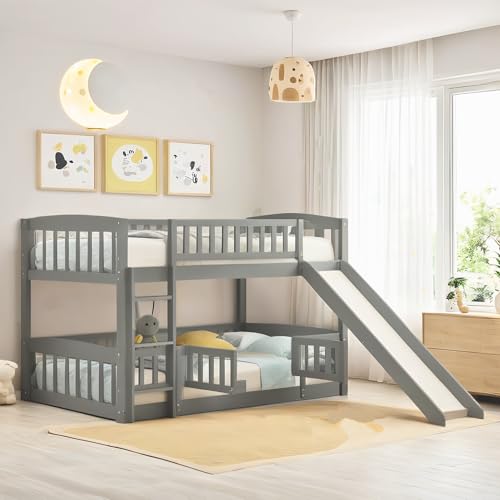
Bunk Beds with Crib on Bottom: The Ultimate Space-Saving Solution
Perfect for growing families — a safe, stylish, and functional design that combines a top bunk with a crib underneath. Maximize your nursery or kids' room without compromising on comfort or safety.
Why choose a bunk bed with a crib on bottom? This innovative design is ideal for families with a toddler and an older child sharing a room. It saves floor space, keeps your little one safe in a crib, and gives your older child a fun elevated sleeping area. Many models also convert into separate beds as your children grow.
What to Look For in a Bunk Bed with Crib on Bottom
🛡️ Safety First
Look for sturdy guardrails on the top bunk, a secure ladder, and a crib that meets all current safety standards (ASTM & CPSC). Ensure the crib slats are properly spaced (no more than 2-3/8 inches apart).
📐 Material & Build
Solid wood or high-grade metal frames offer the best durability and weight capacity. Avoid particleboard or cheap MDF that can warp over time. Check the weight limit for both the top bunk and the crib.
🔄 Convertibility
Many models can be separated into two standalone beds (twin over crib). Some even convert the crib into a toddler bed or daybed, extending the life of your purchase.
📦 Storage Options
Some designs include built-in drawers under the crib or a small bookshelf. This is a huge bonus for small rooms where every inch counts.
Complete Guide: Choosing the Perfect Bunk Bed with Crib on Bottom
If you're considering a bunk bed with a crib on the bottom, you're likely looking for a smart way to accommodate two children in one room without sacrificing safety or style. These beds are especially popular for siblings who are close in age or for families expecting a new baby while an older child needs their own sleeping space.
When shopping for a bunk bed with crib on bottom, the first thing to evaluate is the construction quality. Solid hardwood (like pine, maple, or oak) is preferred over engineered woods because it can handle the wear and tear of active kids. Metal frames are also a great option – they're lightweight, durable, and often more affordable.
Next, consider the crib configuration. Most cribs on these bunk beds are standard full-size cribs (approx. 52" x 28") and are designed to fit a standard crib mattress. Ensure the crib height is adjustable so you can lower the mattress as your baby grows. Some models even include a toddler rail conversion kit, which is a fantastic feature for transitioning from crib to toddler bed.
For the top bunk, check the weight capacity – most can support up to 250 lbs, making them suitable for children up to early teens. The ladder should be angled for easy climbing and have non-slip steps. Guardrails on all four sides (with at least 5 inches above the mattress) are non-negotiable for safety.
Another important factor is room layout. Measure your ceiling height – you'll need at least 30–36 inches of clearance between the top bunk and the ceiling. Also, consider the footprint: the typical bunk with crib measures around 80" long x 56" wide, but sizes vary. Always check the product dimensions before ordering.
If you're tight on space, look for models with built-in storage. Drawers under the crib, shelves on the side, or even a small desk attachment can make a huge difference in a shared kids' room. Some designs also include a small bookshelf bedside table that fits neatly alongside the bed.
For families who want maximum flexibility, choose a convertible model. Many of these bunk beds can be separated into two individual beds: a twin bed and a crib. Later, the crib can be converted into a toddler bed or daybed, giving you years of use. This is a smart investment for growing families.
Finally, don't forget about the mattress. The top bunk typically fits a standard twin mattress (38" x 75"), while the crib requires a standard crib mattress (28" x 52"). Choose high-quality, breathable mattresses that are firm enough for safety, especially for the crib. For extra comfort, you might consider a mattress topper for the top bunk.
In summary, the best bunk bed with crib on bottom is one that meets safety standards, fits your space, and offers versatility for years to come. With the right choice, you'll create a cozy, functional, and fun room for your little ones.
Quick Comparison of Popular Bunk Beds with Crib on Bottom
| Model | Material | Top Bunk Size | Crib Type | Convertible | Price Range |
|---|---|---|---|---|---|
| Storkcraft Caribou | Solid Pine | Twin (38"x75") | Standard Crib (52"x28") | Separates into Twin + Toddler | $650–$850 |
| Dream On Me Lemony | Metal + Wood | Twin (38"x75") | Standard Crib (52"x28") | Separates into Twin + Crib | $720–$920 |
| Delta Children Essex | Solid Wood | Twin (38"x75") | Standard Crib (52"x28") | Separates + Toddler rail | $800–$1,100 |
| Babyletto Hudson | Solid Pine + MDF | Twin (38"x75") | Standard Crib (52"x28") | Separates + Daybed option | $1,200–$1,600 |
Safety & Maintenance Tips
- ✔️ Check hardware regularly – tighten bolts and screws every 3–6 months to prevent wobbling.
- ✔️ Guardrails must be 5″ above mattress – adjust as your child grows and uses thicker mattresses.
- ✔️ Use a snug-fitting crib mattress – gaps should be less than 1 inch to prevent entrapment.
- ✔️ No soft bedding in the crib – avoid pillows, blankets, or stuffed toys for infants under 12 months.
- ✔️ Keep the area around the bed clear – ensure windows, blinds, and cords are out of reach.
- ✔️ Clean with mild soap and water – avoid harsh chemicals that can damage the finish.
Looking for other space-saving solutions? Explore our guide on loft beds with futon and desk for older kids, or check out bunk beds with 2 beds and a desk for a complete study-sleep combo. For smaller spaces, our space-saving beds for adults guide might also be helpful.
If you need a transition option for a toddler, consider children's beds with mattress for a smooth move from crib to big-kid bed. And for additional storage, a white 3-drawer bedside table can complement the bunk bed setup perfectly.