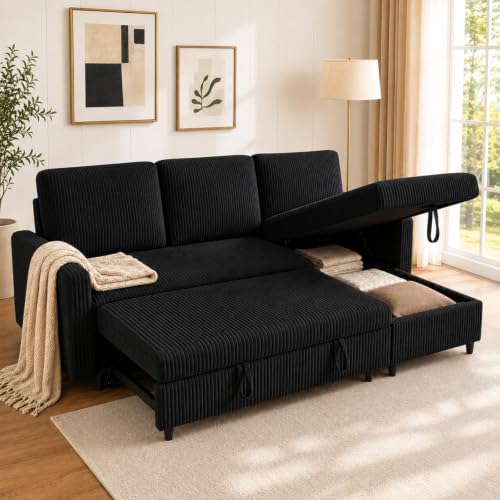
Chaise Sofa Beds: The Complete Buying Guide
Learn how to choose a convertible chaise sleeper that delivers comfortable seating by day and a restful sleeping surface by night — without compromising your room layout or design style.
START EXPLORINGWhy this guide matters: A chaise sofa bed is a hybrid piece of furniture, so it must satisfy two very different demands — everyday lounging and overnight sleeping. This guide explains the mechanisms, frame types, mattress constructions, and layout considerations you need to evaluate before you commit to a model, so you can buy with confidence.
What Is a Chaise Sofa Bed?
A chaise sofa bed is a multi-use seating piece that pairs an L-shaped chaise lounge with a convertible sleeper mechanism. In its closed position, it works as a comfortable sofa with an extended chaise section for reclining, reading, or watching television. When the sleeper mechanism is deployed, the same unit unfolds into a flat surface suitable for overnight guests. This dual-purpose design makes it a practical choice for studio apartments, guest rooms, home offices, and living areas that need to serve more than one function.
Unlike a standard sleeper sofa, the chaise section adds an extra dimension of comfort for daytime use, while the convertible mechanism provides the sleeping function. The result is a single footprint that delivers two distinct experiences. If you are also considering simpler convertible seating, our guide to twin sofa beds covers compact single-sleeper options, while couch beds with storage explains how to add hidden storage to a convertible design.
Types of Chaise Sofa Beds
Chaise sofa beds fall into several broad configurations. Understanding the differences helps you match the piece to your room and your guest requirements.
Pull-Out Chaise Sleeper
The chaise section conceals a fold-out mattress that slides or unfolds into the room. This is the most common configuration and typically offers the most consistent sleeping surface.
Click-Clack Chaise
The backrest folds flat to create the sleeping surface. These models are lighter and easier to reposition, but the sleeping surface is usually thinner than a pull-out design.
Sectional with Chaise and Sleeper
A larger L-shaped sectional where one section converts. These suit open-plan living rooms and offer generous seating, though they demand more floor space.
Corner Chaise Sofa Bed
The chaise sits at the corner of the L, maximizing seating within a compact footprint. Ideal for small living rooms and studio layouts.
If your priority is a dedicated sleeping surface rather than a chaise configuration, explore our couch beds for sale overview, or compare couches with pull-out beds for traditional sleeper sofa designs.
Key Factors When Choosing a Chaise Sofa Bed
Because a chaise sofa bed must perform two roles, the evaluation criteria differ from those of a standard sofa. The following factors matter most.
1. The Sleeper Mechanism
The mechanism determines how the bed deploys and how durable the piece will be over time. Pull-out mechanisms with metal frames and reinforced joints tend to be the most durable. Click-clack mechanisms are simpler and lighter but typically suited to occasional use. When comparing tiers, entry-level models often use simpler folding hardware, while mid-range and premium models feature smoother, heavier-duty mechanisms that are easier to operate and more resistant to wear.
2. Frame Construction
A solid frame is the backbone of a chaise sofa bed. Look for hardwood or high-grade steel frames with reinforced corner joints. Heavy-duty construction matters more here than on a standard sofa because the frame must support both seated and sleeping loads. Models described as commercial-grade or professional-grade typically use thicker gauge steel and denser hardwood.
3. Mattress and Cushion Layers
The sleeping surface is where many chaise sofa beds fall short. Thinner foam layers are adequate for occasional guests, while thicker high-density foam, pocket springs, or hybrid constructions deliver better support for regular use. If the piece will be used nightly, prioritize models with a dedicated mattress rather than a fold-flat backrest. For additional comfort on any sleeper, a quality topper can make a meaningful difference — see our notes on mattress toppers.
4. Dimensions and Open Footprint
Always measure the open footprint, not just the closed sofa dimensions. Pull-out models require clear space in front of the chaise, and corner models need clearance on two sides. Account for walkways, door swings, and access to adjacent furniture. For rooms with limited space, our guide to small bunk beds and short bunk beds for small rooms offers additional space-saving strategies.
5. Orientation: Left-Facing vs. Right-Facing
The orientation of the chaise determines how the piece fits your room. Left-facing and right-facing refer to the side where the chaise sits when you look at the sofa straight on. Choose based on doorway placement, window positions, and where you want the open walking path.
6. Upholstery and Maintenance
Performance fabrics, microfiber, and leather-look materials are easier to maintain than delicate woven textiles. Removable, washable covers are a practical advantage in households with pets or children. Consider the fabric's abrasion rating if the piece will see daily use.
Tier Comparison: What to Expect at Each Level
The table below summarizes the typical characteristics of chaise sofa beds across market tiers. Use it to align your expectations with the tier you are considering.
| Tier | Mechanism | Frame | Sleeping Surface | Best For |
|---|---|---|---|---|
| Entry-Level | Simple click-clack or basic fold-out | Lightweight metal or engineered wood | Thin foam layer | Occasional guests, light use |
| Mid-Range | Smooth pull-out with reinforced joints | Hardwood or heavier steel | High-density foam or pocket spring | Regular guest use, everyday seating |
| Premium | Heavy-duty pull-out, easy-glide operation | Solid hardwood or high-grade steel | Hybrid mattress with support layers | Frequent use, long-term investment |
| Luxury / Commercial-Grade | Professional-grade mechanism, reinforced throughout | Dense hardwood and commercial-grade steel | Premium mattress construction | Nightly sleeping, hospitality settings |
Placement and Styling Ideas
A chaise sofa bed works best when its placement supports both functions. Here are practical placement and styling considerations.
- Anchor a corner: A corner chaise sofa bed makes efficient use of an awkward corner while leaving the center of the room open.
- Define a guest zone: In a studio, place the chaise so the sleeping surface faces away from the main living area, creating a sense of separation.
- Leave deployment clearance: Keep at least the depth of the open bed clear in front of the chaise, plus walkway space.
- Coordinate with bedding: A chaise sleeper often doubles as a guest bed, so choose throw blankets and pillows that work with your existing bedding. Our guides to chenille bedspreads and grey bedspreads queen offer styling inspiration.
- Add a side table: A compact surface beside the chaise improves the lounging experience. See our small bedside chest of drawers and floating bedside shelf with drawer guides for space-efficient options.
Care and Maintenance Tips
Proper care extends the life of both the upholstery and the sleeper mechanism.
- Vacuum regularly: Use a soft brush attachment to remove dust and debris from fabric upholstery.
- Rotate cushions: Flip and rotate seat cushions periodically to distribute wear evenly.
- Lubricate the mechanism: Follow the manufacturer's guidance for lubricating moving parts, and avoid over-lubrication.
- Keep the sleeping surface dry: Use a mattress protector on the sleeper section to guard against spills and moisture.
- Operate gently: Deploy and fold the mechanism slowly and fully to avoid stressing joints.
Frequently Asked Questions
What is a chaise sofa bed?
A chaise sofa bed is a multi-use seating piece that combines an L-shaped chaise lounge with a convertible sleeper mechanism. It functions as a sofa and chaise by day and unfolds into a flat sleeping surface for overnight guests.
Is a chaise sofa bed comfortable for sleeping every night?
Chaise sofa beds are designed primarily for occasional sleeping, but mid-range and premium models with thicker mattresses, reinforced frames, and better support layers can be comfortable for regular use. For nightly sleeping, choose a model with a high-grade mattress and a solid, heavy-duty frame.
How much floor space does a chaise sofa bed need?
Space requirements depend on the configuration and whether the bed is extended. Always measure the open footprint, not just the closed sofa dimensions, and leave clearance for walkways and access to nearby furniture.
What is the difference between a left-facing and right-facing chaise?
Left-facing and right-facing refer to the side where the chaise section sits when you look at the sofa straight on. The right choice depends on your room layout, doorway placement, and where you want the open seating or walking path.
Final Thoughts
A chaise sofa bed is a smart investment for anyone who needs flexible seating and occasional sleeping without adding a second piece of furniture. Focus on the mechanism, frame construction, and sleeping surface quality rather than surface appearance alone, and measure the open footprint before you buy. If you are furnishing a compact bedroom or guest room, pair your chaise sleeper with well-chosen storage and bedding — our guides to daybeds with storage and queen storage beds with drawers can help you complete the room.