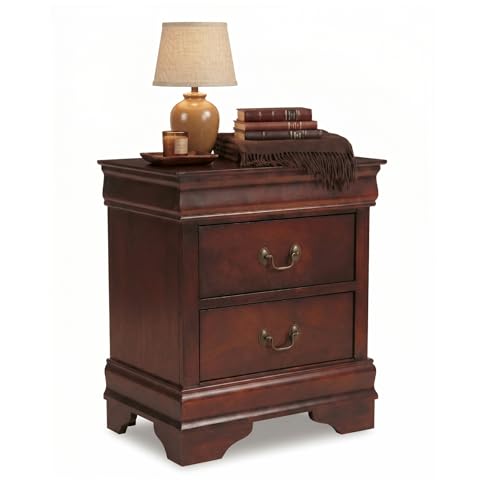
Cherry Wood Bedside Table: Complete Buying Guide & Style Tips
Explore everything you need to know about cherry wood bedside tables — from solid wood construction and finish options to size, placement, and long-term care. Make a confident, well-informed choice for your bedroom.
Start Your ResearchWhy a cherry wood bedside table? Cherry wood is prized for its warm reddish-brown tone, fine grain, and ability to deepen in color over time. A well-made cherry nightstand pairs heirloom-grade craftsmanship with everyday practicality — a long-term investment that anchors a bedroom with quiet, timeless character.
Why Choose a Cherry Wood Bedside Table?
If you are in the research phase, you likely already know a wooden nightstand is on your shortlist. Cherry wood stands apart from oak, walnut, or pine because of three qualities: its color evolution, its grain character, and its workability. Below is a breakdown of what makes it distinctive.
Color That Deepens with Age
Freshly cut cherry starts as a light pinkish-brown and gradually matures into a rich reddish-brown. This natural patina means the piece becomes more distinctive over time — a genuine long-term investment rather than a disposable furnishing.
Fine, Straight Grain
Cherry has a close, smooth grain that accepts stains, oils, and lacquers beautifully. The result is a refined surface that reads as elegant in traditional settings and clean in modern narrow bedside table layouts alike.
Solid, Stable Build
High-grade cherry is dimensionally stable when properly kiln-dried, so drawers glide smoothly and joints stay tight. Mid-range and premium-tier pieces typically use solid cherry panels rather than veneer over engineered core.
Versatile Styling
From traditional bedside table silhouettes to clean-lined rectangular bedside table forms, cherry adapts to rustic, transitional, and contemporary bedrooms without feeling dated.
Construction & Quality Tiers: What to Look For
Not all cherry nightstands are equal. The difference between an entry-level piece and a premium-tier piece usually comes down to panel construction, joinery, hardware, and finish. Use the tier framework below to benchmark what you are actually getting.
| Tier | Construction | Best For |
|---|---|---|
| Entry-Level | Cherry veneer over engineered wood core; stapled or simple dowel joinery; basic metal glides. | Guest rooms, first apartments, or shoppers testing a cherry color palette before committing. |
| Mid-Range | Solid cherry front and top with matching veneer sides; dovetail or reinforced dowel drawers; soft-close or quality side-mount glides. | Primary bedrooms where the piece will be used daily and should hold up for a decade or more. |
| Premium | Fully solid cherry panels; mortise-and-tenon or dovetail joinery; hand-finished oil or lacquer; full-extension soft-close hardware. | Heirloom-minded buyers who want a piece that can be repaired, refinished, and passed on. |
| Luxury | Hand-selected solid cherry with book-matched grain; artisan joinery; custom finish options; possibly hand-carved details. | Design-led bedrooms and collectors who value craftsmanship over mass production. |
A practical rule of thumb: if the listing does not state “solid cherry” or “100% cherry wood,” assume the sides and back are veneer or a secondary wood. That is not necessarily a deal-breaker at the entry tier, but it matters at the mid-range tier and above. For a deeper look at how bedside table forms differ, see our guide to decorating bedside tables.
Size & Placement: Getting the Proportions Right
A bedside table should feel intentional, not squeezed in. The most common guideline is to choose a nightstand whose top sits level with — or within a few inches of — the top of your mattress. Width matters too: the table should be wide enough to hold a lamp, a book, and a glass of water without crowding the bed.
- Height: Top of the table roughly level with the mattress top, or up to 2–3 inches higher for taller beds.
- Width: At least 18–24 inches for a standard setup; 24–30 inches if you want a lamp, books, and decor without clutter.
- Depth: 15–20 inches is typical; deeper tables work well beside king-size beds with bedside tables.
- Clearance: Leave 2–3 inches between the table and the bed so bedding does not catch on drawers.
- Drawer pull direction: Face the pull toward the bed for easy reach, or toward the room if the table doubles as display space.
For smaller rooms, a tall narrow bedside table preserves floor space while still offering usable surface area. If you prefer a softer silhouette, a small round bedside table can soften the hard lines of a rectangular bed frame.
Pros & Cons of Cherry Wood Nightstands
Advantages
- Warm, rich color that deepens attractively with age
- Fine grain takes stains and oils beautifully
- Dimensionally stable when properly kiln-dried
- Repairable and refinishable — a long-term investment
- Works across traditional, transitional, and modern styles
- Solid construction holds up to daily use
Trade-offs
- Color can vary between pieces; natural variation is expected
- Solid cherry pieces sit in the mid-range tier and above
- Direct sunlight will accelerate color change unevenly
- Requires periodic oiling or waxing to maintain finish
- Heavier than engineered-wood alternatives
- Some listings use “cherry” to describe a stain, not the wood species
Care & Maintenance for Long-Term Beauty
Cherry wood is forgiving but not indestructible. A few simple habits will keep the surface smooth and the color even for decades.
- Dust weekly with a soft, dry microfiber cloth — avoid abrasive pads.
- Wipe spills immediately with a slightly damp cloth, then dry thoroughly.
- Apply a furniture wax or oil every 6–12 months, following the maker's recommendation.
- Keep the table out of direct sunlight; rotate decor to avoid uneven color patina.
- Use coasters and felt pads under lamps and vases to prevent ring marks and scratches.
- Avoid silicone-based polishes, which can build up and dull the finish over time.
If you are pairing the nightstand with other wooden pieces, keep finish tones in a similar family. Our guides to the mid-century bedside table and the white bedside table with wheels show how contrasting materials can be layered without clashing.
Styling a Cherry Wood Bedside Table
Cherry's warm tone pairs naturally with cream, sage, charcoal, and brass accents. Keep the top surface to three functional layers: a light source, a personal item, and one decorative element.
Layered Lighting
A slim modern bedside table lamp in brass or matte black adds task light without competing with the wood grain. A small dimmable bulb keeps the mood soft at night.
Textile Contrast
A linen runner or small woven tray under your lamp protects the finish and introduces texture. Pair with a modern bedroom bench at the foot of the bed for visual continuity.
Book & Tray Curation
Stack two or three books horizontally, top with a small ceramic dish or plant. Avoid overfilling the drawer — smooth glides last longer when the load is light and even.
Coordinating Wood Tones
Pair with a modern dresser in a darker walnut for contrast, or a modern wood bedside table in a lighter finish for a tonal, layered look.
Ready to Compare Cherry Wood Bedside Tables?
Once you know your tier, size, and finish preference, the next step is comparing real options. Browse curated cherry wood nightstands and check availability, dimensions, and construction details in one place.
Explore Cherry Wood OptionsFrequently Asked Questions
Is cherry wood good for a bedside table?
Yes. Cherry is dimensionally stable, takes finish beautifully, and develops a rich patina over time. A solid cherry nightstand at the mid-range tier or above is a long-term investment that can be repaired and refinished.
Does cherry wood darken over time?
Yes. Fresh cherry starts light and deepens to a warm reddish-brown when exposed to light and air. This is a natural characteristic, not a defect. Rotate decor and keep the piece out of direct sunlight if you want an even patina.
How can I tell if a nightstand is solid cherry or veneer?
Look at the edges: solid cherry shows end grain at joints and corners, while veneer shows a thin face layer over a different core. Check the listing text — reputable makers state “solid cherry” explicitly. If it says “cherry finish,” it is a stain, not the species.
What size bedside table works with a queen or king bed?
For a queen bed, a 20–26 inch wide nightstand is typical. For a king, go 24–30 inches wide so the table feels proportional. Height should sit level with the mattress top, or up to 2–3 inches higher for taller beds. See our king-size beds with bedside tables guide for paired setups.
How do I maintain a cherry wood finish?
Dust weekly with a soft microfiber cloth, wipe spills immediately, and apply a furniture wax or oil every 6–12 months. Avoid silicone polishes and abrasive cleaners. Use coasters under lamps and felt pads under decor to prevent scratches and ring marks.