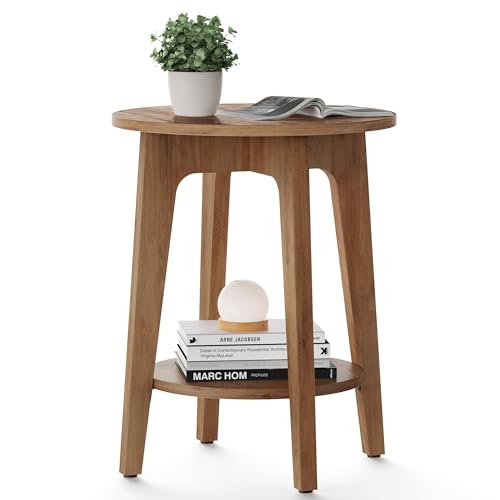
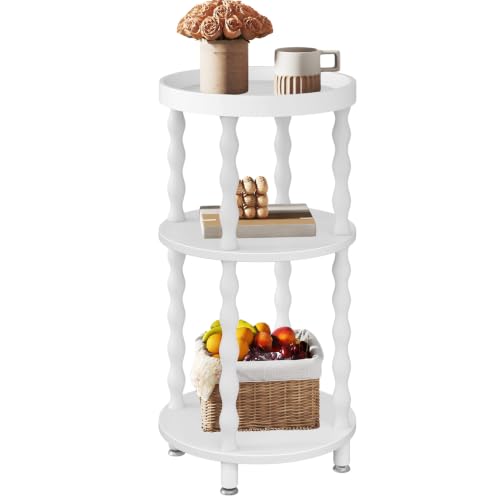
Small Round Bedside Table: The Compact Nightstand That Fits
Short on floor space but still want a functional nightstand? A small round bedside table gives you a lamp perch, a phone spot, and a softer silhouette without crowding your bedroom. Here is everything to know before you choose one.
Why a round table works in tight spaces: Rounded edges eliminate the sharp corners that catch hips and shins in narrow walkways. A compact diameter lets the table tuck into gaps where a rectangular nightstand would not fit, while the circular top still holds a lamp, a book, and a glass of water.
What Counts as a Small Round Bedside Table?
A bedside table earns the "small round" label when its top measures roughly 12 to 18 inches across and its height lands between 20 and 26 inches. That range covers most standard beds, from a low platform frame to a taller upholstered model. The circular top is the defining feature: it softens the room's geometry and makes movement around the bed feel less cramped.
If your sleeping area is genuinely tight, a twin bed for a small room paired with a compact round table creates a workable layout without sacrificing a reading lamp or charging station. The same logic applies in guest rooms, where a guest bed for small spaces benefits from a slim nightstand that does not block the door swing.
Sizing: Getting the Diameter and Height Right
Two measurements decide whether a round table works beside your bed: diameter and height. Diameter controls how much floor space the table claims and whether it fits the gap between the mattress and the wall or wardrobe. Height controls ergonomics, and it matters more than most shoppers expect.
| Table Diameter | Best For | Typical Trade-off |
|---|---|---|
| 12–14 inches | Very tight gaps, twin and full beds, apartment bedrooms | Holds a lamp or a phone, rarely both with a book |
| 15–16 inches | Queen beds with a standard side gap | Balanced surface area and footprint |
| 17–18 inches | King beds, rooms with generous clearance | More surface, less floor savings |
For height, aim for a tabletop that sits level with or within two inches of the mattress top. Too low and you reach down awkwardly every night; too high and the lamp glare hits your eyes while you read. If you are outfitting a larger bed, a king bed with bedside tables set often arrives with matching pieces sized to the frame, which removes the guesswork.
Materials and Build Quality
Round bedside tables appear in four material families, and each behaves differently in a small room.
Solid wood
Solid wood offers durable construction and develops character over time. A modern wood bedside table in oak, walnut, or maple brings warmth that balances a metal bed frame. Solid wood is heavier, which is an advantage on carpet but a consideration on upper floors if you move furniture often.
Metal
Powder-coated steel and aluminum give you a rust-proof finish and a slim profile. Metal frames often pair well with industrial or minimalist bedrooms, and their open bases keep the floor visually clear, which helps a compact room feel less cluttered.
Engineered wood with veneer
MDF and particleboard cores with a veneer skin sit in the mid-tier. Good veneer work looks convincing and holds up well, but check the edge banding and base joints. A wobbling base is the most common failure point in engineered pieces.
Glass and acrylic
Clear tops create the lightest visual footprint, which is useful when a bedside table sits in front of a window or a full-length mirror. These are generally the most delicate option and suit low-traffic spots rather than a primary nightstand that takes daily wear.
Base Styles: Pedestal, Tripod, and Drum
The base determines stability and how much visual weight the table carries.
- Pedestal base: A single central column. Clean and stable, with a wide enough foot to resist tipping. Good for mid-range and premium pieces.
- Tripod base: Three legs splayed outward. Light and airy, but check the splay angle, since a narrow tripod on thick carpet can feel unstable.
- Drum or cylinder: A closed cylindrical body. Often includes a small drawer or shelf inside. The most storage-friendly round option, though heavier visually.
- X-frame or crossed legs: Popular in traditional and farmhouse bedrooms. Sturdy when the joinery is solid.
Storage: What a Round Table Can Hold
Round tables give up drawer capacity in exchange for a smaller footprint, but not all of them are storage-free. Options worth checking:
- Single drawer: Enough for a phone charger, eye mask, and a paperback.
- Open lower shelf: A basket underneath handles cables and slippers without adding width.
- Two-tier design: A smaller top shelf and a wider base shelf. Useful in a guest room where the table doubles as a luggage perch.
- Tray top: A shallow recessed edge that keeps a lamp and glass from sliding off.
If storage is the priority and the floor plan allows it, a white bedside table with wheels or a tall narrow bedside table may serve better than a round piece. The right call depends on whether you are short on width or short on depth.
Matching a Round Table to Your Bedroom Style
A small round bedside table is flexible enough to sit in several design languages. The table's finish and base style do most of the work.
Modern and minimalist
Choose a metal or matte-lacquer round table with a slim pedestal. Pair it with a modern platform bed or a low-profile platform bed to keep sightlines open. A modern bedside table lamp with a narrow base preserves the tabletop for daily items.
Mid-century
Walnut or teak with tapered legs reads mid-century. The look pairs naturally with a mid-century bed and a matching mid-century bedside table if you want a coordinated set rather than a single round accent.
Traditional and French country
Turned pedestals, painted finishes, and scalloped edges belong here. A traditional bedside table in the same family can sit on one side of the bed while the round piece anchors the other, though matching pairs remain the more common approach.
Rustic and cherry wood
Warm-toned wood with visible grain suits a cherry wood bedside table aesthetic. A round piece in cherry or reclaimed pine softens the heavier lines of a traditional bedroom.
Practical Placement Tips for Tight Rooms
Placement determines whether a compact table feels helpful or in the way. A few rules of thumb:
- Leave at least 24 inches of clear walking space between the bed and the nearest wall or wardrobe.
- Set the table flush with the head of the bed rather than centered on the mattress, so it stays reachable while lying down.
- Use the round shape to your advantage in corners, where the curved edge clears a door swing that a square corner would catch.
- Anchor a lightweight table on a rug or add felt pads if it sits on hardwood and gets bumped.
- Keep the top uncluttered. A round surface shows clutter faster than a rectangle because there is no corner to hide things in.
For inspiration on what actually belongs on the surface, see our guide to decorating bedside tables without overcrowding them.
Round vs. Rectangular: A Quick Comparison
| Feature | Small Round Table | Rectangular Table |
|---|---|---|
| Corner safety | No sharp corners, easier in narrow walkways | Corners catch hips and shins in tight spots |
| Usable surface | Smaller effective area for the same diameter | More linear surface and easier to line items up |
| Storage | Limited; drawer or shelf depends on the base | Usually one or two drawers |
| Visual weight | Lighter, breaks up straight lines | Boxier, can feel heavy in small rooms |
| Best for | Tight gaps, curved furniture arrangements, softer styles | Maximizing storage and surface area |
Common Mistakes to Avoid
Buying before measuring the gap
Measure the clear space between the mattress edge and the wall, then subtract two inches for breathing room. A table that technically fits but touches both surfaces looks forced and is hard to clean around.
Ignoring the mattress height
A tabletop far below the mattress forces you to reach down in the dark. Check the height of your mattress top, not the bed frame, and match the table to it.
Overlooking the base footprint
A 14-inch top on a wide tripod base may occupy more floor than expected. Measure the base spread, not just the top, before committing.
Skipping stability checks
Round tables tip more easily than wide rectangles when weight lands off-center. Look for a weighted base, a wide foot, or adjustable leveling glides.
Using a Round Table Beyond the Bedroom
The same compact footprint that suits a nightstand also works elsewhere. A round table can serve as a side table beside a reading chair, a plant stand in a hallway, or an accent piece next to a sofa. If you are furnishing a flexible space, consider a convertible couch or a double sofa bed and pair it with the round table for a multi-purpose room that shifts between daytime seating and overnight guests.
In a larger bedroom, a rectangular bedside table may still make more sense for storage, while the round piece can move to a corner as a display or plant stand. Neither shape is universally better; the right one depends on the gap you are filling.
Final Checklist Before You Choose
- Measure the gap width and the mattress height.
- Decide whether you need a drawer, a shelf, or just a flat top.
- Pick a material that matches your bed frame and floor.
- Check the base spread and stability on your floor type.
- Confirm the finish resists daily wear if the table is a primary nightstand.
- Plan the top's contents before you buy, so the surface area fits your routine.
A small round bedside table is not a compromise. In the right size and material, it is the piece that makes a compact bedroom feel intentional rather than crowded.
Ready to Compare Compact Nightstand Options?
Browse a curated selection of small round bedside tables below, filtered for tight spaces and everyday use. Check availability and compare features before you decide.
Explore OptionsFrequently Asked Questions
What size is a small round bedside table?
A small round bedside table typically measures between 12 and 18 inches in diameter and stands 20 to 26 inches tall. These compact dimensions make it ideal for narrow gaps beside a bed, especially in small bedrooms or tight floor plans.
Is a round bedside table better than a rectangular one?
A round bedside table softens sharp corners, which is safer in tight walkways and easier to navigate around. It also visually breaks up the straight lines of a bed frame and dresser. Rectangular tables, however, often offer more usable surface area and drawer storage.
What height should a bedside table be relative to the mattress?
The tabletop should sit level with or slightly below the top of the mattress, ideally within two inches. This keeps a lamp, glass, and phone within easy reach while lying in bed and prevents awkward stretching.
Can a small round bedside table be used in other rooms?
Yes. A compact round table works well as a side table beside a reading chair, a plant stand in a hallway, or an accent table in a small living room. Its footprint is flexible enough to move between rooms as needs change.
What materials are best for a round bedside table?
Solid wood and metal offer durable construction for long-term use. Engineered wood with a veneer finish provides a stable mid-range option, while glass and acrylic tops create a lighter visual footprint in small spaces.