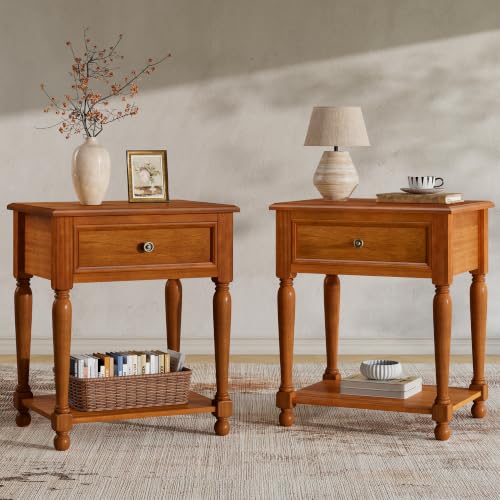
Dark Brown Wood Bedside Table: The Complete Buying Guide
Warm, timeless, and endlessly versatile — a dark brown wood bedside table anchors your bedroom with natural character. Learn how to choose the right size, material, and finish, then style it for both function and beauty.
A bedside table is one of the hardest-working pieces in your bedroom. It holds your lamp, book, water glass, and phone — yet it also sets the visual tone for the whole room. A dark brown wood bedside table brings richness and grounding warmth that lighter furniture sometimes lacks. Whether your style is rustic, modern, or transitional, the right dark wood nightstand can pull the space together.
This guide walks you through materials, finishes, sizing, storage options, and styling tips so you can buy with confidence. If you are still exploring complementary pieces, our cute bedside tables collection and this overview of Danish modern bedside tables can help you compare different aesthetics before you commit.
Why a Dark Brown Wood Bedside Table Works
Dark wood has a natural ability to make a room feel calmer and more grounded. Its deep tones absorb light rather than reflect it, which creates a cozy, cocooning atmosphere ideal for rest. Beyond the mood benefits, dark brown wood offers practical advantages:
Timeless Appeal
Dark brown wood never feels dated. It pairs equally well with crisp white bedding, earthy linens, or bold jewel tones.
Hides Wear Gracefully
Compared with very light finishes, darker wood tones tend to conceal minor scratches and everyday marks more forgivingly.
Anchors the Room
A deep-toned nightstand visually grounds the bed area and adds a sense of weight and permanence.
Versatile Styling
Works with rustic, industrial, traditional, and even modern minimalist schemes when the silhouette is clean.
If your bed frame is also a dark tone, a coordinating dark wood bedstead creates a unified, hotel-like look. If you prefer contrast, a dark table against a lighter bed base is a classic design move that adds depth.
Materials and Finishes to Consider
“Dark brown wood” is a broad category. The material beneath the finish matters just as much as the color, because it affects durability, weight, and how the piece ages over time.
- Solid hardwood (oak, walnut, mahogany, teak): The most durable choice. Solid wood can be sanded and refinished, making it a long-term investment. Walnut and mahogany naturally fall into the dark brown spectrum.
- Veneered wood: A thin layer of real wood over engineered board. Veneers can mimic premium woods beautifully and are generally more stable in humidity, though they cannot be sanded repeatedly.
- Manufactured wood with laminate or foil: The most common construction in entry-level and mid-range furniture. Modern laminates can look convincingly like dark wood and resist stains well.
- Mango and reclaimed woods: Popular in rustic and industrial styles, these bring natural grain variation and a slightly distressed character.
Finish options range from matte oiled walnut to glossy lacquer. Matte and satin finishes tend to suit cozy bedrooms better, while a subtle sheen can suit more formal spaces. Consider this alongside your overall bedroom style — the same principles in our distressed wood bedside table guide apply to how texture changes the feel of a room.
How to Choose the Right Size
A bedside table should sit comfortably beside your mattress without dominating the space. As a general rule of thumb:
- Height: The top of the table should sit level with, or slightly below, the top of your mattress. This keeps your lamp and essentials within easy reach.
- Width: Between 18 and 24 inches is comfortable for most standard bed sizes. Wider tables work well on king beds but can crowd a twin.
- Depth: Match the table depth to your available floor space; 16 to 20 inches is typical.
- Clearance: Leave enough room to open drawers fully without hitting the bed frame.
If your room is tight, a narrow or wall-mounted design can work. You may find inspiration in compact solutions like a dorm bedside shelf, which shows how small footprints can still deliver function.
Storage and Functional Features
Think about what you actually keep beside the bed. A single drawer is often enough for books and chargers, while open shelves suit display and quick grab items. Consider these configurations:
- One drawer + open shelf: A balanced all-rounder for most sleepers.
- Two or three drawers: Best if you like a clutter-free surface.
- Open shelving only: Light and airy; ideal for styled baskets.
- Built-in charging ports: Increasingly common and genuinely useful if you keep a phone nearby.
Drawer runners matter too. Soft-close glides feel more refined and reduce nighttime noise. If you want matching pieces to build a coordinated set, our dresser and bedside table set guide explains how to match tones and hardware.
Understanding Quality Tiers
To help you evaluate options without focusing on numbers, here is how dark brown wood bedside tables generally break down by build quality and positioning.
| Tier | Typical Construction | Best For |
|---|---|---|
| Entry-level | Manufactured wood with laminate or foil finish; basic drawer runners | Guest rooms, first apartments, quick refreshes |
| Mid-range | Veneered wood or mixed construction; soft-close glides on some models | Everyday bedrooms seeking a balance of looks and durability |
| Premium | Solid wood or high-quality veneer; dovetail or reinforced joints | Long-term use; matching with solid wood bed frames |
| Luxury | Solid hardwood with hand-finished detailing; premium hardware | Statement bedrooms and collectors of fine furniture |
Mid-range models usually offer noticeably smoother mechanisms than entry-level pieces, while premium solid wood is the wiser long-term investment if you plan to keep the piece for many years.
Styling Your Dark Brown Wood Bedside Table
Because dark wood is visually rich, styling should feel intentional. A few guiding principles:
- Keep the top surface minimal: A lamp, one book, and a small tray is often enough. Negative space lets the wood grain breathe.
- Mix textures: Pair the wood with linen, ceramic, and a little metal for contrast. A brass lamp base warms up dark tones beautifully.
- Use symmetry: Matching tables on both sides of the bed create calm. A single asymmetric table suits smaller rooms.
- Coordinate, don’t clone: If your bed frame is a different wood, choose a table with a similar undertone rather than an exact match.
For a softer, more decorative approach, you might contrast dark wood with lighter textile-led pieces — our cute bedside tables article explores how shape and color can shift the mood without losing function.
Frequently Asked Questions
What is the ideal height for a bedside table?
The top should align with or sit just below your mattress top — usually 24 to 28 inches from the floor for standard beds. Adjust for taller mattresses or platform beds.
Can dark brown wood work in a small bedroom?
Yes. Choose a narrow silhouette and keep the surrounding walls and bedding light to balance the visual weight. A single drawer or open shelf keeps it feeling airy.
How do I protect a dark wood finish?
Dust regularly with a soft cloth, avoid harsh cleaners, and use coasters for drinks. Keep the table out of direct, prolonged sunlight to prevent uneven fading.
Should the bedside table match the bed frame exactly?
Not necessarily. Matching undertones is more important than an exact match. A slightly different wood tone can add depth, provided the styles feel related.
Ready to Complete Your Bedroom?
Explore our curated selection of dark brown wood bedside tables below and find the piece that fits your space and style.