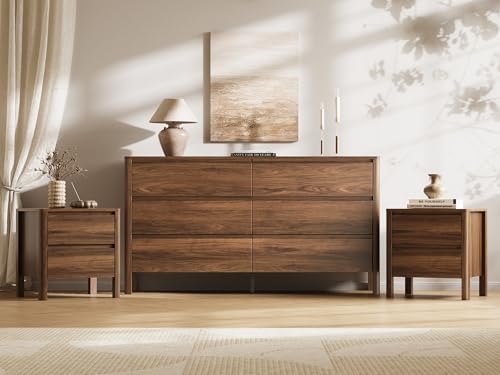
Dresser & Bedside Table Set: The Complete Buying Guide
A matching dresser and bedside table set instantly unifies a bedroom and simplifies storage. This guide explains styles, materials, drawer layouts, sizing, and room planning so you can choose a coordinated set with confidence.
Explore Recommended SetsWhy a coordinated set matters: Bedroom furniture that shares a finish, hardware, and silhouette reads as intentional design. A dresser and bedside table set delivers that cohesion while giving you two functional storage zones — one for folded clothing and linens, one for the essentials you reach at night. Readers researching this topic usually already know they want a set; the goal here is to help you compare options intelligently before you buy.
What a Dresser and Bedside Table Set Typically Includes
Most coordinated bedroom storage sets pair one wider dresser with one or two matching bedside tables. The dresser anchors the room and handles bulk storage, while the bedside table keeps a lamp, book, phone, and water within arm's reach. Some sets add a mirror or a chest of drawers, but the core pairing remains the dresser plus nightstand.
If your room already has a strong frame style, you can still build a coordinated look around individual pieces. Browse the broader dresser collection to compare configurations, or look at cute bedside tables when you prefer a lighter, more decorative nightstand to pair with a substantial dresser.
Popular Style Directions for Coordinated Sets
Modern Minimalist
Clean lines, flat fronts, and integrated handles. This style suits compact rooms because it avoids visual clutter and tends to use slimmer profiles. Look for low-profile legs and seamless drawer fronts.
Danish Modern
Warm wood tones, tapered legs, and restrained detailing. A Danish modern bedside table pairs beautifully with a matching dresser and softens the room without feeling heavy.
Rustic & Distressed
Textured finishes and visible grain add character. A distressed wood bedside table works with a coordinating dresser to create a relaxed, lived-in bedroom.
Dark Wood & Traditional
Rich finishes and classic hardware create a formal, grounded look. A dark brown wood bedside table matched to a dresser in the same tone delivers a cohesive, heritage feel.
Soft & Distressed White
Light finishes brighten small bedrooms and reflect natural light. A distressed white bedside table paired with a whitewashed dresser keeps the room airy and calm.
DIY & Custom Builds
If you enjoy building, you can construct matched pieces yourself. A DIY bedside table project lets you mirror the dresser's finish and hardware for a truly custom set.
Materials and Quality Tiers Explained
Dresser and bedside table sets are sold across several quality tiers. Understanding what separates them helps you judge whether a set will hold up through years of daily use. The descriptors below are relative market positions, not fixed labels.
| Tier | Typical Construction | Best For |
|---|---|---|
| Entry-level | Engineered wood panels, stapled or cam-lock joinery, basic drawer runners, foil or laminate finish. | Guest rooms, first apartments, short-term furnishing where the set may be replaced. |
| Mid-range | Engineered wood with solid wood veneer faces, reinforced corner blocks, smooth-glide drawer hardware, dovetailed or glued-and-nailed drawers. | Primary bedrooms used daily, where a balance of durability and design is important. |
| Premium | Solid wood or high-grade engineered cores, full dovetail joinery, soft-close runners, premium hardware and hand-applied finishes. | Long-term homes where the set should remain stable and attractive for many years. |
| Luxury | Hardwood frames, dovetailed drawers with wood runners, hand-finished surfaces, custom hardware, and furniture-grade detailing. | Design-forward bedrooms where heirloom-level construction is the priority. |
In practice, mid-range and premium sets are the sweet spot for most buyers: they typically offer smoother drawer action and sturdier frames than entry-level builds, while remaining widely available in coordinated dresser-plus-nightstand configurations.
How to Size a Dresser and Bedside Table Set
Correct sizing prevents the single most common bedroom-furniture regret: a set that looks right online but crowds the room in person. Work through these measurements before choosing a configuration.
- Bedside table height: The top should sit at or slightly below mattress height so you can reach items comfortably from lying down.
- Bedside table width: Between 18 and 26 inches works for most queen and king beds. Leave at least 2 to 3 inches of clearance from the bed to open drawers.
- Dresser width: A dresser should not block walkways or closet doors. Measure the wall span you have available and leave room for door swings.
- Dresser depth: Deeper dressers hold more but protrude further. Confirm the depth leaves a comfortable path around the bed.
- Room proportions: In a small bedroom, a taller, narrower dresser with compact bedside tables reads better than a wide, low dresser. In larger rooms, a wider dresser balances the visual weight of the bed.
- Bed frame coordination: If you plan to replace the bed too, check that the set's finish aligns with options like a dark wood bedstead or a double bedstead.
Choosing the Right Drawer and Storage Layout
Drawer configuration matters as much as exterior style. Think about what you actually store and how often you reach for it.
Dresser Configurations
Six- to eight-drawer dressers suit clothing-heavy households. Wide, shallow drawers work well for folded shirts and linens, while deep drawers handle bulky items. A chest-style dresser with stacked drawers saves floor space in narrow rooms.
Bedside Table Storage
Two-drawer nightstands keep small items out of sight. One drawer plus an open shelf offers a place for books and a charger. Open nightstands feel lighter but collect visible clutter.
Hardware Matters
Coordinated hardware is a fast way to make mismatched pieces read as a set. If you already own a dresser, swapping knobs and pulls to match new bedside tables can unify the look without replacing furniture.
Cable Management
If bedside tables will host lamps, phones, and chargers, look for sets with cutouts or space behind the back panel. This keeps cords tidy and prevents damage from repeated bending.
Room-by-Room Recommendations
Different rooms call for different proportions. Use these guidelines to narrow the field.
- Primary bedroom: A mid-range or premium set with a wide dresser and two matching bedside tables creates a balanced, hotel-like arrangement. Prioritize drawer smoothness and finish consistency.
- Guest bedroom: A compact dresser and a single bedside table are often enough. Entry-level or mid-range sets work well here because use is lighter.
- Small bedroom or apartment: Choose a tall, narrow dresser and slim bedside tables, or a single nightstand if floor space is tight. Consider custom-made beds for small rooms to free up additional space.
- Kids' rooms: Durable finishes and rounded edges matter. Pair a sturdy dresser with a compact bedside table that fits beside a cute bed.
- Dorm or rental: Look for lightweight sets that are easy to move. Freestanding pieces are more flexible than wall-anchored units.
Set vs. Individually Chosen Pieces
A coordinated set removes guesswork: the finish, hardware, and proportions are already aligned. The trade-off is limited flexibility — you accept the manufacturer's pairing. Choosing individually lets you optimize each piece for its role, but demands more attention to consistency.
If you go the individual route, anchor the look with one strong piece and build around it. A dresser and bedside table set remains the simplest path to a cohesive bedroom, while an individually chosen dresser bedside table set can be curated to fit unusual room shapes. Either way, confirm the finish name or color code matches across pieces before ordering.
Pre-Purchase Checklist
- Measure the wall span, walkway clearance, and door swing for every piece.
- Confirm drawer count, drawer depth, and whether runners are smooth-glide or soft-close.
- Check joinery details — dovetailed drawers outlast stapled construction.
- Verify the finish is consistent across the dresser and both bedside tables.
- Confirm hardware is included and that replacement knobs are a standard size if you plan to swap them.
- Check assembly requirements and whether the set ships flat-packed or pre-assembled.
- Review return and delivery policies for oversize furniture before ordering.
Frequently Asked Questions
Should a dresser and bedside table match exactly?
Exact matching creates a cohesive, hotel-like look, but complementary finishes in the same wood tone or family also work well. What matters most is a shared style language and consistent hardware so the pieces read as one intentional set.
What size bedside table fits beside a queen or king bed?
A bedside table top should sit at or slightly below mattress height. For most queen and king beds, a width between 18 and 26 inches works well, leaving enough clearance to open drawers and reach the bed comfortably.
Is a dresser and bedside table set worth it for small bedrooms?
Yes, when the pieces are scaled correctly. A narrow dresser paired with compact bedside tables maximizes storage without crowding the room. Measure walkways and door swings before committing to a set.
Which materials hold up best over time?
Solid wood and high-grade engineered wood with reinforced joinery tend to last longest. Mid-range and premium sets typically use dovetailed drawers and smooth-glide hardware, which resist wear better than entry-level stapled construction.