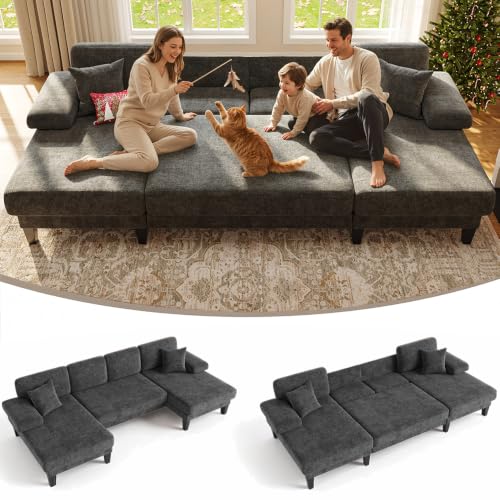
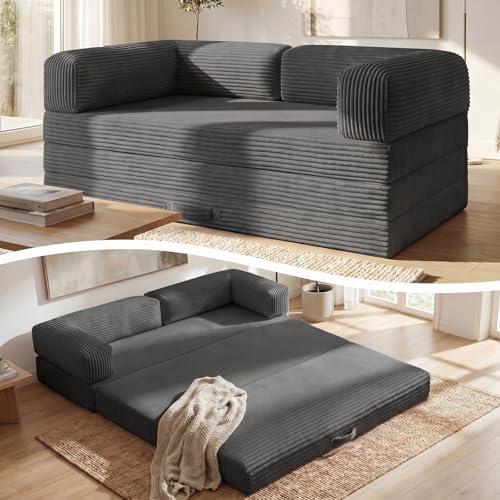
Foam Couches That Turn Into Beds: The Complete Guide
Everything you need to know about foam convertible couches — foam types, conversion mechanisms, sizing, durability, and how to pick the right one for your living space.
Explore Top Options
Why foam couches that turn into beds matter: A foam convertible couch is one of the most space-efficient pieces of furniture you can own. By day it is a comfortable seating area; by night it becomes a sleep surface for guests, overnight visitors, or small-space residents. But not all foam sleeper couches are built the same — the foam density, conversion mechanism, and frame construction determine whether it stays comfortable for years or loses support within months.
What Are Foam Couches That Turn Into Beds?
A foam couch that turns into a bed is a dual-purpose seating and sleeping furniture piece built around a foam core rather than traditional coil springs. Unlike classic innerspring sleeper sofas, foam convertible couches rely on high-density polyurethane foam, memory foam, or a foam-and-fiber blend to provide both seat support and sleep comfort.
These couches typically fall into a few conversion styles:
- Fold-out foam couches — the seat folds flat or unfolds into a sleeping surface, often with a simple hinge or click-clack mechanism.
- Pull-out foam sleeper sofas — a foam mattress or foam-filled cushion slides out from beneath the seat on a metal frame.
- Futon-style foam couches — the backrest folds down flat to create a bed, usually with a foam-filled futon mattress.
- Click-clack foam sofas — a ratcheting hinge allows the backrest to recline through several positions until it lies flat.
Because the entire comfort layer is foam-based, these couches tend to be lighter, easier to move, and simpler to convert than spring-based sleeper sofas. That makes them particularly popular in apartments, studios, guest rooms, home offices, and any space where a dedicated guest bed is not practical. If you are also considering compact sleeping furniture for tighter footprints, our guide to fold-out beds for small spaces covers related options worth comparing.
Foam Types Used in Convertible Couches
The foam inside a convertible couch is the single biggest factor in how it feels to sit on and sleep on. Here are the main foam categories you will encounter:
High-Density Polyurethane Foam
This is the most common core foam in mid-range and premium foam couches. Higher density means the foam resists compression and sagging over time. A well-made high-density foam seat cushion can hold its shape for years of daily use. Entry-level models often use lower-density foam that feels comfortable at first but flattens faster.
Memory Foam
Memory foam contours to body shape and relieves pressure points, which makes it appealing for sleeping. However, memory foam can feel warm and may be slower to recover its shape after sitting. Many convertible couches use a memory foam top layer over a denser support foam base — a balanced approach that combines contouring comfort with structural support.
Foam and Fiber Blends
Some couches wrap a foam core in polyester fiber or cotton batting. This creates a softer, plusher feel on the surface while the foam core provides support. Fiber-wrapped foam is common in futon mattresses and mid-tier sofa beds.
Gel-Infused Foam
Gel particles are mixed into the foam to improve airflow and reduce heat retention. Gel-infused foam is typically found in premium convertible couches and is worth considering if you tend to sleep warm.
For a deeper look at foam-based sleep products in general, see our coverage of foam beds in a box, which explains how foam density and layering affect sleep quality.
How Foam Couches Convert: Mechanism Comparison
The conversion mechanism determines how easy the couch is to use daily and how durable it will be over time. Here is how the main types compare:
| Mechanism |
How It Works |
Best For |
Durability Notes |
| Click-Clack |
Ratcheting hinge lets the backrest recline and lie flat |
Daily conversion, guest rooms, studios |
Simple mechanism with few moving parts; quality varies by hinge grade |
| Fold-Out / Unfold |
Seat section unfolds forward into a flat sleep surface |
Occasional guest use, small apartments |
Hinge and foam crease wear are the main long-term concerns |
| Pull-Out Sleeper |
Foam mattress slides out from under the seat on a metal frame |
Frequent overnight guests, dedicated guest rooms |
Metal frame and mattress thickness drive longevity |
| Futon Fold-Down |
Backrest folds flat; foam futon mattress becomes the bed |
Multi-position lounging, casual seating |
Foam futon mattress quality is the key variable |
Click-clack and fold-out mechanisms are the most common in foam couches because they require fewer parts and keep the couch lightweight. Pull-out sleepers with a dedicated foam mattress generally provide the most bed-like sleep experience, but they are heavier and take up more floor space when extended. If your priority is a couch that doubles as a genuine bed for regular guests, a pull-out foam sleeper is usually the stronger choice. For related compact options, see our guide to foldable sofa beds.
Foam Convertible Couch Tiers: What to Expect at Each Level
Convertible foam couches vary widely in construction quality. To help you compare without relying on arbitrary figures, here is a consistent tier framework used throughout this guide:
Entry-Level Tier
Essential Construction
Basic foam density, simple hinge or fold mechanism, lightweight frame. Suitable for occasional guest use and light daily seating. Expect a shorter service life under heavy daily conversion.
Mid-Range Tier
Balanced Construction
Higher-density foam core, reinforced hinge hardware, sturdier frame. A solid choice for daily seating with regular overnight use. Generally the sweet spot for most households.
Premium Tier
High-End Construction
High-density or gel-infused foam, heavy-duty conversion hardware, solid wood or reinforced metal frame. Designed for frequent conversion and long-term daily use as both couch and bed.
In practice, a mid-range model usually offers noticeably better foam recovery and hinge smoothness than an entry-level couch, while a premium model focuses on long-term durability and consistent sleep comfort. If you are comparing other convertible seating categories, our overview of foam chairs that turn into beds uses the same tier logic for single-seat options.
Sizing: What Sleep Surface Do You Actually Get?
One of the most common surprises with foam couches that turn into beds is that the sleep surface is smaller than expected. A couch that seats three comfortably may convert into a sleep surface closer to a twin or full mattress. Before buying, check the extended dimensions, not just the seated dimensions.
- Twin-equivalent sleep surface — common in two-seat click-clack couches; suitable for one adult or a child.
- Full-equivalent sleep surface — typical in larger three-seat fold-out and pull-out couches; comfortable for one adult or two smaller sleepers.
- Queen-equivalent sleep surface — found in premium pull-out foam sleepers; the most bed-like experience, but requires more floor space when extended.
Measure the extended footprint against your room layout before committing. A pull-out couch needs clear floor space in front of it, while a click-clack or futon folds in place. For households that regularly host couples, a full-equivalent or queen-equivalent sleep surface is worth prioritizing.
Buying Checklist for Foam Convertible Couches
Use this checklist to evaluate any foam couch that turns into a bed before you commit:
- Foam density and layering — look for high-density support foam with a comfort layer on top; avoid couches that describe the foam only vaguely.
- Conversion mechanism quality — reinforced hinges, smooth ratcheting, and metal pull-out frames last longer than thin stamped hardware.
- Extended sleep dimensions — confirm the actual flat sleep surface length and width, not just the seated size.
- Frame material — solid wood or reinforced metal frames resist wobble and flex better than particle board.
- Upholstery durability — tightly woven fabric or performance upholstery holds up better to daily conversion and guest use.
- Cushion recovery — foam that springs back quickly after compression tends to last longer than slow-recovery or mushy foam.
- Weight and mobility — lighter foam couches are easier to reposition, but check that the frame still feels solid.
- Assembly and warranty — a clear warranty on frame and mechanism is a good signal of build confidence.
Care and Maintenance Tips
A foam convertible couch will last longer with a few simple habits:
- Rotate and flip removable foam cushions regularly to distribute wear evenly.
- Vacuum upholstery weekly to prevent dust and debris from working into the foam.
- Use a removable, washable cover or a protective throw if the couch sees heavy daily use.
- Avoid leaving the couch in the extended position for long periods, which can compress the foam along fold lines.
- Keep the couch away from direct sunlight and heat sources to prevent foam degradation and fabric fading.
If you also maintain other foam-based sleep products, our guidance on flippable mattresses covers rotation routines that apply to foam care in general.
Ready to Compare Foam Convertible Couches?
Browse our curated selection of foam couches that turn into beds, organized by tier and use case, so you can match the right couch to your space and guest needs.
View Recommended Options
Who Should Buy a Foam Couch That Turns Into a Bed?
Foam convertible couches are a strong fit for several specific situations:
- Studio and small apartment residents who need one piece of furniture to serve as both living room seating and an occasional bed.
- Guest room and home office owners who want a comfortable seating area that converts for overnight visitors.
- Frequent hosts who need a reliable, easy-to-convert sleep surface without dedicating a full room to a guest bed.
- Renters and movers who prefer lighter, easier-to-move furniture compared to heavy innerspring sleeper sofas.
- Casual loungers who want a multi-position couch for reading, watching, and napping.
If your primary need is a dedicated daily bed rather than dual-purpose seating, a dedicated foam mattress setup may serve you better. Our coverage of foam beds in a box explains when a dedicated foam sleep surface is the smarter choice.
Frequently Asked Questions
Are foam couches that turn into beds comfortable for sleeping every night?
Mid-range and premium foam convertible couches with high-density foam cores can support regular nightly sleep for one person, especially pull-out models with a dedicated foam mattress. Entry-level fold-out couches are generally better suited to occasional guest use. If nightly sleep comfort is the priority, look for a model with a thicker, higher-density foam sleep surface.
How long do foam convertible couches last?
Service life depends heavily on foam density and mechanism quality. Entry-level couches used daily may show foam compression within a couple of years, while premium models with high-density foam and heavy-duty hardware can last considerably longer with proper care. Regular cushion rotation and avoiding prolonged compression in the folded position help extend lifespan.
What is the difference between a click-clack couch and a pull-out foam sleeper?
A click-clack couch converts by reclining the backrest until it lies flat, using a ratcheting hinge. A pull-out foam sleeper contains a separate foam mattress that slides out from beneath the seat on a metal frame. Pull-out sleepers generally provide a more bed-like sleep surface, while click-clack couches are lighter, simpler, and easier to convert in tight spaces.
Can I use a foam couch that turns into a bed in a small apartment?
Yes — foam convertible couches are among the most popular furniture choices for small apartments precisely because they serve two functions. Measure the extended footprint and the clear floor space needed in front of a pull-out model before buying. Click-clack and futon-style couches that fold in place are often the most space-efficient options for very tight rooms.
Do foam sleeper couches sag over time?
Lower-density foam can sag or compress with heavy use, but high-density foam cores resist sagging much better. Choosing a mid-range or premium tier couch with clearly specified high-density foam and rotating the cushions regularly significantly reduces the risk of sagging. A reinforced frame also prevents the flexing that contributes to uneven foam wear.
What size sleep surface should I expect from a foam convertible couch?
Most two-seat click-clack couches convert to a sleep surface roughly equivalent to a twin mattress, while larger three-seat fold-out and pull-out models typically provide a full-equivalent sleep surface. Premium pull-out foam sleepers may offer a queen-equivalent surface. Always check the extended dimensions listed by the manufacturer rather than assuming based on seating capacity.