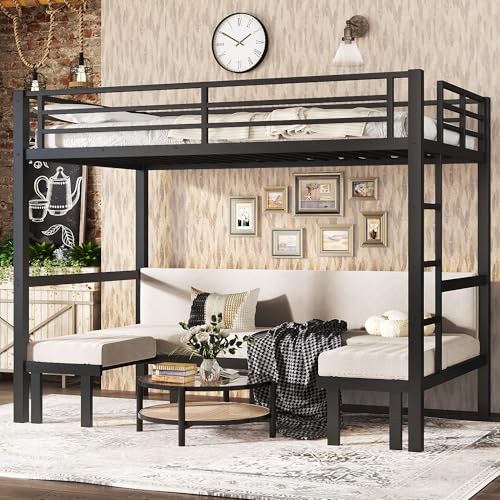
Twin Futon Beds: The Complete Buyer's Guide
Everything you need to know about twin futon beds — from frame construction and mattress types to dual-purpose designs that maximize small spaces without sacrificing comfort.
EXPLORE TOP PICKSWhy twin futon beds deserve your attention: A twin futon bed is one of the most versatile pieces of furniture you can place in a guest room, home office, studio apartment, or teen bedroom. It serves double duty as a comfortable seat by day and a full sleeping surface by night, making it a smart solution for rooms where every square foot matters.
This guide walks you through frame types, mattress construction, size considerations, and the practical details that separate a durable futon from a frustrating one — so you can choose with confidence.
What Exactly Is a Twin Futon Bed?
A twin futon bed combines a folding or convertible frame with a twin-sized mattress, typically measuring 38 inches wide by 75 inches long. Unlike a standard twin bed with a fixed mattress and box spring, a futon frame allows the sleeping surface to fold into a seated position, transforming the piece from a sofa into a bed in seconds.
The design originated from traditional Japanese futon bedding, which consists of a quilted mattress placed directly on the floor. Modern Western interpretations evolved into the upholstered convertible futons most shoppers recognize today. If you appreciate the minimalist roots of this design, you may also enjoy exploring futon beds from Japan for a more authentic tatami-style experience.
Twin futons are particularly popular for three reasons: they fit into narrow rooms, they offer seating and sleeping in a single footprint, and they are straightforward to move and reassemble. For anyone furnishing a compact apartment or a multi-purpose guest room, that combination is hard to beat.
Twin Futon Frame Types Explained
The frame determines how the futon functions, how long it lasts, and how comfortable it feels in both positions. Here is how the main categories compare:
1. Metal Frames
Metal futon frames are the most common entry-level option. They typically use tubular steel or high-grade steel with a rust-proof finish. A well-built metal frame with reinforced joints handles daily conversion well, though lighter-duty models may develop squeaks over time. Look for frames with a solid build and welded or bolted cross supports rather than thin snap-together tubing.
2. Wooden Frames
Hardwood frames — particularly oak, pine, and rubberwood — bring warmth and a furniture-grade appearance to a room. A solid wood frame with a smooth finish tends to feel more like a permanent piece of furniture than a folding guest bed. Wooden futons pair naturally with rustic or Scandinavian interiors. If you are building a coordinated bedroom, consider how a wooden futon would sit alongside a solid oak bedside table with drawers for a cohesive look.
3. Upholstered Frames
Upholstered futon frames wrap the base in fabric or faux leather, giving the piece a sofa-like appearance when folded. These work well in living areas where the futon needs to blend into the decor. The trade-off is that upholstered models generally sit in the mid-range to premium tiers and require more careful cleaning.
4. Armless and Low-Profile Designs
Armless twin futons are ideal for tight corners and narrow rooms. Low-profile frames keep sightlines open, which helps small bedrooms feel less cramped. If your room is especially compact, a twin futon can be paired with other space-conscious furniture like a small bedside chest of drawers to keep the floor plan clear.
Choosing the Right Twin Futon Mattress
The frame gets the attention, but the mattress decides whether you actually sleep well. Twin futon mattresses fall into three broad construction categories:
- Foam-core mattresses: The most common type. Dense polyurethane foam holds its shape and provides predictable support. Higher-density foam cores resist compression better and are the safer pick for a bed used nightly.
- Innerspring mattresses: These use a coil system wrapped in padding. They offer a more traditional mattress feel and better airflow than solid foam, but coils can eventually press through thinner futon covers.
- Cotton and fiber blends: Traditional futon fillers that are firm, breathable, and fold cleanly. They suit occasional sleeping and seating use but compress over time with daily bed use.
Thickness matters as much as material. A 6-inch futon mattress is adequate for occasional guest use, while an 8-inch to 10-inch mattress with a high-density core is the better choice for a primary sleeping surface. A mid-range foam futon typically offers a noticeable improvement in longevity compared with an entry-level cotton-filled model.
If the futon will be your main bed, treat the mattress as a long-term investment and choose a high-density core with a removable, washable cover. For guest rooms used a few times a year, a standard foam futon is perfectly serviceable.
Twin Futon Comparison by Tier and Use Case
| Tier | Typical Construction | Best For | Durability Outlook |
|---|---|---|---|
| Entry-level | Light tubular metal frame, basic foam mattress | Occasional guest sleeping, dorm rooms | Moderate; expect replacement within a few years of daily use |
| Mid-range | Reinforced steel or hardwood frame, high-density foam mattress | Multi-purpose guest room or home office | Good; holds up well to regular folding and unfolding |
| Premium | Solid hardwood or upholstered frame, innerspring or layered foam mattress | Primary sleeping space in a studio or small bedroom | Excellent; designed for long-term daily use |
| Top-tier | Furniture-grade hardwood with precision mechanism, luxury layered mattress | Design-focused interiors and full-time sleeping | Outstanding; a long-term investment piece |
Twin Futon Size and Room Fit
A standard twin futon occupies roughly the same footprint as a twin bed frame, but the conversion mechanism needs clearance. As a rule of thumb, leave at least 24 inches of open floor space in front of the frame so the mattress can fold down without hitting walls or furniture.
Measure the wall where the futon will sit, then measure the depth of the frame in both seated and flat positions. Many twin futons extend several inches further when laid flat, so account for that extension before finalizing placement. If the futon is going into a room shared with other furniture, a low-profile armless frame keeps the layout flexible.
For rooms where a twin still feels too large, a twin size storage bed is worth comparing — it offers a fixed sleeping surface with built-in drawers, at the cost of losing the sofa function.
Practical Tips Before You Buy
- Test the mechanism: A quality futon converts with one hand and locks firmly in both positions. Any frame that requires force or wobbles when locked is a red flag.
- Check the mattress support: Slats should be closely spaced and securely fastened. Wide gaps accelerate mattress sagging.
- Confirm the cover is removable: Futon covers take daily wear. A zip-off, washable cover dramatically extends the usable life of the mattress.
- Plan for bedding storage: Twin sheets and blankets need a home during the day. A bedstead with drawers elsewhere in the room, or a storage ottoman, keeps bedding out of sight.
- Match the room's style: A wooden futon suits rustic and Scandinavian rooms; a metal frame suits industrial and modern spaces. For a bolder look, note that black poster beds demonstrate how a strong frame silhouette can anchor a room's design.
Frequently Asked Questions
Is a twin futon comfortable enough for nightly sleeping?
Yes, provided you choose a frame with a solid build and a high-density foam or innerspring mattress. Entry-level cotton-filled futons are better suited to occasional use. For nightly sleeping, prioritize a mid-range or premium mattress with at least 8 inches of thickness.
How long does a twin futon mattress last?
With a removable cover and regular rotation, a high-density foam mattress in the mid-range tier typically lasts several years of regular use. Basic cotton futons may need replacement sooner when used as a primary bed.
Can a twin futon fit in a small apartment?
Absolutely — that is the twin futon's main advantage. Its compact footprint and dual seating-sleeping function make it one of the most space-efficient furniture choices for studios and small guest rooms. Just leave clearance in front for the fold-down motion.
Do I need a special sheet for a twin futon?
Standard twin-size sheets fit most twin futon mattresses. Thicker mattresses may need deep-pocket twin sheets. A fitted sheet plus a washable futon cover is the simplest bedding setup.
What is the difference between a twin futon and a daybed?
A daybed uses a standard twin mattress on a fixed frame, often with a backrest and side arms. A futon folds flat for sleeping and upright for seating. Daybeds are simpler and more mattress-friendly; futons are more flexible in how they use space.
Ready to Choose Your Twin Futon?
Browse our hand-picked selection of twin futon beds and mattresses below, organized to help you compare features at a glance.
VIEW RECOMMENDED OPTIONS