Headboards for Adjustable Beds: Complete Buying Guide & Style Tips
Your adjustable bed delivers personalized comfort for sleep and relaxation — but the right headboard completes the picture. Learn how to choose a headboard that fits your frame, matches your style, and supports your daily routine.
Why a Headboard Matters for Adjustable Bed Owners
An adjustable bed is an investment in sleep quality, recovery, and daily comfort. Whether you raise the head section for reading, watching television, or managing acid reflux, the bed frame itself is only part of the equation. A well-chosen headboard adds structural polish, visual warmth, and practical support that transforms a functional adjustable base into a complete bedroom centerpiece.
Beyond aesthetics, a headboard serves several practical purposes for adjustable bed owners:
- Wall protection: When the head section articulates upward, pillows and bedding can press against the wall. A headboard creates a protective barrier that prevents scuffs, marks, and fabric wear.
- Pillow support: A padded or upholstered headboard gives back and neck pillows a stable surface to lean against during upright positions.
- Visual anchoring: Adjustable bases often have a low-profile, mechanical appearance. A headboard softens the look and ties the bed into the room's design language.
- Thermal comfort: Upholstered headboards can absorb sound and reduce the echo that sometimes occurs in minimalist bedrooms with hard flooring.
If you are still deciding on the foundation itself, our guide to bed frames for split king adjustable beds covers the structural side in more detail. For seniors or caregivers exploring smaller setups, twin adjustable beds for seniors is a helpful companion read.
Compatibility: How Headboards Work With Adjustable Frames
Not every headboard is designed to pair with an adjustable base. The articulation of the head section means the mattress moves independently of the frame — and the headboard must accommodate that movement without interference. Here is what to check before you commit:
1. Attachment Points
Most adjustable bases include pre-drilled mounting brackets or slots on the head end of the frame. Headboards that are explicitly labeled as compatible with adjustable beds typically include slotted brackets or a multi-position rail that allows the headboard to sit at the correct height while the mattress articulates.
2. Clearance and Pivot Room
When the head section rises, the mattress edge travels in an arc. The headboard must sit far enough forward or high enough that the mattress does not collide with it. Look for headboards described as having "adjustable bed clearance" or a recessed lower panel.
3. Frame Thickness
Adjustable bases are often thicker than traditional bed frames. Verify the rail thickness and bolt spacing so the headboard brackets align correctly. Some manufacturers sell adapter kits for this purpose.
4. Independent Legs vs. Frame-Mounted
Frame-mounted headboards attach directly to the adjustable base. Freestanding headboards have their own legs and stand behind the bed. Freestanding designs are more forgiving when dimensions are uncertain, but they must be positioned carefully to avoid gaps.
Types of Headboards for Adjustable Beds
Headboard designs fall into a few broad categories, each with trade-offs for adjustable bed owners. The table below summarizes the main options before we dive into the details.
Upholstered and Padded Headboards
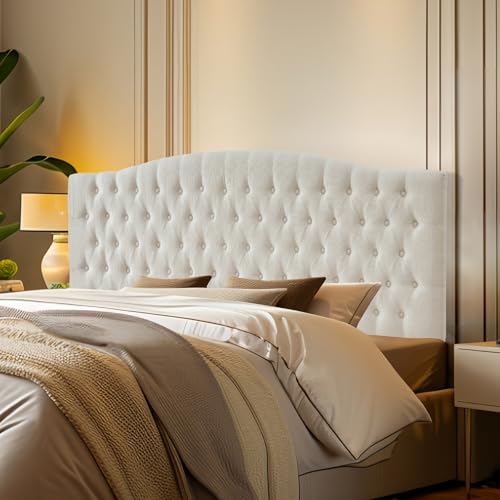
Fabric-wrapped headboards are the most popular choice for adjustable beds because they provide a soft surface for leaning back during raised positions. Look for high-density foam padding and a fabric that resists pilling. Linen blends, performance weaves, and microfiber are common choices. These headboards pair naturally with the upholstered aesthetic described in our bed with headboard overview.
Wooden Headboards
Solid wood and wood-veneer headboards offer durability and a classic look. For adjustable beds, choose a design with a flat or gently curved panel rather than deep tufting or protruding carvings that could interfere with pillow placement. A wooden headboard is a long-term investment and often fits transitional or traditional bedroom styles.
Metal Headboards
Metal headboards are lightweight, easy to mount, and available in finishes from matte black to brushed brass. Open-frame metal designs can be a good match for adjustable beds because they leave visual space and do not obstruct the articulation path. However, thin metal bars may not provide comfortable back support during upright reading.
Freestanding and Wall-Mounted Options
Freestanding headboards stand on their own legs and are placed behind the bed. They are simple to install and easy to reposition. Wall-mounted headboards are fixed to the wall and can create a built-in, hotel-like look, but they require precise measurement relative to the bed's raised position.
Bookcase and Storage Headboards
Storage headboards add shelves or cubbies for books, glasses, and small items. For adjustable bed owners, confirm that the storage section sits above the mattress articulation zone. If you like the idea of integrated bedside surfaces, our article on beds with built-in bedside tables explores related furniture concepts.
Materials and Finishes: What Works Best
Material choice affects comfort, durability, maintenance, and how the headboard interacts with the adjustable bed's movement. The following guide uses universal quality tiers rather than specific figures so the advice stays useful over time.
- Entry-level upholstery: Basic polyester and microfiber fabrics. Adequate for guest rooms and occasional use. Expect simpler stitching and lighter foam padding.
- Mid-range upholstery: Linen blends, woven performance fabrics, and denser foam. These offer a good balance of durability and comfort for daily adjustable bed use.
- Premium upholstery: Belgian linen, top-grain leather, and high-resilience foam. These materials resist compression and retain shape longer, which matters if you frequently lean back in a raised position.
- Solid wood: Oak, walnut, and maple offer long-term structural integrity. Veneered MDF is a mid-tier alternative that can look excellent but requires care around moisture.
- Metal finishes: Powder-coated steel and aluminum are durable and low-maintenance. Premium finishes include brushed brass and hand-applied patinas.
Mounting and Attachment Methods
How the headboard attaches to your adjustable bed determines stability, ease of installation, and long-term satisfaction. There are three primary approaches:
Frame-Mounted Brackets
The headboard bolts directly to the adjustable base using brackets supplied by the base manufacturer or the headboard maker. This is the most secure option when the parts are compatible. Check that the bracket slots allow vertical adjustment so you can align the headboard with your mattress height.
Freestanding Legs
The headboard has its own legs and slides into place behind the adjustable base. No drilling is required, and the headboard can be moved independently. The main trade-off is that the headboard may shift slightly if not weighted or anchored.
Wall-Mounted Panels
A wall-mounted headboard is fixed to the wall with brackets. This approach is popular in modern and minimalist bedrooms and avoids any interaction with the adjustable base. It requires accurate measurement of the bed's raised position so the mattress does not contact the panel.
Whichever method you choose, confirm that all hardware is included and that the mounting height accommodates your mattress thickness. If you are replacing an older bed setup, our guide on when to replace a mattress can help you coordinate the upgrade.
Sizing and Fit: Matching Headboard to Adjustable Bed
Adjustable beds come in standard mattress sizes, but the base dimensions can differ slightly from traditional frames. Use the following guidelines when selecting a headboard:
- Twin and twin XL: Common for adjustable beds used by seniors or in guest rooms. Choose a headboard labeled for twin or twin XL and confirm the bracket spacing.
- Full and queen: The most common adjustable bed sizes for couples. A queen headboard should match the base width within an inch or two; a slight overhang is usually fine.
- King and split king: Split king setups use two twin XL mattresses and often two independent bases. A single wide headboard can work if the bases are joined, but some owners prefer two separate headboards for independent articulation. Our article on bed frames for split king adjustable beds covers this in more detail.
- California king: Less common for adjustable bases but available. Measure the base width and confirm headboard compatibility. For broader sizing context, see beds larger than California king.
Height matters as much as width. A headboard that is too low may disappear behind a thick mattress, while one that is too tall can dwarf the bed. As a general rule, the top of the headboard should sit about 20 to 30 inches above the mattress surface when the bed is flat.
Style and Bedroom Design
The headboard is often the visual focal point of the bedroom. For adjustable bed owners, style choices should also respect the bed's mechanical nature and the room's proportions.
Modern and Minimalist
Low-profile upholstered panels, floating wall-mounted designs, and clean-lined wood frames work well in modern bedrooms. A neutral palette keeps the focus on the bed's function. Pair with simple bedding and a low nightstand such as the distressed white bedside table for a cohesive look.
Traditional and Transitional
Curved wooden headboards, tufted upholstery, and nailhead trim suit traditional rooms. Choose a style with smooth padding rather than deep buttons if you frequently lean back in the raised position.
Rustic and Natural
Reclaimed wood, live-edge panels, and woven rattan headboards add warmth. These materials work nicely with textured bedding and natural fiber rugs. If the room is small, see our small bedroom decor ideas for space-saving headboard approaches.
Upholstered and Soft
Velvet, linen, and bouclé headboards create a cozy, hotel-inspired atmosphere. They are especially comfortable for adjustable bed owners who read or watch television in bed. Consider a headboard with a slight wingback shape for extra support.
Care and Maintenance
Headboards that pair with adjustable beds endure more contact than traditional headboards because the user often leans back against them. A little maintenance keeps them looking sharp:
- Upholstered headboards: Vacuum monthly with a soft brush attachment. Spot-clean according to the fabric care code. Rotate the position of throw pillows to avoid uneven wear.
- Wooden headboards: Dust with a microfiber cloth and apply a wood conditioner every few months. Avoid placing the headboard in direct sunlight, which can fade the finish.
- Metal headboards: Wipe with a damp cloth and dry immediately. Check mounting bolts periodically, especially if the headboard is frame-mounted and the adjustable bed is used frequently.
- Leather headboards: Use a leather conditioner twice a year. Keep sharp objects and pet claws away from the surface.
If you are refreshing the surrounding bedding at the same time, our guides to bed sheets and bedroom rugs can help complete the room.
Quick Comparison: Headboard Types for Adjustable Beds
The table below compares popular headboard categories using universal quality tiers and practical considerations. Use it as a starting point for your research.
| Headboard Type | Typical Tier | Best For | Adjustable Bed Compatibility | Maintenance Level |
|---|---|---|---|---|
| Upholstered panel | Entry to mid-range | Comfortable leaning and reading | High when frame-mounted | Low to moderate |
| Premium linen or leather | Premium to luxury | Daily use and long-term durability | High with adjustable brackets | Moderate |
| Solid wood | Mid to premium | Classic and transitional rooms | Moderate — check clearance | Low |
| Metal open-frame | Entry to mid-range | Lightweight and airy designs | High — minimal obstruction | Low |
| Storage/bookcase | Mid to premium | Small bedrooms and practical storage | Moderate — verify articulation zone | Low to moderate |
| Wall-mounted panel | Mid to luxury | Modern and minimalist bedrooms | High with precise measurement | Low |
For a broader view of bedroom furniture that complements an adjustable setup, explore our pages on bedside tables and master bedroom bedside tables.
Frequently Asked Questions
Can I use a regular headboard with an adjustable bed?
In many cases, yes — but it depends on the mounting method and clearance. A regular headboard may work if it is freestanding or if the adjustable base has compatible brackets. The key is to confirm that the mattress does not collide with the headboard when the head section is raised. Frame-mounted headboards designed specifically for adjustable beds are the safest choice.
Do adjustable beds require a special headboard?
Not always, but a headboard labeled as adjustable-bed-compatible is easier to install and more reliable. These headboards typically include slotted brackets or extended rails that accommodate the thicker adjustable base and the mattress articulation path.
How high should a headboard be for an adjustable bed?
As a general guideline, the top of the headboard should sit about 20 to 30 inches above the mattress surface when the bed is flat. For adjustable beds used frequently in the raised position, a slightly taller headboard provides more support for back and neck pillows.
Will an upholstered headboard interfere with the mattress articulation?
Upholstered headboards do not interfere if they are positioned correctly. The foam padding is typically compressed against the wall or bracket side, leaving the mattress side clear. Choose a design with a flat or gently curved panel rather than deep tufting that protrudes into the mattress zone.
Can I use two separate headboards for a split king adjustable bed?
Yes. Some couples prefer two separate headboards for a split king setup because each side can be adjusted independently. This approach also makes it easier to replace or upgrade one side without affecting the other. Just ensure both headboards are at matching heights for visual symmetry.
What is the best material for a headboard used with an adjustable bed?
Upholstered headboards with high-density foam and performance fabric are a popular choice because they are comfortable to lean against during raised positions. Solid wood and metal are excellent for durability and easy maintenance. The best material depends on how often you use the adjustable feature and the overall style of your bedroom.
Ready to complete your adjustable bed setup? Explore our recommended headboards for adjustable beds below. Each option is selected for compatibility, comfort, and style — so you can rest easier in every position.