Beds with Built-In Bedside Tables: The Complete Guide
Streamline your bedroom with a single piece of furniture that combines sleeping space with integrated storage and surface area. Learn how attached nightstands work, what to check before buying, and which configuration suits your room.
Explore Recommended ModelsSleepWisePicks Perspective: A bed with a built-in bedside table is more than a space-saving trick. It is a structural decision that affects how you use your bedroom every night. This guide walks you through the practical considerations so you can choose with confidence.
What Exactly Are Beds with Built-In Bedside Tables?
A bed with a built-in bedside table is a bed frame that incorporates one or two attached surfaces, shelves, or drawer units directly beside the sleeping area. Instead of placing a separate nightstand next to the bed, the table is structurally connected to the frame. This creates a unified furniture piece that serves the same function as a traditional nightstand: holding a lamp, phone, book, glasses, or a glass of water within arm's reach.
The integration can take several forms. Some models feature a simple open shelf that extends from the headboard or side rail. Others include a closed drawer, a combination of shelf and drawer, or even a small cabinet with a door. The common thread is that the surface and storage are part of the bed itself, not a freestanding item.
This design approach is particularly relevant for people who want to reduce furniture count without sacrificing function. If you are working with a compact room, you may also find our guide to small bedroom decor useful for complementary layout ideas.
Why Choose a Bed with an Attached Nightstand?
The decision to choose an integrated design over a conventional bed plus separate nightstand comes down to priorities. Here are the main advantages that buyers in the research phase should weigh.
- Space consolidation: Two furniture pieces become one footprint. In rooms where every inch matters, this can be the difference between a comfortable layout and a cramped one. The gap between the mattress and a separate nightstand disappears entirely.
- Visual cohesion: Because the table matches the bed frame in material and finish, the overall look is more unified. There is no mismatched furniture to coordinate.
- Reduced clutter: With fewer separate pieces, there are fewer legs, surfaces, and edges to collect dust or create visual noise. The bedroom reads as calmer and more intentional.
- Stability: An attached table cannot be accidentally knocked over or pushed out of reach. It stays exactly where it is designed to be.
- Simplified assembly and moving: One piece to assemble and one piece to move, rather than two. This matters for renters and for anyone who reconfigures rooms frequently.
There are trade-offs as well. You lose the flexibility to rearrange the table independently, and the integrated design may limit access to one side of the bed if the room layout changes. For most buyers, however, the space and cohesion benefits outweigh these considerations.
Quality Tiers: Understanding What You Get at Each Level
Beds with built-in bedside tables are available across a range of construction qualities. To help you compare without relying on numerical figures, we use a three-tier classification system that reflects relative market positioning and build characteristics.
Essential Tier
Frames in this tier typically use engineered wood or basic metal construction with straightforward assembly. The integrated table is usually an open shelf or a simple surface. These models are a solid choice for guest rooms, first apartments, or temporary setups where the primary goal is function over longevity.
Balanced Tier
This is the most common category for buyers who want durability and design flexibility. Expect solid wood or reinforced engineered wood, a combination of open and closed storage, and finishes that resist everyday wear. The mechanism for any drawer or pull-out element is noticeably smoother than entry-level counterparts.
High-End Tier
Premium models use hardwood, high-grade veneers, or upholstered elements with precise joinery. The integrated bedside table may include soft-close drawers, cable management, or a dedicated device charging area. These are long-term investments designed to remain structurally sound and visually consistent for many years.
When comparing models, focus on how well the construction matches your intended use. A balanced-tier bed is often the sweet spot for a primary bedroom, while an essential-tier model can serve well in a secondary space. For a broader look at frame options, see our bed frames section.
Key Features to Evaluate Before You Buy
Beyond the tier classification, several specific features determine how well a bed with an integrated bedside table will work in your room. Use the following checklist during your research.
- Table height: The surface should sit at a comfortable height relative to the mattress top. Too low and you have to reach awkwardly; too high and it interferes with getting in and out of bed. A surface that is roughly level with or slightly above the mattress is generally most usable.
- Storage configuration: Decide whether you need an open shelf, a closed drawer, or both. Open shelves are easy to access but collect dust; drawers hide clutter but require clearance to open. Consider what you actually keep at your bedside.
- One side or both: Some models include an integrated table on both sides, while others offer it on one side only. If two people share the bed, both sides need a surface. If the bed is against a wall on one side, a single integrated table may be sufficient.
- Material and finish: Match the frame material to your room's style. Wood tones, painted finishes, and upholstered panels each have different maintenance needs. Ensure the finish is described as durable or reinforced for everyday use.
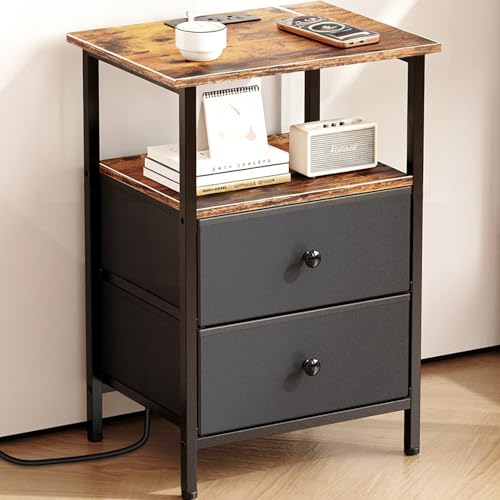
- Cable access: If you charge devices overnight, look for a design with a cutout or gap for cables. Some premium models include a built-in USB port, similar to a standalone bedside table with USB port.
- Assembly requirements: Integrated designs can be more complex to assemble than a simple frame. Check whether the product listing specifies the tools required and the estimated assembly time.
- Mattress compatibility: Confirm the bed size and mattress thickness range that the frame supports. A very thick mattress may obscure the integrated table or make it less accessible.
Comparison: Built-In vs. Freestanding Bedside Tables
The table below summarizes the practical differences between integrated bedside tables and traditional freestanding nightstands. Use it to clarify which approach aligns with your priorities.
| Factor | Built-In Bedside Table | Freestanding Nightstand |
|---|---|---|
| Floor footprint | Consolidated into the bed frame | Requires dedicated floor space beside the bed |
| Flexibility | Fixed position; cannot be moved independently | Can be repositioned or replaced easily |
| Visual cohesion | Matches the bed by design | Requires coordination with other furniture |
| Storage options | Typically shelf, drawer, or combination integrated into frame | Wide variety of sizes, drawer counts, and styles |
| Ideal for | Compact rooms, unified aesthetics, reduced clutter | Large rooms, frequent rearranging, specific storage needs |
| Assembly | One integrated piece; may be more involved | Two separate pieces; generally simpler individually |
Neither approach is universally better. The right choice depends on your room dimensions, how often you rearrange furniture, and whether you prioritize a streamlined look or maximum flexibility. If you are also considering separate bedside tables, our bedside tables guide covers the standalone category in detail.
Room Layout Considerations
Before committing to a bed with an integrated bedside table, map out your room. Measure the wall where the bed will sit, the distance to any doors or closets, and the clearance needed for any drawers to open. An integrated table adds width to the bed frame, so the total footprint is wider than a standard bed of the same mattress size.
If the bed will be placed against a wall on one side, a single-sided integrated table is often the most practical configuration. If both sides are accessible, a double-sided design provides symmetry and equal convenience for two sleepers. For rooms where storage is the primary concern, you may also want to explore beds without headboards with storage, which prioritize under-bed capacity over bedside surfaces.
Lighting is another factor. An integrated table gives you a stable surface for a lamp, but you may still want a wall-mounted reading light if the table surface is small. Consider how you will route power to the table area for chargers or lamps.
Materials and Durability
The material of the bed frame and integrated table directly affects how long the piece will last and how well it withstands daily use. Solid wood and high-grade engineered wood are common in mid-range and premium tiers. Metal frames are also available, often in industrial or minimalist styles, and can be very durable when the gauge of the steel is appropriate for the bed size.
Pay attention to the joinery where the table meets the bed frame. This is a stress point, especially if the table is used to support weight when getting in or out of bed. Reinforced brackets and solid construction at this junction are signs of a well-built piece. For heavy-duty needs, our bed frames for heavy people guide discusses load capacity and frame reinforcement in more detail.
Finish quality matters too. A durable finish resists scratches and moisture, which is important for a surface that may hold drinks or be used near a lamp. Look for descriptions such as "reinforced," "durable construction," or "high-grade" in the product details.
Who Should Consider a Bed with Integrated Bedside Tables?
This furniture category suits a specific set of needs. You are likely a good candidate if any of the following describe your situation:
- You have a compact bedroom and want to avoid the visual and physical clutter of separate nightstands.
- You prefer a cohesive, matched furniture look without spending time coordinating pieces.
- You want a stable, fixed surface beside the bed that will not shift or tip.
- You are furnishing a guest room or rental where simplicity and durability are priorities.
- You value easy maintenance and fewer items to dust and move during cleaning.
On the other hand, if you frequently rearrange your bedroom, need a very specific storage configuration, or want the option to upgrade nightstands independently of the bed, a freestanding setup may serve you better. There is no single correct answer; the goal is to match the furniture to your actual habits.
Frequently Asked Questions
What are beds with built-in bedside tables?
They are bed frames that include one or two attached surfaces or storage units beside the sleeping area. These integrated tables function like nightstands but are structurally part of the bed, creating a single furniture piece that saves space and looks unified.
Are beds with attached nightstands suitable for small bedrooms?
Yes. They are especially effective in small rooms because they eliminate the gap between the mattress and separate nightstands. This consolidation frees up floor area and reduces visual clutter, making compact spaces feel more open and organized.
How do I choose the right bed with integrated bedside tables?
Start by measuring your room and the intended wall. Decide whether you need one or two integrated tables, choose a storage configuration that matches what you keep at your bedside, select a material and finish that fits your decor, and verify that the table height is comfortable relative to the mattress.
Can I use a regular mattress with this type of bed?
In most cases, yes. These beds are designed to accept standard mattress sizes. Check the product specifications for the supported mattress thickness range, as a very thick mattress may reduce access to the integrated table surface.
Do built-in bedside tables reduce bed stability?
Not when the bed is well constructed. The integrated table is part of the frame, and quality models use reinforced joinery at the connection point. A well-built integrated design is typically as stable as a standard frame, if not more so due to the added structural element.
Ready to Compare Models?
Browse our curated selection of beds with built-in bedside tables. Each listing includes feature details so you can evaluate storage configuration, material, and design before you decide.
View Recommended Beds