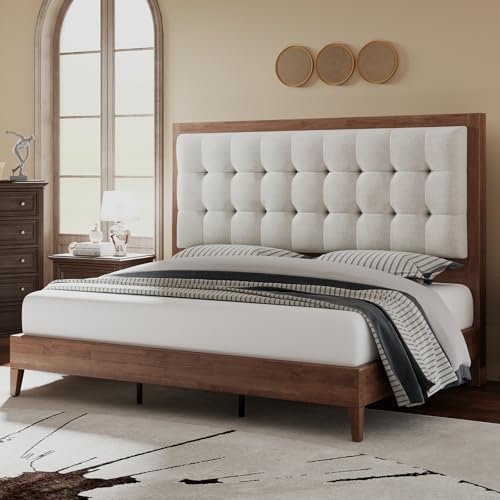
King Size Wood and Upholstered Beds: The Complete Guide
Explore how solid wood craftsmanship and upholstered comfort combine in king size beds. Compare frame styles, materials, support systems, and design pairings before you commit to your next bedroom centerpiece.
Explore Recommended BedsA king size bed anchors the entire bedroom. When that bed combines wood and upholstery, it brings together two complementary strengths: the visual warmth and structural credibility of timber with the softness and tactile comfort of fabric or leather. This combination has become one of the most requested directions in bedroom furniture because it satisfies both aesthetic and practical demands.
This guide is written for readers who already know they want a king size bed and are now comparing wood, upholstered, and hybrid wood-upholstered designs. Rather than surface-level descriptions, we break down material behavior, frame construction, mattress pairing, and long-term care so you can decide with confidence. If you are still mapping out the wider category, our king size beds overview is a useful starting point.
Why King Size Wood and Upholstered Beds Matter
King size beds offer the widest standard sleeping surface for couples, and the frame choice determines how that space functions day to day. Wood frames are valued for rigidity, repairability, and natural grain character. Upholstered frames are valued for softness at the headboard, reduced noise from movement, and a tailored silhouette that hides hardware.
Combining the two allows manufacturers to place hardwood where structural strength matters most — the side rails, center support, and slat platform — while using upholstered panels on the headboard and footboard where comfort and visual softness pay off. The result is a bed that feels substantial without looking heavy and comfortable without looking casual.
Key insight: The most reliable wood-upholstered king beds use solid hardwood or high-grade engineered wood for the internal frame, and treat upholstery as a removable or serviceable layer. Ask whether the headboard cushion has a replaceable cover, because that single detail extends the bed's usable life significantly.
Wood and Upholstery Materials Compared
Material choice is the single biggest driver of durability, feel, and maintenance demands. The table below compares the most common options across king size wood and upholstered beds. Tier descriptions refer to relative market positioning, not to any numeric figure.
| Material | Category | Best For | Durability Notes |
|---|---|---|---|
| Solid oak | Premium tier | Long-term family use, heavy mattresses | Dense grain, resists warping, refinishable |
| Solid walnut | Luxury tier | Statement bedrooms, warm modern interiors | Very stable, rich color, minimal movement |
| Maple and ash | Premium tier | Clean contemporary lines, painted finishes | Hard and shock-resistant, takes stain evenly |
| Pine and rubberwood | Entry-level to mid-range | Guest rooms, starter households | Lighter density, benefits from reinforced joints |
| Engineered wood with veneer | Mid-range tier | Consistent finishes, humid climates | Stable core, resistant to seasonal movement |
| Linen and cotton blend upholstery | Essential to balanced tier | Relaxed, coastal, and Scandinavian rooms | Breathable, covers often removable and washable |
| Velvet and bouclé upholstery | High-end tier | Glam, art deco, and luxury modern styling | Dense pile resists sagging, needs gentle cleaning |
| Leather and faux leather upholstery | Top-tier to commercial-grade | Industrial and traditional rooms, high traffic | Wipes clean easily, develops patina over time |
Matching Wood and Upholstery Tones
The strongest wood-upholstered beds follow a deliberate contrast. Warm oak and walnut pair naturally with cream linen or oatmeal bouclé. Ash and maple, being cooler in tone, sit well with charcoal velvet, slate grey, or deep navy. Dark stained wood with tan leather reads as an industrial or library-inspired statement and pairs well with the ideas in our industrial bedroom guide.
If the bed will sit against a wall of exposed brick or concrete, leather and darker timber give a grounded feel. In calmer, light-filled rooms, lighter wood frames with woven or linen covers keep the bed from dominating the space.
Frame Styles and Design Approaches
King size wood and upholstered beds are not a single look. The frame architecture changes both the visual weight of the bed and how it interacts with the rest of the room.
Panel and Slatted Wood Frames with Upholstered Headboards
This is the most common hybrid approach. The base and side rails are solid wood, often with visible slats or panel lines, while the headboard is a padded upholstered panel. It keeps the bed structurally simple and easy to disassemble for moving, while the upholstered headboard provides back support for reading or watching television in bed. Models with tall cushioned headboards work especially well for people who sit up frequently.
Fully Upholstered Frames with Exposed Wood Accents
Here the side rails and footboard are wrapped in fabric or leather, with exposed timber legs, corner posts, or trim. This style softens the bed's footprint in smaller rooms because the upholstered sides reduce hard edges and visual weight. It also pairs neatly with industrial style bedside cabinets when the exposed wood is finished in a dark stain.
Sleigh and Curved Silhouettes
Curved wood frames combined with upholstered panels create a more traditional or transitional look. The curve is usually in the headboard or footboard, and the upholstery follows the shape. These beds need more floor clearance because the curves extend beyond the mattress footprint. Our king size sleigh beds collection illustrates how much variation exists within this single silhouette.
Platform and Low-Profile Designs
Platform-style wood-upholstered beds sit lower to the floor and use a slatted or solid platform instead of box springs. They suit modern and minimalist bedrooms and pair well with king size platform beds in the same aesthetic family. Low profiles also make a room feel taller, which matters in bedrooms with standard ceiling heights.
Statement Headboard Designs
Some king beds use a dramatic upholstered headboard — channel tufting, wingbacks, or deep buttoning — set into a wood surround. These are best treated as the focal point of the room, with quieter bedding and minimal wall art. If you prefer a taller presence, compare the proportions in our guide to king beds with high headboards before committing.
Support Systems and Mattress Compatibility
The frame is only half of the bed. How the mattress is supported determines comfort, mattress lifespan, and whether the bed stays quiet over time.
Slat Systems
Wood slats are the most common support method in wood-upholstered beds. Look for slats at least 2.5 inches wide with gaps no wider than 3 inches for foam and hybrid mattresses. Closely spaced slats with a center rail and at least one center support leg are essential for king size beds, because the wider span increases flex under load. Reinforced slat systems are a hallmark of premium-tier frames.
Platform Bases and Box Spring Alternatives
Some beds use a solid platform or a closely spaced slat deck that functions like a box spring. These are suitable for most mattress types, though memory foam benefits from a breathable slat deck rather than a fully solid surface. If you prefer a taller sleeping height or a plusher feel, a low-profile foundation can be added, provided the side rails are deep enough to conceal it.
Adjustable-Friendly Frames
Not every wood or upholstered king bed works with an adjustable base. Frames that are compatible usually have removable or hinged slats and a headboard that does not obstruct the base's articulation. If you are planning an adjustable setup, review king bed frames for adjustable beds to understand which construction details matter, and check whether the headboard and footboard can be retained.
Mattress Thickness and Headboard Height
A thick pillow-top mattress can hide a beautifully upholstered headboard. As a rule, the mattress top should sit at or slightly below the middle of the headboard so the upholstery remains visible and provides back support. For mattress sizing details, our king size bedsheet size reference helps you confirm dimensions before ordering bedding.
Comfort, Maintenance, and Longevity
Everyday Comfort Advantages
Upholstered headboards absorb sound and soften the bed's impact on the room, which is why they are popular in shared bedrooms and apartments. The padding also makes sitting up in bed more comfortable, particularly for readers and anyone who works from a laptop in bed. Wood components add rigidity, so the bed does not flex or creak as much as a fully upholstered frame under movement.
Cleaning and Care Routines
- Vacuum upholstered panels monthly with a soft brush attachment to lift dust from the weave.
- Rotate and flip the mattress according to the manufacturer's schedule to prevent uneven settlement.
- Check and tighten frame bolts every few months, especially on king size beds where the span amplifies movement.
- Use a mattress protector to keep spills away from both the mattress and the upholstered rails.
- Dust wood surfaces with a dry or slightly damp cloth; avoid silicone-based polishes that can dull matte finishes.
What Determines Longevity
Three factors matter most: joint construction, center support, and upholstery serviceability. Mortise-and-tenon or dowel-and-bolt joints outperform stapled or glued joints over years of use. A center rail with at least one adjustable support leg prevents sagging across a king size span. Removable or replaceable upholstery covers allow the bed to be refreshed rather than replaced when fabric wear occurs.
Strengths of Wood-Upholstered King Beds
- Combines structural rigidity with soft, supportive comfort
- Upholstered headboards improve reading and sitting comfort
- Quieter under movement than all-upholstered frames
- Wide stylistic range from modern to traditional
- Repairable wood components extend service life
Points to Plan For
- Upholstery requires regular vacuuming and spot care
- Light fabrics show wear sooner in high-traffic rooms
- Larger footprint demands careful room measurement
- Adjustable-base compatibility is not universal
- Hybrid designs can be heavier to move and reassemble
Room Planning and Styling Tips
A king size bed measures roughly 76 by 80 inches for the mattress alone, before frame overhang. Leave at least 24 inches of walking space on each side where possible, and 30 inches at the foot of the bed if a dresser sits opposite. In tighter rooms, a low-profile wood-upholstered frame with a flush footboard preserves more circulation space than a sleigh or poster design.
Bedside Furniture Pairing
Bedside tables should be at least as tall as the mattress top. For upholstered beds, wood nightstands in a contrasting tone create visual balance; for wood-dominant beds, upholstered or painted nightstands soften the composition. If you need generous storage, large bedside tables with drawers work well alongside king beds without crowding the headboard.
Lighting and Textiles
Bedside lamps with warm, diffused light complement upholstered textures and reduce glare on wood finishes. Layering a quilt or throw across the foot of the bed adds color without competing with a statement headboard. For seasonal layering, our guides to king bedspreads and comforters and lightweight summer bedspreads for king size beds cover fabric weights and fit considerations.
Creating a Cohesive Look
The most successful king size wood and upholstered beds are surrounded by a restrained palette. Choose one dominant material — wood or upholstery — and let the other play a supporting role. Add texture through rugs, curtains, and throw pillows rather than through additional furniture finishes. A few well-placed indoor plants add life without visual noise and work especially well in rooms with light wood frames.
How to Choose the Right Bed for Your Tier
Because king size wood and upholstered beds span a wide range of market positioning, it helps to match construction expectations to tier rather than to any single feature. The table below frames the trade-offs clearly.
| Tier | Typical Frame Construction | Upholstery Approach | Best For |
|---|---|---|---|
| Entry-level | Pine or rubberwood, stapled or simple bolt joints | Fixed covers, synthetic blends | Guest rooms, first apartments, short-term needs |
| Mid-range | Rubberwood or engineered hardwood, reinforced corner blocks | Removable covers on some models, cotton-linen blends | Primary bedrooms with moderate daily use |
| Premium | Solid oak, ash, or maple, mortise-and-tenon joinery | High-density foam, tailored woven or performance fabric | Long-term family use, heavy mattresses |
| Luxury | Solid walnut or premium hardwood, hand-finished details | Velvet, bouclé, or full-grain leather, replaceable panels | Design-led bedrooms where the bed is the focal point |
A Practical Checklist Before You Decide
- Measure the room and confirm clearance on both sides and at the foot of the bed.
- Confirm the support system is rated for your mattress type and weight.
- Check that the center rail has at least one adjustable support leg.
- Ask whether upholstery covers are removable or replaceable.
- Verify headboard height against your mattress thickness.
- Consider future adjustable-base compatibility if that is on your roadmap.
- Review assembly requirements and whether professional installation is advised.
For a broader view of frame options beyond the wood-upholstered category, compare king size beds with frame and king size metal beds to see how materials change the bed's character and maintenance profile.
Frequently Asked Questions
What is the difference between wood and upholstered king size beds?
Wood king size beds emphasize structural craftsmanship and natural grain, often with slatted or panel designs. Upholstered king size beds feature fabric or leather covers over a padded frame, offering softer visual lines, added comfort for sitting up, and greater acoustic absorption. Many premium models combine both materials for a balanced look.
Which wood type is best for a king size bed frame?
Solid hardwood frames such as oak, walnut, maple, and ash offer the best durability for king size beds. These dense woods resist warping and support heavier mattresses. Pine and rubberwood are common in entry-level to mid-range frames, while engineered wood with veneer provides a stable, consistent finish at a lower tier.
Are upholstered king beds suitable for all bedroom styles?
Yes. Upholstered king beds adapt well to modern, transitional, and classic interiors. Linen and cotton blends suit relaxed and coastal settings, velvet and bouclé fit luxury and glam aesthetics, and leather works in industrial or traditional rooms. Wood-upholstered hybrid beds bridge multiple styles.
What mattress thickness works with a king size upholstered bed?
Most king size upholstered beds accommodate mattresses between 8 and 14 inches thick. Check the headboard height and side rail depth before pairing a thick pillow-top mattress with a low-profile frame. Adjustable-friendly models often specify a maximum mattress height in their documentation.
How much space should I leave around a king size bed?
Aim for at least 24 inches of walking space on each side where possible, and around 30 inches at the foot if there is opposing furniture. Low-profile frames with flush footboards are the most space-efficient choice in smaller primary bedrooms.
Do wood-upholstered beds work with adjustable bases?
Some do, but compatibility depends on the slat system and headboard construction. Frames with removable or hinged slats and open headboard designs are the most likely to accept an adjustable base. Confirm compatibility with the manufacturer before ordering.
Ready to Compare King Size Wood and Upholstered Beds?
Review recommended models in the product section below, compare frame styles and material combinations, and choose the bed that fits both your room and your long-term comfort needs.
View Recommended Beds