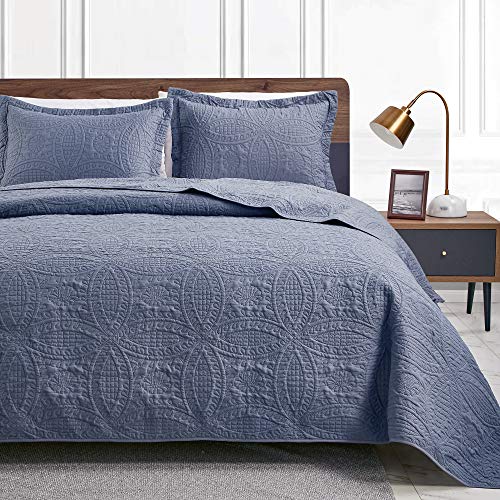
King Bedspreads & Comforters: The Complete Buying Guide
Everything you need to choose the right king-size bedspread or comforter — from fabric and fill to fit, drop length, and coordinated sham sets.
Start the GuideWhy this guide matters: A king bed is a significant investment, and the bedding you choose defines how it looks, feels, and functions. Whether you're upgrading to a king bed for the first time or refreshing an existing setup, this guide walks you through bedspread versus comforter types, materials, sizing, drop length, care, and styling — so you can buy with confidence.
Bedspread vs. Comforter: What's the Real Difference?
Shoppers often use these terms interchangeably, but they describe different bedding constructions. Understanding the distinction is the first step toward a purchase you'll be happy with for years.
- King bedspread: A single, relatively thin layer — often quilted, woven, or matelassé — designed to cover the entire bed and drape over the sides. Bedspreads are typically styled as a finished top layer and often reach close to the floor, creating a tailored, hotel-like appearance. They're a natural fit for warm sleepers and warmer climates.
- King comforter: A thicker, filled bedding piece with loft, designed to sit on top of sheets. Comforters prioritize warmth and coziness and usually pair with a duvet cover or decorative shams. They're ideal for cold rooms and sleepers who want plushness.
Many households keep both on hand: a lightweight bedspread for summer and a lofted comforter for winter. If you prefer a streamlined look with minimal styling effort, a bedspread — especially a king size bedspread set — is often the simpler choice. If you love a layered, cloud-like bed, a comforter is the better foundation.
King-Size Sizing: Getting the Fit Right
A standard king mattress measures approximately 76 inches wide by 80 inches long. Bedding labeled "king" is cut to fit that footprint, but fit varies by brand and construction. Pay attention to three dimensions:
- Width and length: The flat measurement of the bedding. For a king bedspread, look for at least 76 inches of width plus the drop on each side.
- Drop length: How far the fabric hangs over each side. A 15–21 inch drop is typical. Thick mattresses and box springs require a longer drop; a low-profile platform bed may need less.
- Oversized options: If you have a pillow-top mattress or want a generous drape, an oversized king bedspread provides extra fabric on all sides and reduces the "too short" problem common with standard cuts.
If you're also refreshing sheets, our guide to king-size bedsheet sizing in centimeters pairs well with this article, and a king-size bedsheet overview can help you coordinate the base layer.
Materials and Weaves: What to Look For
Fabric choice affects breathability, durability, maintenance, and the overall look of your bed. Here's how the most common options compare:
| Material / Weave | Best For | Feel & Appearance | Maintenance |
|---|---|---|---|
| Cotton (quilted or woven) | All-season use, breathability | Soft, matte, tailored | Machine washable (large capacity) |
| Linen | Warm sleepers, relaxed style | Textured, breathable, lived-in | Machine washable, softens over time |
| Matelassé | Decorative, year-round elegance | Raised woven pattern, medium weight | Gentle machine wash, line dry preferred |
| Microfiber / polyester blend | Easy care, wrinkle resistance | Smooth, uniform, colorfast | Machine washable, quick drying |
| Down / down-alternative (comforters) | Cold rooms, loft and warmth | Plush, airy, cloud-like | Professional cleaning or commercial machine |
| Jacquard / damask | Statement styling, formal bedrooms | Patterned, lustrous, structured | Follow care label; often dry clean |
For a lightweight summer setup, cotton and linen bedspreads are excellent performers. In cooler months, a down or down-alternative comforter layered under a quilt adds warmth without bulk. A lightweight summer bedspread in king size is a smart seasonal addition for warm sleepers.
Quality Tiers: A Practical Framework
Rather than comparing listings on price alone, evaluate construction quality and materials. The framework below uses universal tier descriptors so you can assess any product on its own merits:
| Tier | Typical Construction | Best For | Expected Longevity |
|---|---|---|---|
| Entry-level | Standard microfiber or low-thread-count cotton; simple quilting | Guest rooms, seasonal swaps, first-time setups | Short to medium term with regular washing |
| Mid-range | Higher-quality cotton, matelassé, or blended weaves; reinforced stitching | Primary bedrooms, everyday use | Several years with proper care |
| Premium | Long-staple cotton, linen, jacquard; dense quilting; precise tailoring | Master bedrooms, design-focused spaces | Long-term investment; holds shape well |
| Luxury | Fine linen or Egyptian cotton; hand-finished details; coordinated shams | High-end styling, luxury guest suites | Exceptional durability with specialist care |
Mid-range options typically deliver the best balance of durability and design variety for most households, while premium and luxury tiers justify themselves through materials and finishing that hold up over many seasons.
Drop Length, Mattress Thickness, and Bed Height
Fit failures are the most common source of bedding returns. Measure before you buy:
- Measure your mattress height (including topper and box spring if present). A 14-inch mattress with a 9-inch box spring sits high and needs a longer drop.
- Decide your preferred drop. A 15-inch drop gives a clean, modern look; 21 inches reads traditional and generous.
- Check the bed frame. High-profile king beds with high headboards and king-size beds with frames often benefit from longer drops to balance visual proportions.
- Consider a bed skirt if you want a tailored finish without relying entirely on the bedspread's drop.
Shams, Accent Pillows, and Coordinated Sets
King bedding sets frequently include two king shams, which protect pillows and create a pulled-together look. A king-size bedspread with shams removes guesswork from matching patterns and colors. For a more layered bed, add a decorative lumbar pillow and a throw at the foot.
If you like the quilted look, king-size quilted bedspread sets offer texture and warmth in one package. For a nautical or coastal bedroom theme, king-size nautical bedspreads provide a strong visual anchor. And if you're coordinating a full bedding refresh, see our king-size bedspread sets overview for matching options.
Quick Styling Tips for King Beds
- Fold the top third of the bedspread back to reveal sheets and add visual depth.
- Use two king shams plus one or two accent pillows for a balanced arrangement.
- Match the bedspread tone to your king headboard for a cohesive look.
- Choose a bedspread with a subtle pattern if your room has bold art or a statement headboard.
- In warm seasons, swap to a lightweight summer king bedspread and store the heavier comforter.
Care and Maintenance Essentials
Proper care extends the life of any bedspread or comforter and keeps it looking fresh:
- Check the care label first. It dictates water temperature, drying method, and whether dry cleaning is required.
- Use a large-capacity machine. King bedding needs room to move; an overloaded machine causes uneven cleaning and wear.
- Wash less often with a top layer. A top sheet or duvet cover reduces how frequently the bedspread itself needs washing.
- Air and shake regularly. This restores loft to comforters and prevents dust settling.
- Store seasonally. Use breathable cotton bags rather than plastic to prevent moisture buildup.
For complementary bedding care, see our guidance on linen sheets and linen bedsheet care, which follow similar principles of gentle washing and air drying.
Frequently Asked Questions
What is the difference between a king bedspread and a comforter?
A king bedspread is a single, thinner layer — often quilted or woven — that drapes over the sides and typically reaches near the floor for a tailored look. A comforter is thicker and filled for warmth, usually sitting on top of sheets and paired with a duvet cover. Bedspreads suit warm sleepers and streamlined styling; comforters suit cold rooms and cozy layering.
How do I choose the right size bedspread for a king bed?
Start with the mattress dimensions: about 76 by 80 inches for a standard king. Confirm the bedspread is cut specifically for king beds, then check the drop length — the fabric hanging over each side. A 15–21 inch drop is typical. Thick mattresses may need an oversized king bedspread for a fuller drape.
What materials are best for king bedspreads and comforters?
Cotton is breathable and durable for all-season use. Linen offers texture and temperature regulation for warm sleepers. Microfiber blends resist wrinkles and simplify care. Down and down-alternative comforters provide loft for cold rooms, while quilted cotton and matelassé bedspreads add decorative texture with moderate weight.
Are king size bedspreads with shams worth considering?
Yes. Coordinated sets with two king shams create a finished, hotel-style look and eliminate the effort of matching patterns. Shams also protect pillows, extending their useful life.
How should I care for a king bedspread or comforter?
Follow the care label. Most cotton and microfiber bedspreads are machine washable in a large-capacity machine; dry on low. Down and luxury comforters may need professional cleaning. Shake bedding regularly to restore loft, air it between washes, and store seasonally in breathable cotton bags.
Ready to Complete Your King Bed Setup?
Explore our curated selection of king bedspreads and comforters, plus matching headboards, frames, and bedding essentials.
View Recommended Products