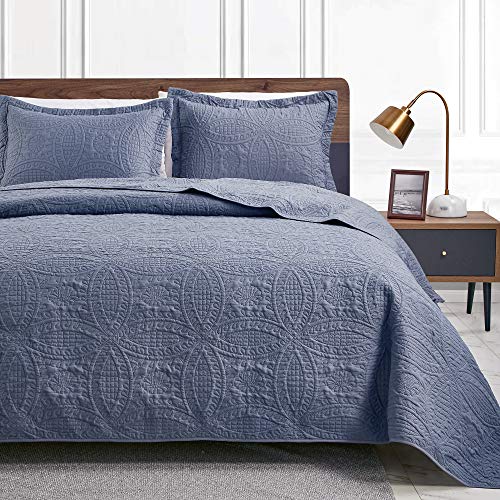
Light Blue Bedspread King Size: The Complete Buyer’s Handbook
A calm, airy light blue bedspread can transform a king-size bed into the visual centerpiece of a restful bedroom. This guide walks you through sizing, fabric choices, styling, and long-term care so you can buy with confidence.
What This Guide Covers
Why a Light Blue Bedspread Works Beautifully in a King Bedroom
Light blue occupies a rare position in interior design: it is calming enough to support rest, yet saturated enough to anchor a large piece of furniture like a king bed. Unlike stark white, a soft blue tone hides minor creases and everyday wear, and unlike deep navy, it keeps a spacious bedroom feeling open and bright.
From a styling perspective, light blue reads as a near-neutral. It pairs naturally with warm wood tones, crisp whites, brushed metals, and soft greys. If your bedroom already leans toward a contemporary industrial look, a pale blue spread softens the hard lines of exposed brick and metal without fighting them. In a more traditional room, the same spread adds a fresh, coastal-adjacent note that feels timeless rather than trendy.
The color also behaves differently depending on finish. Matelassé and quilted weaves deepen the shade slightly through shadow and texture, while smooth cotton percale reflects more light and appears almost powdery. Understanding this before you buy helps you predict how the bedspread will look under your bedroom’s specific lighting.
King-Size Sizing Explained: Getting the Drop Right
The single most common mistake buyers make with king bedspreads is underestimating the required dimensions. A standard king mattress measures 76 inches wide by 80 inches long, but a bedspread must extend beyond the mattress on all sides to create a proper drop. For a classic look with a modest overhang, look for spreads around 108 by 96 inches. For a fuller drape that reaches toward the floor, oversize options measuring roughly 120 by 100 inches or larger are the better fit.
Two variables change the math: mattress thickness and your preferred styling. A deep pillow-top king mattress can add three to five inches of height, which swallows the drop of a standard spread. If you like a pillow-tuck finish, where the top edge folds neatly behind the pillows, you need additional length. If you prefer a simple drape with pillows resting on top, the standard dimensions may suffice.
Quick sizing rule: Measure your mattress width, length, and depth. Add at least 12 to 16 inches to the width for side drops and 8 to 12 inches to the length for the foot drop. Compare that total against the bedspread’s finished dimensions, not the mattress size label on the packaging.
If you are also refreshing other bedding elements, the king-size bedsheet size guide is a useful companion reference for coordinating fitted and flat sheets beneath your bedspread. And if you are considering a complete bedding refresh, browsing king-size bedspread sets can help you match shams and accent pieces in the same dye lot.
Fabric and Weave Options for a Light Blue King Bedspread
The fabric determines how the color reads, how the spread drapes, and how easy it is to maintain. Here are the most common options you will encounter.
Cotton Percale and Sateen
Cotton remains the most popular choice for its breathability and easy care. Percale weaves have a crisp, matte finish that makes light blue appear soft and understated. Sateen weaves have a subtle sheen that gives the same color a slightly more polished, luminous quality. Both are generally machine washable and soften with use.
Matelassé and Quilted Weaves
Matelassé is a double-cloth weaving technique that produces a raised, textured surface, often in subtle geometric or floral patterns. This texture is especially effective in pale blue because the raised areas catch light and create depth. A king-size matelassé bedspread offers a dressier look than a flat cotton spread and tends to hold its shape well over time. Quilted styles use stitched layers around a light batting, adding warmth and a plush hand-feel.
Linen and Linen Blends
Linen delivers a relaxed, lived-in texture that suits casual and coastal-inspired bedrooms. It is highly breathable and becomes softer with every wash, but it wrinkles readily, which some buyers love and others find fussy. Linen blends with cotton reduce wrinkling while retaining much of the texture.
Synthetic and Microfiber Blends
Polyester and microfiber blends are typically the most wrinkle-resistant and colorfast options. They hold dye well, which matters for pale shades that can fade, and they are generally the easiest to launder. The trade-off is breathability: synthetic spreads may feel warmer in humid conditions, so they suit cooler climates and air-conditioned rooms best.
Matching a Light Blue Bedspread to Your Bedroom Style
Light blue is adaptable, but the surrounding decor determines whether it reads coastal, modern, cottage, or tailored. Consider these directions before you commit.
- Coastal and breezy: Pair pale blue with white shams, natural rattan accents, and light wood furniture. Add a woven throw at the foot of the bed for texture.
- Modern minimal: Keep the palette tight with charcoal, white, and pale blue. Choose a smooth sateen or matelassé spread with clean lines and avoid heavy patterns.
- Cottage and traditional: Opt for quilted or floral matelassé in soft blue, layered with cream sheets and a textured bed skirt. Warm wood nightstands complete the look.
- Industrial and urban: Use pale blue as a softening counterpoint to black metal, concrete, or reclaimed wood. A simple cotton spread in a flat weave keeps the room from feeling cold. If you are refining this direction, industrial-style bedside cabinets can reinforce the theme without competing with the bed.
Bedside coordination matters more than most buyers expect. A complementary light blue bedside table can tie the room together, or you can deliberately contrast with warm wood or black metal for visual balance.
Style Comparison: Which Light Blue Bedspread Suits You?
The table below compares common light blue bedspread categories by positioning, feel, and best use. Use it to narrow your shortlist before reading individual product listings.
| Category | Tier | Texture & Feel | Best For |
|---|---|---|---|
| Flat cotton percale | Entry-level | Crisp, matte, lightweight | Warm sleepers, casual rooms, easy laundering |
| Cotton sateen | Mid-range | Smooth, subtle sheen, moderate weight | Modern bedrooms wanting a polished look |
| Quilted cotton | Mid-range | Plush, stitched, lightly insulating | All-season use and layered styling |
| Matelassé | Premium | Raised texture, structured drape | Traditional and cottage interiors, dressier rooms |
| Linen blend | Premium | Textured, breathable, relaxed wrinkles | Coastal and natural interiors, warm climates |
| Oversize luxury cotton | Luxury | Generous drop, high-grade fabric, refined finish | Deep mattresses, pillow-tuck styling, statement bedrooms |
If you want to explore specific silhouettes within this category, king-size quilted bedspread sets and king-size bedspreads with shams are useful next stops. For a more classic nautical reading of the color, king-size nautical bedspreads offer a distinct striped or coastal-influenced alternative.
Layering and Seasonal Use
A king bedspread is rarely used in isolation. Layering extends its usable range and lets you change the room’s character without replacing the main piece.
Warm months: Use a lightweight cotton or matelassé spread on its own, paired with breathable sheets. If you sleep hot, a lightweight bedspread for summer in a pale blue tone keeps the bed visually cool as well as physically cool. For larger beds, lightweight summer bedspreads in king size are sized appropriately for the drop.
Cool months: Layer a quilt or duvet beneath the spread, or fold a textured throw across the foot of the bed. The light blue top layer remains the visual anchor while the underlying layers handle warmth. If you prefer a coordinated set, king bedspreads and comforters can be combined for a fuller, more insulated bed.
Transitional styling: Swap shams and accent pillows seasonally while keeping the bedspread constant. This is the most efficient way to refresh a bedroom without re-investing in the core bedding.
Care and Maintenance for Light Blue Bedding
Pale blue dyes are generally stable, but they deserve sensible care to avoid fading and uneven wear.
- Washing: Machine wash cold on a gentle cycle with a mild detergent. Wash light blues separately from dark colors for the first several cycles.
- Bleach: Avoid chlorine bleach, which can yellow pale blues. Use an oxygen-based brightener only if the care label permits it.
- Drying: Tumble dry low or line dry. High heat accelerates shrinkage and can dull the color over time.
- Matelassé and quilted styles: Air these between washes and avoid over-washing, which can compress the raised texture.
- Storage: Store folded in a cool, dry place away from direct sunlight, which is the leading cause of faded pale dyes.
Rotating the bedspread periodically, so the same areas are not always exposed to window light, also helps extend its visual life.
Final Buying Checklist
Before you finalize a purchase, run through these checks:
- Measure the mattress, not the label. Confirm width, length, and depth, then compare against finished bedspread dimensions.
- Decide on drop style. Standard drape, full floor-length drape, or pillow-tuck each require different dimensions.
- Match fabric to climate and routine. Breathable cotton or linen for warm rooms, quilted or synthetic blends for cooler rooms and low-maintenance households.
- Check colorfastness claims. Look for pre-washed or colorfast labeling, especially for pale shades.
- Confirm care instructions. If the label requires dry cleaning, factor that into your long-term routine.
- Coordinate with existing decor. Bring a photo of your bedroom or a pillow sham to compare tone and texture.
Ready to Compare Light Blue King Bedspreads?
Browse curated options below to find the fabric, weave, and drop that fit your bedroom best.
Explore OptionsFrequently Asked Questions
What size bedspread should I choose for a king bed?
A king bedspread should measure at least 108 inches wide by 96 inches long for a standard drop. Oversize king bedspreads often reach 120 by 100 inches or more to cover deeper mattresses and allow a pillow-tuck or generous overhang.
Is a light blue bedspread suitable for year-round use?
Yes. Light blue is a versatile, near-neutral hue that works across seasons. Choose a lightweight cotton or matelassé weave for warm months and layer a quilt or duvet underneath during cooler periods for added warmth without changing the visual style.
How do I care for a light blue bedspread?
Most cotton and linen blends are machine washable in cold water on a gentle cycle. Wash colors separately, avoid chlorine bleach, and tumble dry on low or line dry to preserve the dye and prevent shrinkage. Matelassé and quilted styles benefit from periodic airing between washes.
Will light blue bedding show stains easily?
Light blue hides minor creases and everyday dust better than white, but it can show oil-based stains. Treat spills promptly with a mild detergent solution and avoid scrubbing, which can disturb the weave.
Can I use a light blue bedspread with a patterned bedroom?
Yes. Light blue acts as a calming neutral against most patterns, especially florals, stripes, and geometric prints. Keep the pattern scale varied and repeat the blue tone in one or two accent pieces to create cohesion.