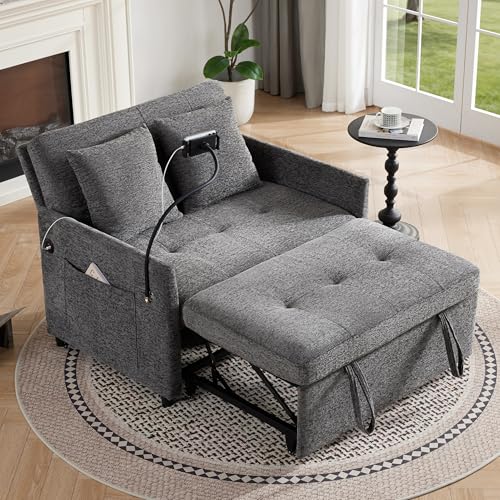
Loveseat Pull Out Beds: The Complete Guide to Dual-Purpose Comfort
Maximize your living space with a loveseat that seats two by day and sleeps one comfortably by night. Discover how to choose the right convertible for your home.
Explore Top PicksWhy loveseat pull out beds matter: In compact apartments, guest rooms, home offices, and studio spaces, every square foot counts. A loveseat pull out bed delivers seating and sleeping in a single footprint — making it one of the smartest furniture investments for multi-functional living. This guide walks you through sizing, mechanisms, comfort factors, and the top-tier options so you can buy with confidence.
What Is a Loveseat Pull Out Bed?
A loveseat pull out bed is a compact sofa designed to seat two people that converts into a sleeper — typically a twin or full-size bed. Unlike a full-size sleeper sofa, a loveseat sleeper occupies a smaller footprint, making it ideal for tight rooms where a traditional sofa bed would overwhelm the layout. The conversion mechanism usually involves one of three designs: a pull-out mattress that folds out from beneath the seat, a click-clack backrest that folds flat, or a futon-style fold-down frame.
These dual-purpose pieces are especially popular in studio apartments, guest rooms, home offices, and living room decor setups where flexible seating is essential. They also pair naturally with living room ideas that prioritize space efficiency without sacrificing style.
Types of Loveseat Pull Out Beds
1. Traditional Pull-Out Sleeper Loveseats
These feature a steel or wood frame with a folding mattress stored inside the seat. When deployed, the mattress extends outward on a metal mechanism. Traditional pull-out loveseats typically offer a thicker, more mattress-like sleeping surface than click-clack designs, making them the better choice for overnight guests who need genuine comfort. Mid-range and premium tiers often include upgraded innerspring or memory foam mattresses and reinforced mechanisms for smoother operation.
2. Click-Clack Convertible Loveseats
A click-clack loveseat folds flat by reclining the backrest until it locks into a sleeping position. These are generally lighter and easier to move than traditional pull-outs, and they suit occasional guest use well. Entry-level click-clack models work fine for short-term sleeping, while high-end tier versions include padded cushioning and sturdy hardwood frames for better support.
3. Futon-Style Loveseat Sleepers
Futon loveseats use a fold-down frame that transitions from upright seating to a flat sleeping surface. They are simple, durable, and often the most straightforward to operate. Futon designs pair well with casual or low platform bed aesthetics and work nicely in rooms that lean toward minimalist or Scandinavian styling.
4. Memory Foam and Hybrid Sleeper Loveseats
Newer models incorporate memory foam mattresses or hybrid foam-and-spring layers inside the pull-out mechanism. These deliver noticeably better pressure relief and motion isolation than traditional spring sleeper mattresses. If the loveseat will be used for regular sleeping rather than occasional overflow, a memory foam or hybrid sleeper is worth prioritizing.
Sizing Guide: Will a Loveseat Sleeper Fit Your Space?
Loveseat pull out beds typically measure between 50 and 65 inches in width when seated. When fully extended, the sleeping surface usually runs 70 to 80 inches in length. The key measurement is the clearance needed in front of the loveseat when the bed is deployed — most models require 60 to 75 inches of open floor space. Always measure your room and account for door swings, walkways, and nearby furniture before choosing a model.
| Configuration | Seated Width | Sleeping Surface | Best For |
|---|---|---|---|
| Twin Sleeper Loveseat | 50–58 in | Twin (38 × 75 in) | Single guests, studios |
| Full Sleeper Loveseat | 58–65 in | Full (54 × 75 in) | Couples, guest rooms |
| Click-Clack Loveseat | 50–60 in | Twin to Full flat | Occasional use, offices |
| Futon Loveseat | 50–60 in | Full flat | Casual rooms, dorms |
Pro tip: If your room has limited depth, a click-clack or futon loveseat may be more practical than a traditional pull-out, since these designs require less extension space. Measure the full deployed length plus at least 12 inches of walking clearance.
Comfort and Mattress Quality: What to Look For
The sleeping experience of any loveseat pull out bed depends heavily on the mattress inside. Entry-level sleeper loveseats often use thin polyurethane foam that compresses over time. Mid-range and premium models upgrade to higher-density foam, gel-infused memory foam, or pocketed coil systems. If the loveseat will serve as a primary bed for guests, prioritize a model with a mattress at least 4.5 inches thick and a supportive foam core.
For added comfort, consider pairing the sleeper with a mattress topper — a simple upgrade that transforms a basic sleeper mattress into a genuinely restful surface. A memory foam mattress topper works particularly well for pressure relief on thinner sleeper mattresses.
- Mattress thickness: 4.5 inches or more for regular sleeping; 3 inches is acceptable for occasional use.
- Mattress type: Memory foam or hybrid for better support; innerspring for a more traditional feel.
- Frame material: Hardwood or high-grade steel for durability; particle board is a red flag for long-term use.
- Mechanism: Look for smooth, reinforced pull-out hardware with a weight rating that comfortably exceeds the mattress and sleeper weight.
- Upholstery: Performance fabrics or microfiber resist stains and wear better than thin woven fabrics.
Pros and Cons of Loveseat Pull Out Beds
Advantages
- Space-efficient dual-purpose design
- Seats two comfortably during the day
- Provides a genuine sleeping surface for guests
- Available in styles to match most decor
- No separate guest bed required
Considerations
- Sleeper mattresses can wear faster than standard mattresses
- Requires clearance space when deployed
- Heavier than a standard loveseat
- Entry-level models may have thin mattresses
- Mechanism quality varies significantly by tier
How to Choose the Right Loveseat Pull Out Bed
1. Match the Sleeper to Its Primary Use
If the loveseat is mainly seating with occasional overnight guests, a click-clack or futon model in the mid-range tier is sufficient. If it will serve as a regular guest bed, invest in a traditional pull-out with a premium memory foam mattress and a reinforced mechanism. For a more substantial sleeping setup in a guest room, a memory foam sofa bed offers a larger sleeping surface with the same dual-purpose convenience.
2. Verify the Mechanism
Test or research the pull-out mechanism carefully. Premium and luxury tier models use heavy-duty steel mechanisms with smooth-glide operation and locked-in-place safety. Entry-level models sometimes use thinner metal that flexes over time. Look for models with a weight rating clearly stated and customer feedback mentioning smooth operation over months of use.
3. Check the Upholstery and Frame
High-grade upholstery — microfiber, performance weave, or bonded leather — will hold up far better in a multi-use room. The frame should be hardwood or reinforced steel, not particle board. A luxury bedstead-grade frame build in a loveseat sleeper is a strong indicator of long-term durability.
4. Plan the Room Layout
Think of the loveseat as part of your overall living room decor plan. Leave at least 60 inches of open floor space in front of the loveseat for deployment, and consider pairing it with a long bedside table with drawers or a slim console for additional storage and visual balance.
Accessory idea: Add a lounge chair bed nearby for extra seating that also converts — a smart combo for multi-functional rooms that host both social gatherings and overnight guests.
Loveseat Pull Out Beds by Tier
To compare models without referencing specific figures, here is how loveseat sleeper tiers typically differ in build quality, mechanism, and mattress comfort:
| Tier | Frame & Mechanism | Mattress Quality | Best For |
|---|---|---|---|
| Entry-Level | Basic steel or composite frame; simpler pull-out hardware | Thin foam (3–4 in); adequate for occasional use | Occasional guest seating, dorms |
| Mid-Range | Reinforced steel mechanism; hardwood or engineered hardwood frame | Medium-density foam or basic innerspring (4.5–5 in) | Regular guest use, home offices |
| Premium | Heavy-duty smooth-glide mechanism; solid hardwood frame | High-density memory foam or hybrid (5–6 in) | Frequent overnight guests, studios |
| Luxury | Commercial-grade mechanism; kiln-dried hardwood frame | Premium hybrid or gel memory foam (6+ in) | Primary guest bed, high-end apartments |
Models in the mid-range tier typically offer the most balanced combination of mechanism durability, mattress comfort, and upholstery quality. Entry-level models are perfectly serviceable for occasional use, while premium and luxury tiers make sense when the loveseat will be used for sleeping on a regular basis.
Care and Maintenance Tips
- Rotate the mattress: Flip or rotate the sleeper mattress every few months to prevent compression dips.
- Use a mattress protector: A mattress protector guards against spills and extends the life of the sleeper mattress.
- Vacuum upholstery regularly: Weekly vacuuming with a soft brush attachment keeps fabric fresh and prevents dust buildup.
- Lubricate the mechanism: A few drops of silicone lubricant on the pull-out tracks annually keeps operation smooth.
- Avoid jumping or heavy impact: Protect the mechanism and frame by treating the sleeper as seating and sleeping furniture, not a play surface.
Frequently Asked Questions
Ready to Find Your Perfect Loveseat Sleeper?
Browse our curated selection of top-rated loveseat pull out beds — filtered by tier, size, and mechanism type.
View Top Picks Below