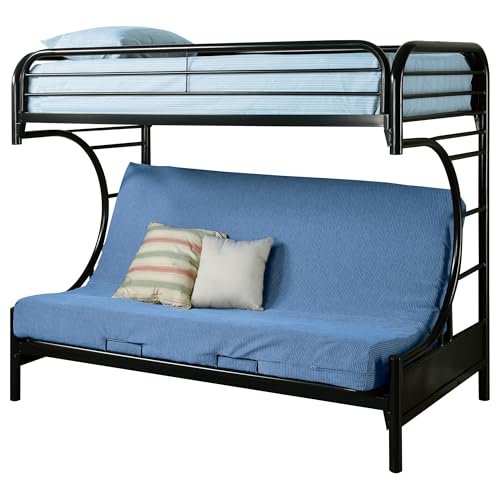
Metal Bunk Beds Twin Over Full Futon: The Ultimate Space-Saving Sleep Solution
One frame, three functions: a twin sleeping platform on top, a full-size futon sofa below, and a full sleeper when the backrest folds flat. Here is everything you need to know before choosing one for your home.
What Is a Metal Bunk Bed Twin Over Full Futon?
A metal bunk bed twin over full futon is a hybrid furniture piece that stacks a twin-size sleeping platform above a full-size futon. Unlike a traditional bunk bed with two fixed mattresses, the lower level is a convertible futon: it stands upright as a sofa for daytime lounging and folds flat into a full-size sleeping surface at night. The entire structure is built from metal — typically steel tubing or reinforced angle iron — rather than wood.
This configuration solves a common household dilemma: you need sleeping space for two or more people, but you also want a comfortable place to sit, read, or host friends during the day. The upper twin serves a single sleeper, while the lower futon handles both seating and a wider sleeping footprint. The result is a single piece of furniture that replaces a bed, a sofa, and a guest sleeper all at once.
Metal construction is central to the appeal. Steel frames are generally slimmer than wooden posts, which means more usable floor space and better sight lines in a small room. High-grade steel also resists warping, cracking, and moisture damage far better than wood, and a rust-proof finish keeps the frame looking clean for years. If you are weighing frame materials, our broader guide to metal bunk beds breaks down the trade-offs in detail.
Why Choose a Metal Frame and a Futon Base?
The case for metal
Metal frames bring three practical advantages to a bunk bed: strength-to-weight ratio, slim profiles, and low maintenance. A well-built steel frame can support adult weight on both levels while keeping the overall footprint compact. The finish — usually powder coating or a rust-proof paint layer — wipes clean with a damp cloth and does not absorb spills or odors the way unfinished wood can.
Metal also handles temperature and humidity swings gracefully, which matters in basements, garages, and coastal homes. It will not swell, crack, or harbor dust mites inside the frame material itself. For a deeper look at how steel frames compare across configurations, see our collection of metal bed frames.
The case for a futon base
The futon base is what separates this model from a standard bunk bed. It gives you:
- Dual-purpose furniture: a sofa by day and a full-size bed by night, without moving to a different room.
- Wider lower sleeping surface: a full-size futon accommodates two smaller sleepers or one adult comfortably.
- Better daytime utility: the room stays functional as a lounge, study, or play area even when nobody is sleeping.
- Easier access: a futon base often leaves more open floor area in front of the bed compared with a fixed lower bunk.
If you are comparing this layout to a fixed-mattress version, the guide to metal bunk beds twin over full explains where the two designs diverge and which one suits different households.
Anatomy of the Frame: What Makes It Strong
Not all metal bunk beds are built to the same standard. When you evaluate a twin over full futon model, look for these structural features:
- Main support posts: thick-gauge steel tubing, ideally with a square or rectangular cross-section for rigidity. Round tubing is common but can flex more under load.
- Cross rails and slats: metal slats or a wire mesh deck distribute weight across the frame. Heavier-gauge slats with center support bars reduce sagging.
- Reinforced joints: welded corners and bolted connection points with locking nuts are stronger than simple screw-together fittings. Look for gusseted corners on the upper bunk.
- Guard rails: the top bunk should have full-length guard rails on both sides, with a gap no larger than a few inches at the head and foot.
- Integrated ladder: a sturdy ladder that hooks securely over the top rail, ideally with flat, wide steps rather than thin rungs.
- Futon mechanism: a smooth folding hinge with locking positions, plus a metal frame that supports the futon mattress evenly when flat.
A solid build also protects resale potential and long-term usability. Many buyers prioritize frames that are described as heavy-duty or reinforced, because those descriptors signal thicker steel and better welding. Our overview of metal bunk beds with storage shows how added drawers and shelves are engineered into the same frame architecture.
Entry-Level, Mid-Range, and Premium Tiers Explained
Because product positioning varies widely, it helps to think in tiers rather than specific figures. The table below summarizes what you can generally expect at each level. Use it as a relative comparison — a mid-range model typically offers smoother mechanisms and thicker steel than an entry-level one, while a premium model pushes further on finish quality and structural refinement.
| Tier | Typical Frame Build | Futon Mechanism | Best For |
|---|---|---|---|
| Entry-level | Lighter-gauge steel, basic welded joints, simple slat deck | Standard fold-flat hinge, two positions | Guest rooms, occasional use, first apartment |
| Mid-range | Thicker steel posts, reinforced corners, center support bar | Smoother multi-position hinge with locking latch | Daily use, shared kids' rooms, teen bedrooms |
| Premium | High-grade steel, gusseted corners, powder-coated rust-proof finish | Precision hinge, quiet operation, reinforced futon deck | Primary residences, adult use, long-term investment |
| Luxury / commercial-grade | Oversized tubing, commercial welding standards, extended warranty | Heavy-duty mechanism rated for frequent conversion | Rental properties, vacation homes, high-traffic households |
Tier language is a useful shorthand, but always read the specifications: steel gauge, weight capacity, and warranty length tell you more than a marketing label. A well-specified mid-range frame is often the sweet spot for families who use the bed every night.
Safety, Weight Capacity, and Ladder Placement
Safety is the single most important consideration with any bunk bed, and the twin over full futon layout has a few specific points to watch.
- Top bunk age guidance: most safety organizations recommend that children under six sleep on the lower level. The top bunk is best suited to older children, teens, and adults.
- Guard rails: the upper bunk needs rails on both sides that extend at least five inches above the mattress top. Check that the rail gap at the head and foot is small enough to prevent entrapment.
- Weight capacity: confirm the rated capacity for each level separately. A sturdy frame should clearly state limits for the top bunk, the futon in sofa mode, and the futon in flat mode.
- Ladder security: the ladder should hook over the top rail and sit flush against the frame, with no wobble. If the ladder is removable, store it out of the way when the top bunk is not in use.
- Wall anchoring: many frames include anti-tip hardware. Use it. Anchoring the frame to a wall stud prevents tipping if someone climbs or leans on the edge.
- Ceiling clearance: leave enough headroom above the top mattress so a sleeper can sit up without hitting the ceiling or a light fixture.
If you are shopping for a household with younger children, the safety considerations in our kids beds guide apply here as well, especially around rail height and ladder design.
Room Sizing and Clearance Planning
A twin over full futon bunk bed is larger than a standard twin bunk because the lower level is full-width. Before you buy, measure the room and map out clearances:
- Footprint: the frame itself occupies roughly the width of a full-size bed plus the frame thickness. Confirm the exact dimensions from the product specification.
- Ladder clearance: leave at least two feet of open floor in front of the ladder so it can be climbed safely.
- Futon extension: when the futon folds flat, the sleeping surface extends forward. Make sure there is enough floor space in front of the frame for the flat position.
- Door and closet swing: check that doors, closet doors, and dresser drawers can open fully without hitting the frame.
- Ceiling height: aim for at least 30 to 36 inches of clearance between the top mattress and the ceiling.
For a broader planning framework, the mattress size chart helps you visualize how twin and full dimensions compare. If your room has low ceilings, the guidance in low ceiling bunk beds for adults is especially relevant.
Choosing the Right Mattress for Each Level
The upper twin and the lower futon have different mattress needs.
Top bunk mattress
Choose a twin mattress that is no thicker than the guard rail height allows — typically six to eight inches. A thinner profile keeps the sleeper safely below the rail line. Medium-firm support works well for most sleepers, and a mattress with a sturdy core resists sagging on metal slats. Our medium-firm mattresses collection is a good starting point, and the mattress buying guide covers firmness selection in depth.
Futon mattress
A futon mattress needs to be flexible enough to fold and thick enough to feel comfortable when flat. Look for a full-size futon mattress with a dense cotton or foam core and a durable cover. A mattress that is too thick may not fold cleanly into the sofa position; one that is too thin will feel every bar of the frame. A mattress protector extends the life of both surfaces — see our mattress protectors guide for options.
If you are outfitting the bed for a child, the mattress toppers for twin beds page offers ways to soften the top bunk without exceeding the rail height.
Assembly and Maintenance Essentials
Most metal bunk beds ship flat-packed and require assembly. A few practices make the process smoother and the result safer:
- Two-person assembly: the frame is heavy and awkward to handle alone. Recruit a helper for the upper platform and the futon deck.
- Follow the sequence: loosely thread all bolts before tightening anything. This lets the frame settle square before you lock it down.
- Check hardware regularly: re-tighten bolts after the first week, then every few months. Vibration from daily use can loosen connections.
- Protect the floor: use felt pads or a rug under the feet to prevent scratches, especially on hardwood.
- Clean with care: wipe the frame with a damp cloth and mild soap. Avoid abrasive cleaners that can dull a powder-coated finish.
For a step-by-step walkthrough, our how to assemble a bed frame guide covers the tools and sequence in detail.
Who Benefits Most From This Configuration?
The twin over full futon layout shines in specific scenarios:
- Guest rooms and home offices: the futon doubles as a sofa for remote work or reading, and converts to a full bed when guests stay over.
- Teen and shared bedrooms: the top twin gives a teen their own sleeping space while the futon provides seating for friends.
- Small apartments and studios: one frame replaces a bed and a couch, freeing up floor area for a desk or dining nook.
- Vacation homes and rentals: the dual-purpose design maximizes sleeping capacity without clutter. Commercial-grade frames are worth considering for high-turnover properties.
- Multi-generational households: the lower futon is easier to access for older family members, while the top bunk suits visiting grandchildren.
Planning tip: if you expect frequent overnight guests, pair the futon with a quality full-size mattress topper and a washable cover. It keeps the seating surface comfortable and the sleeping surface hygienic between visits.
Frequently Asked Questions
What is a metal bunk bed twin over full futon?
It is a space-saving bunk bed with a twin-sized sleeping platform on top and a full-sized futon on the bottom. The futon serves as a sofa during the day and folds flat into a full-size bed at night.
Is a twin over full futon bunk bed safe for adults?
Many models are engineered with high-grade steel and reinforced frames rated for adult use. Always verify the manufacturer's weight capacity for each level and anchor the frame to a wall where possible.
How much floor space does this bunk bed save?
It consolidates two sleeping surfaces and a seating area into a single footprint. Compared with a separate twin bed, full bed, and sofa, the savings in floor area are substantial — especially in studios and guest rooms.
Does the futon really convert into a full-size bed?
Yes. The backrest folds flat to create a full-size sleeping surface. Check the product specification for the exact flat dimensions and the recommended futon mattress thickness.
What mattress thickness works best on the top bunk?
A six- to eight-inch twin mattress is usually the safest choice because it keeps the sleeper below the guard rail line. Verify the rail height and follow the manufacturer's guidance.
Can the bunk bed be separated into two beds?
Most twin over full futon models are not designed to split. If you need a convertible option, look for frames explicitly described as separable or stackable.
Ready to Compare Models?
Use the recommendations below to explore frames that match your room size, safety needs, and preferred tier. Every listing includes verified specifications so you can compare structural features side by side.
Explore Recommended Models