Single Beds That Turn Into Double Beds: The Complete Buyer's Guide
One bed, two sleeping arrangements. Learn how convertible single beds work, which mechanism suits your room, and how to choose a design that stays comfortable when it grows from a solo sleeper to a shared double.
Why this guide matters: If you are researching single beds that turn into double beds, you already know you want flexibility — a compact footprint for daily life and a full-size sleeping surface when a partner or guest stays over. This guide explains the mechanisms, the trade-offs, and the specification details that separate a smooth conversion from a frustrating one, so you can decide with confidence before you visit a retailer.
What "Single Bed That Turns Into a Double" Really Means
The phrase covers several distinct product families, and understanding the difference is the first step toward a smart purchase. In practice, almost all of these beds begin as a standard single (twin) footprint and expand to roughly double-bed dimensions — typically around 135 cm to 140 cm wide, depending on the model and region's sizing conventions.
There are three dominant conversion mechanisms on the market today:
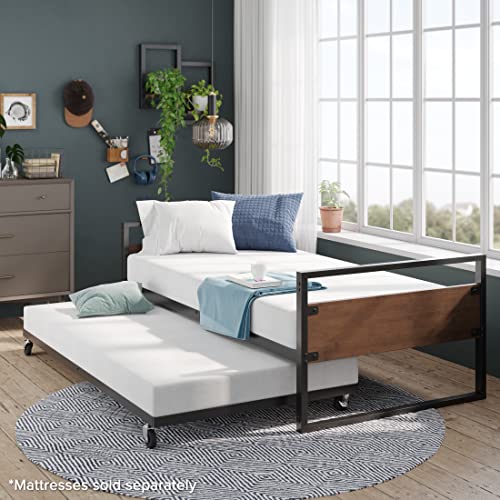
- Trundle conversion: A second mattress platform is stored underneath the main bed and rolls or slides out alongside it. When deployed, the two surfaces sit side by side at a similar height, forming a double sleeping area.
- Pop-up or pull-out expansion: The frame itself unfolds or extends sideways, often raising a second platform to the same level as the primary mattress. These designs tend to feel more like a true double bed because the sleeping surface is continuous.
- Folding platform conversion: A hinged platform folds out from the bed base, and a folding mattress unfolds with it. These are common in guest rooms and small apartments where the bed must disappear or shrink during the day.
Each mechanism changes how the bed feels, how much floor space it needs when open, and what mattress you can use. We will walk through each one in detail below.
Trundle Beds: The Most Common Convertible Option
Trundle designs are the most widely available category of single beds that turn into double beds, and for good reason. The concept is simple and robust: a hidden second bed lives beneath the main frame and slides out when needed. Many models allow the trundle to be raised to the same height as the main mattress, creating a level, side-by-side double surface.
When shopping for a trundle conversion, pay attention to three specification details that directly affect long-term satisfaction:
- Lift mechanism: Manual lift trundles use a simple pop-up frame, while assisted models use gas struts or spring systems. Mid-range and premium models generally offer smoother, safer lifting for heavier mattresses.
- Mattress thickness allowance: Trundle compartments have a maximum mattress height. Exceeding it prevents the bed from closing cleanly. Check the stated clearance before choosing a mattress.
- Frame material: High-grade steel or reinforced hardwood frames handle repeated conversion far better than thin tubular metal. Look for solid build quality at the joints.
If your priority is a design that blends into a styled bedroom rather than looking like a folding guest bed, a trundle is usually the most furniture-like solution. For rooms that need extra storage as well, explore options like single beds with storage and mattress to combine both functions.
Practical tip: measure the open footprint
A trundle bed may be compact when closed, but the deployed configuration can occupy significantly more floor space. Measure the full open dimensions — including the space needed to walk around the bed — before committing. In tight rooms, consider small single beds for small rooms as a complementary starting point.
Pop-Up and Pull-Out Expansions: A Continuous Sleeping Surface
Pop-up and pull-out designs take a different approach. Instead of two separate platforms side by side, the frame expands so the sleeping surface remains continuous across the full width. For couples who occasionally share the bed, this creates a more natural sleeping experience with no gap or height difference in the middle.
These models are often engineered around a folding mattress or a two-piece mattress system that locks together when open. The frame quality is critical here: a reinforced linkage and heavy-duty slats determine whether the expanded surface stays flat and quiet over years of use.
Advantages of this category include:
- No uncomfortable center gap between two mattresses
- A more uniform appearance when converted
- Often a smaller closed footprint than a trundle setup
The trade-off is that the mattress choice is more restrictive — you generally need the manufacturer's compatible folding mattress rather than any standard single mattress. If you prefer a conventional mattress, a trundle system is usually more flexible.
Comparing Convertible Bed Mechanisms at a Glance
The table below summarizes how the main categories compare across the factors that matter most during the research stage. Use it as a quick reference, then dig into the detailed sections that follow.
| Mechanism | Tier Positioning | Best For | Key Consideration |
|---|---|---|---|
| Trundle conversion | Mid-range | Guest rooms, flexible kids' rooms, styled bedrooms | Needs clear floor space when open; check mattress height limit |
| Pop-up / pull-out expansion | Premium | Couples who occasionally co-sleep, compact apartments | Usually requires a proprietary folding mattress |
| Folding platform conversion | Entry-level | Occasional guest use, multipurpose rooms | Best for lighter sleepers and short-stay guests |
How to Choose the Right Convertible Single Bed
Buying decisions here come down to balancing four variables: how often the bed converts, who sleeps on it, how much space the open configuration requires, and how the bed looks when closed. Below is a practical framework.
1. Define the primary use case
If the bed converts nightly for a couple, prioritize frame durability and a continuous mattress surface — a premium pop-up design is usually the strongest fit. If it converts a few times a month for guests, a mid-range trundle is efficient and easy to operate. For occasional short-stay visitors, an entry-level folding platform keeps things simple without over-specifying.
2. Match the mattress to the mechanism
This is the single most common source of disappointment. Folding platforms require flexible foam mattresses; a rigid innerspring mattress will not fold and may damage the frame. Trundle beds need a mattress within the compartment's clearance. Pop-up frames typically pair with a specific two-piece mattress. Always confirm compatibility before ordering, and note that mattress thickness affects both comfort and whether the bed closes properly.
3. Check the frame engineering
Look for reinforced joints, high-grade steel or solid hardwood, and a smooth conversion action. A heavier frame is not automatically better, but excessive flex or wobble during conversion is a warning sign. Premium models tend to use assisted lift mechanisms that reduce strain when raising a heavier trundle mattress.
4. Plan the room around the open state
Designers often recommend leaving at least 60 cm of walking space around the deployed bed. If your room cannot accommodate that, consider a bed that expands lengthwise rather than sideways, or rethink the layout entirely. Small-room strategies in our small bedroom solutions guide can help you map the space before you buy.
5. Decide on style continuity
Convertible beds do not have to look utilitarian. Upholstered and wooden designs that convert discreetly can serve as the visual anchor of a styled bedroom. If you are building a cohesive look, pairing the bed with complementary pieces such as a rattan bedside table keeps the room feeling intentional even when the second sleeping surface is hidden.
Comfort and Safety Considerations for Adult Use
Adults can absolutely use convertible single beds as a primary or secondary sleeping solution, provided the frame is rated for adult weight and the mattress is supportive enough for regular use. Three checks matter most:
- Weight rating: Confirm the frame's stated load capacity for both the closed and open configurations. Expanded surfaces distribute weight differently.
- Surface continuity: Two separate mattresses can create a noticeable seam. If co-sleeping is frequent, prioritize a continuous-surface design or use a mattress connector.
- Edge support: Expanded platforms sometimes have softer edges. If you tend to sleep near the perimeter, test or review edge support specifically.
For side sleepers in particular, mattress support at the shoulder and hip matters more than bed width. Our side sleeper guide explains how to evaluate pressure relief, which is useful when choosing the mattress that will pair with your convertible frame.
Design and Decor: Making a Convertible Bed Look Intentional
One advantage of trundle-style designs is that they read as conventional beds when closed, which means the room does not feel like a guest overflow zone. A few styling moves help:
- Choose bedding that works in both configurations — a neutral quilted bedspread in a double size can be tucked neatly when the bed is closed and used fully when open.
- Keep the floor area around the trundle clear so conversion is effortless. Baskets and storage bins should live elsewhere.
- Use lighting to define the sleeping zone. A reading bedside lamp adds warmth and function without occupying floor space.
If the room also serves as a home office or study, consider how the bed's open footprint overlaps with your desk zone. Furniture that works in multiple configurations — including small apartment furniture — helps the room feel deliberate rather than improvised.
Common Mistakes Buyers Make
Most conversion-bed regrets trace back to a small number of avoidable errors:
- Ignoring the mattress specification. A compatible mattress is not optional; it is part of the system. Buying the frame first and the mattress later often leads to a mismatch.
- Underestimating the open footprint. The deployed bed plus walking clearance is the real space requirement, not the closed dimensions.
- Choosing on appearance alone. Conversion smoothness, frame stability, and mattress compatibility matter more than the finish. Read specification details and, where available, verified reviews that mention long-term conversion use.
- Overlooking storage for bedding. Extra sheets and the second mattress need a home. Storage-integrated frames simplify this considerably.
If your room is genuinely constrained, it is worth comparing a convertible single bed with other flexible formats. Some buyers find that a small sofa bed suits a multipurpose room better, while others prefer a dedicated convertible bed for sleeping comfort. There is no universal answer — only the answer that fits your room and routine.
Who Should Buy a Single Bed That Turns Into a Double?
This category shines in specific situations:
- Guest rooms with limited floor space that need to accommodate couples without dedicating the room to a permanent double bed.
- Small apartments where the bedroom doubles as a workspace or lounge during the day.
- Teen and young adult rooms that need to flex between solo use and hosting a friend.
- Holiday rentals and short-stay properties where sleeping capacity flexibility directly affects how many guests can be hosted.
Conversely, if the bed will be used as a daily double by a couple, a conventional double or queen frame is usually the more comfortable long-term choice. Convertible beds trade a small amount of sleeping refinement for meaningful space flexibility — a trade that makes sense in many homes but not all.
Frequently Asked Questions
How does a single bed turn into a double bed?
Are convertible single beds comfortable for adults?
What mattress works best for a bed that converts from single to double?
Do I need special bedding for a convertible bed?
Can a convertible bed be used every night?
Ready to Compare Convertible Bed Options?
Browse recommended models, check specifications, and compare features to find the single bed that turns into a double bed for your space.
Explore Options