Reading Bedside Lamp: The Complete Buying Guide
Everything you need to know before choosing a bedside lamp for nightly reading — light quality, adjustability, eye comfort, and sleep-friendly design.
Why this guide matters: A reading bedside lamp is not just a decorative accessory. It directly affects how comfortable your eyes feel during long reading sessions and how easily you fall asleep afterward. This guide walks you through the practical details so you can choose with confidence.
Why a Dedicated Reading Lamp Matters
Most bedrooms have general ambient lighting, but ambient light is rarely ideal for reading. It is often too diffuse, casts shadows across the page, or comes from the wrong angle. A dedicated reading bedside lamp solves these problems by concentrating light exactly where you need it — on the book — while keeping the rest of the room dim and restful.
Beyond comfort, a well-chosen lamp supports better sleep hygiene. Bright overhead light close to bedtime signals your brain to stay alert. A focused, warm-toned bedside lamp lets you read comfortably while gradually preparing your body for rest. If sleep quality is a priority for you, pairing a good lamp with sound sleep hygiene habits makes a noticeable difference.
There is also a practical side: the right lamp reduces eye strain. When light is too dim, your eyes work harder to focus; when it is too harsh or badly angled, glare causes discomfort. A lamp with adjustable direction and brightness gives you control over both extremes.
Key Features to Look For in a Reading Bedside Lamp
Not every bedside lamp is a good reading lamp. The features below separate a lamp that merely looks nice from one that genuinely supports long reading sessions.
1. Adjustable Direction and Beam Control
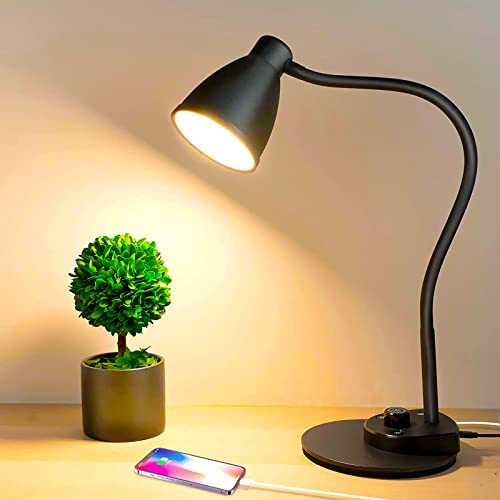
This is the single most important feature. A flexible gooseneck, swivel head, or articulated arm lets you angle the light onto your page without shining it into your eyes or your partner's face. Fixed-head lamps force you to position your body around the light, which becomes tiring quickly. If you read in different positions — sitting up, reclining, or lying on your side — adjustability is essential. Readers who follow a side sleeper guide will especially appreciate a lamp that can be angled from a lying position.
2. Dimmable Brightness
Brightness needs change depending on the time of evening and your reading material. A dimmable lamp lets you start brighter for dense text and lower the output as you wind down. Stepless dimming (a smooth dial or touch slider) is more comfortable than two or three fixed levels. This flexibility also helps when one person wants to read and the other wants to sleep.
3. Warm Color Temperature
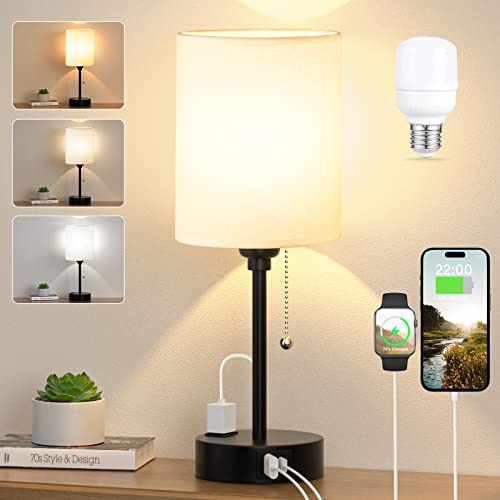
Color temperature is measured in Kelvin. For bedtime reading, warm white light in the range of roughly 2700K to 3000K is generally recommended. It feels softer and is less disruptive to your natural sleep rhythm than cool, blue-toned light. Some lamps offer adjustable color temperature, which is useful if you also use the lamp for tasks earlier in the evening. For more context on light and sleep, see our reading lights overview.
4. Glare-Free, Eye-Friendly Design
Look for a lamp with a shaded or recessed bulb so the light source itself is not directly visible. A diffuser or frosted shade softens the beam. Flicker-free drivers are worth checking as well — some lower-tier LED lamps produce subtle flicker that can cause headaches over long sessions. A focused beam with a soft edge is the ideal balance: bright enough on the page, gentle at the edges.
5. Stable Base and Bedside Footprint
Your lamp sits on a nightstand, and nightstand space is usually limited. A stable base that will not tip when you reach for it matters, especially in the dark. Compact or clamp-mounted designs are useful in small rooms. If you are optimizing a tight space, our guides on small bedroom solutions and small bedside table lamps offer practical layout ideas.
6. Controls Within Easy Reach
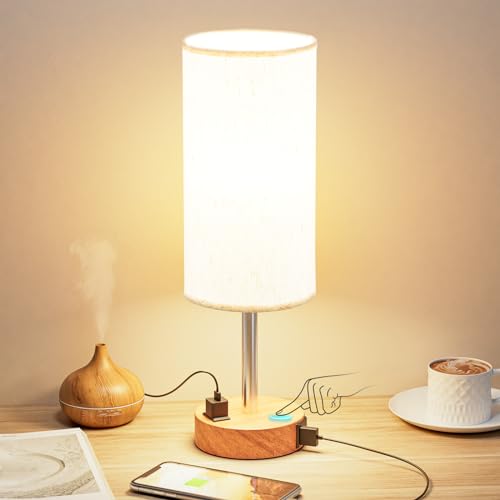
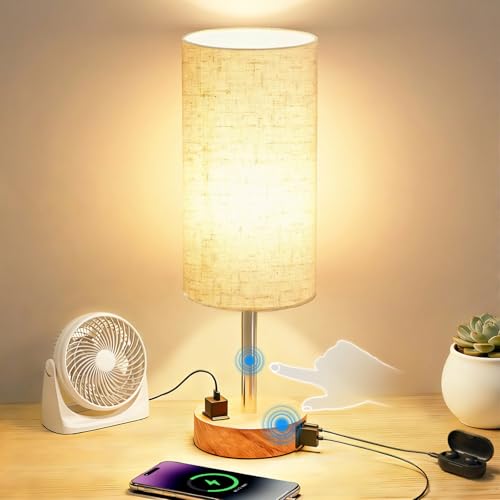
A touch-sensitive base, an inline switch on the cord, or a well-placed dial makes a surprising difference when you are half-asleep. Fumbling for a tiny switch in the dark is a small annoyance that adds up night after night. Some lamps also include a USB port for charging a phone, which can reduce cable clutter on the nightstand.
Types of Reading Bedside Lamps
Reading lamps come in several formats, each suited to different rooms and reading habits. The table below compares the main categories using universal quality tiers rather than any numeric figures.
| Type | Best For | Typical Tier Positioning | Key Consideration |
|---|---|---|---|
| Gooseneck LED lamp | Precise beam control, reading in bed | Entry-level to mid-range | Check for flicker-free driver and stable base |
| Articulated arm lamp | Larger nightstands, long reading sessions | Mid-range to premium | Joint quality determines long-term durability |
| Clamp-on lamp | Very small nightstands or headboards | Entry-level | Ensure the clamp fits your furniture thickness |
| Swing-arm wall lamp | Freeing up nightstand surface | Mid-range to high-end tier | Requires installation; check reach and swing range |
| Classic shaded table lamp | Traditional decor, softer ambient reading light | Essential tier to premium | Choose a shade that directs light downward |
| Smart bedside lamp | Adjustable color temperature and scheduling | Premium to flagship tier | App dependency and setup complexity vary |
Note on tiers: The tier labels above describe relative market positioning, not any specific figures. A mid-range model in one category may offer features comparable to a premium model in another, so compare within type rather than across the whole market.
Understanding Light Quality: Lumens, Kelvin, and CRI
Three specifications matter most for reading comfort. Understanding them helps you read product listings with a critical eye.
Lumens: How Much Light Reaches the Page
Lumens measure light output. For focused bedside reading, a lamp that delivers a concentrated beam onto the page is more useful than a very bright lamp spread across the room. Dimmable lamps in the mid output range give you the flexibility to match the room's ambient light. Avoid judging a lamp purely by its maximum output — a focused, well-aimed beam at moderate output often reads more comfortably than a harsh, wide beam at high output.
Kelvin: The Color of the Light
Warm light (around 2700K–3000K) has a relaxing, slightly amber quality and is the standard recommendation for evening reading. Neutral light (around 3500K–4000K) is crisper and can suit readers who prefer a clearer page. Cool light (5000K and above) is best reserved for daytime task work, not bedtime reading. If you read early in the evening and want one lamp for both tasks, adjustable color temperature is a worthwhile feature.
CRI: How Accurately Colors Render
The Color Rendering Index describes how faithfully a light source shows colors. A higher CRI makes printed pages, illustrations, and book covers look natural rather than washed out. For plain text reading the difference is subtle, but for graphic novels, magazines, or illustrated books, a lamp with a higher CRI is noticeably more pleasant.
How to Position Your Reading Lamp
Even a well-chosen lamp underperforms if it is positioned poorly. A few simple placement principles make a big difference:
- Place the lamp on the side of your dominant hand so your body does not cast a shadow across the page as you turn pages.
- Aim the beam at the page, not at your face. The light source itself should stay out of your direct line of sight.
- Keep the lamp slightly in front of your reading position rather than directly beside your head, which reduces glare.
- Match lamp height to your reading posture. A gooseneck or swing arm makes this adjustment easy; a fixed lamp may need a stack of books under it (a temporary fix at best).
- Coordinate with your nightstand layout. If space is tight, consider a skinny bedside table or a small bookshelf bedside table that keeps the lamp stable and the surface organized.
Reading Lamps and Sleep: What to Keep in Mind
Light is one of the strongest signals your body uses to regulate its sleep-wake cycle. Bright light close to bedtime, especially cool-toned light, can delay the release of melatonin and make it harder to fall asleep. The goal is not to read in darkness but to read in a way that respects your body's transition toward sleep.
Practical steps include choosing a warm-toned lamp, dimming it as the evening progresses, and keeping the beam focused on the page rather than the room. Reading on a screen adds its own light exposure, so a paper book under a warm lamp is often the gentler choice. Readers dealing with specific concerns such as snoring or breathing issues during sleep may find our snoring solutions and sleep apnea guide useful alongside lighting adjustments.
If you use a sleep tracker to monitor your rest, you can experiment with different lamp settings over a week or two and observe any changes in how quickly you fall asleep. Our overview of sleep trackers explains what these devices can and cannot tell you.
Matching the Lamp to Your Bedroom Style
A reading lamp is a visible object on your nightstand, so it should fit the room's design language. The good news is that functional lamps now come in nearly every aesthetic.
- Rustic and natural interiors: lamps with wood or metal finishes pair well with a rustic bedroom scheme. A reclaimed wood bedside table or a rattan bedside table makes a natural pairing with warm-toned lamp shades.
- Scandinavian and minimalist rooms: clean lines and neutral shades fit a Scandinavian bedroom. A compact lamp on a small light wood bedside table keeps the look uncluttered.
- Soft, layered bedrooms: fabric shades and warm metals suit a shabby chic decor approach or other layered, textured styles.
- Pairs and symmetry: if your bed is shared, matching lamps on both sides create visual balance. Our guide to a set of 2 bedside lamps covers how to choose a matching pair.
If you are furnishing a smaller space, the interplay between lamp size, table size, and bed placement matters more than in a large room. Our small bedroom storage and small bedroom decor guides offer broader context for fitting everything together.
A Simple Buying Checklist
Before you commit to a lamp, run through this checklist. It covers the points that most often cause regret after purchase.
- Is the head or arm adjustable? Can you direct the beam onto the page from your usual reading position?
- Is it dimmable? Smooth dimming is preferable to fixed levels.
- Is the color temperature warm or adjustable? Warm white is the standard for evening reading.
- Is the light source shielded? You should not see the bare bulb or LED from your pillow.
- Is the base stable and the footprint right for your nightstand? Measure your table before ordering.
- Are the controls easy to reach in the dark? Touch bases and inline switches are convenient.
- Does it match the room's style? A lamp you enjoy looking at is one you will keep using.
Frequently Asked Questions
What type of light is best for reading in bed?
Warm white light between roughly 2700K and 3000K is generally best for reading in bed. It is gentle on the eyes and less disruptive to melatonin production than cool-toned light. Look for adjustable brightness and a focused beam that directs light onto the page rather than into your eyes.
Should a reading bedside lamp be adjustable?
Yes, adjustability is one of the most important features. A flexible neck, swivel head, or articulated arm lets you direct light precisely where you need it, reduces glare, and accommodates different reading positions. Adjustable brightness and color temperature add further comfort.
How many lumens do I need for a reading lamp?
For focused bedside reading, a moderate, concentrated output directed at the page is usually sufficient. Higher output is not always better because excessive brightness can cause glare and eye strain. Dimmable lamps let you fine-tune the output for your environment.
Can a reading lamp affect my sleep?
Yes. Bright, cool-toned light close to bedtime can suppress melatonin and delay sleep onset. Choosing a warm-toned, dimmable lamp and keeping the beam focused on your book rather than your face helps minimize disruption to your sleep cycle.
Do I need a special lamp if I share a bed?
A directional, dimmable lamp is especially valuable when you share a bed. It lets you read while keeping light off your partner's side. Placing the lamp on your own side and aiming the beam down at the page minimizes spillover. A pair of matching lamps with individual controls is a practical setup for shared bedrooms.
Ready to Choose Your Reading Lamp?
Browse our curated selection of reading bedside lamps below. Each option is chosen for adjustability, light quality, and bedside practicality — so you can read comfortably and wind down for better sleep.