Solid Platform Beds With No Slats: The Complete Guide
A slat-free platform bed delivers uninterrupted support, a clean silhouette, and a rock-solid foundation for your mattress. Here is everything research-stage buyers need to know before choosing one.
Explore Recommended PicksIf you have been comparing bed bases, you have likely noticed a quiet divide: traditional platform beds rely on a row of wooden or metal slats, while solid platform beds with no slats replace that lattice with a continuous deck. That single design decision changes how weight is distributed, which mattresses pair best, and how much assembly and maintenance the frame demands.
This guide is written for buyers who already know they want a platform-style bed and are now weighing whether a slat-free deck is the right upgrade. Below we break down how slat-free support works, who benefits most, which mattress types are compatible, and the details that separate a sturdy frame from a flimsy one.
What Is a Solid Platform Bed With No Slats?
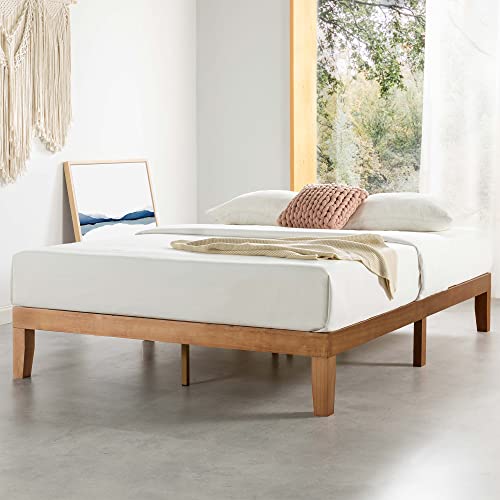
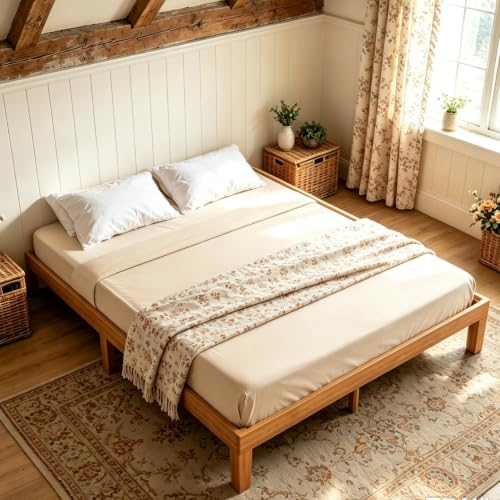
A solid platform bed features a full, uninterrupted support surface — usually a wooden panel, a plywood deck, or an upholstered solid base — that spans the entire inside of the frame. Instead of resting on spaced slats, your mattress sits directly on this deck. The design eliminates the gaps that allow airflow in slat-based beds and removes the need for a box spring entirely.
Most slat-free models are built around one of three deck styles:
- Solid wood panel deck — a single reinforced panel or a few large boards joined together, common in solid wood platform beds with storage drawers where the deck doubles as a lid for the storage cavity.
- Plywood or engineered deck — lighter than solid wood but still continuous; often used in upholstered frames and adjustable-friendly designs.
- Ventilated solid deck — a continuous surface with drilled holes, grooves, or breathable panels to restore some airflow while keeping the slat-free structure.
Because the deck is the load-bearing element, build quality matters more than in a slatted frame. A well-made slat-free bed typically uses reinforced corner joints, a center support rail, and a deck thickness that resists bowing over time.
How Slat-Free Support Works Under Your Mattress
On a slatted bed, your body weight travels through the mattress into individual slats, which flex slightly and spread the load across the frame. On a solid deck, weight is distributed across the entire surface at once. That has three practical consequences:
- More even support. There are no gaps for the mattress to sink into, so the base stays flat and consistent — a real advantage for memory foam and hybrid mattresses that need a firm, uniform surface.
- Less flex and squeak. Fewer moving parts means fewer creaks. A reinforced solid deck is generally quieter than a slat system that loosens over time.
- Reduced airflow. The trade-off is ventilation. Without gaps, moisture and heat have fewer escape routes, which is why ventilated decks and breathable mattress protectors matter.
If you are matching a base to a specific mattress type, our guides on top-rated mattresses for adjustable beds and top-rated beds for side sleepers explain how support surfaces interact with different sleep styles.
Who Should Choose a Slat-Free Platform Bed?
A solid deck is not automatically better than slats — it is better for specific situations. Consider a slat-free frame if any of the following applies:
- You sleep on a premium foam or hybrid mattress. These mattresses need a flat, rigid base to perform as designed.
- You are a heavier sleeper. A continuous deck spreads weight more evenly than spaced slats, which reduces stress on individual components.
- You want a no-box-spring setup. The deck already provides the complete support layer.
- You value a clean look. Slat-free designs often have a lower, more streamlined profile that suits modern and minimalist bedrooms.
- You are furnishing a guest or rental room. Fewer parts and a simpler structure mean less that can loosen or fail.
Conversely, if you sleep hot, live in a humid climate, or prefer a very bouncy innerspring feel, a ventilated slat design may serve you better. It is also worth comparing slat-free models with solid wood king size beds if you are sizing up, since larger frames place more demand on the deck.
Advantages and Trade-Offs
Advantages
- Continuous, even support with no gaps
- No box spring required
- Quieter, with fewer moving parts
- Excellent match for foam and hybrid mattresses
- Clean, low-profile silhouette
- Solid choice for heavier sleepers
Trade-Offs
- Heavier and harder to move
- Less airflow than slatted bases
- Needs a ventilated deck in humid climates
- Assembly can require two people
- Some models are not adjustable-bed compatible
Which Mattresses Pair Best With a Solid Deck?
Mattress compatibility is the single most important decision after frame sturdiness. The table below summarizes how common mattress types behave on a slat-free platform bed.
| Mattress Type | Compatibility | Notes |
|---|---|---|
| Memory foam | Excellent | Needs a flat, rigid surface; a solid deck is ideal. |
| Hybrid | Excellent | Pocket coils plus foam perform best on continuous support. |
| Latex | Very good | Dense and heavy; a reinforced deck prevents sagging. |
| Innerspring | Good | Works well, but prioritize a ventilated deck. |
| Pillow-top | Good | Check overall height; solid decks sit lower than box springs. |
One practical note: a solid deck does not “break in” like a slat system, so the mattress takes on the full character of its own support layers. If you are still deciding between firmness levels, our stomach sleeper guide explains how a firmer base changes spinal alignment.
Buying Checklist: What to Look For
Use this checklist to evaluate any slat-free platform bed before you commit:
- Deck thickness and material. Solid wood or a thick engineered panel resists bowing; thin particleboard does not.
- Center support. Frames in full size and larger should include a center rail or center legs to prevent mid-span flex.
- Ventilation. Look for drilled holes, slotted panels, or breathable fabric decks — especially in humid climates.
- Joinery. Reinforced corner brackets, mortise-and-tenon joints, or heavy-duty bolts signal a solid build.
- Weight rating. Compare the stated capacity against the combined weight of your mattress and sleepers.
- Assembly requirements. Check whether tools are included and whether two people are recommended.
- Mattress height clearance. A slat-free deck sits lower than a box spring; confirm the finished bed height suits your room.
How Slat-Free Beds Compare to Alternatives
Slat-free platform beds sit alongside several other support systems. Understanding the differences helps you confirm the right choice:
- Slatted platform beds — lighter, more breathable, and easier to move, but they require closer slat spacing for foam mattresses and can develop squeaks.
- Box spring plus frame — traditional and bouncy, but adds height and an extra component that wears out.
- Adjustable bases — ideal for articulated positioning, but they are a different category entirely. See our guide to split king adjustable beds if articulation is a priority.
- Storage platform beds — a slat-free deck often doubles as a storage lid, which is why storage beds for small spaces frequently use solid decks.
If space is your main constraint, space-saving beds for small rooms and small twin beds for small spaces cover footprint-focused options that pair well with slat-free construction.
Care and Maintenance Tips
A solid platform bed needs less ongoing attention than a slatted frame, but a few habits keep it performing:
- Rotate or flip your mattress according to the manufacturer’s schedule to prevent uneven compression.
- Use a breathable, waterproof mattress protector to block moisture from reaching the deck.
- Check bolts and brackets every few months; retighten as needed.
- Air out the bedroom regularly and avoid pushing the bed flush against a damp wall.
- If the deck is ventilated, keep the holes clear of dust and bedding.
For broader bedroom planning, our solid wood bedside cabinets and smart bedside table with wireless charging guides help you finish the room around your new frame.
Frequently Asked Questions
Do solid platform beds with no slats need a box spring?
No. The solid deck is a complete support system and replaces both the slats and the box spring. Place your mattress directly on the deck.
Which mattresses work best on a slat-free platform bed?
Firm to medium-firm foam and hybrid mattresses tend to perform very well on a solid deck. Innerspring and latex mattresses also work, but choose a ventilated deck to manage moisture.
Is a slat-free platform bed better for heavy sleepers?
Generally yes. A continuous deck distributes weight across the full frame rather than concentrating it on individual slats, making it a solid choice for heavier sleepers and high-end mattresses.
How do I prevent mold under a solid platform bed?
Choose a deck with ventilation holes or breathable panels, use a breathable mattress protector, and air out the bedroom regularly. Some slat-free frames include built-in airflow channels under the deck.
Can I use an adjustable mattress on a slat-free platform bed?
Only if the frame is explicitly rated for adjustable mattresses. Most rigid solid decks are not designed to articulate, so check the manufacturer’s compatibility statement first.
Final Thoughts
Solid platform beds with no slats are a strong choice for buyers who want uninterrupted support, a quieter frame, and a clean, box-spring-free setup. The key is matching the deck to your mattress, prioritizing reinforced construction, and planning for ventilation. Get those three elements right, and a slat-free platform bed becomes a long-term foundation for better rest.
Ready to compare specific models? Browse the recommended picks below to see how different tiers stack up on deck construction, support, and finish.