Solid Wood Bedside Cabinets: The Complete Buyer's Guide
Everything you need to choose a durable, beautifully crafted nightstand that fits your bedroom, your storage needs, and your style. Learn about wood species, door styles, drawer configurations, and sizing before you decide.
Explore Recommended OptionsWhy solid wood? A solid wood bedside cabinet is a long-term investment in your bedroom. Unlike particleboard or veneer-covered models, solid wood furniture can be sanded, refinished, and repaired over time, so it ages gracefully instead of degrading. This guide walks you through the key decisions step by step.
What Exactly Counts as a "Solid Wood" Bedside Cabinet?
The term "solid wood" is used loosely in the furniture industry, so it pays to know what you are actually buying. In its strictest sense, a solid wood bedside cabinet is built from lumber milled from a single tree species, with the primary structural panels and drawer fronts made from that wood rather than from engineered boards wrapped in a thin veneer.
In practice, you will encounter a few common constructions:
- 100% solid wood: The cabinet body, doors, drawer fronts, and top are all made from solid lumber. This is the most durable and repairable category.
- Solid wood with engineered panels: Visible surfaces and fronts are solid wood, while internal panels or the back panel use plywood or engineered boards for stability and weight management. This is a common and reasonable approach at the mid-range level.
- Veneered: An engineered core covered with a thin slice of real wood. It can look convincing, but it is not the same as solid construction and offers far less long-term refinishing potential.
If longevity matters to you, look for listings that clearly state the material of each component. Reputable sellers will specify whether the drawer boxes, back panel, and interior are solid wood or engineered. A genuinely solid cabinet is heavier, has visible grain that continues across joints, and will show end-grain patterns on the top edges.
Types of Solid Wood Bedside Cabinets
Bedside cabinets come in several configurations, each suited to a different balance of storage, display space, and footprint. Before comparing specific products, decide which layout matches your nightly routine.
1. Single-Door Cabinets
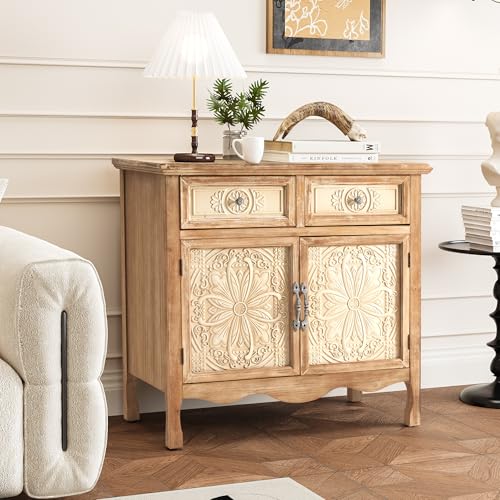
A single-door bedside cabinet offers enclosed storage behind a hinged door, often with one internal shelf. It is ideal if you want to hide clutter such as books, chargers, eye masks, or medication. The door style — shaker, louvered, or flat panel — strongly influences the visual character of the piece.
2. Drawer Cabinets
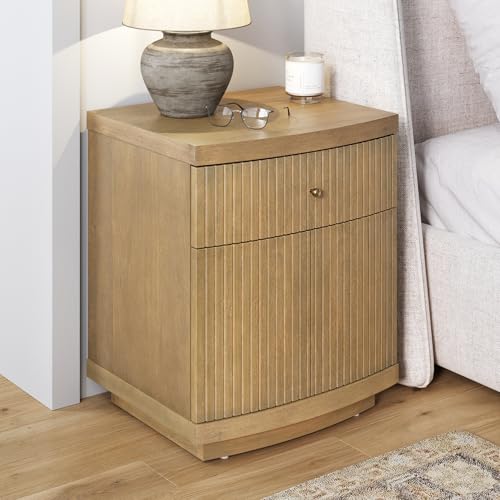
Drawer-based nightstands provide the most organized access to small items. One to three drawers are common; a two-drawer configuration is a versatile middle ground for most sleepers. If you want to keep the surface clear, a design like a solid wood bedside table with drawers pairs a generous top with organized storage underneath.
3. Open-Shelf Cabinets
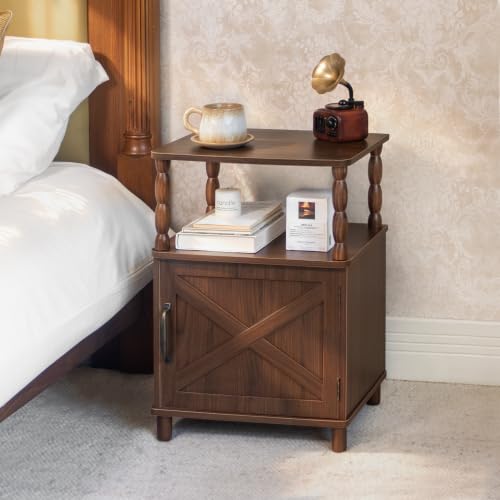
Open shelves are best for display: a lamp, a framed photo, a small plant, or a stack of current reads. They sacrifice dust protection for visual lightness and quick access. Many buyers combine an open shelf at the bottom with a drawer or door above.
4. Tall and Narrow Bedside Cabinets
If your bed sits low or your wall space is limited, a tall, slim silhouette can be the right fit. You can explore dedicated options in our guide to tall bedside cabinets with drawers for vertical storage that does not crowd the bed. For very tight gaps, a tall narrow bedside table can fit where a standard-width cabinet cannot.
Choosing the Right Wood Species
The species of wood affects hardness, grain pattern, color, and how the piece responds to humidity. Here is a practical comparison of the species most commonly used for bedside cabinets. Tier labels describe relative market positioning, not any monetary figure.
| Wood Species | Market Tier | Key Characteristics | Best For |
|---|---|---|---|
| Pine | Essential tier | Soft, light in tone, prominent knots, takes paint and stain well | Rustic and cottage-style bedrooms; painted finishes |
| Rubberwood | Entry-level | Uniform grain, dense, widely used in solid-wood furniture, accepts dark stains | Balanced durability for everyday use; stained finishes |
| Alder | Mid-tier | Soft hardwood, fine grain, warm color, easy to stain to mimic other woods | Traditional and transitional bedrooms; warm-toned décor |
| Oak | Premium | Hard, heavy, open grain, excellent durability, natural honey tones | High-traffic bedrooms; long-term everyday use |
| Walnut | Luxury | Dense, rich chocolate-brown heartwood, refined grain, ages beautifully | Statement pieces; modern and mid-century interiors |
| Maple | Mid-tier to premium | Very hard, fine closed grain, pale color, excellent for painted finishes | Crisp painted cabinetry; light and airy rooms |
A note on hardness: softer species such as pine and alder are more prone to denting and scratching than oak, maple, or walnut. If your bedside cabinet will hold a lamp, a mug of tea, and a stack of hardcovers, a harder species is usually the more resilient choice within its tier.
Getting the Size Right
Sizing is the most common source of buyer regret. A bedside cabinet that looks perfect online can feel cramped or out of proportion once it is next to your bed. Use the following guidelines to narrow your options.
- Height: The top of the cabinet should sit roughly level with, or slightly below, the top of your mattress. This keeps a lamp, phone, and glass of water within easy reach while lying down.
- Width: A 16–20 inch (about 40–50 cm) width suits most beds. Leave a small gap between the cabinet and the bed so bedding does not catch on the corners.
- Depth: 14–18 inches (about 35–45 cm) is typical. Deeper cabinets offer more storage but can crowd a narrow walking path.
- Clearance: Allow at least 24 inches (about 60 cm) of walkway between the foot of the bed and the nearest furniture if the cabinet sits along a traffic route.
For small bedrooms, consider the overall footprint of your furniture arrangement. Our guides to space-saving beds for small rooms and storage beds for small spaces can help you plan a layout that leaves room for matching bedside pieces.
Doors, Drawers, and Hardware: What to Inspect
Construction details separate a cabinet that lasts a decade from one that loosens within a year. When comparing options, check these elements:
- Drawer joints: Dovetail joints are the gold standard for durability. Box joints and well-glued butt joints are acceptable at the mid-range level; stapled joints are a warning sign.
- Drawer glides: Wood-on-wood runners are traditional and quiet but can wear. Metal ball-bearing glides with soft-close action are smoother and more consistent for daily use.
- Hinges: Look for solid metal hinges with a firm closing action. Concealed cup hinges with adjustment screws are common on mid-range and premium cabinets.
- Hardware finish: Brass, bronze, nickel, and matte black are the dominant finishes. Choose a finish that matches other metal elements in the bedroom, such as lamp bases or curtain rods.
- Shelf adjustability: If the cabinet has an internal shelf, confirm whether it can be repositioned or removed to accommodate taller items.
Pros and Cons at a Glance
Strengths of Solid Wood
- Repairable and refinishable over many years
- Holds screws and joinery securely
- Natural grain offers visual depth that veneers struggle to match
- Ages with character rather than delaminating
Trade-offs to Consider
- Heavier than engineered-board cabinets, so plan for moving help
- Can respond to extreme humidity swings with minor seasonal movement
- Higher-tier species sit in the premium and luxury positions
- Requires occasional oiling or waxing to maintain the finish
Styling and Placement Tips
A bedside cabinet does more than hold your phone. It anchors the sleeping area and frames the bed. Here are a few practical ideas for making the most of yours:
- Pair with a warm lamp: A touch bedside lamp with USB port keeps charging cables tidy and gives you one-touch lighting for late-night reading.
- Add a tray for small items: A swivel bedside tray table with adjustable height can sit over the cabinet for drinks and snacks without risking spills on the wood surface.
- Keep the top uncluttered: Reserve the surface for two or three functional objects — a lamp, a small clock, and a book — so the cabinet reads as calm rather than busy.
- Coordinate with the bed: If you have a wood bed frame, either match the species or choose a contrasting tone deliberately. A solid wood platform bed with storage drawers pairs naturally with matching solid wood nightstands.
- Consider symmetry: Two matching cabinets flanking the bed create a balanced, hotel-like composition. A single cabinet works well when one side of the bed sits against a wall.
If space is genuinely limited, a smart bedside table with wireless charging can double as a nightstand and a charging station, reducing the number of items competing for the surface.
A Practical Buying Checklist
Before you commit to a specific model, run through this checklist. It will help you avoid the most common pitfalls.