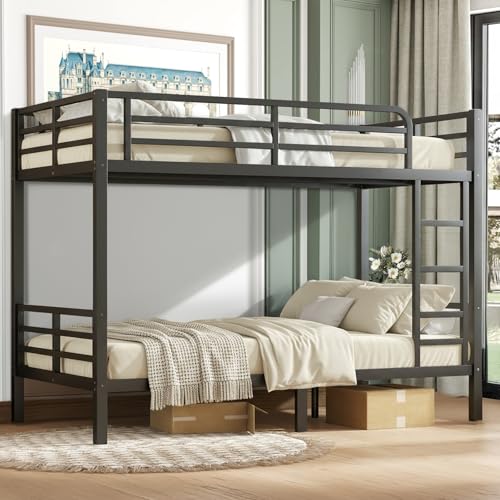
Twin XL Bunk Beds for Adults: The Complete Buying Guide
Everything you need to choose a safe, durable, and comfortable twin XL bunk bed for adults — sizing, frame construction, weight capacity, layout planning, and setup tips for guest rooms, dorms, cabins, and compact apartments.
Quick Answer: Are Twin XL Bunk Beds Suitable for Adults?
Yes. Twin XL bunk beds are purpose-built for adult sleepers, offering a 38-inch by 80-inch sleeping surface — five inches longer than a standard twin. What separates an adult-rated bunk bed from a youth model is not the mattress size alone, but the frame engineering: reinforced corner joints, high-grade steel or solid hardwood construction, a higher per-bunk weight rating, and full-length guardrails on the upper level. When shopping, prioritize frames explicitly rated for adult use and check that both the upper and lower bunks meet the weight capacity you need.
Why Twin XL Is the Right Size for Adult Bunk Beds
Standard twin bunk beds are designed around children and teens, and that shows the moment an adult tries to sleep on one. A standard twin mattress measures 38 inches wide by 75 inches long. A twin XL keeps the same 38-inch width but extends the length to 80 inches — matching the length of a queen or king mattress. For anyone taller than about 5 feet 9 inches, those extra five inches make the difference between sleeping comfortably and hanging off the end of the bed.
Because twin XL is the standard mattress size used in college dormitories across the United States, it has become the default specification for adult bunk beds, guest room bunks, cabin bunks, and vacation rental setups. That standardization is a practical advantage: replacement mattresses, sheet sets, and mattress protectors in twin XL are widely available and easy to source.
If you are still comparing sizes, our guides to twin XL beds and twin XL beds for adults break down dimensions and mattress compatibility in more detail. If you are considering a smaller footprint option instead, twin beds for adults covers the trade-offs of the shorter twin length.
What Makes a Bunk Bed “Adult-Rated”?
The label on the box matters less than the engineering inside the frame. Youth bunk beds are typically built with thinner metal tubing, lighter slats, and a per-bunk weight rating that reflects children's weights. Adult-rated twin XL bunk beds are engineered differently across several key areas:
- Frame material and gauge: Heavy-duty steel frames use thicker tubing and reinforced corner brackets. Solid wood frames use hardwood such as pine, oak, or rubberwood rather than composite panels.
- Weight capacity: Each bunk should carry a weight rating appropriate for adults — often substantially higher than youth models. Always verify the per-bunk rating, not just a combined total.
- Joint construction: Look for bolted or welded joints, corner braces, and mortise-and-tenon joinery on wooden frames. These resist the side-to-side sway that lighter joints develop over time.
- Guardrails: The upper bunk should have full-length guardrails on both sides, with no more than a small gap between the rail and the mattress.
- Slat support: Closely spaced, thick slats prevent mattress sagging and distribute weight evenly across the frame.
- Ladder integration: An adult-rated ladder should be wide, flat-stepped, and securely hooked or bolted to the frame — not a thin rung ladder resting loosely on the rail.
The quality tier system below is a useful shorthand. Entry-level frames suit light, occasional use. Mid-range frames are the sweet spot for most households. Premium and top-tier frames target daily adult use, heavier sleepers, and multi-user environments.
| Tier |
Best For |
Typical Construction |
What to Expect |
| Entry-Level |
Occasional guest use, light sleepers |
Steel tube frame, bolted joints, basic slats |
Essential tier construction; adequate for infrequent use but less resistant to sway over time |
| Mid-Range |
Everyday guest rooms, vacation rentals |
Thicker steel or solid wood, corner braces, reinforced slats |
Balanced tier with better stability and a more refined finish; solid choice for the category |
| Premium |
Daily adult use, heavier sleepers |
High-grade steel or hardwood, welded or mortise-and-tenon joints |
Heavy-duty build with minimal flex; well-specified for long-term daily use |
| Top-Tier |
Commercial use, multi-user households, cabins |
Commercial-grade steel, reinforced cross-bracing, integrated storage or stairs |
Flagship tier engineered for durability under frequent, repeated use |
Twin XL Bunk Bed Frame Types for Adults
The frame style you choose affects stability, assembly complexity, ceiling clearance needs, and how the bed fits into your room layout. Here are the main configurations to consider.
Twin XL over Twin XL Bunk Beds
The classic configuration: two twin XL sleeping surfaces stacked vertically. This is the most space-efficient option for a guest room or a shared bedroom, and it works well when ceiling height allows comfortable headroom on the top bunk. Many models in this category can be separated into two freestanding beds later — a useful flexibility feature. For detachable designs, see twin over twin bunk beds that can be separated, and for the XL version specifically, twin XL bunk beds gives a broader overview of the category.
Twin XL Bunk Beds with Stairs
Stairs are a meaningful upgrade for adults. A staircase with flat treads is far easier and safer to climb than a vertical ladder, especially at night or for anyone with knee or balance concerns. Staircase models often integrate drawers into the steps, adding storage without extra floor space. Explore twin XL bunk beds with stairs if this is a priority.
Twin XL Bunk Beds with Storage
Storage-integrated frames — with under-bed drawers, shelving, or trundle space — are ideal for small apartments and guest rooms where every square foot counts. These models are typically heavier and require more assembly, but they eliminate the need for a separate dresser. See twin XL bunk beds with storage for configurations that combine sleeping space with built-in organization.
Twin XL over Full and Twin over Full Configurations
If you want a wider sleeping surface on the lower bunk, twin XL over full and twin over full bunk beds are worth considering. These are popular in guest rooms and vacation rentals because the lower bunk accommodates couples or adults who prefer extra width. Our guides to twin over full size bunk beds and twin over full bunk beds with slide cover the layout and clearance implications.
Twin XL Bunk Beds with Trundle
A trundle adds a third sleeping surface that rolls out when needed and tucks away when not. This is a strong option for guest rooms that occasionally host three people. For related configurations, see twin size bunk beds with trundle and twin bunk beds with trundle and storage.
Choosing the Right Mattress for a Twin XL Bunk Bed
The mattress is not an afterthought on a bunk bed — it affects both comfort and safety. Two rules matter most:
- Mattress thickness must match the guardrail height. On the upper bunk, the mattress should sit low enough that the guardrail remains meaningfully above the mattress surface. A thick mattress can defeat the purpose of the rail. Check the manufacturer's maximum recommended mattress thickness for the upper bunk.
- Use a twin XL mattress, not a standard twin. A standard twin will leave a gap at the foot of the frame, and on some models that gap can create a safety hazard or cause the mattress to shift.
For the lower bunk, thickness is less critical, but a supportive medium-firm mattress generally works well for adults. If you plan to use an adjustable base on a freestanding twin XL bed, our guide to twin XL sheet sets for adjustable beds explains how bedding fit changes with articulation.
Bedding is easier than it looks: twin XL sheets, comforters, and bedspreads are widely stocked. Our pages on twin XL bedspread sets, twin XL bedspread size, and twin XL bedspreads and quilts cover sizing and styling options. For bunk-specific bedding that fits neatly around rails, see twin comforters for bunk beds.
Safety, Clearance, and Room Planning
Before ordering, measure your room carefully. Bunk beds are tall, and ceiling height is the most commonly overlooked constraint. As a general planning guideline, allow comfortable seated headroom on the top bunk — enough that an adult can sit up without contacting the ceiling or a ceiling fan. Measure from the top of the upper mattress to the ceiling, not from the floor.
Pre-Purchase Measurement Checklist
- Ceiling height from floor to ceiling, and any ceiling fixtures or fans in the bed's footprint
- Room length and width, plus door swing and closet clearance
- Frame footprint dimensions — assembled bunk beds are wider and deeper than the mattress alone
- Upper-bunk guardrail height relative to your planned mattress thickness
- Ladder or stair placement and the floor space needed to climb safely
- Weight capacity per bunk, compared with the heaviest intended sleeper
- Whether the frame can be separated into two freestanding beds if your needs change
Additional safety practices for adult bunk beds:
- Assemble strictly according to the manufacturer's instructions, and re-tighten bolts after the first few weeks of use and periodically thereafter.
- Place the bunk bed against a wall where possible, and avoid positioning the ladder side where it blocks a doorway or walkway.
- Do not exceed the stated weight capacity on either bunk.
- Use a nightlight near the ladder or stairs to reduce the risk of missteps during the night.
- Keep the upper bunk free of heavy items stored on the rail or headboard.
If your space is tighter than a full bunk bed allows, our guide to twin bunk beds for small rooms and the broader list of unique bunk beds for small rooms may offer a better-fitting alternative.
Alternatives Worth Considering
Twin XL bunk beds are not the only way to add adult sleeping capacity in a compact space. Depending on your room and how often the beds will be used, these alternatives may fit better:
Final Buying Tips
When you are ready to choose a specific model, work through these priorities in order:
- Verify adult weight ratings for both bunks. A frame marketed as “adult-friendly” should state per-bunk capacity clearly. If the specification is vague, treat it with caution.
- Prefer bolted or welded joints over press-fit connections. Adult use puts far more stress on joints than children's use, and reinforced joints are what keep a bunk bed stable over years.
- Choose stairs over a ladder if anyone in the household has mobility concerns. The difference in daily usability is substantial.
- Confirm mattress thickness limits for the upper bunk before buying a mattress, and buy a twin XL — not a standard twin.
- Check assembly requirements. Solid wood and storage-integrated frames take longer to assemble; some models benefit from two people.
- Think about reversibility. Models that can be separated into two freestanding beds or assembled with the ladder on either side give you more flexibility as your room layout changes.
For a wider view of the category, browse twin XL bunk beds and the related twin size bunk beds collection. If you are furnishing a guest room from scratch, pair your bunk with compatible bedding from our twin XL sheet sets guide and consider under-bed organization from under bed storage.
Frequently Asked Questions
Are twin XL bunk beds comfortable for adults?
Yes, provided the frame is adult-rated and the mattress is supportive. The twin XL sleeping surface is 80 inches long — the same length as a queen mattress — so adults up to around 6 feet 4 inches can typically sleep without their feet hanging off. Comfort then depends on mattress quality and frame stability: a sturdy frame with closely spaced slats and a quality twin XL mattress delivers a comfortable night's sleep.
What is the weight capacity of a twin XL bunk bed for adults?
Capacity varies by model and tier. Entry-level frames typically carry lighter per-bunk ratings, while mid-range, premium, and commercial-grade frames are engineered for heavier adult use. Always check the manufacturer's stated per-bunk weight capacity rather than assuming a combined figure applies to each level, and never exceed the stated limit on either bunk.
Can two adults sleep on a twin XL bunk bed?
Yes — one adult per bunk. Twin XL bunk beds are designed for two separate sleepers, one on the upper level and one on the lower. Each sleeping surface is 38 inches wide, which is comfortable for a single adult but not intended for two people sharing one bunk.
How much ceiling height do I need for a twin XL bunk bed?
There is no single number, because frame heights vary. Measure the assembled height of the specific model, then add your mattress thickness and allow comfortable seated headroom on the top bunk. Also account for ceiling fans and light fixtures in the bed's footprint. If seated headroom on the top bunk would be tight, consider a low-profile bunk or a twin XL over full configuration instead.
Can a twin XL bunk bed be separated into two beds?
Many models can. Detachable designs allow the upper bunk to be removed so the frame functions as two freestanding twin XL beds. This is a useful feature if your needs may change — for example, if a guest room later becomes a shared bedroom. Check the product specification for “separates into two beds” or “detachable” before purchasing.
What mattress thickness works best on the upper bunk?
Follow the manufacturer's maximum recommended mattress thickness for the upper bunk. The goal is to keep the guardrail meaningfully above the mattress surface so it functions as intended. A thinner, firmer mattress generally works better on the top bunk than a deep pillow-top. Never use a standard twin mattress in a twin XL frame — the length mismatch creates a gap at the foot.
Ready to Compare Twin XL Bunk Beds for Adults?
Use the curated product picks below to compare frame types, construction tiers, and configurations — then check availability and read full specifications before you decide.