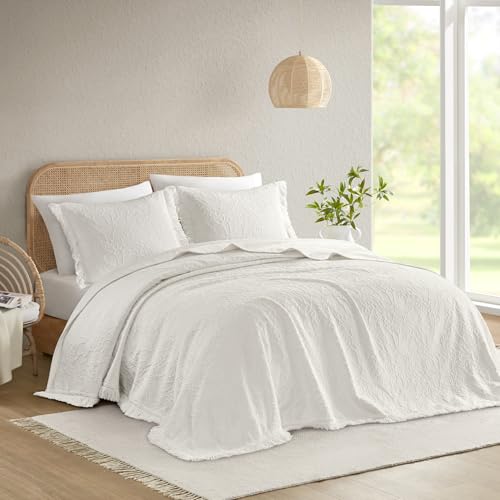
White Chenille Bedspread King: A Complete Buying & Styling Guide
A white chenille bedspread in king size is one of those rare bedroom pieces that delivers on both texture and atmosphere. The raised tufted surface catches light softly, adds quiet depth to a large bed, and turns an ordinary king frame into a focal point. If you are researching this category before you commit, this guide walks through what chenille actually is, how to judge quality across product tiers, how a king-size spread should fit, and how to care for it so the texture stays beautiful for years.
What Makes Chenille Different From Other Bedspreads
Chenille is a yarn with a soft, fuzzy pile running along its core, and when it is woven or tufted into a bedspread, it produces the characteristic raised, velvety pattern that defines the look. Unlike a flat cotton quilt or a smooth sateen coverlet, chenille has physical dimension. That texture is the main reason people seek it out: it reads as cozy without needing a heavy comforter, and it works especially well on a king bed where a large flat surface can otherwise look empty.
A white chenille bedspread is also unusually versatile. White reflects light and makes a room feel larger and calmer, while the chenille pattern keeps the surface from looking sterile. That combination is why the style has remained popular across farmhouse, cottage, traditional, and even modern minimalist bedrooms. If you want to see how white spreads compare in other weaves, our guide to a white bedspread covers the broader category, and the white quilted bedspread king size page is useful if you prefer a flatter, stitched surface.
Why King Size Changes the Buying Decision
A king bed is wide, and a spread that looks generous on a queen can look undersized on a king. The key measurements to check are the drop on the sides and the length at the foot. A well-proportioned king spread should drape far enough to cover the mattress and box spring or platform base, with enough overhang to look intentional rather than stretched. Because chenille has weight and body, it tends to hang cleanly, but a spread cut too small will pull at the corners and lose the relaxed drape that makes the style appealing.
King beds also amplify pattern. A tufted chenille design that looks subtle on a twin can become a strong visual statement across a king surface. If you want a quieter look, choose a spread with a small repeating motif or a tone-on-tone pattern rather than a large bold design. Pairing the spread with a simple bed frame helps too; a white bedstead or a white platform bed keeps the palette cohesive, while a wooden bed king size frame adds warm contrast against the white chenille.
Judging Quality Across Product Tiers
Chenille bedspreads sit across a wide quality spectrum, and the differences show up in yarn density, tufting consistency, backing fabric, and finishing. Rather than thinking in terms of numbers, it helps to think in tiers. The table below summarizes what you can generally expect at each level.
| Tier | Yarn & Texture | Backing & Finish | Best For |
|---|---|---|---|
| Entry-level | Lighter pile, simpler tufting, more visible weave | Basic backing, straightforward hem | Guest rooms, seasonal styling, first chenille purchase |
| Mid-range | Denser pile, consistent tufting, clearer pattern definition | Reinforced backing, clean bound edges | Primary bedrooms used daily |
| Premium | Plush high-density chenille, refined motif, soft hand feel | Durable backing, precise finishing, better shape retention | Rooms where texture is a design feature |
| Luxury | Heirloom-quality tufting, deep pile, artisan detailing | Premium backing and edge construction | Long-term investment pieces and styled interiors |
In practice, mid-range and premium spreads tend to offer the most balanced experience for a primary bedroom: the tufting holds its shape through repeated use, and the white stays crisp because the yarn is dense enough to resist flattening. Entry-level options are perfectly reasonable for occasional use or for testing whether the chenille look suits your room. Higher tiers make sense when the spread is the centerpiece of the design.
Matching the Bedspread to Your Bedroom
White chenille is a neutral, but neutrals still have temperature. A bright optic white reads crisp and modern, while a soft off-white or cream reads warmer and more traditional. Decide which direction suits your room before you shop, because mixing the two across bedding and curtains can make one look dingy next to the other.
Bedside furniture is the easiest place to build a cohesive look. A white bedside table with drawers continues the clean palette, while a walnut bedside cabinet introduces a natural wood tone that keeps the white from feeling flat. If you prefer a softer, layered look, a white shabby chic bedside cabinet pairs naturally with chenille texture. For a more tailored finish, consider a white mid-century bedside table or a white high-gloss bedside table.
Window treatments and wall decor complete the picture. Sheer or light-filtering curtains keep the room airy, and a simple wall shelf gives you a place for small decor without crowding the bed. If your bed frame has a headboard, a wall-mounted headboard for king size beds can anchor the spread visually and add height to the room.
Care and Longevity: Keeping White Chenille Beautiful
Chenille rewards gentle care. The raised pile is what gives the spread its character, and harsh washing or high heat can flatten it permanently. A few habits make a large difference:
- Wash on a gentle cycle with a mild detergent and avoid chlorine bleach, which can yellow white fibers over time.
- Use a front-loading machine or a commercial-size machine for a king spread so it has room to move; overcrowding causes abrasion against the drum.
- Tumble dry on low or air-dry flat. High heat is the fastest way to crush the tufted texture.
- Rotate the spread periodically so sun exposure and wear are distributed evenly across the surface.
- Store folded in a breathable cotton bag rather than a sealed plastic bin, which can trap moisture and cause discoloration.
If the spread is used daily, a lightweight top layer or a washable king size bedspread as a rotating option can extend the life of the chenille piece by reducing how often it needs a full wash. For seasonal styling, a white king size quilted bedspread layered underneath adds warmth in cooler months without hiding the chenille texture on top.
What to Check Before You Commit
Before finalizing a purchase, verify four things: the exact dimensions including drop, the fiber content and backing material, the return policy, and the care instructions. Chenille can be made from cotton, cotton blends, or synthetic yarns, and each behaves differently in the wash. Cotton chenille tends to feel more breathable and develops a softer hand over time, while blends may hold shape more firmly. Neither is inherently better; the right choice depends on how you sleep and how much maintenance you want.
Also consider the room's overall sleep environment. A textured spread adds visual warmth, but temperature regulation still comes from your mattress and bedding layers. If you are evaluating your broader setup, our guide on when to replace a mattress is a useful companion read, and the white bedspread twin XL page helps if you are coordinating a matching look across multiple bed sizes.
Frequently Asked Questions
Is a white chenille bedspread suitable for daily use?
Yes, provided you choose a mid-range or premium tier with dense tufting and a durable backing. Daily use mainly affects how often the spread needs washing, so a spread with reinforced construction and clear care instructions will hold up better over time.
How do I stop a king chenille spread from looking flat?
Flattening usually comes from heat and compression. Wash gently, dry on low or air-dry, and avoid storing the spread under heavy items. Rotating the spread and occasionally shaking it out helps the pile recover its loft.
Can chenille be layered with other bedding?
Absolutely. Chenille works well as a top layer over a quilt or blanket, and it pairs naturally with cotton sheets and a simple duvet. Keep the layers lightweight so the texture of the chenille remains the visual focus.
Does white chenille show stains easily?
White bedding shows marks more readily than dark colors, but chenille's textured surface hides minor imperfections better than a flat sateen. Treat spills promptly with a mild detergent and cold water, and avoid scrubbing the pile aggressively.
Ready to Explore Your Options?
A white chenille bedspread king size is a long-term decision, so take the time to compare texture, tier, and fit against your room. The recommendations below are a practical starting point for your research.