Wooden Beds King Size: The Complete Buyer's Guide
Everything you need to know before choosing a king size wooden bed — frame construction, wood types, support systems, sizing, and styling for your master bedroom.
Why a king size wooden bed is a smart long-term choice: A king size wooden bed is more than a furniture purchase — it is the anchor of your bedroom and a nightly investment in rest. Wooden frames offer natural warmth, structural rigidity, and timeless style that suits both contemporary and classic interiors. This guide walks you through every decision point so you can buy with confidence.
Why Choose a Wooden King Size Bed?
A king size bed delivers 76 inches of width and 80 inches of length — enough space for couples who value personal sleeping room or for solo sleepers who simply want to spread out. When that generous platform is built from wood, you gain several advantages over metal or upholstered alternatives:
- Natural durability: Solid hardwood frames can last decades with proper care, making them a genuine long-term investment.
- Warm aesthetic: Wood grain brings organic texture and a calming presence that pairs well with almost any decor style.
- Quiet performance: A well-joined wooden frame with reinforced center rails minimizes squeaks and motion transfer.
- Repairability: Scratches can often be sanded and refinished, extending the life of the piece.
- Versatility: From minimalist platform styles to ornate sleigh designs, wooden frames span every design language.
If you are still deciding between frame materials, our broader wooden bed frames guide compares wood against metal and upholstered options in detail.
King Size Dimensions and Room Planning
Before you fall in love with a frame, confirm your room can accommodate it. A king size mattress is 76" × 80", but the frame footprint is larger. Here is what to plan for:
| Element | Typical Dimension | What It Means for Your Room |
|---|---|---|
| King mattress | 76" W × 80" L | The sleep surface you are buying for |
| Wooden frame footprint | 80–84" W × 84–88" L | Adds 2–4 inches per side for rails and headboard depth |
| Recommended walking clearance | 24–30" on at least two sides | Ensures comfortable movement and easy bed-making |
| Minimum room size | 12' × 12' or larger | Smaller rooms may feel cramped with a king bed |
| Headboard height (typical) | 40–60" from floor | Taller headboards create a focal point but need wall clearance |
Measure your room and doorways before ordering. A king size wooden bed delivered in one piece may not fit through narrow hallways or stairwells — confirm whether the frame ships flat-packed or assembled.
Wood Types: Which Is Right for You?
The wood species affects durability, weight, grain character, and how the frame ages. Here is a practical comparison across the market tiers:
| Wood Type | Market Tier | Key Characteristics | Best For |
|---|---|---|---|
| Pine | Entry-level | Lightweight, soft grain, takes paint well | Guest rooms, casual styles, painted finishes |
| Rubberwood | Entry-level to mid-range | Uniform grain, good density, widely used in solid-wood furniture | Value-focused buyers wanting solid wood |
| Oak | Premium | Hard, heavy, prominent grain, excellent longevity | Long-term master bedroom investment |
| Walnut | Premium to luxury | Rich dark tones, fine grain, naturally stable | Elegant, sophisticated interiors |
| Maple | Premium | Hard, fine grain, light color, very durable | Modern and Scandinavian-inspired rooms |
| Mahogany / Teak | Luxury | Dense, weather-resistant, heirloom quality | Traditional and luxury bedroom settings |
| Engineered wood (MDF with veneer) | Mid-range | Stable, uniform, less prone to warping | Humid climates, contemporary flat-pack designs |
Solid Wood vs. Engineered Wood
Solid wood offers superior repairability and natural character but is heavier and moves slightly with humidity. Engineered wood is more dimensionally stable and often sits in the mid-range tier. For a king size bed — which bears significant weight — prioritize a frame with reinforced corner joints, a center support rail, and at least four to six support legs regardless of material.
Frame Styles for King Size Wooden Beds
Style is personal, but each frame type carries practical implications for room layout and mattress support:
Platform Wooden Beds
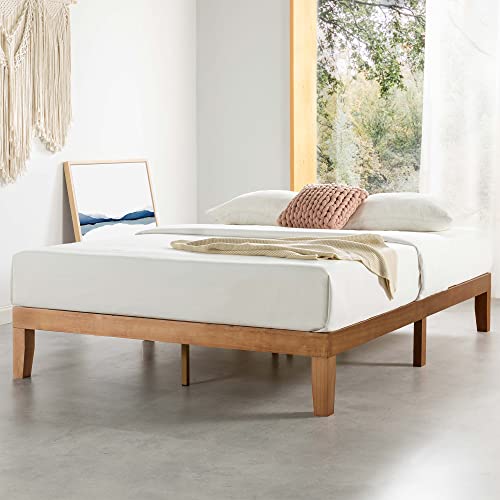
A platform bed uses a slatted or solid base to support the mattress directly — no box spring required. This is the most popular modern configuration because it is low-profile, sturdy, and compatible with foam, hybrid, and latex mattresses. If you want a clean, minimalist look, this is your best starting point.
Panel and Sleigh Beds
Panel beds feature a flat or gently curved headboard, while sleigh beds add a dramatic scrolled footboard. Both bring traditional elegance, but sleigh beds extend further into the room — confirm your walking clearance before choosing one in a king size.
Canopy and Four-Poster Beds
Canopy frames create a striking focal point and can support curtains for privacy and light control. They suit larger rooms with higher ceilings. For a coordinated look, pair a wooden canopy with a white canopy bed in a guest room or explore king-specific canopy options if your master suite has the ceiling height.
Storage and Hydraulic-Lift Beds
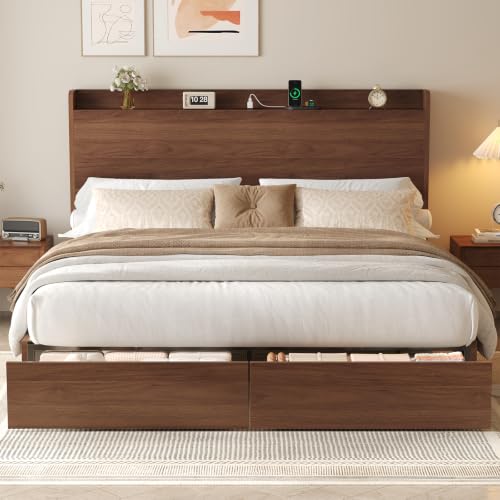
If floor space is limited, a wooden king bed with under-bed storage or a hydraulic lift mechanism maximizes utility without sacrificing style. These frames are typically heavier and sit in the mid-range to premium tiers due to the added hardware.
Upholstered-Wood Hybrids
Many premium frames combine a solid wood structure with an upholstered headboard for comfort and acoustic softness. Our guide to wood and upholstered king beds explores this hybrid category in depth.
Support System and Mattress Compatibility
The support system is where many buyers make costly mistakes. A king size mattress is heavy — especially hybrid and latex models — so the base must distribute weight evenly:
- Slatted bases: Look for slats no more than 3 inches apart for foam and hybrid mattresses. Wider gaps can cause sagging over time.
- Center support rail: A king bed should always have a center rail with at least two additional support legs. This prevents the middle of the mattress from dipping.
- Box spring compatibility: Some traditional wooden frames are designed for a box spring. Confirm before buying — using a box spring on a slatted platform can void mattress warranties.
- Adjustable base compatibility: If you plan to use an adjustable base, check whether the wooden frame has a removable or open-slatted design. Our guide to wooden bed frames for adjustable beds covers this in detail.
Not sure whether your current mattress is still viable? Read our guide on when to replace your mattress before pairing it with a new frame.
Construction Quality Checklist
When evaluating a king size wooden bed, inspect these construction details — they separate a durable frame from a short-lived one:
- Joinery: Mortise-and-tenon or dovetail joints outperform stapled or screwed butt joints. Look for reinforced corner blocks.
- Center rail: A solid center rail running head-to-foot is non-negotiable for king size.
- Support legs: At least four to six legs touching the floor, including two under the center rail.
- Slat thickness: Thicker, closely spaced slats resist bowing under a heavy mattress.
- Finish: A sealed, low-VOC finish protects against moisture and stains. Check for certifications if you have chemical sensitivities.
- Hardware: Heavy-duty bolts and brackets — not thin screws — should secure the side rails to the headboard and footboard.
Weight Rating Matters
A quality solid wood king size frame with a center rail and multiple support legs typically handles 500–800 lbs or more. Entry-level frames may have lower ratings. Always check the manufacturer's stated weight capacity and mattress thickness recommendations.
Styling Your King Size Wooden Bed
A king bed dominates the bedroom visually, so the surrounding pieces should balance rather than compete. Consider these pairings:
- Bedside tables: A king bed is wide, so you need generous nightstands. Browse walnut bedside tables with drawers for warm, matching tones, or a white bedside table with storage for a lighter contrast.
- Bedding: A king needs king-size bedding. Our guides to white cotton king size bedspreads and washable king size bedspreads cover fabric and care considerations.
- Bed skirts and skirting: A tailored king size bedskirt hides under-bed storage and finishes the look.
- Headboards: If your frame lacks a headboard, a wall-mounted headboard for king size beds adds a polished focal point without requiring a new frame.
Common Mistakes to Avoid
- Ignoring the room footprint: A king bed plus nightstands needs roughly 12 feet of wall width to feel balanced.
- Skipping the center support: Without it, the mattress sags in the middle within months.
- Mismatching mattress and base: A foam mattress on wide slats will degrade faster than one on a proper platform.
- Overlooking delivery logistics: King frames are large and heavy — confirm assembly and delivery options.
- Choosing style over stability: A dramatic sleigh or canopy frame is wonderful, but structural rigidity always comes first.
Frequently Asked Questions
What are the standard dimensions of a king size wooden bed?
A standard king size mattress measures 76 inches wide by 80 inches long. A wooden bed frame adds several inches on each side for the frame and headboard, so plan for a footprint of approximately 80 to 84 inches wide and 84 to 88 inches long.
Is solid wood better than engineered wood for a king size bed?
Solid wood offers superior durability, repairability, and natural grain character, making it a long-term investment. Engineered wood is more stable in humid conditions and typically sits in the mid-range tier, while solid hardwood represents the premium and luxury tiers.
Do wooden king size beds require a box spring?
Most modern wooden king size beds use a slatted base that supports a mattress directly without a box spring. However, some traditional models are designed for a box spring, so always confirm the support system before purchasing.
How much weight can a wooden king size bed frame support?
A well-constructed solid wood king size frame with reinforced center rails and multiple support legs can typically hold 500 to 800 pounds or more. Entry-level frames may support less, so check the manufacturer's weight rating.
How do I clean and maintain a wooden king size bed?
Dust weekly with a soft cloth, avoid harsh chemical cleaners, and wipe spills promptly. Keep the frame away from direct heat sources and use felt pads under decorative items to prevent scratches. Reapply a wood conditioner annually if the finish appears dry.
Ready to explore specific models? Our curated selection below highlights wooden king size beds across entry-level, mid-range, and premium tiers to match your needs and bedroom style.