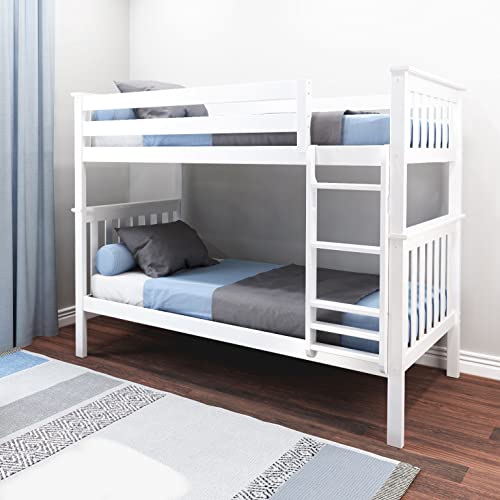
Bunk Beds That Separate Into Twin Beds
One frame today, two independent beds tomorrow. Learn how convertible bunk beds work, what to check before buying, and how to pick the right design for growing families, guest rooms, and flexible spaces.
Start the Buying GuideWhy convertible bunk beds matter: A bunk bed that separates into twin beds gives you two pieces of furniture in one. It suits siblings sharing a room, a guest room that occasionally hosts two people, or a teenager who wants a more independent setup later. The key is understanding the conversion mechanism, the frame materials, and the safety details before you commit.
What Are Bunk Beds That Separate Into Twin Beds?
Bunk beds that separate into twin beds are modular sleep systems built so the upper and lower units can be detached and used independently. Instead of a permanently stacked frame, these models use a shared structure—or two compatible frames—that lock together for bunk configuration and unlock for separate placement. The result is a single purchase that adapts to changing room layouts, family needs, and guest arrangements.
This category is sometimes described as convertible bunk beds, separable bunk beds, or split bunk beds. The terminology varies, but the defining feature is the same: the frame is designed for two modes, stacked and side-by-side. That flexibility is especially useful in homes where a dedicated children's room may later become a guest room or a study.
It helps to think of these beds as a spectrum. Some designs are true modular systems with reinforced locking joints and independently rated frames. Others are simpler two-frame setups that stack with alignment pins and a ladder. The quality of the conversion hardware is the single biggest differentiator between an entry-level model and a premium one. If you are also weighing bunk configurations in general, our guide to bunk beds twin over twin covers the classic stacked format in more detail.
How the Conversion Mechanism Works
Understanding the mechanism before you shop will save you from surprises during assembly. Most separable bunk beds fall into one of three conversion styles.
1. Interlocking Post-and-Bracket System
The upper frame rests on reinforced corner brackets attached to the lower frame's posts. Heavy-duty bolts or locking pins secure the connection. To separate, you remove the ladder, detach the guardrails, unbolt the upper unit, and lift it down with a second person. This is the most common design in mid-range and premium models because it balances stability with straightforward conversion.
2. Modular Two-Frame Stack
Two complete, independently rated twin bed frames are stacked with alignment pins or a stacking kit. Each frame has its own legs and weight capacity. Separation is often as simple as lifting the top frame off the bottom one. These models tend to be heavier and more expensive to produce, but they offer the cleanest conversion because neither frame depends on the other for structural support.
3. Sliding or Side-by-Side Rail System
A less common design uses a shared base with rails that allow the upper unit to slide or be repositioned. These are convenient in tight spaces but require careful inspection of the locking hardware. If the rail system is not reinforced, the bunk configuration may feel less rigid than a fixed frame.
Benefits of a Separable Bunk Bed
The appeal goes beyond saving floor space. A bunk bed that separates into twin beds solves several practical problems at once.
- Long-term adaptability: Young children often share a room, but teenagers usually want their own space. A separable frame lets you transition without buying new furniture.
- Guest room flexibility: Keep the bunk configuration for sleepovers, then split the beds when adult guests prefer separate sleeping arrangements.
- Moving and rearranging: Two smaller frames are easier to move through narrow hallways and stairwells than one large stacked unit.
- Repair and replacement: If one frame is damaged, a modular system lets you replace or repair a single unit rather than the whole bed.
- Resale and reuse: Separable beds hold their usefulness across more room types, which makes them a practical long-term investment for families.
There is also a design benefit. When separated, each twin bed can be styled independently—different bedding, different wall placement, different bedside storage. If you are planning the surrounding room, our guide to small bedroom decor offers layout ideas that work well with twin bed pairs.
Frame Types Compared
The frame material affects weight, stability, conversion ease, and how the bed looks in a room. Use the table below as a quick reference, then read the notes that follow.
| Frame Type | Tier | Best For | Conversion Feel |
|---|---|---|---|
| Powder-coated steel | Entry-level to mid-range | Kids' rooms, frequent reconfiguration | Lightweight, tool-assisted |
| Solid wood (pine, rubberwood) | Mid-range | Traditional and transitional decors | Moderate weight, bolt-based |
| Hardwood (oak, maple) | Premium to luxury | Long-term family use, adult rooms | Heavy, very stable when locked |
| Engineered wood with steel reinforcement | Mid-tier to high-end tier | Modern finishes, apartment living | Balanced weight, bracket-based |
| Upholstered modular frames | Premium | Guest rooms, teen bedrooms | Heavier, careful alignment needed |
Steel Frames
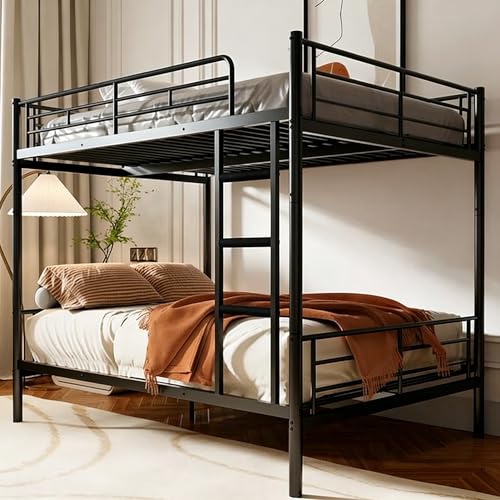
Steel is the most common choice for entry-level and mid-range separable bunk beds. High-grade steel with a rust-proof finish keeps weight manageable while providing predictable strength. Check the rated weight capacity per bunk and confirm that the conversion hardware is bolted, not just slotted. Lightweight steel frames can flex slightly in bunk mode, so look for cross-bracing or a reinforced center support.
Wood Frames
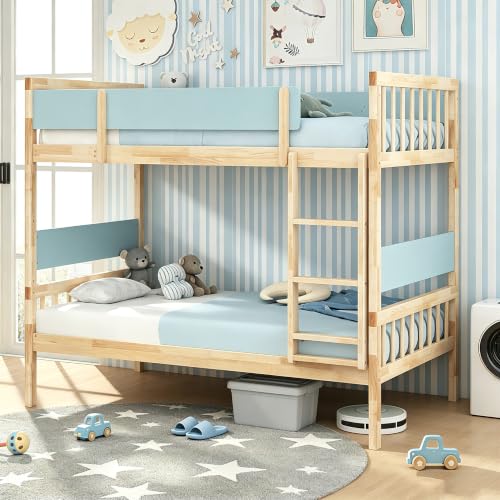
Solid wood frames feel warmer and suit traditional interiors. Pine and rubberwood are common in mid-range models; oak and maple appear in premium builds. Wood expands and contracts with humidity, so inspect the joints after the first season of use and re-tighten bolts as needed. A hardwood frame is a long-term investment that can handle repeated conversions better than softer woods.
Upholstered and Mixed-Material Frames
Upholstered modular frames offer a softer look for guest rooms and teen spaces. They tend to be heavier, which is an advantage for stability but a drawback during conversion. Engineered wood with steel reinforcement is a middle path: modern finishes with predictable structural behavior. Whichever material you choose, verify that the manufacturer explicitly rates the frame for both bunk and separated use.
Buying Checklist: What to Verify
Before you add a separable bunk bed to your cart, run through this checklist. It focuses on the details that separate a reliable convertible frame from one that disappoints after a few months.
Conversion Hardware
- Are the locking joints bolted or pinned? Bolted connections are generally more secure for repeated conversions.
- Does the manufacturer include a hardware bag with labeled parts and a torque guide?
- Is the ladder detachable and repositionable for both configurations?
- Are the guardrails removable without damaging the frame finish?
Structural Ratings
- Check the weight capacity for the top bunk, the bottom bunk, and each separated twin bed.
- Look for cross-bracing or center support rails on steel frames.
- Confirm that the frame is rated for adult use if teenagers or adults will sleep on it.
Dimensions and Clearance
- Measure ceiling height against the assembled bunk height, including the top mattress and guardrail.
- Confirm the footprint of each separated twin bed fits your intended room layout.
- Check the ladder's angle and whether it obstructs walking space.
Finish and Maintenance
- Powder-coated steel should have a rust-proof finish at weld points and joints.
- Wood frames should have sealed surfaces to resist humidity changes.
- Ask whether replacement hardware is available if a bolt or bracket is lost during a move.
Choosing the Right Mattress
Mattress fit matters more on a convertible bunk bed than on a standard frame. The top bunk's guardrail height is calculated around a specific mattress thickness range, and an oversized mattress can reduce the effective safety barrier. Most manufacturers recommend mattresses between 6 and 10 inches thick for the top bunk.
For separated twin beds, standard twin mattresses work, but check the frame's inner dimensions. Some modular designs use slightly different tolerances than a conventional twin frame. A mattress that is too loose can shift during sleep; one that is too tight can strain the frame when you change sheets.
Firmness is a personal choice, but consider the sleepers. Children generally do well on a medium-firm mattress that supports growth and movement. Adults using the separated beds may prefer a firmer surface for back support. If the bed will serve both children and adults over time, a medium-firm mattress is a balanced compromise. For more on when a mattress needs replacing, see our guide on when to replace mattress.
Finally, pair the mattress with a fitted sheet sized correctly for a twin. Loose bedding on a top bunk is a tripping hazard during the night. A snug fit also protects the mattress surface and keeps the sleep environment tidy.
Safety and Assembly Essentials
Safety on a separable bunk bed comes down to assembly discipline and regular checks. Follow these practices.
During Assembly
- Assemble on a clear, level floor with two adults. Do not attempt conversion alone.
- Follow the manufacturer's torque recommendations. Over-tightening can strip bolts; under-tightening leaves joints loose.
- Attach the guardrail on all open sides of the top bunk. Never use the top bunk without it.
- Position the ladder securely and confirm it hooks or bolts into place.
After Conversion
- Re-check every bolt and bracket after the first week of use in the new configuration.
- Place separated twin beds away from windows, radiators, and hanging cords.
- Use a wall anchor kit if the manufacturer provides one, especially in homes with young children.
Ongoing Maintenance
- Inspect joints monthly for the first six months, then quarterly.
- Re-tighten hardware after moving the bed or converting it.
- Replace any bent bracket or stripped bolt immediately. Do not improvise with hardware from a different system.
If the bed is for young children, review age and weight guidance from the manufacturer and your local safety standards. A convertible frame is convenient, but the bunk configuration still requires the same supervision and guardrail discipline as a fixed bunk bed.
Best Scenarios for Each Design
Different conversion styles suit different households. Here is how to match the design to the situation.
Growing Siblings
A mid-range steel or solid wood model with bolted joints works well. Start in bunk mode while the children are young, then separate the beds when they want more privacy. Choose a frame with a rated weight capacity that accommodates teenagers so the bed remains useful for years.
Guest Rooms and Multipurpose Rooms
A modular two-frame stack is the cleanest choice. When guests arrive, the frames can be separated quickly; when the room is used as a study or playroom, the bunk configuration frees floor space. Upholstered or mixed-material frames suit guest room decor better than bare steel.
Small Apartments and Low Ceilings
Look for low-profile separable designs specifically rated for tighter vertical clearance. If ceiling height is limited, a separated twin bed configuration may be the better long-term layout. Our guide to bunk beds for low ceilings covers clearance measurements in more detail.
Adult and Teen Use
Separable bunk beds are not only for children. Heavy-duty steel or hardwood frames rated for adult weight can serve teenagers, college students, or adults in shared housing. Confirm the weight rating for each configuration and choose a frame with reinforced center support. If you need a larger shared-room setup, our guide to queen size bunk beds for adults explores heavier-duty options.
If you are still deciding between a separable model and a fixed bunk, compare the long-term plan for the room. A fixed bunk is simpler and often more rigid; a separable bunk is more adaptable. Neither is universally better—the right choice depends on how often the room's function is likely to change.
Ready to Compare Convertible Bunk Beds?
Browse recommended separable bunk bed options and check availability for your room size and sleeping needs.
View Recommended ModelsFrequently Asked Questions
How do bunk beds that separate into twin beds work?
These convertible designs use a shared or modular frame system where the top and bottom units can be unlocked and repositioned as two independent twin beds. Most models include reinforced corner brackets, detachable guardrails, and a reversible ladder that allow you to switch configurations without specialized tools.
Are separable bunk beds as sturdy as fixed bunk beds?
Yes, when properly assembled. Mid-range and premium separable bunk beds use high-grade steel or solid wood joinery with locking mechanisms that maintain structural integrity in both bunk and separated configurations. Entry-level models may flex more, so always check the rated weight capacity and assembly instructions.
What mattress thickness works best for convertible bunk beds?
Most manufacturers recommend mattresses between 6 and 10 inches thick. A mattress that is too thick can raise the sleep surface above the guardrail on the top bunk, which is a safety concern. Check the specific model's guidance before pairing mattresses.
Can bunk beds that separate into twin beds be used in low-ceiling rooms?
Some low-profile designs are built specifically for tighter vertical clearance. If ceiling height is a concern, look for models explicitly rated for low ceilings and confirm the assembled height, including the top mattress and guardrail, before purchasing.
Do I need two people to convert the bed?
Yes. Even lightweight frames become awkward once assembled, and lifting the upper unit safely requires a second person. Clear the floor area before starting and keep the original hardware labeled for future conversions.