Bunk Beds for Low Ceilings: Smart Space-Saving Sleep Solutions
Low ceiling? No problem. Explore low-profile bunk beds designed to maximize headroom, safety, and comfort in compact bedrooms, guest rooms, and shared spaces.
Explore Top PicksQuick Answer: The best bunk beds for low ceilings use low-profile frames, thinner mattresses, and smart ladder placement to keep the top bunk safely below ceiling level. Aim for at least 30–34 inches of clearance above the top mattress, choose adult-rated weight capacities, and favor twin-over-twin or staggered designs for maximum headroom.
Why Low Ceilings Change the Bunk Bed Equation
Bunk beds are a proven space-saver, but a standard bunk is often built for rooms with generous vertical space. In attics, basements, dormers, converted lofts, and older homes, ceiling heights can fall well below the typical eight-foot standard. In those rooms, a full-height bunk can turn the top berth into a cramped, unsafe sleeping spot — and a head-bumping hazard every morning.
Low-profile bunk beds solve this by reducing the distance between the floor and the top mattress. The goal is simple: preserve the space-saving benefit of two sleeping surfaces while keeping the top bunk occupant comfortably clear of the ceiling. That means understanding clearance rules, choosing the right frame height, and matching mattress thickness to the design.
If your room is tight in both height and floor area, pairing a low-profile bunk with smart storage and compact furnishings makes a real difference. Our guides on small bedroom decor and beds without headboards with storage are useful companions to this article.
How Much Clearance Do You Actually Need?
Clearance is the single most important measurement in a low-ceiling bunk bed decision. It determines whether the top bunk is safe, comfortable, and code-compliant. Here is the practical breakdown:
- Minimum clearance above the top mattress: 30 inches is the common safety floor, and many building codes cite this figure.
- Recommended clearance for comfort: 34 inches or more, so a sleeper can sit up without striking the ceiling.
- Between bunks: allow at least 30 inches from the lower mattress to the underside of the upper bunk for comfortable sitting.
- Guardrail height: the top guardrail should rise at least 5 inches above the mattress surface, and the mattress should sit at least 5 inches below the top of the guardrail.
Measure from the floor to the ceiling, then subtract the frame height, mattress thickness, and a safety buffer. If the math leaves you short, a lower frame or a thinner mattress is the fix — not a compromise on safety. For rooms where vertical space is generous but floor space is limited, a low-profile bunk bed for adults can still deliver a cleaner look without sacrificing comfort.
Types of Bunk Beds That Work Under Low Ceilings
1. Twin-Over-Twin Low-Profile Bunks
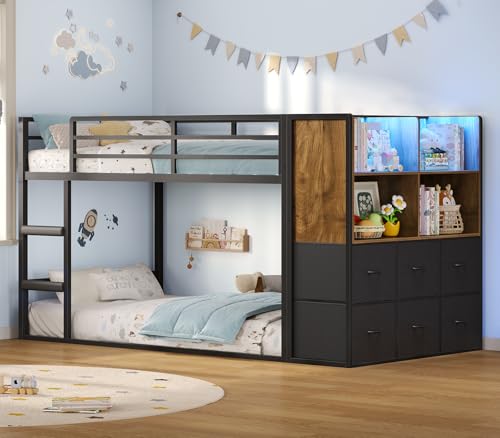
The classic space-saver, reworked with a shorter frame. Twin-over-twin configurations are the most common choice for low ceilings because both berths are the same size and the frame can be built closer to the floor. They suit kids' rooms, guest rooms, and shared bedrooms. Browse our twin size bunk beds collection for a full range of options.
2. Staggered and Stepped Bunks
Staggered designs offset the top bunk rather than stacking it directly overhead. This creates more visual and physical breathing room, and it often allows a lower overall frame height. If you want a look that feels less blocky in a compact room, this style is worth considering.
3. Low Loft Beds
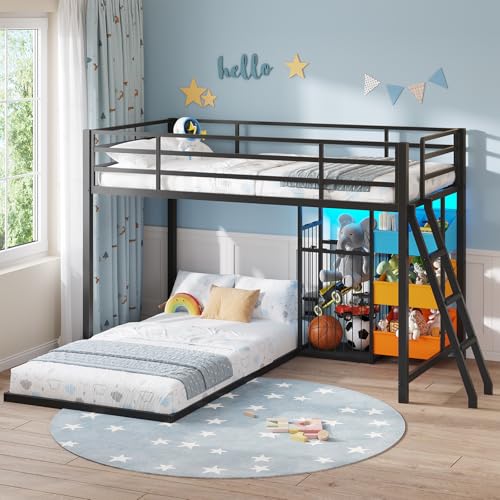
A loft bed with a shortened platform raises the sleeping surface just enough to fit storage or a small play area underneath, without the height of a full loft. They work well when the ceiling is low but the floor plan is also cramped. For adult-oriented options, see adult loft beds for adults.
4. Bunk Beds With Stairs Instead of Ladders
Stairs add safety and ease of access, especially for younger children and older adults. In low-ceiling rooms, a stair configuration can be built at a gentler angle that suits the shorter frame. Explore twin size bunk beds with stairs and white twin bunk beds with stairs for design inspiration.
5. Bunk Beds That Separate Into Twin Beds
If you are not sure how long you will need a bunk, a convertible design offers flexibility. The frame can be split into two freestanding beds later, which is helpful in growing households. See bunk beds that separate into twin beds.
Key Features to Look For
Low Frame Height
Prioritize frames designed with a reduced overall height so the top mattress stays well below the ceiling.
Solid Guardrails
Full-length guardrails on the top bunk are non-negotiable. Check that the rail sits well above the mattress.
Heavy-Duty Build
Look for reinforced joints, high-grade steel or solid wood, and a published weight capacity that suits the users.
Space-Saving Ladder
An angled or integrated ladder keeps access safe without eating into floor space or headroom.
Mattress Compatibility
Thinner mattresses (6–8 inches) are often recommended for low-profile bunks to preserve clearance and rail safety.
Storage Integration
Built-in drawers or shelves turn the lower footprint into useful storage without adding height.
Low Ceiling Bunk Bed Comparison by Tier
The table below groups low-ceiling bunk bed styles by market tier and best use case. Use it as a starting point, then verify dimensions and weight capacity for your specific room.
| Tier | Typical Construction | Best For | Notes |
|---|---|---|---|
| Entry-Level | Light metal frame, simple ladder | Kids' rooms, occasional guest use | Lighter build; confirm weight limits |
| Mid-Range | Reinforced metal or solid wood, full guardrails | Daily use by children and teens | Good balance of durability and design |
| Premium | Heavy-duty steel or hardwood, integrated stairs | Adults, long-term daily use | Higher weight capacity, smoother finish |
| Luxury / Custom | Custom joinery, built-in storage, designer finishes | Primary residences, tailored layouts | Made-to-measure for exact ceiling height |
Safety Checklist Before You Buy
- Measure twice: floor-to-ceiling height, frame height, and mattress thickness.
- Confirm clearance: at least 30 inches above the top mattress, ideally 34 inches or more.
- Check guardrails: top bunk must have full-length rails on all open sides.
- Verify weight capacity: match the frame rating to the intended users.
- Inspect the ladder: secure attachment, non-slip steps, and a safe angle.
- Anchor the frame: use wall anchors or anti-tip straps where recommended.
- Choose the right mattress: thin, firm mattresses help preserve clearance and rail safety.
- Keep ceiling fixtures clear: avoid fans, lights, or shelves directly above the top bunk.
For additional context on frame durability and load ratings, our guide to heavy-duty bunk beds with storage is a useful reference.
Room Layout Tips for Low-Ceiling Spaces
A low ceiling often comes with a compact footprint, so layout matters as much as the bunk itself. Position the bunk against a solid wall, keep the ladder clear, and avoid placing the top bunk under a slope or beam. Light colors, vertical storage, and a mirror or two can make the room feel taller. Our small bedroom decor guide covers these tricks in more detail.
If the room is shared by two people, consider a twin over full bunk bed for a little extra lower-bunk width, or a bunk bed with storage stairs to combine access and organization.
Frequently Asked Questions
How much clearance do I need above a bunk bed?
Allow at least 30 to 34 inches between the top bunk mattress and the ceiling. Thirty inches is the common safety minimum; 34 inches or more is recommended so a sleeper can sit up without bumping their head.
Are low-profile bunk beds safe for adults?
Yes, provided the frame is adult-rated, the weight capacity is respected, and the ceiling clearance meets recommended minimums. Heavy-duty frames with reinforced joints are the right choice for adult use.
What is the best bunk bed configuration for a low ceiling room?
Twin-over-twin low-profile bunks, staggered designs, and low loft beds tend to work best. Avoid full-height lofts with desks underneath unless the ceiling height allows safe headroom on both levels.
Can I use a standard mattress on a low-profile bunk bed?
Yes, but choose a thickness that keeps the top bunk occupant safely below the guardrail. Many low-profile designs recommend mattresses around 6 to 8 inches thick to maximize headroom and maintain rail safety.
How do I stop a bunk bed from feeling cramped under a low ceiling?
Keep the top bunk as low as safely possible, use light colors, add a slim reading light, and avoid bulky bedding. A thin, firm mattress and a low-profile frame make the biggest difference.
Should the ladder be on the side or the end?
Either can work. Choose the placement that keeps the ladder clear of doors, windows, and furniture. End-mounted ladders often save floor space in narrow rooms, while side-mounted ladders can be easier for younger children.
Ready to Find the Right Low-Ceiling Bunk Bed?
Compare low-profile options, check dimensions, and match the frame to your ceiling height before you decide.
View Recommended Picks