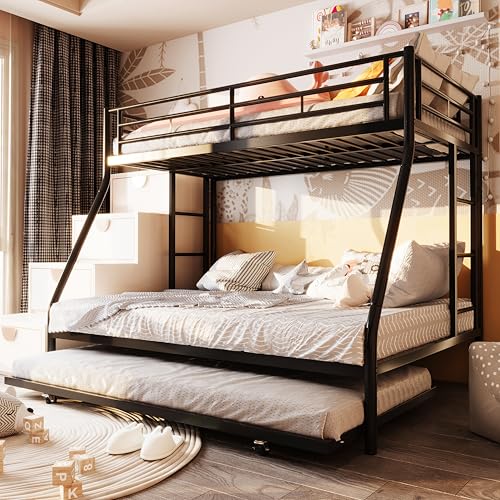
Bunk Beds with Full on Bottom and Trundle: The Complete Buyer's Guide
Maximize sleeping space without compromising comfort. Discover how a full-size bottom bunk paired with a pull-out trundle creates a versatile three-sleeper solution for kids, teens, and guests.
Why this configuration works: A bunk bed with a full-size bottom bunk and a trundle combines generous lower-level comfort with an extra hidden bed. It is a smart choice for growing families, sleepover-friendly rooms, and guest spaces that need to adapt to changing needs.
What Is a Bunk Bed with Full on Bottom and Trundle?
A bunk bed with full on bottom and trundle is a stacked sleep system where the lower bunk holds a full-size mattress, the upper bunk typically holds a twin or full mattress, and a third bed rolls out from underneath the lower bunk on casters or a sliding frame.
This layout is popular because it delivers three distinct sleeping surfaces in roughly the footprint of a single full-size bed. The full bottom bunk suits older children, teens, or adults who want more room to stretch out, while the trundle provides a flexible extra bed that disappears when not in use.
Compared with a standard bunk bed, this configuration trades a little under-bed storage for an entire additional sleeping space. If you need storage instead, explore bunk beds with storage drawers as an alternative.
Why Choose a Full Bottom Bunk with Trundle?
- Three beds in one footprint: The upper bunk, full bottom bunk, and trundle accommodate three sleepers without three separate bed frames.
- Comfort for older sleepers: A full-size lower bunk gives teens and adults more width than a twin, which makes the bed feel less cramped.
- Guest-ready flexibility: The trundle stays hidden during everyday use and rolls out when friends or family stay over.
- Space-efficient for shared rooms: Siblings sharing a room get individual sleeping surfaces while keeping floor space open for play or study.
- Long-term adaptability: The configuration works from childhood through the teen years and remains useful in a guest room later.
If you are comparing layouts, it helps to review bunk beds with full size on bottom to see how the full lower bunk changes room planning and mattress selection.
Sizes, Mattresses, and Space Planning
Getting the mattress sizes right is the most important step before buying. Mismatched mattresses can create safety gaps at the guardrails or put unnecessary strain on the trundle frame.
| Sleeping Position | Typical Mattress Size | Best For | Key Consideration |
|---|---|---|---|
| Upper Bunk | Twin or Full | Children, teens | Use a thinner profile mattress so guardrails remain effective |
| Bottom Bunk | Full | Teens, adults, older children | Standard full mattress fits most frames; verify weight rating |
| Trundle | Twin or Full (model dependent) | Guests, sleepovers | Often accepts a slightly thinner mattress to clear the frame |
Trundle Types: Pop-Up vs. Roll-Out
Trundles are not all the same. The two main styles behave differently and suit different rooms.
Roll-Out Trundle
A roll-out trundle slides horizontally from under the bottom bunk on casters. It sits low to the floor and is the most common style in bunk bed designs. It is straightforward to use and works well in rooms with open floor space beside the bed.
Pop-Up Trundle
A pop-up trundle lifts and locks at the same height as the bottom bunk, effectively creating a second full-size sleeping surface side by side. This style is useful when you want a larger continuous sleep area, but it requires more clear floor space when deployed.
If your priority is a third bed that stays out of the way, a straightforward roll-out design is usually the most practical. For more layout ideas, see bunk beds with trundle underneath.
Safety Features to Check Before Buying
- Full-length guardrails: The upper bunk should have guardrails on both long sides and at least part of the ends, with no gap wide enough for a child to slip through.
- Sturdy ladder: Look for a ladder that attaches firmly to the frame, with flat steps or wide rungs rather than thin bars.
- Weight capacity: Check the stated limit for the upper bunk, lower bunk, and trundle separately. Reinforced frames are essential for teen and adult use.
- Slat spacing: Closely spaced slats support the mattress and prevent sagging. Avoid frames with wide gaps that let a mattress dip.
- Stable base: A solid build with cross-bracing or center support legs reduces wobble, especially on larger full-size frames.
- Corner and edge finishing: Rounded edges and smooth finishes reduce the risk of bumps in tight rooms.
For households with younger children, it is also worth reviewing bunk beds with rails on top and bottom to understand how rail coverage affects safety.
Materials, Build Quality, and Market Tiers
Bunk beds with full bottom bunks and trundles span a wide range of construction quality. Rather than focusing on figures, it helps to understand how each tier performs in daily use.
| Tier | Typical Construction | Best For | What to Expect |
|---|---|---|---|
| Entry-Level | Lightweight metal or basic engineered wood | Young children, occasional guest use | Simpler assembly and lighter frames; suitable for lighter sleepers |
| Mid-Range | Reinforced metal or solid wood with center support | Teens, shared kids' rooms, regular sleepovers | Better stability, smoother trundle glide, more consistent finishing |
| High-End | Hardwood, heavy-duty hardware, premium finishes | Long-term family use, adult guests | Durable construction, refined details, strong weight ratings across all three beds |
Mid-range models generally offer the best balance for families who expect daily use from all three sleeping positions. Entry-level frames can work well in guest rooms where the trundle is used occasionally, while high-end hardwood designs are a long-term investment for rooms that will serve multiple children over the years.
If you prefer a coordinated furniture set, bunk beds with dresser options can simplify bedroom planning.
Room Layout and Placement Tips
- Place the trundle side toward open floor: The bed should pull out into clear space, not toward a wall or closet door.
- Keep the ladder accessible: Avoid tucking the ladder into a corner where it becomes awkward to climb.
- Allow headroom above the top bunk: A ceiling fan or low light fixture directly above the upper bunk can be a hazard.
- Use the wall for stability: Positioning the bed against a solid wall reduces movement and feels more secure.
- Plan for bedding changes: Leave enough room on the access side to tuck in sheets and rotate the mattress.
For rooms that need extra function beyond sleeping, compare bunk beds with storage underneath to see how under-bed space can be repurposed.
Who Should Buy This Configuration?
Families with two or three children sharing a room benefit most. The full bottom bunk gives an older child more space, while the trundle handles sleepovers or a younger sibling.
Guest rooms and vacation homes gain a flexible third bed that stays out of sight during everyday use. The full bottom bunk also makes the room comfortable for adult visitors.
Teens transitioning from childhood furniture often prefer the full-size lower bunk because it feels more like a standard bed than a narrow twin.
If you need a different upper configuration, bunk beds with full on bottom and twin on top is a closely related layout worth comparing.
Common Buying Mistakes to Avoid
- Ignoring mattress thickness: A thick upper mattress can rise above the guardrail and reduce safety.
- Overlooking trundle clearance: Measure the pull-out distance before placing the bed in a tight corner.
- Skipping the weight rating: A frame rated for children may not safely support teens or adults.
- Assuming all trundles fit full mattresses: Some trundles accept only a twin mattress, so confirm the size before ordering.
- Neglecting assembly space: Large bunk frames require room to maneuver during assembly and may need two people.
Care and Maintenance for Long-Term Use
Regular checks keep a bunk bed with a trundle safe and smooth to operate. Tighten bolts and screws every few months, particularly on the ladder and guardrail attachments. Inspect the trundle casters for debris and lubricate them if rolling becomes stiff.
Rotate and flip mattresses according to the manufacturer's guidance to prevent uneven wear. For full-size bottom bunks, a mattress protector helps extend the life of the mattress, especially in shared rooms. Keep the area under the bottom bunk clear so the trundle glides without obstruction.
If you are also furnishing the rest of the room, buying guides and reviews can help you match the bed with complementary pieces.
Frequently Asked Questions
What is a bunk bed with full on bottom and trundle?
It is a bunk bed configuration where the lower bunk is a full-size bed and an additional trundle bed pulls out from underneath, providing a third sleeping space. The upper bunk is typically a twin or full size depending on the model.
Is a full-size bottom bunk suitable for adults?
Yes. A full-size mattress offers enough width and length for many adults. However, adults should always check the weight capacity of the specific frame and avoid the upper bunk unless the model is rated for adult use.
How much weight can a trundle bed support?
Weight capacity varies by model. Entry-level trundles often support lighter sleepers such as children, while mid-range and premium models are reinforced for teens and adults. Always verify the manufacturer's stated capacity before use.
Do I need special mattresses for a bunk bed with trundle?
Yes. Upper bunks require a mattress that meets the safety rail height, usually a thinner profile mattress. Trundle beds often use a standard or slightly thinner mattress. Full-size bottom bunks accept standard full mattresses.
Are bunk beds with trundles safe for young children?
They can be safe when the model includes full-length guardrails, a sturdy ladder, and meets current safety standards. Children under six should generally use the bottom bunk or trundle rather than the upper bunk.
Ready to Compare Bunk Bed Options?
Browse recommended bunk beds with full bottom bunks and trundles, then check availability and features before you decide.
View Recommended Models