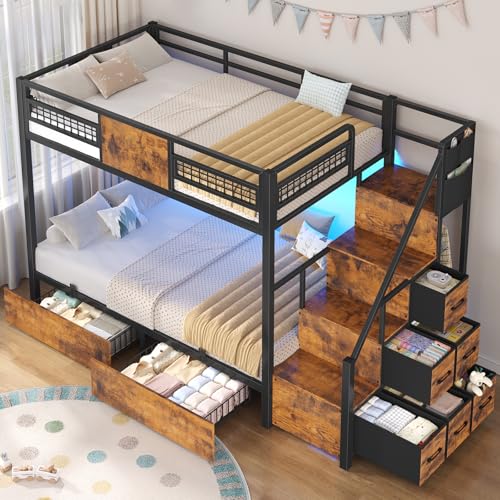
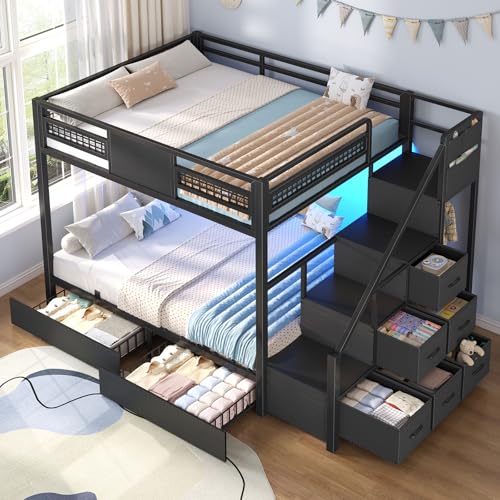
Bunk Beds with Storage Stairs
Turn the climb to the top bunk into valuable storage space. Learn how staircase bunk beds with built-in drawers and cubbies can organize a small room and eliminate the need for a separate dresser.
START YOUR GUIDEWhy Choose Storage Stairs? A traditional bunk bed ladder is compact but serves only one purpose. A staircase with integrated drawers or cubbies replaces the ladder and delivers two essential functions in one footprint: safe access to the upper bunk and a place to store clothing, toys, or linens. For small bedrooms, this is one of the most efficient furniture designs available.
This guide explains the different staircase configurations, what to check for safety, and how to plan a storage staircase bunk for your room.
Why Storage Stairs Beat a Standard Ladder
Ladders are functional, but they have limitations in a small room. Storage stairs address several common complaints at once:
Safer Access
Wide, deep steps are easier to climb than angled ladder rungs, especially for younger children or anyone carrying items to the top bunk.
Built-In Storage
Each step can hide a deep drawer or open cubby, replacing a standalone dresser or toy chest in tight rooms.
More Stable
A staircase anchors to the bed frame at multiple points, reducing the wobble common with hook-on ladders.
Room-Defining
The staircase creates a natural visual boundary in a shared room, giving each child a sense of their own space.
Cleaner Look
A solid staircase hides clutter behind closed drawers, helping a small bedroom feel tidy and calm.
Flexible Direction
Many storage stair designs can be mounted on the left or right end of the bunk, adapting to room layout.
The main trade-off is footprint. A storage staircase extends several feet from the side of the bed, so it requires more floor length than a ladder. In rooms where length is limited but width is available, this is usually a worthwhile exchange. For tight layouts, our guide to small space bunk beds covers alternative configurations.
Common Storage Staircase Designs
Storage stairs come in several forms. The right choice depends on how much you need to store and how much room is available:
| Design | Best For | Storage Capacity |
|---|---|---|
| Drawer staircase | Clothing, bedding, and general household storage | High — deep drawers on every step |
| Open cubby staircase | Books, toys, and display baskets | Medium — open shelves on each step |
| Combination staircase | Mixed storage needs; some drawers, some cubbies | Medium to high — flexible per step |
| Wide-step staircase | Younger children who need extra foot room | Varies — often paired with shallow drawers |
Drawer stairs offer the most storage but require the most clearance for the drawers to pull out fully. Open cubbies are more forgiving in tight spaces because you do not need room to slide anything out. For more ideas on organizing a compact room, explore our guides to small bedroom storage and under-bed storage.
Bunk Bed Configurations with Storage Stairs
Storage stairs are available on nearly every bunk configuration. The most popular options include:
Twin Over Twin
The classic choice for siblings sharing a room. A twin-over-twin bunk with a storage staircase is compact and practical. This is one of the most common configurations for children's bedrooms. For more options, see our kids beds collection.
Twin Over Full
A larger lower bunk suits older children or guests, while the upper twin keeps the footprint manageable. A storage staircase in this configuration adds drawer space without consuming the full lower bunk. Learn more in our guide to twin-over-full bunk beds.
Loft Bed with Storage Stairs
A loft bed with a storage staircase frees the entire space below for a desk, seating, or play area. This is an excellent choice for teens or adults in a studio apartment. See our loft beds for adults guide for adult-focused options.
Full Over Full
Two full-size sleeping surfaces for teens or adults. This is a heavy configuration, so verify weight capacity and staircase load-bearing when choosing a storage stair design. For adult bunk options, see double-over-double bunk beds for adults.
If you need even more sleeping capacity, a quadruple bunk bed may suit larger families. For space-saving alternatives, a trundle bed offers a hidden third mattress without extending the frame length.
Safety Essentials for Storage Stair Bunk Beds
A staircase configuration introduces different safety considerations than a ladder. Verify these features before purchase:
- Staircase attachment: The staircase must anchor firmly to the bed frame at multiple points, not just rest against it.
- Step depth and height: Deeper, shallower steps are easier for children to climb safely than steep, narrow steps.
- Handrail: A handrail along at least one side of the staircase helps younger children feel secure.
- Guardrails on the top bunk: Full-length guardrails with only a gap at the staircase opening.
- Drawer stops: Drawers should have stops to prevent them from pulling out completely and tipping.
- Weight capacity: Confirm the per-bunk rating and the staircase load rating, especially for full-over-full or adult configurations.
- Wall anchoring: Where the manufacturer provides hardware, anchor the frame to a wall stud.
Room Planning for a Storage Stair Bunk
Because the staircase extends outward, room dimensions matter more than with a ladder-equipped bunk. Measure carefully before ordering:
- Length clearance: Add the staircase depth (typically 2–3 feet) to the bunk bed length. Confirm the total fits against the intended wall.
- Drawer clearance: If you choose drawers, allow enough open floor space for them to extend fully without blocking the door or walkway.
- Ceiling height: Allow 30–36 inches between each mattress and the bunk above, plus similar clearance above the top mattress.
- Traffic flow: Leave at least 24 inches of walkway on the open side of the bed.
- Windows and exits: Never block windows or doors with the staircase or the bunk frame.
For small rooms, our guides to small bedroom solutions and space-saving beds offer additional layout strategies. If the room is very compact, a small space bed may be a better fit than a storage stair bunk.
Materials and Build Quality
Storage stair bunks endure both sleeping weight and climbing weight, so build quality matters. Consider these factors:
| Material | Best For | Tier Indicator |
|---|---|---|
| Solid pine or rubberwood | Everyday family use with moderate storage needs | Entry-level to mid-range |
| Engineered hardwood (oak, maple) | High-traffic rooms needing long-term durability | Premium tier |
| Metal frame with wood stairs | Slim bunk profiles with solid step construction | Mid-tier to high-end tier |
| All-metal construction | Heavy-duty use in shared or commercial settings | Commercial-grade |
Solid wood is the most common choice for storage stair bunks because the drawers and stairs need structural integrity. Metal frames paired with wooden stairs combine a slim bunk profile with solid step construction. Whichever you choose, check that drawer boxes are dovetailed or otherwise reinforced, and that the staircase uses thick, well-supported steps. For durable bunk options, see our sturdy bunk beds guide.
Styling a Storage Stair Bunk Room
With storage built into the bed, the rest of the room can stay uncluttered. A few choices make a small bunk room feel cohesive:
- Coordinate bedding across both bunks for a unified look. Neutral shades are easy to pair; a neutral bedspread works well in many palettes.
- Use baskets in open cubbies to hide small items and add texture.
- Choose a warm rug to soften the floor and define the play area.
- Add wall-mounted reading lights so each bunk has its own light source without floor lamps.
- Layer in curtains to soften the room and control light — navy blue curtains add depth to a neutral space.
For more styling inspiration, see our guides to small bedroom ideas and modern bedroom ideas. If you are refreshing the bedding, our sheets and linens guide explains how to find the right fit for each bunk size.
Frequently Asked Questions
Are storage stairs safe for young children?
Yes, provided the staircase is firmly anchored to the frame, the steps are deep and shallow, and a handrail is present. Storage stairs are generally easier and safer for young children to climb than angled ladders.
How much storage do the stairs provide?
It varies by design. Drawer staircases typically offer three to four deep drawers, comparable to a small dresser. Cubby staircases provide open shelves that hold baskets or books. Combination designs split the difference.
Can the staircase be mounted on either side?
Many storage stair bunks allow the staircase to be mounted on the left or right end. Check the product specifications, as some models are fixed.
Do I need extra floor space for drawer clearance?
Yes, if you choose drawers. Allow enough open floor space for the drawers to extend fully without blocking doors or walkways. Open cubbies do not require this clearance.
What mattress thickness works best on a storage stair bunk?
For the upper bunk, choose a mattress no thicker than about 6–8 inches so the guardrail remains effective. The lower bunk can take a standard mattress. Always check the manufacturer's recommended maximum thickness.