Small Bedroom Storage: Smart Solutions for Compact Spaces
A small bedroom does not have to mean a cluttered one. With the right combination of storage beds, slim furniture, and vertical organization, even the tightest room can feel open, calm, and fully functional. This guide walks you through the most effective small bedroom storage strategies, compares the main product categories, and helps you choose the setup that fits your space and sleeping habits.
Why Storage Is the Key to a Small Bedroom
In a compact bedroom, every square foot carries weight. The bed typically occupies 40 to 60 percent of the floor area, leaving limited room for dressers, desks, or seating. When storage is insufficient, clutter migrates to the floor, the bed, and any flat surface available — which makes the room feel smaller and disrupts the calm environment that good sleep depends on.
The solution is not to squeeze in more furniture, but to choose furniture that stores. A storage bed, a nightstand with drawers, and a bench with a lift-up lid each replace a separate storage unit while occupying the same footprint as their non-storing counterparts. This layered approach is the core of any successful small bedroom solution, and it works because it converts dead space — under the mattress, inside furniture bodies, above door frames — into usable capacity.
Storage Beds: The Foundation of Compact Bedrooms
The single most effective small bedroom storage upgrade is a bed with integrated storage. Because the bed is the largest object in the room, it also offers the largest untapped volume. Storage beds fall into two main designs: drawer beds, which slide out from the side or foot, and lift-up beds, which raise the entire mattress on a hydraulic platform to reveal a full-surface compartment beneath.
Drawer-Style Storage Beds
Drawer beds typically feature two to four drawers along one or both sides. They are convenient for nightly access — pajamas, books, chargers — and work well when the bed is placed with at least one side accessible. Entry-level drawer beds often use fabric or MDF drawer boxes, while mid-range and premium models use dovetail joints, metal runners, and soft-close mechanisms. If you are shopping specifically for this category, explore queen-size storage beds and single beds with storage and mattress options to compare configurations.
Lift-Up Hydraulic Storage Beds
Lift-up beds provide a continuous compartment the full size of the mattress base — ideal for suitcases, seasonal bedding, and bulky items. The hydraulic mechanism makes lifting effortless, and premium-tier models hold their position safely when open. This design suits rooms where side access is limited, since all storage is reached from the top. For small rooms, a small single bed for small rooms with lift-up storage is often the most space-efficient choice available.
Wood, Upholstered, or Metal?
Material affects both durability and visual weight. Solid wood and engineered wood storage beds offer the sturdiest drawer mechanisms and a warm, grounded look that suits most interiors. Upholstered storage beds add softness and sound absorption but tend to be heavier. Metal storage beds are less common and usually rely on separate under-bed bins rather than integrated drawers. If you prefer a natural finish, real wood twin beds with storage combine durability with a compact footprint.
Under-Bed Storage Beyond the Bed Frame
If replacing your bed is not an option, under-bed space can still be reclaimed with retrofit storage. The key is matching the storage type to your available clearance and how often you need to reach the items.
- Rolling drawer units: Best for frequent access. Low-profile wheeled drawers slide out easily and work well on hard floors. Measure clearance carefully — most need 6 to 8 inches of height.
- Flat storage bins: Ideal for seasonal clothing, shoes, and bedding. Choose bins with handles and lids to keep dust out, and label them for quick identification.
- Vacuum-sealed bags: Excellent for bulky duvets and winter coats. They compress volume dramatically, but should not be used for items that need to breathe, such as down pillows.
- Bed risers: Raise the frame to create clearance where none exists. Only use risers on stable, flat frames, and verify that the increased height still feels comfortable when getting in and out.
For rooms with very limited floor area, combining a slim bed frame with rolling bins underneath can deliver storage comparable to a dedicated drawer bed without replacing your existing furniture.
Slim Nightstands and Bedside Organization
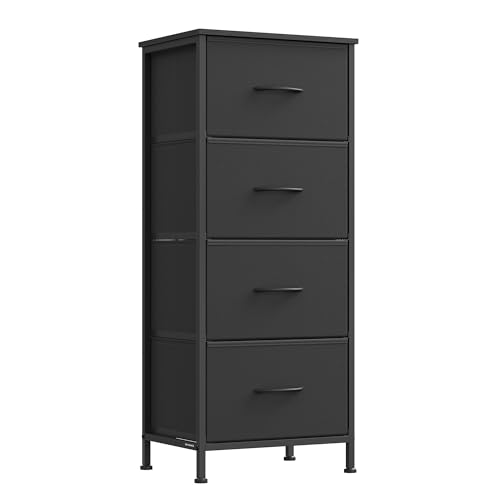
Nightstands are essential in a small bedroom, but standard 20- to 24-inch-wide models can crowd the bed and block circulation. Slim nightstands — typically 12 to 16 inches wide — provide a surface for a lamp, phone, and a glass of water while adding a drawer or shelf for small items. This category has grown significantly, with options ranging from skinny bedside tables to slim bedside tables with drawers.
If floor space is truly tight, consider alternatives to the traditional nightstand: a wall-mounted shelf, a small bookshelf bedside table, or a rolling bedside table with drawers that can be tucked away when not in use. For a cohesive look, small bedside table sets of 2 keep both sides of the bed symmetrical without consuming extra width.
Choosing the Right Height and Depth
A nightstand top should sit level with or slightly below the mattress surface for comfortable reach. Depth should not exceed the headboard's depth, or it will protrude into the walking path. In narrow rooms, a rectangular bedside table with a shallow profile is often more practical than a round or square model.
Vertical and Multi-Functional Storage
Small bedrooms have one abundant dimension: height. Vertical storage uses wall space that would otherwise sit empty, freeing floor area for movement and making the room feel taller.
- Wall-mounted shelves: Install shelves above the nightstand or desk for books, decor, and frequently used items. Keep the lowest shelf at least 18 inches above the mattress to avoid head collisions.
- Over-the-door organizers: Ideal for shoes, accessories, and small clothing items. They require no floor space and can be moved easily.
- Storage benches: Place at the foot of the bed for blankets, pillows, or off-season clothing. A lift-up seat bench doubles as a seating area.
- Bedside lamps with built-in shelves: A small bedside table lamp with an integrated base shelf adds function without adding furniture.
- Multi-functional beds: A queen-size trundle bed for adults adds a second sleeping surface without a second bed footprint — useful in guest rooms that double as home offices.
Storage Solution Comparison Table
The table below compares the main small bedroom storage categories by tier, best use case, and access style. Tier labels reflect relative market positioning, not any specific figure.
| Storage Solution | Tier | Best For | Access Style |
|---|---|---|---|
| Lift-up hydraulic storage bed | Premium | Seasonal and bulky items; rooms with limited side access | Top-lift platform |
| Drawer storage bed | Mid-range | Nightly-access items; rooms with one accessible side | Side or foot drawers |
| Rolling under-bed drawers | Entry-level | Frequent-access storage; hard floors | Slide-out wheels |
| Flat storage bins | Entry-level | Seasonal clothing and shoes | Lift-lid |
| Slim nightstand with drawer | Mid-range | Bedside essentials; narrow clearance | Front drawer |
| Wall-mounted shelving | Entry-level | Books, decor, display storage | Open shelves |
| Storage bench | Mid-range | Blankets and pillows; extra seating | Lift-up seat |
A practical small bedroom setup usually combines two or three tiers: an entry-level under-bed bin system for seasonal items, a mid-range slim nightstand for daily essentials, and — if the bed is being replaced — a premium lift-up storage bed for maximum capacity.
Common Mistakes to Avoid
- Buying storage furniture that is too deep. Deep nightstands and dressers protrude into walking paths in narrow rooms. Measure the clearance between the bed and the wall before choosing depth.
- Ignoring the bed's footprint. A bed with a wide headboard or thick frame consumes more floor area than the mattress size suggests. Check the overall dimensions, not just the mattress label.
- Overloading drawer beds. Drawer mechanisms have weight limits. Keep heavy items in the larger compartments and distribute weight evenly to avoid sagging runners.
- Skipping vertical space. Many small bedrooms have unused wall height above the door or above the headboard. Wall-mounted shelves and hooks add storage without consuming floor area.
- Choosing style over access. A beautiful storage bed with only one accessible side is impractical in a room where the bed sits against a wall. Match the storage design to your room's layout.
For a wider look at compact room design, see our small bedroom decor guide and the broader small apartment furniture collection for complementary pieces.
Frequently Asked Questions
What is the best storage solution for a small bedroom?
Storage beds with built-in drawers or lift-up hydraulic platforms are the most effective solution for small bedrooms, as they use the space beneath the mattress that would otherwise be wasted. Pair them with slim nightstands and vertical shelving to complete a compact storage system.
How much clearance do I need under my bed for storage?
For freestanding under-bed storage boxes, aim for at least 6 to 8 inches of clearance. If you prefer rolling drawers or vacuum-sealed bags, 8 to 10 inches gives you more flexibility. Storage beds with integrated drawers eliminate the need for clearance entirely.
Are storage beds sturdy enough for daily use?
Yes. Mid-range and premium storage beds use reinforced slats, high-grade steel mechanisms, and solid wood or engineered wood frames that support standard mattress weights. Lift-up hydraulic platforms typically hold 200 to 300 pounds of mattress and bedding, while drawer-style storage beds distribute weight across the full frame.
Can I add storage to my existing bed without buying a new one?
Absolutely. Under-bed storage bins, rolling drawer units, bed risers, and over-the-door organizers can retrofit almost any existing bed. Choose low-profile bins with wheels or handles for easy access, and use bed risers only if your frame height allows safe clearance.
How do I keep a small bedroom organized with limited storage?
Focus on multi-functional furniture: storage beds, nightstands with drawers, and benches with lift-up seats. Use vertical space with tall bookcases or wall-mounted shelves, declutter seasonally, and choose furniture with a small footprint but generous internal capacity.