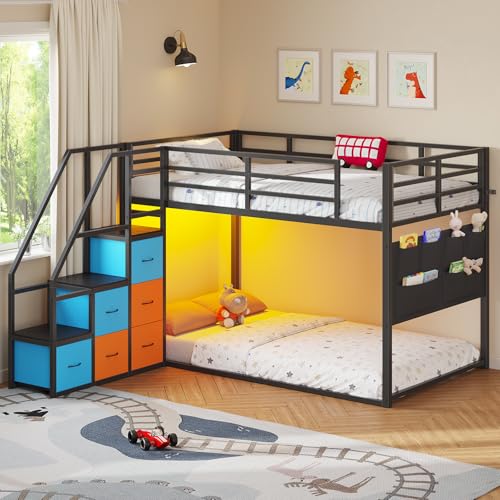
Cool Bunk Beds for Small Rooms: The Complete Space-Saving Guide
Maximize every square foot with smart bunk bed designs that combine style, safety, and storage. Learn how to choose the perfect compact bunk bed for your small bedroom.
Why bunk beds make sense for small rooms: A well-chosen bunk bed can double your sleeping capacity without consuming extra floor space. The best designs incorporate storage, study areas, and clever configurations that turn a cramped room into a functional, comfortable sleep environment.
Understanding Bunk Bed Types for Compact Spaces
Not all bunk beds are created equal, especially when floor space is limited. Understanding the main configurations helps you match the right design to your room dimensions and sleeping requirements.
Twin Over Twin Bunk Beds
The classic configuration stacks two twin-sized sleeping surfaces vertically, occupying roughly the same footprint as a single twin bed. This is the most space-efficient option for rooms shared by two children or teens. Many models feature convertible bunk beds twin over twin designs that can separate into two standalone beds later.
Twin Over Full Bunk Beds
Combining a twin upper bunk with a full lower bunk provides extra sleeping space for couples or older children who need more room. These are slightly wider than twin-over-twin models but still far more compact than two separate beds. Explore children's bunk beds twin over full for family-friendly options.
Loft Beds with Desk or Storage
A loft bed elevates the sleeping surface to create usable floor space underneath, ideal for a study desk, reading nook, or dresser. For rooms that need to serve multiple purposes, children's bedroom furniture loft beds offer an excellent balance of sleep and function.
Bunk Beds with Stairs and Storage
Staircase designs are safer than ladders and often incorporate built-in drawers or shelves. These are particularly valuable in small rooms where every inch counts. Consider children's bunk beds with storage stairs for a combination of accessibility and organization.
Key Features to Prioritize in a Small Room
When evaluating cool bunk beds for small rooms, focus on features that directly address space constraints and safety requirements.
Vertical Clearance
Ensure adequate headroom between bunks—at least 30 inches is recommended for comfort. Low-ceiling rooms may require a shorter upper bunk or a loft configuration instead.
Built-In Storage
Drawers under the lower bunk, shelving in the staircase, or a trundle bed add functionality without increasing the footprint. This is often the difference between cluttered and calm.
Convertibility
Models that separate into two beds or convert to a loft offer long-term flexibility. This is a smart long-term investment for growing families or changing room layouts.
Safety Rails and Guardrails
Full-length guardrails on the upper bunk are non-negotiable for child safety. Check that rails are at least 5 inches above the mattress top and securely attached.
Comparison: Bunk Bed Configurations for Small Rooms
The table below compares popular bunk bed styles across key criteria. Use this as a starting point for your research, then verify dimensions against your actual room measurements.
| Configuration | Best For | Space Efficiency | Storage Potential | Flexibility |
|---|---|---|---|---|
| Twin Over Twin | Two children sharing a room | High | Moderate | Moderate |
| Twin Over Full | Teen or adult sharing with child | Medium-High | Moderate | Moderate |
| Loft with Desk | Single occupant needing workspace | Very High | High | High |
| Bunk with Stairs & Storage | Families prioritizing organization | High | Very High | Low-Moderate |
| Convertible Bunk | Long-term flexibility | High | Moderate | Very High |
Safety Considerations for Bunk Beds in Tight Spaces
Small rooms introduce specific safety challenges—tighter clearances, less room for ladders, and proximity to walls and furniture. Address these factors before purchase:
- Guardrail height and coverage: The upper bunk must have guardrails on both sides, with at least 5 inches of rail above the mattress surface. Gaps should not exceed 3.5 inches to prevent entrapment.
- Ladder or stair placement: Ensure the ladder or stairway does not block doorways, closets, or windows. In tight rooms, a angled ladder or built-in staircase saves valuable floor space.
- Ceiling clearance: Allow at least 30 inches between the top of the upper mattress and the ceiling. For younger children, add a few extra inches for safety.
- Mattress thickness: Use only mattresses that meet the manufacturer's thickness specification—typically 6 to 8 inches for the upper bunk. A too-thick mattress reduces guardrail effectiveness.
- Wall anchoring: Attach the bunk bed frame to the wall using anti-tip straps or brackets, especially in rooms with carpet or uneven floors.
- Age appropriateness: The American Academy of Pediatrics recommends bunk beds only for children aged 6 and older. Younger children should use the lower bunk exclusively.
Maximizing Space Around and Under the Bunk
The bunk bed itself is only part of the equation. How you use the surrounding space determines whether the room feels cramped or comfortable.
Under-Bed Storage Solutions
The space beneath the lower bunk is prime real estate. Use rolling storage bins, under-bed drawers, or a trundle bed for guests. For additional sleeping capacity without permanent floor space, trundle beds with mattress slide neatly under the main frame.
Vertical Wall Storage
Install floating shelves above the lower bunk or on adjacent walls to keep books, toys, and decor off the floor. Wall-mounted reading lights free up nightstand space and improve bedtime routines.
Multi-Functional Furniture
Choose a bedside table that doubles as a desk or a bench with hidden storage. In very small rooms, children's beds for small rooms with integrated storage often outperform traditional bunk beds for single occupants.
Pro tip: Measure your room's ceiling height, door clearance, and window positions before shopping. A bunk bed that fits the floor plan but blocks a window or closet creates daily frustration. Keep a clearance of at least 2 feet between the bunk and any other furniture for safe movement.
Style and Design: Making Bunk Beds Look Cool
Bunk beds have evolved far beyond utilitarian metal frames. Modern designs incorporate clean lines, mixed materials, and playful colors that appeal to both children and design-conscious parents.
Materials That Work in Small Spaces
Light wood finishes (birch, maple, pine) make small rooms feel airier, while white-painted frames reflect light and create a sense of openness. Dark woods and metal frames add contrast but can feel heavy in compact spaces—balance them with light bedding and wall colors.
Integrated Themes
For children's rooms, consider bunk beds with built-in play features—a lower-level curtain that creates a fort, a slide attachment, or a themed headboard. These design elements make the bed a focal point rather than a space compromise.
Coordinating Bedding and Accessories
In a small room, visual clutter is the enemy. Choose bedding in a cohesive palette and avoid too many patterns. A simple cotton bedsheet queen size in a solid color or subtle stripe keeps the upper bunk visually calm.
Buying Checklist: What to Verify Before You Commit
Use this checklist to evaluate any bunk bed before finalizing your purchase:
- Dimensions match your room: Measure the assembled footprint, including ladder protrusion and guardrail overhang. Verify ceiling height for the upper bunk.
- Weight capacity: Check the manufacturer's weight limit for both upper and lower bunks. Exceeding capacity compromises safety.
- Assembly requirements: Confirm whether professional assembly is required or recommended. Some heavy-duty frames are challenging to assemble without tools.
- Certifications: Look for JPMA certification or compliance with ASTM F1427 (the standard safety specification for bunk beds).
- Return policy: Bunk beds are large items—verify the return window and any restocking terms before ordering.
- Warranty coverage: A solid warranty (at least one year) indicates confidence in build quality.
Frequently Asked Questions
What is the minimum ceiling height for a bunk bed?
Most bunk beds require at least 7 feet (84 inches) of ceiling height to provide adequate headroom for the upper bunk. For loft beds, you'll need additional clearance—typically 8 feet or more if the lower area is used as a workspace.
Are bunk beds safe for young children?
The American Academy of Pediatrics recommends that children under 6 years old should not sleep on the upper bunk. For children 6 and older, ensure full guardrails, a secure ladder, and proper mattress thickness. Always anchor the frame to the wall.
Can a bunk bed fit in a room with a sloped ceiling?
Yes, but placement matters. Position the bunk so the upper sleeper has adequate headroom on the higher side of the slope. Low-profile bunk beds or loft beds with a lower upper platform may be necessary. Measure the lowest point of the ceiling above the upper mattress.
What is the best bunk bed configuration for a very small room?
A twin-over-twin bunk bed with built-in storage stairs offers the best balance of sleeping capacity and space efficiency. If only one person uses the room, a loft bed with a desk underneath maximizes usable floor area.
How do I prevent the bunk bed from squeaking?
Squeaking usually comes from loose joints or friction between the mattress and frame. Tighten all bolts after assembly and periodically thereafter. Use a non-slip mattress pad or felt pads between the mattress and frame to reduce movement noise.
Ready to Find Your Perfect Bunk Bed?
Explore our curated selection of space-saving bunk beds designed for small rooms. Compare features, read reviews, and find the right fit for your home.
View Recommended Bunk Beds