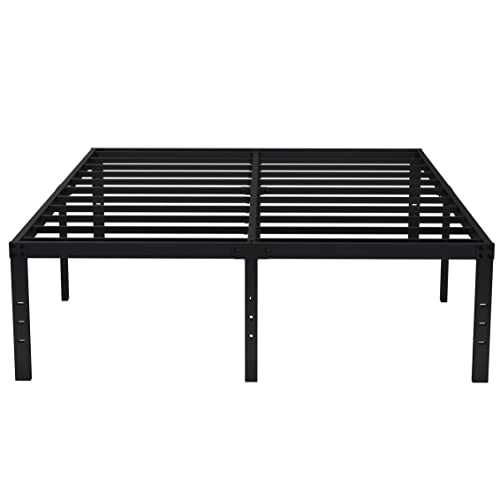
Heavy Duty Bed Frames: Built to Last, Designed for Comfort
Discover reinforced bed frames engineered for exceptional strength, stability, and long-term performance. Your complete guide to choosing the right heavy-duty bed for every sleeper.
Explore the GuideWhy Heavy Duty Bed Frames Matter: A bed frame is the foundation of your sleep environment. A reinforced, heavy-duty frame doesn't just support more weight—it eliminates squeaks, prevents sagging, extends mattress life, and provides the stability needed for deep, uninterrupted rest. Whether you're a larger sleeper, a couple sharing a bed, or simply someone who values solid construction, investing in a high-weight-capacity bed frame is one of the smartest sleep decisions you can make.
What Makes a Bed Frame Truly Heavy Duty?
Not all bed frames marketed as "heavy duty" are created equal. The term can be applied loosely, so understanding the specific engineering characteristics that contribute to genuine strength and durability is essential. A truly heavy-duty bed frame combines several key elements:
1. Material Quality and Gauge
The material is the most fundamental factor. High-grade steel frames typically use thicker gauge tubing—14-gauge or lower for serious heavy-duty models—while wooden frames rely on solid hardwood species like oak, maple, or ash rather than particle board or soft pine. The thickness of the material directly correlates with the frame's ability to resist bending, warping, and fatigue over time.
2. Reinforced Joints and Connection Points
The weakest points of any bed frame are the joints. Heavy-duty frames use reinforced connection points—welded steel gussets, mortise-and-tenon joinery, or heavy-duty bolts with locking washers—to distribute stress evenly. Look for frames with double or triple bolt connections at critical junctions rather than single screws.
3. Support Structure and Slat System
A robust slat system is critical. Heavy-duty frames typically feature wider, thicker slats (often 2.5 to 3.5 inches wide) spaced closely together, supported by a center rail and multiple support legs. Some premium frames incorporate a metal grid or box-spring-like support base for maximum load distribution.
4. Weight Capacity Rating
Reputable manufacturers provide a specific weight capacity rating. A heavy-duty bed frame should generally support at least 800 to 1,000 pounds for queen and king sizes, with reinforced adult models often rated for 1,500 to 2,000 pounds or more. Never assume a frame is heavy-duty based solely on appearance—always verify the rated capacity.
5. Center Support and Legs
For larger sizes—queen, king, and California king—a center support rail with additional legs reaching the floor is non-negotiable for heavy-duty performance. This prevents the mattress from sagging in the middle and distributes weight across a wider footprint.
Pro Tip: When evaluating a heavy-duty bed frame, check whether the weight capacity is rated for the frame alone or includes the mattress. Also confirm whether the rating applies to static or dynamic weight—dynamic loading (people moving, sitting down) requires a higher safety margin.
Metal vs. Wooden Heavy Duty Bed Frames
The two dominant material categories for heavy-duty bed frames each offer distinct advantages. Understanding these differences will help you match the frame to your specific needs and preferences.
High-Grade Steel and Metal Frames
Metal bed frames—particularly those constructed from high-grade steel—offer an exceptional strength-to-weight ratio. They are inherently resistant to warping, cracking, and moisture damage, making them ideal for humid climates and long-term durability. Welded steel frames with reinforced corners can achieve extraordinary weight capacities while maintaining a relatively slim profile.
- Pros: Superior strength-to-weight ratio, resistant to warping and pests, easy to clean, often tool-free assembly, excellent for adjustable mattress bases
- Cons: Can be cold to the touch, may squeak if joints loosen over time, limited aesthetic options compared to wood
- Best for: Adults seeking maximum durability, adjustable bed compatibility, modern and industrial bedroom styles, humid environments
If you're interested in exploring the broader category of robust sleeping surfaces, our heavy-duty beds guide covers complete bed systems built for exceptional strength.
Solid Hardwood Frames
Wooden heavy-duty bed frames crafted from solid hardwood—oak, maple, ash, or walnut—combine natural beauty with impressive structural integrity. Reinforced joinery, thick side rails, and multiple slats create a frame that can easily support adult weights while adding warmth and character to the bedroom. High-quality wooden frames are a long-term investment that can be refinished and passed down.
- Pros: Timeless aesthetic, warm and inviting feel, excellent for traditional and rustic decor, repairable and refinishable
- Cons: Heavier and more difficult to move, susceptible to moisture if not properly finished, typically requires more assembly time
- Best for: Couples sharing larger mattresses, traditional bedroom styles, those who value natural materials, long-term ownership
For adults requiring maximum load-bearing capacity in a wooden frame, explore our guide to heavy-duty wooden bunk beds for adults, which covers reinforced solid wood construction in detail.
| Feature | High-Grade Steel Frame | Solid Hardwood Frame |
|---|---|---|
| Strength-to-Weight | Excellent | Good to Excellent (varies by species) |
| Moisture Resistance | Excellent (with rust-proof finish) | Moderate (requires sealed finish) |
| Aesthetic Warmth | Modern / Industrial | Warm / Traditional / Rustic |
| Assembly Complexity | Usually simpler (bolt-together) | More involved (joinery + hardware) |
| Longevity | Excellent (20+ years) | Excellent (20+ years with care) |
| Weight Capacity (King) | Often 1,000–2,500+ lbs | Often 800–1,500+ lbs |
| Best For | Maximum durability & modern style | Natural beauty & traditional decor |
Understanding Weight Capacity: What You Need to Know
Weight capacity is the single most important specification when evaluating a heavy-duty bed frame—yet it's also one of the most misunderstood. Here's a practical framework for interpreting manufacturer ratings:
Static vs. Dynamic Load
Most manufacturers rate their frames for static weight—the combined weight of the mattress and sleepers at rest. However, real-world use involves dynamic loads: sitting down heavily, rolling over, children jumping, or two people getting into bed simultaneously. A frame rated for 1,000 pounds static may experience peak dynamic forces significantly higher. For genuine peace of mind, choose a frame with a safety margin of at least 30–50% above your expected static load.
Size-Specific Considerations
- Twin and Twin XL: Typically rated 400–800 lbs; heavy-duty models for adults often reach 1,000+ lbs
- Full: Standard ratings 500–1,000 lbs; reinforced models 1,200+ lbs
- Queen: Standard 600–1,200 lbs; heavy-duty 1,500–2,000+ lbs
- King and California King: Standard 800–1,500 lbs; heavy-duty 2,000–2,500+ lbs
Remember: The weight capacity should account for the mattress, bedding, and all occupants. A memory foam king mattress alone can weigh 100–150 pounds, so factor that into your calculation. If you're considering a heavy-duty bed system, confirm whether the frame rating includes the mattress weight or represents additional load capacity.
Heavy Duty Bed Frame Tiers: A Universal Classification
To help you navigate the market without relying on arbitrary numbers, we use a consistent tier classification system based on construction quality, materials, and engineering sophistication. This framework applies across all bed frame categories:
| Tier | Typical Construction | Weight Capacity Range | Best For |
|---|---|---|---|
| Entry-Level | Standard steel tubing, basic slats, single-bolt joints | Moderate (500–800 lbs for queen) | Lightweight sleepers, guest rooms, occasional use |
| Mid-Range | Thicker gauge steel or solid wood, reinforced joints, center support | Strong (800–1,200 lbs for queen) | Average adults, couples, daily use |
| Premium | High-grade steel or hardwood, welded gussets, multi-point support, close slat spacing | Very Strong (1,200–2,000 lbs for queen) | Larger sleepers, heavy couples, long-term daily use |
| Luxury / Commercial | Commercial-grade steel or furniture-grade hardwood, engineered load distribution, lifetime-rated joints | Exceptional (2,000+ lbs for queen) | Maximum durability, hospitality use, bariatric support, multi-generational families |
When shopping, look for frames that clearly state their tier-equivalent specifications—material gauge, joint construction, and rated capacity—rather than relying on marketing language alone.
Matching Heavy Duty Frames to Your Situation
For Larger Sleepers and Couples
If you or your partner are heavier than average, or if you share a bed and want zero sagging or squeaking, prioritize a premium or luxury tier frame with a welded steel grid or reinforced hardwood construction. A center support rail with multiple floor-touching legs is essential for queen and king sizes. For bunk bed options that meet similar standards, see our heavy-duty bunk beds collection.
For Kids and Teens
Children's beds need to withstand jumping, climbing, and years of growth. A mid-range to premium heavy-duty frame provides a safety margin that standard kids' beds lack. If you're specifically shopping for children, our fun children's beds guide covers playful designs with reinforced construction, while heavy-duty bunk beds with storage offers space-saving solutions for shared rooms.
For Guest Rooms and Multi-Use Spaces
Guest beds see intermittent but potentially rough use. A mid-range heavy-duty frame ensures the bed remains stable and quiet for years between guests. For spaces that do double duty, consider home office beds or guest beds that combine heavy-duty construction with versatility.
For Adults Seeking Maximum Strength
When nothing less than the strongest frame will do—whether for bariatric support, medical needs, or simply peace of mind—look for commercial-grade steel frames with lifetime joint warranties. Our heavy-duty beds guide explores the most robust complete bed systems available. For those considering adjustable options, good adjustable beds reviews cover heavy-duty adjustable frames.
Heavy Duty Bed Frame Buying Checklist
Use this checklist to evaluate any heavy-duty bed frame before you commit:
- Verify the rated weight capacity — confirm it exceeds your expected load with a safety margin.
- Inspect the material specification — steel gauge (14 or lower for heavy-duty) or wood species (solid hardwood, not particle board).
- Check the joint construction — welded gussets, mortise-and-tenon, or double-bolt connections indicate serious engineering.
- Confirm center support — a center rail and at least two additional legs for queen and larger sizes.
- Evaluate the slat system — wide, closely spaced slats; metal grids outperform thin wooden slats for heavy loads.
- Review assembly requirements — some heavy-duty frames require two people; check whether tools are included.
- Read the warranty — premium and luxury tier frames typically offer 5-year to lifetime warranties on structural components.
- Check mattress compatibility — slat spacing, box spring requirements, and adjustable base compatibility.
Editor's Note: A heavy-duty frame is a long-term investment. The difference between a mid-range and premium tier frame is often the difference between replacing your bed in five years versus enjoying it for twenty. When in doubt, choose the higher tier—your sleep quality and safety are worth it.
Ready to Upgrade Your Sleep Foundation?
Explore our curated selection of heavy-duty bed frames below, each evaluated for construction quality, weight capacity, and long-term durability. Find the frame that matches your strength requirements and design preferences.
View Recommended FramesFrequently Asked Questions
What weight capacity should a heavy duty bed frame support?
A true heavy-duty bed frame typically supports at least 800 to 1,000 pounds for queen and king sizes, while reinforced models for adults can exceed 2,000 pounds. Always check the manufacturer's rated capacity rather than assuming based on material alone.
Are heavy duty metal bed frames better than wooden ones?
Both can be excellent. High-grade steel frames offer superior strength-to-weight ratios and resist warping, while solid hardwood frames provide natural aesthetics and can be equally durable when properly reinforced. The best choice depends on your design preference and assembly requirements.
Do heavy duty bed frames require special assembly?
Most heavy-duty frames require assembly but come with detailed instructions and all necessary hardware. Reinforced models may need two people due to weight. Some premium and commercial-grade frames offer tool-free or quick-lock assembly systems.
Can heavy duty bed frames be used with any mattress type?
Yes, most heavy-duty frames are compatible with memory foam, hybrid, innerspring, and latex mattresses. Always verify the frame's slat spacing and whether a box spring is required for your specific mattress type.
How do I know if a bed frame is genuinely heavy duty?
Look for specific engineering details: material gauge (14 or lower for steel), solid hardwood construction (not particle board), reinforced joints (welded or double-bolted), center support rails, and a stated weight capacity rating. Vague marketing claims without specifications are a red flag.