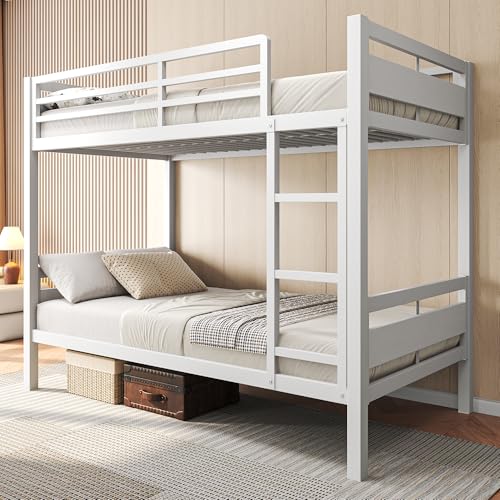
Heavy Duty Metal Bunk Beds Twin Over Twin: The Complete Buyer's Guide
Everything you need to know about choosing a heavy duty metal bunk bed twin over twin. From steel frame construction and weight capacity to safety features and space-saving benefits — make a confident, informed decision.
EXPLORE THE GUIDEWhy heavy duty matters: A heavy duty metal bunk bed twin over twin is more than just a space-saving solution — it is a long-term investment in safety, durability, and sleep quality. Whether you are furnishing a guest room, a teenager's bedroom, or a shared adult space, the right frame keeps everyone secure night after night.
What Makes a Metal Bunk Bed "Heavy Duty"?
Not all metal bunk beds are created equal. The term heavy duty refers to a specific set of construction standards that separate a robust, long-lasting frame from a flimsier alternative. Before you start comparing models, it helps to understand what you are actually looking for.
Thicker Steel Tubing
Heavy duty models use thicker gauge steel — often 14-gauge or heavier — for the main frame, legs, and support rails. This translates directly into greater structural integrity and less flex under load.
Reinforced Joints & Welds
Look for fully welded joints rather than bolted connections at critical stress points. Reinforced corner brackets and cross-bracing distribute weight more evenly across the entire frame.
Higher Weight Capacity
Heavy duty bunk beds are rated for significantly higher weight capacities than standard models. Each bunk — top and bottom — should independently support a generous load, making them suitable for adults and teens.
Robust Safety Rails
Full-length guardrails on the top bunk are essential. Heavy duty models feature taller, sturdier rails that are welded or bolted securely to the frame — not thin wire guards that flex under pressure.
Anti-Slip & Stability Features
Built-in ladder hooks, anti-slip steps, and wider feet or glides prevent wobbling and keep the bed firmly planted on the floor, even on hard surfaces.
Corrosion-Resistant Finish
A powder-coated or rust-proof finish protects the steel from moisture and wear, extending the life of the frame and maintaining a clean, modern appearance.
Why Twin Over Twin Is the Most Popular Configuration
The twin over twin configuration places two standard twin-sized sleeping surfaces in the same footprint as a single twin bed. It is the most widely adopted bunk bed layout for good reason — it balances space efficiency, mattress compatibility, and versatility better than any other arrangement.
Maximum Space Efficiency
Two twin beds stacked vertically free up valuable floor space. This makes twin over twin ideal for small bedrooms, shared rooms, guest rooms, and vacation properties where every square foot matters.
Standard Mattress Sizing
Twin mattresses are widely available, easy to replace, and come in a huge range of materials and firmness levels. You are never locked into a proprietary mattress size.
Flexible for All Ages
From children sharing a room to teenagers to adult guests, the twin over twin layout works across age groups. When paired with a heavy duty frame, it is a true multi-generational solution.
Heavy Duty Metal Bunk Bed Tiers Compared
Heavy duty metal bunk beds twin over twin are available across several quality tiers. Use this comparison to understand what each tier typically delivers so you can match the bed to your intended use.
| Tier | Best For | Frame Characteristics | Safety Features |
|---|---|---|---|
| Entry-Level | Light use, children's rooms, occasional guest sleeping | Standard steel tubing, bolted assembly, basic powder coat finish | Top bunk guardrails, built-in ladder |
| Mid-Range | Daily use by teens and adults, shared bedrooms | Thicker gauge steel, reinforced joints, improved cross-bracing, better finish | Taller guardrails, wider ladder steps, anti-slip features |
| Premium | Heavy daily use, adult-only households, long-term ownership | High-grade steel, fully welded frame sections, commercial-style construction | Full-length reinforced guardrails, robust ladder mounting, enhanced stability |
| Commercial-Grade | Rental properties, hostels, high-turnover environments | Industrial steel construction, maximum weight capacity, engineered for institutional use | Meets stricter safety standards, tamper-resistant hardware, heavy-duty rails |
Pros and Cons of Heavy Duty Metal Bunk Beds
Advantages
- Exceptional durability: High-grade steel and reinforced construction stand up to years of daily use without sagging or wobbling.
- Higher weight capacity: Suitable for adults, teens, and heavier sleepers — a major advantage over standard bunk beds.
- Space-saving design: Two sleeping surfaces in one footprint, ideal for small rooms and shared spaces.
- Easy to maintain: Metal frames wipe clean easily and resist dust mites and allergens better than upholstered alternatives.
- Long-term investment: A well-built heavy duty frame outlasts multiple mattress replacements and can be passed down or moved between homes.
- Versatile styling: Modern powder-coated finishes fit seamlessly into contemporary, industrial, and minimalist bedroom designs.
Considerations
- Assembly complexity: Heavy duty frames are heavier and may require two people to assemble safely. Allow adequate time for setup.
- Weight of the frame itself: The robust construction that makes these beds durable also makes them heavier to move once assembled.
- Ceiling height requirements: The top bunk needs sufficient clearance above it. Measure your ceiling height before choosing a model.
- Mattress thickness matters: A very thick mattress on the top bunk can reduce guardrail effectiveness. Follow the manufacturer's recommended maximum mattress height.
- Aesthetic limitations: Metal frames offer a specific industrial or modern look. If your bedroom style is rustic or traditional, a metal bunk bed may not be the best visual fit.
Key Factors When Choosing a Heavy Duty Metal Bunk Bed Twin Over Twin
1. Weight Capacity Rating
This is the single most important specification to check. Heavy duty models should clearly state the weight capacity for both the top and bottom bunks independently. For adult use, look for a frame rated well above the weight of the intended sleepers to ensure a comfortable safety margin. If you are comparing options, explore more heavy duty twin over twin bunk beds to see how different models rate their load limits.
2. Frame Construction and Steel Gauge
Thicker steel gauge means a stronger frame. Fully welded joints at stress points — particularly where the ladder attaches and where the bed rails meet the legs — are a hallmark of quality construction. Bolted connections are common and acceptable, but they should use heavy-duty hardware and lock washers to prevent loosening over time. For a deeper look at frame strength standards, see our guide to heavy duty metal bunk beds for adults.
3. Safety Rails and Ladder Design
The top bunk must have a full-length guardrail on both sides, with no more than a small gap at the ladder opening. The ladder should attach securely — hook-on ladders are common, but models with locking mechanisms or bolted ladders offer greater peace of mind. Wider, flat steps are easier to climb than narrow round rungs, especially for children and older adults.
4. Mattress Compatibility
Twin over twin bunk beds use standard twin mattresses (38 x 75 inches). However, mattress thickness matters: a mattress that is too thick can compromise the safety rail on the top bunk, while a very thin mattress may leave uncomfortable gaps. Check the manufacturer's recommended mattress height range before purchasing. For mattress options, browse hybrid mattresses that offer a balance of support and comfort for bunk bed use.
5. Ceiling Height and Room Layout
Measure your ceiling height before committing to a bunk bed. The person on the top bunk needs enough headroom to sit up comfortably, and the person on the bottom bunk needs adequate clearance as well. Standard bunk beds require a minimum ceiling height of around 7 to 8 feet, but heavy duty models with taller frames may need more. Also consider the room's layout — leave space for the ladder to be positioned safely and ensure the bed does not block windows or doors.
6. Finish and Aesthetic
Powder-coated finishes are the standard for heavy duty metal bunk beds. They are durable, easy to clean, and available in a range of colors — from classic black and white to contemporary gray and silver tones. A quality finish resists chipping and rust, keeping the bed looking sharp for years. If you are coordinating with existing bedroom furniture, consider how the bunk bed's finish will complement your other pieces.
Ready to Compare Heavy Duty Twin Over Twin Bunk Beds?
Browse a curated selection of heavy duty metal bunk beds twin over twin below. Compare features, check availability, and find the right frame for your space.
VIEW RECOMMENDED MODELSRelated Guides You May Find Useful
Frequently Asked Questions
What weight capacity should a heavy duty metal bunk bed twin over twin support?
A heavy duty metal bunk bed twin over twin typically supports a significantly higher weight capacity than standard models. Look for models with reinforced steel frames and higher weight ratings for both the top and bottom bunks. The exact capacity varies by manufacturer, so always check the specification before purchase.
Are heavy duty metal bunk beds safe for adults?
Yes, heavy duty metal bunk beds are specifically designed to accommodate adults. These models feature reinforced steel construction, higher weight capacities, and robust safety rails that make them suitable for adult use. Always verify the weight rating and safety certifications before purchase.
What makes a metal bunk bed heavy duty?
A heavy duty metal bunk bed features thicker gauge steel, reinforced joints, a higher weight capacity, and sturdier frame construction compared to standard models. These beds are built to withstand daily use and support heavier users without compromising stability.
Do I need a special mattress for a bunk bed?
You need a standard twin mattress for a twin over twin bunk bed, but you should check the manufacturer's recommended mattress height. A mattress that is too thick can reduce the effectiveness of the top bunk's safety rail. Most bunk beds are designed for mattresses between 6 and 8 inches thick, but always confirm with the specific model's documentation.
Can heavy duty metal bunk beds be disassembled and moved?
Yes, most heavy duty metal bunk beds are designed to be disassembled for moving or storage. Keep the original hardware and assembly instructions in a safe place. Because these frames are heavier than standard bunk beds, plan for two people to handle the disassembly and reassembly safely.