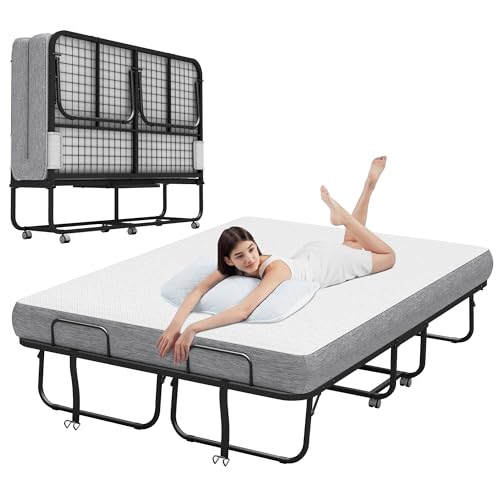
Queen Folding Beds for Adults: The Complete Space-Saving Guide
Everything you need to know about foldable queen beds — frame types, mattress pairing, setup, and how to pick the right model for guest rooms, studios, and small apartments.
A queen folding bed for adults solves a very specific problem: you want full-size sleeping comfort without permanently dedicating floor space to a bed. Whether you live in a studio apartment, host guests regularly, or need a flexible second bed, a foldable queen bed gives you a real mattress surface that can disappear when the room needs to serve another purpose.
But not all folding beds are built the same. Adult use demands sturdier frames, better mattress support, and smoother folding mechanisms than a temporary cot. This guide walks you through frame construction, mattress compatibility, folding mechanisms, and the practical trade-offs so you can decide with confidence before you buy.
What Is a Queen Folding Bed for Adults?
A queen folding bed is a full queen-size (60 by 80 inches) sleeping platform that folds along its length or width into a compact footprint. Unlike a standard queen size bed that stays assembled, a folding model is engineered with hinged frame sections and a foldable mattress or a mattress-compatible folding deck.
Adult-oriented models differ from children's or camping versions in three ways: they use heavier gauge steel or solid wood frames, they include reinforced center supports to prevent sagging, and they are rated for adult weight capacities. Many also include lockable casters so the bed can be rolled into storage and secured in place when in use.
Frame Types and Build Quality
The frame is the single most important component. A folding bed's longevity and safety depend on how well its hinges, legs, and deck support handle repeated folding and adult weight.
- Steel folding frames: The most common adult option. Mid-range models typically use tubular steel with a rust-proof finish; high-end tier models use high-grade steel with reinforced crossbars and a locking hinge system.
- Solid wood folding frames: Less common at queen size but available in premium and luxury tiers. Look for hardwood construction and metal hinge plates, since all-wood hinges wear faster.
- Bi-fold and tri-fold decks: Bi-fold models fold once in half and are simpler but bulkier when stored. Tri-fold models collapse into a smaller footprint but have more hinge points to check for durability.
- Platform-style folding frames: These provide a flat deck for the mattress without a box spring. For comparison, see how standard platform beds without headboards handle support — folding versions mirror that approach but add hinges.
Regardless of material, check the weight rating, the hinge warranty, and whether the frame has a center support rail. Queen size spans 80 inches, so mid-span sag is a real risk on entry-level models.
Choosing the Right Mattress
The mattress makes or breaks a folding queen bed. A mattress that is too thick won't fold inside the frame clearance; one that is too thin won't cushion the deck's hinge lines.
Best choices: medium-firm memory foam or hybrid mattresses in the 6 to 8 inch thickness range. Foam compresses at the fold, which protects the mattress core, and medium-firm support suits most adult sleepers. Side sleepers may prefer a slightly softer foam to cushion shoulders and hips.
What to avoid: thick innerspring mattresses with rigid coil units, pillow-top designs with deep quilting, and any mattress over 10 inches thick unless the manufacturer explicitly confirms fold clearance. Also avoid mattresses with fiberglass fire barriers if the mattress will be folded frequently — repeated flexing can degrade the barrier.
If you already own a mattress and only need the frame, measure its thickness and confirm the folding frame's maximum mattress height before ordering.
Folding Mechanisms Explained
There are three main mechanisms, each with different trade-offs in storage size, setup effort, and long-term durability.
- Hinged fold-in-half frames: The bed folds once along its length and often stands upright. Setup is fast, but the folded unit remains fairly tall. Entry-level models in this category often have simpler hinge locks; premium models add spring-assisted folding.
- Tri-fold frames: The bed folds twice, producing a more compact bundle that fits into closets or under other furniture. More hinges mean more wear points, so prioritize models with metal hinge plates and a stated fold-cycle rating.
- Roll-away frames with casters: The bed folds and rolls on locking wheels. These are the most convenient for guest rooms, and the best adult models pair casters with a stabilizing leg system so the bed does not shift during sleep.
Whichever mechanism you choose, test the lock. A folding bed should lock firmly in the open position with no wobble, and the lock should require a deliberate action to release.
Space Savings and Best Use Cases
A folded queen bed typically occupies a footprint similar to a narrow wardrobe — often 12 to 18 inches deep depending on the model. That makes it viable in rooms where a fixed queen bed would consume the entire floor.
- Studio apartments: Fold the bed away during the day to reclaim living space. Pair it with a compact seating arrangement and a small daybed with storage or a couch bed with storage if you need dual-purpose furniture.
- Guest rooms and home offices: A foldable queen keeps the office functional day to day and provides real adult sleeping space when visitors arrive.
- Small bedrooms shared by adults: When floor space is tight, a folding frame can be folded during waking hours to free up movement room. A queen storage bed with drawers is the alternative if you prefer a fixed bed with built-in storage.
- Rentals and temporary housing: A folding queen moves easily between apartments without disassembly tools.
If you need bunk-style flexibility instead, twin over twin bunk beds for adults and full double bunk beds for adults are worth comparing for multi-person households.
Comparing Queen Folding Bed Tiers
Use this tier comparison to match a model to your usage intensity. Tiers reflect market positioning and build quality, not numeric values.
| Tier | Frame Build | Best For | Folding Mechanism |
|---|---|---|---|
| Entry-level | Tubular steel, basic hinge locks | Occasional guest use, light-duty setups | Hinged fold-in-half |
| Mid-range | Reinforced steel with center support | Regular guest rooms, weekly folding | Hinged or tri-fold with casters |
| Premium | High-grade steel, locking hinge system | Daily adult use, studio apartments | Spring-assisted fold with casters |
| Luxury / flagship | Hardwood or commercial-grade steel | Permanent primary bed in small spaces | Tri-fold with precision hinges |
Entry-level models handle occasional use well. If you plan to fold and unfold the bed several times a week, step up to mid-range or premium — the hinge quality and center support make a noticeable difference over time.
Setup, Safety, and Maintenance
Proper setup protects both the bed and the sleeper. Follow these practices:
- Confirm the lock engages fully before every use. A partially engaged hinge is the most common cause of folding bed instability.
- Place on a level floor. Casters should be locked when the bed is in use, and stabilizing legs should contact the floor evenly.
- Keep hinge points clean and lubricated. A dry silicone spray every few months keeps folding smooth and prevents squeaks.
- Inspect welds and hinge plates quarterly. Look for cracks, loosened bolts, or bent crossbars. Retire the frame if structural damage appears.
- Rotate the mattress. Folding compresses the mattress along the fold line, so rotate it head-to-foot periodically to even out wear.
If the folding bed will be your permanent bed, treat it like any other mattress setup: use a breathable mattress protector and follow the mattress maker's care instructions. For related maintenance guidance, see our notes on mattress care.
Common Mistakes to Avoid
- Buying without checking mattress clearance. Measure your mattress thickness against the frame's fold specification before ordering.
- Ignoring the weight rating. Two adults sharing a queen bed need a frame rated well above the combined weight, especially at mid-span.
- Choosing a frame with no center support. Queen size is long enough that unsupported decks sag over time.
- Skipping the lock test. If the hinge lock feels vague or loose in the store or in reviews, choose another model.
- Using a thick pillow-top mattress. It will not fold cleanly and can damage both the mattress and the hinge mechanism.
Why This Guide Helps You Decide
Buying a folding queen bed is a research-heavy purchase. You are balancing frame durability, mattress compatibility, storage footprint, and long-term reliability — and the wrong choice is expensive to correct. This guide gives you the decision framework: what to check in the frame, which mattress types fold safely, how the mechanisms differ, and where each tier fits. Once you know these points, you can evaluate any product listing in minutes and buy with confidence.
Frequently Asked Questions
Are queen folding beds sturdy enough for daily adult use?
Yes. High-end tier models with reinforced steel frames and solid build quality are designed for daily adult use. Check the weight capacity and center support before buying.
What mattress works best with a queen folding bed?
A medium-firm memory foam or hybrid mattress in the 6 to 8 inch range. Avoid thick innerspring and pillow-top mattresses that resist folding.
How much space does a folded queen bed take up?
Most fold to roughly 12 to 18 inches in depth, depending on the mechanism. Tri-fold models store more compactly than bi-fold designs.
Can I use a queen folding bed as a permanent bed?
Yes, premium and flagship tier models suit permanent use in small apartments and studios when paired with a supportive mattress.
Do folding beds squeak?
Hinges can develop squeaks over time. Lubricating hinge points with silicone spray and tightening bolts usually resolves it. Persistent squeaks may indicate worn hinge plates.
Final Thoughts
A queen folding bed for adults is a practical, space-smart solution when you need full-size comfort without a permanent footprint. Focus your search on frame quality — reinforced steel, center support, and a firm hinge lock — then pair it with a medium-firm foam or hybrid mattress in the right thickness. Match the tier to how often you fold the bed, and it will serve you reliably for years.