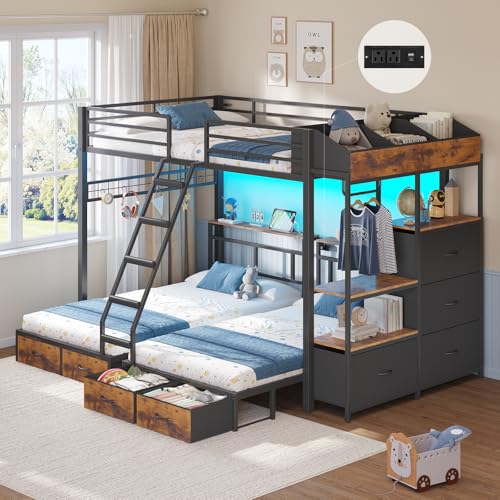
Triple Bunk Beds With Stairs and Storage: The Complete Buyer's Guide
Everything you need to know before choosing a space-saving triple bunk bed — layouts, stair safety, hidden storage, and how to match the right design to your room and sleepers.
What Exactly Is a Triple Bunk Bed With Stairs and Storage?
A triple bunk bed stacks three sleeping surfaces in a single footprint — typically a twin-over-twin-over-twin or a twin-over-full-over-twin arrangement. The "with stairs" part replaces the traditional vertical ladder with a stepped staircase, which is far easier for children, older adults, and anyone carrying bedding. The "with storage" element usually appears as built-in drawers beneath the bottom bunk, cubbies tucked into the staircase, or shelving along the side rails.
Together, these three features turn a standard bunk into a multifunctional furniture piece. If you are still comparing broader bunk categories, our guide to triple bunk beds with storage covers the storage-only variants, while the triple bunk beds with mattresses page explains how mattress sizing works across three tiers.
Common Triple Bunk Layouts and Who They Suit
Layout choice affects headroom, mattress size, and how the stairs integrate with the frame. Here are the three most common configurations:
- Twin-over-twin-over-twin (stacked): The most compact option. All three bunks share the same footprint, making it ideal for narrow rooms or shared kids' bedrooms. Headroom between tiers is the tightest, so this layout suits younger children best.
- Twin-over-full-over-twin (staggered): The middle tier is wider, giving a couple or an older child more room. The staggered frame is deeper front-to-back, so measure your floor space carefully. See our staggered bunk beds with storage guide for depth comparisons.
- L-shaped or corner triple: Two bunks run along one wall and the third turns the corner. This layout works well in square rooms and often leaves a natural alcove for the staircase and drawers.
Stairs vs. Ladders: Safety and Daily Usability
Stairs are the standout upgrade on these beds. A ladder requires balance and upper-body strength; a staircase with wide treads and a handrail behaves like a miniature set of household steps. For families with young children, bunk beds with stairs significantly reduce the risk of falls during the night.
Look for staircases with non-slip treads, a continuous handrail on at least one side, and tread depth of roughly 10 inches or more. Some premium models angle the staircase outward, which improves stability but adds to the overall footprint. Entry-level models often use a straight, vertical staircase — fine for tight rooms, but check that the handrail is included rather than sold separately.
Storage Options: Where the Space Actually Goes
Storage in a triple bunk is not one feature — it is a set of decisions. The most common placements are:
- Under-bed drawers: Full-extension drawers beneath the bottom bunk are the workhorse of storage. Look for metal glides rather than plastic tracks; they hold up far better over years of daily use.
- Staircase cubbies: Each step can double as a recessed shelf. This is excellent for books, slippers, or small toys, and it keeps the floor clear.
- Side shelving and headboard niches: Built-in shelves along the frame add display and bedside storage without extra furniture.
- Corner and end storage: Some designs add a wardrobe column or a set of shelves at the foot of the bed — useful in rooms with no closet.
For families who need maximum capacity, the shorty bunk beds with storage format shows how compact frames can still pack in drawers. If the room is genuinely tight, our small space bunk beds article covers footprint strategies that pair well with triple configurations.
Triple Bunk Configurations at a Glance
| Configuration | Best For | Storage Strength | Space Demand |
|---|---|---|---|
| Twin-over-twin-over-twin | Three children in one room; narrow bedrooms | Moderate — under-bed drawers and stair cubbies | Lowest footprint |
| Twin-over-full-over-twin | Mixed-age siblings; a couple plus a child | High — wider base allows larger drawer banks | Moderate depth |
| L-shaped / corner triple | Square rooms; rooms with a natural alcove | High — corner column and stair storage combine | Largest footprint |
| Triple with integrated desk | Teens and students who need a study zone | Moderate — desk replaces some drawer space | Moderate depth |
Materials and Build Quality to Look For
A triple bunk carries three sleepers, so structural integrity matters more than on a single bed. Solid wood and high-grade steel are the two durable construction paths. Metal frames with reinforced corner brackets are common in mid-range models and offer excellent strength-to-weight ratios. Wooden frames feel warmer and suit traditional or rustic interiors.
Check the weight capacity per tier, the thickness of the slats, and whether the frame includes a center support rail. For adults or heavier sleepers, our solid wood bunk beds for adults and queen size bunk beds for adults guides explain how to evaluate load ratings. If you are weighing metal versus wood, the metal bunk beds twin over twin overview covers the hardware and finish differences.
Safety Checklist Before You Buy
- Guardrails on every upper tier: Rails should run at least five inches above the mattress top and extend past the mattress edges on both sides.
- Stair handrail: A continuous handrail on at least one side of the staircase is non-negotiable for households with young children.
- Non-slip treads: Rubberized or textured steps prevent slips, especially in socks.
- Weight capacity per bunk: Confirm the rating for each tier separately — the top bunk is often rated lower than the bottom.
- Wall anchoring: Most triple bunks include an anti-tip strap. Use it. A tall frame with three sleepers should always be secured to the wall.
- Mattress thickness limits: Upper bunks need mattresses thin enough that the guardrail remains effective. Check the manufacturer's maximum thickness.
Choosing Mattresses for a Triple Bunk
Triple bunks usually require twin mattresses on the upper tiers and either twin or full on the lower tier, depending on the layout. Thinner, firmer mattresses work best on upper bunks because they keep the sleeper below the guardrail line. Memory foam is a popular choice for its low profile and motion isolation; our memory foam mattresses guide explains firmness ranges that suit bunk use. For a full overview of sizing across all three tiers, the mattresses hub is the best starting point.
Protect the investment with a waterproof layer — the mattress encasements guide covers options that zip fully around the mattress and keep allergens out.
Room Planning: Ceiling Height, Doors, and Assembly
Before ordering, measure ceiling height. A triple bunk typically needs at least 7 feet of clearance to sit comfortably, and more if the top tier has a tall guardrail or a canopy. Measure doorways and stairwells along the delivery path as well — triple bunks ship in several boxes, but the largest panels can still be awkward in tight hallways.
Assembly usually takes two adults a few hours. Frames that use pre-drilled holes, labeled hardware, and a center support rail are far easier to build. If the bunk will sit in a small room, pair it with compact storage furniture — a small bedside table or a narrow bedside table with storage keeps the nightstand footprint minimal. For layout ideas, the small bedroom decor guide shows how triple bunks fit into tight floor plans.
Who Should Consider a Triple Bunk With Stairs and Storage?
This bed style shines for families with two to three children sharing a room, vacation homes that need to sleep guests in a compact space, and multi-generational households. It is less suitable for very low ceilings, rooms with a narrow doorway leading directly to the bed wall, or sleepers who need a queen-size surface on every tier.
If adults will use the upper bunks regularly, check the per-tier weight ratings carefully. The metal twin bunk beds for adults article explains which reinforced frames handle adult sleepers safely. For rooms that need a desk instead of a third sleeper, the queen bunk beds for adults with desk format is a useful alternative.
Frequently Asked Questions
Are stairs safer than ladders on a triple bunk?
Yes, for most households. Stairs with a handrail and non-slip treads provide a wider, more stable surface than a ladder, which reduces the risk of slips — especially for children who need to use the bed at night.
How much floor space does a triple bunk with stairs need?
A stacked twin-over-twin-over-twin frame typically needs the same footprint as a standard twin bunk, plus clearance for the staircase. Staggered and L-shaped layouts need more depth. Measure the room and the delivery path before ordering.
Can the storage drawers hold clothing?
Yes. Under-bed drawers on mid-range and high-end tier triple bunks are usually deep enough for folded clothing or bedding. Check the drawer height and whether the glides are metal rather than plastic.
What mattress thickness works on the top bunk?
Follow the manufacturer's maximum thickness specification — usually around 6 to 8 inches for upper tiers. A thinner mattress keeps the sleeper below the guardrail, which is essential for safety.
Do triple bunks need to be anchored to the wall?
Yes. A tall frame carrying three sleepers should always use the anti-tip strap or wall anchor included with the bed. This is a standard safety requirement, not an optional extra.
Ready to Compare Triple Bunk Models?
Browse our curated selection of triple bunk beds with stairs and storage, with feature details and availability updated for you.
View Recommended Models