Triple Bunk Beds with Storage: The Complete Buying Guide
Maximize your bedroom space with a triple bunk bed that combines three sleeping levels with smart storage solutions. Learn how to choose the right frame, layout, and safety features for your home.
Start Your ResearchWhy triple bunk beds with storage are worth considering: When floor space is limited but sleeping capacity needs to grow, a triple bunk bed with integrated storage offers one of the most efficient solutions available. These beds stack three sleeping surfaces into the footprint of a single bed, while built-in drawers, stair compartments, and shelving keep clothes, toys, and bedding organized without requiring additional furniture. This guide walks you through every decision point — from frame material and configuration to safety certifications — so you can choose with confidence.
What Is a Triple Bunk Bed with Storage?
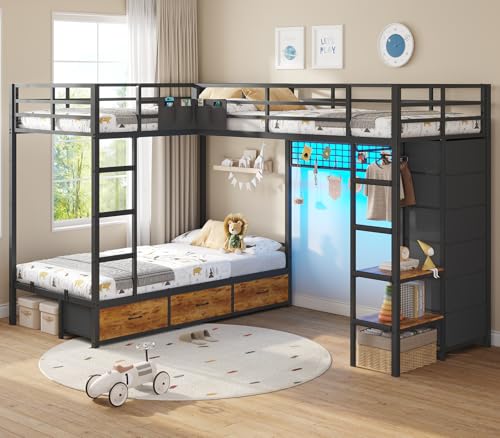
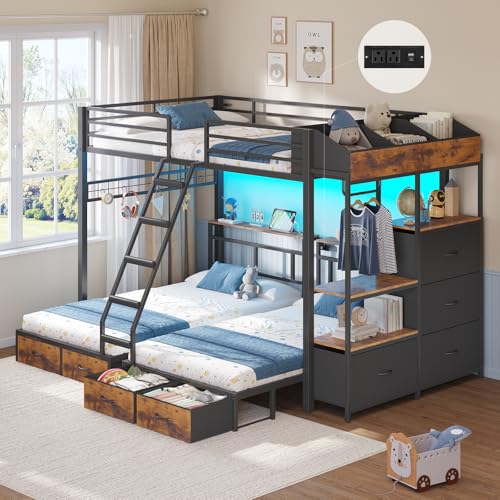
A triple bunk bed with storage is a multi-level sleeping system that accommodates three sleepers in a vertical arrangement, typically with one bed stacked above another and a third bed positioned either above both or offset to the side. What distinguishes a storage-equipped model from a basic triple bunk is the integration of functional storage — drawers, stair compartments, shelving, or a trundle — built directly into the frame.
These beds are most commonly used in children's bedrooms, guest rooms, vacation properties, and shared living spaces where maximizing every square foot matters. Unlike separate beds placed side by side, a triple bunk bed consolidates three sleeping areas into the footprint of a single bed, freeing up floor space for play, study, or movement.
The storage element adds another layer of efficiency. Instead of buying a separate dresser or shelving unit, you gain organizational capacity within the bed's own structure. This is especially valuable in small bedroom decor planning, where every piece of furniture must justify its presence.
Triple Bunk Bed Configurations
Triple bunk beds are not a single design — they come in several configurations, each with distinct advantages depending on room shape, ceiling height, and user age. Understanding these layouts is essential before comparing specific models.
Standard Triple Bunk (Three Levels Stacked)
The classic triple bunk stacks three sleeping surfaces directly above one another, usually with a twin on the bottom, twin in the middle, and twin on top. This configuration has the smallest footprint but requires the highest ceiling — typically at least eight feet. It is best suited for older children and teenagers who can navigate a ladder or staircase safely.
Staggered Triple Bunk
In a staggered design, the middle and top bunks are offset rather than perfectly stacked, creating a stepped appearance. This reduces the visual height of the unit and can make the top bunk feel less enclosed. Staggered layouts often pair well with built-in stair storage and are popular in staggered bunk beds with storage models.
L-Shaped Triple Bunk
An L-shaped triple bunk places two beds in an L configuration on the lower level with a third bed above one of them. This layout suits corner placement and can create distinct sleeping zones. It is less vertically imposing than a straight stack but requires more floor area.
Triple Bunk with Stairs and Storage
This configuration replaces a traditional ladder with a full staircase, and each stair often doubles as a storage drawer or compartment. Models like triple bunk beds with stairs and storage are particularly popular for younger children because the stairs are easier and safer to climb than a vertical ladder. The staircase itself becomes a significant storage asset.
For those comparing layouts, our guide to triple bunk beds with mattresses explains how mattress thickness affects clearances and safety in each configuration.
Storage Types and Their Benefits
The storage in a triple bunk bed is not an afterthought — it is often the deciding factor for buyers. Here are the most common storage types and what each offers.
| Storage Type | Best For | Key Advantage |
|---|---|---|
| Under-Bed Drawers | Clothing, bedding, toys | Uses unused space beneath the bottom bunk; easy access for daily items |
| Stair Storage Compartments | Books, small toys, accessories | Turns the staircase into a functional storage column; keeps items off the floor |
| Built-In Shelving | Display items, books, alarm clocks | Provides open access at each bunk level; ideal for bedside essentials |
| Trundle Storage | Extra bedding, seasonal clothing | Roll-out drawer beneath the bottom bunk; can double as a fourth sleeping surface |
| Headboard/Foorboard Cabinets | Personal items, privacy storage | Discreet compartments that keep each sleeper's belongings separate |
When evaluating storage, consider who will use it. Younger children benefit from lower drawers and open shelving they can reach easily. Teenagers and adults may prefer closed cabinets and deeper drawers. If the bed will serve multiple age groups over time, a combination of stair storage and under-bed drawers offers the most flexibility.
For rooms where floor space is extremely tight, a shorty bunk bed with storage — which uses shorter mattress lengths — can provide triple-bunk functionality in a reduced footprint. And if you are furnishing a compact room from scratch, our small space bunk beds guide covers complementary furniture choices.
Frame Materials Compared
The frame material determines durability, weight capacity, maintenance needs, and the overall aesthetic of your triple bunk bed. Here is how the main options compare.
Solid Wood
Solid wood frames — typically pine, oak, or rubberwood — offer the most natural look and are generally the most durable choice for heavy-duty use. They handle weight well, resist wobbling, and can be refinished if scratched. Solid wood triple bunks are often found in the mid-range to premium tiers and are a solid long-term investment. However, they are heavier and may require more careful assembly.
Metal
Metal frames, usually steel or iron, are valued for their strength-to-weight ratio and clean, modern lines. A heavy-duty metal triple bunk can support adult users without the bulk of solid wood. Metal frames are generally easier to disassemble and move, and they resist warping in humid conditions. The trade-off is that metal can feel colder and may squeak over time if joints loosen. Models with reinforced welding and rust-proof finishes sit at the higher end of the metal category.
Engineered Wood (MDF and Particleboard)
Engineered wood frames are common in entry-level and mid-tier triple bunks. They offer a smooth, uniform finish and are typically lighter and easier to assemble than solid wood. Quality varies significantly — look for models with high-density boards, reinforced joints, and laminated surfaces that resist moisture. Engineered wood is not ideal for very heavy users or for rooms with extreme humidity fluctuations.
Tier guidance: Entry-level triple bunks are usually engineered wood with basic ladder access. Mid-range models step up to solid wood or heavier-gauge metal with stair storage. High-end and top-tier frames use premium hardwoods or commercial-grade steel with reinforced joinery, thicker slats, and more sophisticated storage integration. When comparing tiers, the differences in stability, longevity, and safety detailing are usually more meaningful than any single specification.
Safety Features You Must Check
Safety is the single most important factor when choosing any bunk bed, and triple bunks demand even closer scrutiny because of their height and stacked design. Use this checklist before making a decision.
- Full-length guardrails on every upper level: The top and middle bunks should have guardrails that run the full length of the mattress, not just partial rails. Gaps should be small enough to prevent a child from slipping through.
- Weight capacity per bunk: Confirm the rated weight capacity for each level, not just the total. Adult-capable models should state clearly that each bunk is engineered for adult weight.
- Sturdy access: A staircase with handrails is safer than a vertical ladder, especially for children under eight. If a ladder is used, it should be wide, have flat non-slip steps, and hook securely to the frame.
- Slat spacing and mattress support: Slats should be closely spaced and thick enough to prevent mattress sagging. Some models include a solid platform base, which is more supportive but heavier.
- Corner braces and center supports: A well-built triple bunk includes reinforced corner joints and at least one center support rail per level to prevent flexing.
- Non-toxic finishes: Look for low-VOC or water-based finishes, especially for children's rooms. Certifications such as GREENGUARD or CARB Phase 2 indicate lower emissions.
- Anti-tip anchoring: Tall triple bunks should be anchored to the wall where possible. Check whether the manufacturer includes wall-anchoring hardware.
If the bed will be used by younger children, our guide to kids beds covers additional age-specific safety considerations. For adult users, confirm that the frame is rated for adult weight and that the top bunk has adequate headroom for sitting up.
Size and Space Planning
Triple bunk beds are space-efficient, but they still require careful measurement before purchase. Here are the key dimensions to plan around.
| Measurement | Typical Requirement | Why It Matters |
|---|---|---|
| Ceiling height | At least 8 ft for standard triple stack | Ensures safe headroom on the top bunk; staggered designs may need slightly less |
| Floor footprint | Approximately one twin bed footprint plus stair projection | Determines whether the bed fits without blocking doors or windows |
| Clearance between bunks | 30–36 inches recommended | Allows comfortable sitting and safe climbing; check manufacturer specs |
| Stair projection | 24–36 inches into the room | Staircases extend beyond the bed frame; account for this in tight rooms |
Also consider door swing, window access, and ceiling fixtures such as fans or lights. A triple bunk placed under a ceiling fan may be unsafe if the top bunk brings a sleeper too close to the blades. Measure the room's usable wall length and compare it to the bed's assembled dimensions, including any storage drawers that pull out.
If the room is genuinely compact, pair the bunk with space-conscious accessories. A narrow bedside table with storage or a tall bedside table with drawers can provide extra organization without crowding the floor. Our small bedroom decor guide offers broader layout ideas for tight spaces.
Who Should Choose a Triple Bunk Bed?
Triple bunk beds with storage serve a wide range of households and use cases. Consider which profile matches your situation.
Families with Multiple Children
Families with three children sharing a room are the most common buyers. A triple bunk with stair storage keeps each child's belongings organized and reduces the need for a separate dresser. For households with three or more children, models that combine stair storage with under-bed drawers provide the most organizational capacity.
Guest Rooms and Vacation Properties
A triple bunk bed turns a small guest room into a space that sleeps three comfortably. Storage compartments let you keep extra bedding, towels, and guest supplies on hand without cluttering the room. For vacation rentals, durable metal or solid wood frames with low-maintenance finishes are the practical choice.
Teenagers and Young Adults
Older children and young adults appreciate the independence of a triple bunk with personal shelving and storage. Adult-capable metal frames and queen size bunk beds for adults offer more generous sleeping surfaces for older users.
Multi-Generational and Shared Living
In shared homes, a triple bunk with storage can serve as a flexible sleeping arrangement that adapts as needs change. Solid wood frames in the mid-range or premium tier hold up well to daily use by multiple people.
Step-by-Step Buying Guide
Follow these steps in order to narrow your options efficiently and avoid a purchase you will regret.
- Measure your room and ceiling. Confirm ceiling height, available wall length, and door/window clearances. Decide whether a straight stack, staggered design, or L-shaped layout fits best.
- Identify the primary users. Age, weight, and mobility determine whether you need a staircase, a ladder, adult-rated bunks, or full-length guardrails on every level.
- Choose your storage priority. Decide whether you need clothing storage (drawers), small-item storage (stair compartments), or display storage (shelving). Most buyers benefit from a combination.
- Select a frame material. Match the material to your durability needs and aesthetic. Solid wood for longevity, metal for strength and modern lines, engineered wood for lighter-weight assembly.
- Verify safety certifications and weight ratings. Check per-bunk weight limits, guardrail specifications, slat spacing, and finish certifications. Do not skip this step.
- Compare assembly and delivery requirements. Triple bunks are large and heavy. Check whether assembly is included, whether the boxed components fit through your doorways, and whether wall anchoring is required.
- Review the return and warranty policy. Confirm the warranty period for the frame and the return window. For mattresses, check trial policies separately — our mattresses guide explains what to look for.
One more consideration: mattress choice matters. Triple bunks typically use twin or twin-over-twin sizes, and mattress thickness affects guardrail effectiveness and climbing clearance. For comfort-focused options, explore memory foam mattresses in the appropriate size. If you want to protect your investment, a mattress encasements guide explains how to keep mattresses clean and extend their lifespan.
Frequently Asked Questions
What is the safest triple bunk bed configuration for children?
A staggered triple bunk bed with a full-length staircase and reinforced guardrails on every sleeping level is generally considered the safest configuration. Look for frames with full-length guardrails on the top and middle bunks, a weight-rated ladder or staircase, and a solid base that prevents mattress shifting. Always anchor the frame to the wall if the manufacturer provides hardware.
How much vertical space is needed for a triple bunk bed?
A standard triple bunk bed requires a ceiling height of at least 8 feet to allow safe headroom on the top bunk. Staggered designs can reduce this requirement slightly, but you should always verify the manufacturer's recommended clearance between each sleeping level and the ceiling. Also check the clearance between bunks — 30 to 36 inches is typical for comfortable sitting and climbing.
Are triple bunk beds with storage suitable for adults?
Yes, many triple bunk beds are engineered with adult-capable weight ratings, particularly solid wood and heavy-duty metal models. Adults should confirm the weight capacity per level and consider lower-profile configurations for easier access to upper bunks. Models designed for adults often use wider mattresses and heavier-gauge frames.
What types of storage are typically integrated into triple bunk beds?
Common storage features include under-bed drawers, built-in stair storage compartments, shelving units at the headboard or footboard, and trundle beds that store beneath the bottom bunk. Stair storage is especially popular because it uses vertical space that would otherwise be wasted, and it keeps frequently used items within easy reach.
Do triple bunk beds require special mattresses?
Most triple bunks use standard twin or twin XL mattresses. The key considerations are mattress thickness — which affects guardrail height and climbing clearance — and firmness, which affects support on upper levels. Check the manufacturer's recommended maximum mattress thickness before buying. For general guidance, see our mattress buying resources.
How do I maintain a triple bunk bed with storage?
Tighten all bolts and screws every few months, especially in the first year of use. Check guardrails and slats for looseness. Clean drawers and stair compartments regularly to prevent dust buildup. For metal frames, inspect joints for squeaks and apply lubricant where needed. For wood frames, use a mild cleaner and avoid excessive moisture. Keeping the bed anchored to the wall and checking anchor tightness periodically is also recommended.
Making Your Final Decision
A triple bunk bed with storage is a significant purchase that affects daily life for everyone in the household. The right choice balances safety, spatial efficiency, storage capacity, and durability. Start with measurements and user profiles, then narrow by material and storage type, and finally verify safety certifications and weight ratings before committing.
Take your time comparing configurations and reading the specifications closely. A well-chosen triple bunk bed will serve your household for years, adapting to changing needs while keeping the room organized and comfortable. For related research, explore our guides on triple full bunk beds for adults, metal bunk beds twin over twin, and modern bunk beds with stairs.