Wooden Bedside Bench: A Complete Buying Guide
A well-chosen wooden bedside bench adds practical seating, a resting place for your evening essentials, and a warm natural accent that ties the bedroom together. This guide walks you through materials, dimensions, placement, and style so you can choose with confidence.
Why a bedside bench deserves a place in your bedroom: Unlike a plain nightstand, a wooden bedside bench offers generous surface area and a comfortable spot to sit while dressing or removing shoes. It softens the transition between bed and floor, keeps clutter off the mattress, and introduces the tactile appeal of natural timber. Whether you are refreshing a guest room or completing a primary suite, a bench is one of the most versatile additions you can make.
What Makes a Wooden Bedside Bench Different
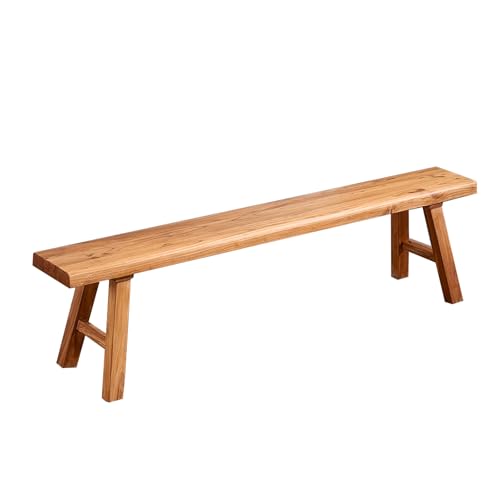
A bedside bench sits at the intersection of seating and storage furniture. It is typically longer than a nightstand but shallower than a full bedroom bench, which lets it slide neatly beside or at the foot of the bed without crowding the room. Wood construction gives it structural rigidity and a visual warmth that upholstered or metal benches often lack.
Buyers researching this category usually already know they want a bench — the real questions are about wood species, finish, dimensions, and how the piece will coordinate with an existing wooden bed frame or a walnut bedside cabinet. The sections below answer those questions in plain terms.
Key Benefits of Adding a Bedside Bench
Comfortable Seating
A sturdy bench gives you a place to sit while putting on socks or shoes, which is far kinder to your back than perching on the edge of the mattress.
Extra Surface Area
Lay out tomorrow's clothing, rest a breakfast tray, or stack books and a folded throw. The bench keeps these items off the bed and floor.
Visual Warmth
Timber grain and natural tones soften hard edges and connect the room to organic textures, especially in minimalist or Scandinavian schemes.
Space Definition
A bench anchors the foot of the bed or a reading corner, giving the eye a resting point and making the layout feel intentional.
Wood Types and Build Quality
The wood species and joinery determine how a bench feels, ages, and holds up to daily use. Here is how the common options compare.
| Tier | Typical Materials | Best For | Durability Notes |
|---|---|---|---|
| Entry-level | Engineered wood with veneer, pine, MDF cores | Guest rooms, occasional use, first apartments | Lightweight; check for reinforced corner blocks and a solid top surface |
| Mid-range | Rubberwood, acacia, mango wood, solid pine frames | Daily use in primary bedrooms | Good balance of weight and stability; look for mortise-and-tenon or dowel joinery |
| Premium | Oak, maple, ash, cherry | Long-term use, households with children or pets | Dense grain resists dents; refinishable surfaces that age gracefully |
| Luxury | Walnut, teak, hand-finished hardwoods | Statement pieces, heirloom-quality furniture | Excellent dimensional stability; premium oil or lacquer finishes |
Beyond species, inspect how the bench is put together. A quality wooden bedside bench should have a top that does not flex under weight, legs that meet the frame with proper joinery rather than staples alone, and a finish that feels smooth without visible drips or uneven patches.
Sizing and Placement
Dimensions matter more than most buyers expect. A bench that is too deep blocks walkways; one that is too tall looks out of proportion beside the mattress.
- At the foot of the bed: Choose a bench roughly two-thirds to three-quarters the width of the mattress. Leave at least 18 inches of clearance on each side to move comfortably.
- Beside the bed: A narrow bench (about 30–40 inches wide) works as a nightstand alternative. It should sit level with or slightly below the mattress top for easy reach.
- Under a window: A low bench with a shallow depth doubles as a reading seat and does not obstruct the view.
- Seat height: Around 17–19 inches is comfortable for most adults to sit and stand from with ease.
If your bedroom is compact, consider a bench with open legs rather than a solid base — it keeps the floor visible and makes the room feel larger. For very tight layouts, a bench with a built-in shelf or drawer can replace a separate wooden three-drawer bedside table and save floor space.
Matching Your Bench to Your Bedroom Style
A wooden bench should feel like part of the room, not an afterthought. A few pairing principles help:
With a Wooden Bed Frame
Match or deliberately contrast the wood tone. A light oak bench beside a dark wooden king-size bed creates a balanced, layered look.
With Bedside Tables
If your nightstands are painted white, a natural wood bench adds warmth without clashing. If they are timber, echo the grain for cohesion.
In a Minimalist Room
Choose a clean-lined bench with a slatted or open base. Avoid heavy carving or ornate detailing that fights the calm.
In a Rustic Room
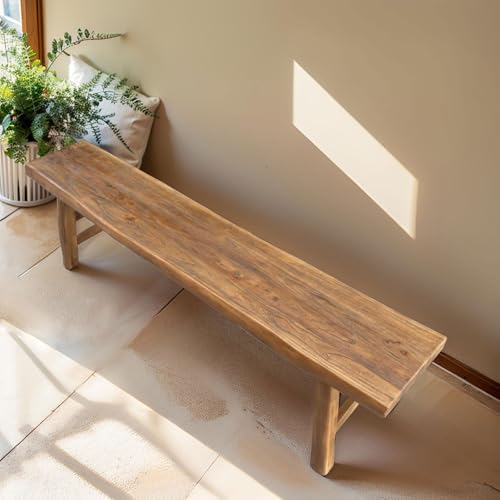
Live-edge tops, visible knots, and matte oil finishes suit farmhouse and cabin aesthetics. Pair with textured bedding for depth.
How to Use a Bedside Bench Day to Day
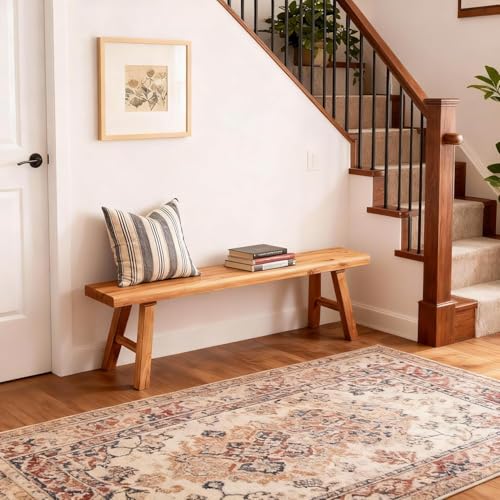
- Place a folded throw and a small cushion on one end to soften the timber and invite sitting.
- Use the remaining surface for a tray holding a lamp, a book, and a glass of water — a simple substitute for a walnut bedside table with drawers.
- In a guest room, keep fresh towels and a spare blanket on the bench so visitors feel welcomed.
- Add a pair of slippers underneath if the bench has open legs; they stay out of the walkway and are ready when you need them.
- During the day, use the bench as a spot to set laundry or a laptop bag instead of tossing items onto the bed.
Care and Maintenance
Wooden furniture rewards a little routine attention. Dust the bench weekly with a soft, dry cloth, and wipe spills promptly with a barely damp cloth followed by a dry one. Avoid placing hot mugs directly on the surface — use a coaster or tray. Every six to twelve months, apply a furniture wax or oil appropriate to the finish to protect the grain and keep the tone even. Keep the bench out of prolonged direct sunlight to prevent uneven fading, and avoid harsh household cleaners that can strip the finish.
Common Buying Mistakes to Avoid
- Ignoring depth: A deep bench can make a narrow bedroom feel cramped. Measure the walkway before you commit.
- Choosing looks over stability: Thin legs and lightweight frames may look elegant online but wobble in daily use.
- Forgetting the finish: Matte and oiled finishes feel warmer and hide scratches better than high-gloss lacquer in busy households.
- Overlooking assembly: Some benches ship flat-packed. Check whether the hardware and instructions are included and whether the joinery relies on cam locks or proper bolts.
- Mismatching scale: A delicate bench beside a heavy sleigh bed looks lost; a chunky bench beside a slim platform bed overwhelms it.
Ready to Choose Your Wooden Bedside Bench?
Browse our curated selection of wooden bedside benches and bedroom seating. Compare styles, materials, and features, then check availability to find the piece that fits your space and your routine.
Frequently Asked Questions
What is a wooden bedside bench used for?
A wooden bedside bench provides a convenient place to sit while getting dressed, to lay out clothing, or to hold a tray, books, or a folded throw. It also adds visual warmth and a finished look to the bedroom.
What size wooden bedside bench should I choose?
For placement at the foot of a queen or king bed, a bench that is slightly narrower than the mattress works best. For a bench beside the bed, a compact two-seater or narrow design fits tighter spaces without blocking walkways.
Which wood type is best for a bedside bench?
Solid hardwoods such as oak, walnut, and maple offer the best durability and long-term stability. Mid-range options often use rubberwood or acacia, while entry-level models may use engineered wood with a veneer finish.
Can a wooden bedside bench be used in a small bedroom?
Yes. In small bedrooms, choose a narrow bench with a low profile and open legs so the floor remains visible. A bench with a shelf or storage compartment can replace a separate nightstand in tight layouts.
For related bedroom furniture ideas, explore our guides on wooden floating bedside tables, white bedside tables with storage, and wooden day beds to complete a cohesive, restful space.