Bedside Table with Outlet and USB: The Complete Buying Guide
Keep your phone, smartwatch, and reading lamp charged within arm's reach. Learn what separates a well-built charging nightstand from a basic one — and choose the model that fits your bedroom.
Why a Charging Nightstand Belongs in Every Bedroom
A bedside table with outlet and USB solves one of the most common bedroom frustrations: the tangle of cables and adapters that accumulates on a traditional nightstand. Instead of hunting for a wall socket behind the bed, you plug devices directly into the furniture beside you. The result is a cleaner surface, fewer dropped phones, and a more restful sleep environment.
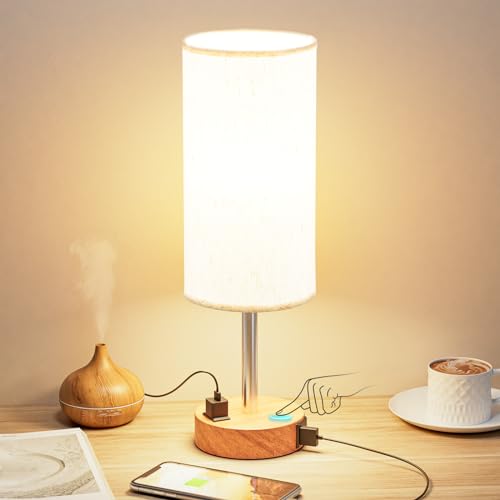
The appeal goes beyond convenience. Integrated charging keeps devices off the floor and away from under-bed dust, reduces the risk of tripping over cords at night, and gives every family member a dedicated charging spot. For readers who enjoy a late-night chapter, pairing a charging nightstand with a dedicated bedside reading light creates a complete wind-down station.
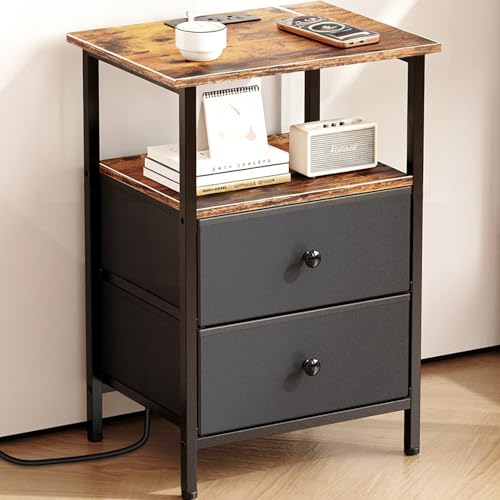
Modern designs range from compact open-frame units to full storage cabinets. If your bedroom doubles as a home office, a model with file storage such as a bedside table with file drawer keeps paperwork organized while still offering charging access. The category has matured to the point where nearly every style — from black bedside table finishes to warm wood tones — includes a power-equipped option.
USB-A vs USB-C vs AC Outlets: What to Expect
Not all charging nightstands are built the same. The port configuration determines which devices you can power without an adapter, so it pays to understand the difference before comparing models.
USB-A Ports
USB-A remains the most common port on entry-level and mid-range charging nightstands. It is perfectly suited for older phones, e-readers, Bluetooth speakers, and smartwatch docks. Most units provide two USB-A ports rated for standard charging speeds. If your household still relies on USB-A cables, this is the most universally compatible option.
USB-C Ports
USB-C is increasingly standard on premium and high-end tier models. It supports faster charging for modern smartphones and tablets, and it is reversible, which is a small but meaningful convenience in the dark. A nightstand that pairs one USB-C port with two USB-A ports offers the best of both worlds.
AC Outlets
Built-in AC outlets let you plug in a lamp, a white noise machine, or a laptop adapter without reaching for an extension cord. Models that combine two AC outlets with USB ports are the most flexible. For a full comparison of outlet-only designs, see our guide to bedside tables with power outlets.
| Port Type | Best For | Typical Tier |
|---|---|---|
| 2× USB-A | Phones, e-readers, smartwatch docks | Entry-level |
| USB-A + USB-C | Mixed-device households, tablets | Mid-range |
| AC outlets + USB | Lamps, noise machines, laptops | Premium |
| Fast-charge USB-C + AC | Flagship phones, multi-device setups | Luxury |
For a broader look at configurations, our overview of bedside tables with charging stations explains how integrated modules differ from add-on power strips.
Key Features to Evaluate Before You Buy
Beyond the ports, several design details separate a nightstand you will keep for years from one you will replace within a season. Consider these factors in order of practical importance.
Storage Layout
Drawers keep cables, chargers, and bedside essentials out of sight. A single drawer with a shelf underneath is the most versatile layout for most bedrooms. If you need more room for books and devices, look at models with generous storage or a drawer-and-shelf combination. Hidden compartments are useful for keeping small valuables out of view — see our guide to bedside tables with hidden storage.
Cable Management
Look for a rear cutout or grommet that lets the power cord exit cleanly. Without one, the cord presses against the wall and can fray over time. Some premium models include an internal channel that routes both the main cord and device cables out of sight.
Surface Area and Height
The top surface should hold a lamp, a glass of water, and your phone without crowding. Standard nightstand height is roughly level with the top of your mattress. If you sleep on an adjustable bed, a bedside table designed for adjustable beds keeps essentials reachable as the head section rises.
Drawer Hardware
Metal glides with a soft-close mechanism are worth prioritizing. They prevent drawers from slamming during the night and hold up better than stapled particle-board runners. Models with decorative handles can also serve as a style accent.
- Rear cable cutout or internal cable channel
- At least two USB ports plus one AC outlet
- Metal drawer glides with soft-close action
- Surge protection or overcurrent protection in the power module
- Cord length of at least 6 feet for flexible placement
- Weight capacity rated for a lamp and everyday items
Materials, Build Quality, and Finish Options
The frame material affects durability, weight, and how well the nightstand matches your existing bedroom set. Each option has trade-offs.
Solid Wood and Wood Veneer
Solid wood offers the most durable construction and a finish that ages gracefully. Veneer over engineered wood is a common mid-range choice that balances stability and appearance. Both work well with black-and-wood two-tone designs that pair naturally with upholstered bed frames.
Metal Frames
Powder-coated steel and aluminum frames are lightweight, resistant to moisture, and easy to clean. They suit modern and industrial bedroom styles. A black bedside table in metal is a versatile choice that reads as intentional rather than plain.
Upholstered and Mixed Materials
Fabric-wrapped drawers and leather-trimmed tops add warmth and absorb sound — a small benefit in shared bedrooms. These models tend to sit in the premium tier and require more careful cleaning.
Tier Guide: Matching Features to Your Needs
Charging nightstands fall into four broad market tiers. The right choice depends on how many devices you charge, how much storage you need, and how long you intend to keep the piece.
| Tier | Typical Features | Best For |
|---|---|---|
| Entry-level | Two USB-A ports, single drawer, engineered wood frame | Guest rooms and first apartments |
| Mid-range | USB-A + USB-C, one AC outlet, two drawers, metal glides | Primary bedrooms with multiple devices |
| Premium | Dual AC outlets, fast-charge USB-C, cable channel, solid wood or veneer | Couples sharing a charging station |
| Luxury | Integrated wireless charging pad, hidden compartment, upholstered details | Flagship bedrooms and design-led spaces |
For a nightstand that doubles as a charging hub, a model in the premium tier with a dedicated wireless charging station can eliminate the need for a separate pad. If your priority is simplicity, a mid-range unit with one USB-C port covers most modern phones.
Sizing and Placement for Small or Large Rooms
Measure the gap between your mattress edge and the nearest wall or closet before ordering. A nightstand that is too wide will crowd the bed; one that is too narrow will not hold a lamp and a phone at the same time.
Small Bedrooms
In compact rooms, choose a narrow profile with vertical storage. Models with a single drawer and an open shelf keep the footprint small while still housing a charger. Our roundup of bedside tables for small bedrooms covers options that fit tight gaps, and tables for small rooms focuses on multi-purpose designs.
Large Bedrooms
Larger rooms can accommodate wider units with two or three drawers. A bedside table dresser combines nightstand function with extra clothing storage. If you prefer a statement piece, a height-adjustable bedside table adapts to different mattress profiles.
Placement Checklist
- Top surface roughly level with the mattress top
- At least 2 inches of clearance from the wall for the power cord
- Drawers open without hitting the bed frame
- Power cord reaches a wall outlet without an extension cord
Safety and Certification Checklist
Charging furniture combines electrical components with everyday bedroom use, so safety deserves a dedicated review. Before you commit to a model, verify the following.
- Certification: Look for UL, ETL, or equivalent safety listing on the power module.
- Surge protection: Built-in surge suppression protects phones and tablets from voltage spikes.
- Overcurrent protection: Prevents overheating when multiple devices charge at once.
- Cord gauge: A heavier-gauge cord handles the load of a lamp plus two devices without warming.
- Placement: Keep the nightstand away from curtains and bedding that could block heat dissipation.
If you need a nightstand for a medical setting, our guide to a bedside table for hospital beds covers models with lockable storage and accessible port placement. For general bedroom organization, a bedside cabinet with shelf pairs well with a charging unit on top.
Frequently Asked Questions
What should I look for in a bedside table with outlet and USB?
Prioritize built-in AC outlets and USB-A or USB-C ports, a fire-resistant housing, adequate cord length, and a sturdy frame. Consider drawer storage and a finish that matches your bedroom furniture. Check that the power module carries a recognized safety certification.
Are USB ports on nightstands safe for charging phones overnight?
Reputable models use certified charging modules with surge protection and overcurrent safeguards. Always check for UL or ETL listing before leaving devices plugged in overnight. Avoid stacking books or fabric over the power module so it can dissipate heat.
Can a bedside table with outlets replace a charging station?
Yes. A nightstand with integrated outlets and USB ports consolidates device charging beside the bed and reduces cable clutter. For fast-charging laptops you may still want a dedicated adapter, but phones, tablets, and e-readers are fully covered.
Where should I place a charging nightstand in a small bedroom?
Place it within arm's reach of the bed and close to a wall outlet. Choose compact models with vertical storage or open shelves when floor space is limited. Leave a small gap behind the unit so the power cord is not pinched against the wall.
Do charging nightstands work with adjustable beds?
Yes, provided the table height matches the mattress when the head section is raised. Dedicated adjustable-bed nightstands are designed with this in mind and often include casters or a swivel top.
Making Your Final Decision
A bedside table with outlet and USB is a small upgrade with an outsized effect on your nightly routine. Focus on the port mix first, then storage layout, then materials. Readers who want a minimalist footprint can start with a standard bedside table format and add a charging model later, while those furnishing a full room may prefer to browse nightstands with drawers for a coordinated look.
Whatever tier you choose, verify the safety certification, measure your available space, and pick a finish that complements your bed frame. The right charging nightstand becomes the quiet anchor of a well-organized bedroom — and one less cable to untangle before sleep.