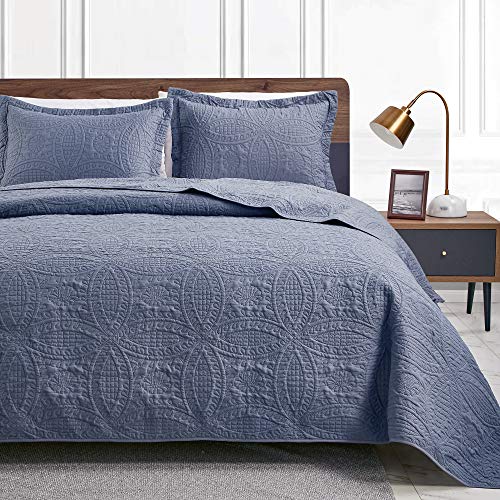
Bedspreads & Comforters: The Complete Buyer's Guide
Understand the real differences between bedspreads and comforters, how to size them correctly, which materials perform best for your sleep style, and how to layer bedding for year-round comfort.
Start With the BasicsWhy this guide matters: Bedspreads and comforters are the most visible layer of your bedding, yet they are often chosen on appearance alone. This guide explains how construction, fill, sizing, and care affect warmth, durability, and everyday usability, so you can choose bedding that looks right and performs for years.
Bedspread vs. Comforter: What's the Real Difference?
Both bedspreads and comforters cover the top of the bed, but they are built for different purposes and styling outcomes. Understanding these differences is the fastest way to narrow your options before browsing a retailer.
Bedspreads
A bedspread is typically a lightweight, quilted or woven cover designed to drape over the entire bed, often reaching close to the floor and sometimes covering the pillows. Traditional bedspreads have a generous drop and are meant to be the single finishing layer. They are usually thinner than comforters, which makes them a good fit for warmer rooms or for people who prefer a neat, tailored look.
Comforters
A comforter is a thicker, filled, quilted cover designed primarily for warmth. It usually sits on top of the bed and is folded back at the pillows, often paired with a duvet cover, top sheet, or decorative shams. Comforters provide more loft and insulation, making them the standard choice for cold climates and for sleepers who like a plush, hotel-style bed.
| Feature | Bedspread | Comforter |
|---|---|---|
| Primary purpose | Full-coverage top layer and styling | Warmth and insulation |
| Typical thickness | Lightweight, often quilted or woven | Thick, filled with loft |
| Pillow coverage | Often drapes over or covers pillows | Usually folded back; pillows exposed |
| Drop length | Generous, often near the floor | Moderate overhang (4–6 inches typical) |
| Best for | Warm rooms, tailored looks, quick bed-making | Cold rooms, plush layered bedding, shared beds |
Materials and Fill: What Actually Affects Comfort
The outer fabric and the fill determine how warm, breathable, and durable a bedspread or comforter will be. In general, natural fills offer better breathability and temperature regulation, while synthetic fills offer consistency and easier maintenance.
Outer Fabric Options
- Cotton: Breathable, soft, and durable; the most common outer fabric for quilts, bedspreads, and comforters. Long-staple cotton tends to feel smoother and resist pilling better over time.
- Polyester and microfiber: Wrinkle-resistant, easy to launder, and available in a wide range of textures. Microfiber is a solid choice for high-traffic guest rooms and households with pets.
- Linen: Naturally breathable and moisture-wicking, with a relaxed texture. Linen bedspreads suit warm climates and layered, casual styling.
- Wool: Excellent for temperature regulation and natural warmth; often used in blanket-style bedspreads and heavier comforters for cold bedrooms.
Fill Options
- Down: The best warmth-to-weight ratio and loft. Premium down comforters feel light yet trap heat efficiently; fill power is the key specification to compare.
- Down alternative: A synthetic fill that mimics down's loft, typically hypoallergenic and easier to clean. Mid-range down-alternative comforters often provide excellent warmth for the category.
- Cotton batting: Common in quilted bedspreads; breathable and lightweight, suited to warm rooms and summer use.
- Wool batting: Dense and insulating; well-suited to winter comforters and cold-climate bedrooms.
Quality Tiers in Plain Terms
Rather than focusing on numbers, use these relative tiers to benchmark products:
- Entry-level: Basic polyester or cotton blends with straightforward quilting; suitable for guest rooms and seasonal refresh.
- Mid-range: Better cotton shells, denser quilting, and down-alternative fills; a solid balance for daily use.
- Premium: Long-staple cotton, higher fill power, and reinforced stitching; designed for years of regular washing and use.
- Luxury: High fill-power down, fine sateen or percale shells, and artisan quilting; the most refined hand-feel and loft retention.
Sizing: Getting the Drop and Overhang Right
Size is the most common source of returns for bedspreads and comforters. A cover that is too small leaves the mattress exposed; one that is too large pools on the floor and collects dust. Use the table below as a starting point, then confirm against the retailer's dimensions.
| Bed Size | Typical Mattress Dimensions | Comforter Overhang per Side | Bedspread Drop |
|---|---|---|---|
| Twin | 38" × 75" | 3–5 inches | 10–20 inches |
| Full | 54" × 75" | 4–6 inches | 15–21 inches |
| Queen | 60" × 80" | 4–6 inches | 15–21 inches |
| King | 76" × 80" | 5–7 inches | 15–21 inches |
| California King | 72" × 84" | 5–7 inches | 15–21 inches |
For a traditional bedspread look that reaches near the floor, measure from the top of the mattress to the floor and add that measurement to each side of the mattress width. For a comforter on a shared bed, err toward the larger overhang so both sleepers stay covered during the night.
How to Choose: A Practical Decision Framework
Use these questions to narrow your options quickly and avoid buying bedding that looks good in photos but disappoints in daily use.
- What is the room temperature? Warm rooms suit lightweight bedspreads or breathable cotton comforters; cold rooms benefit from down or wool fills.
- How often will you wash it? Households with pets or children should prioritize machine-washable bedspreads and down-alternative comforters. Down comforters generally need professional cleaning or careful home laundering.
- What is your styling goal? Tailored, full-drape looks call for bedspreads; relaxed, layered looks suit comforters with duvet covers and shams.
- Who shares the bed? Shared beds need generous overhang and, ideally, a comforter with consistent fill distribution to prevent cold spots.
- Do you have allergies? Down-alternative fills and tightly woven cotton shells are the most practical hypoallergenic choices.
For a coordinated setup, pair your selected cover with matching bed sheets and a supportive pillow. If you are still finalizing your bed, browse the broader beds collection and review our mattress buying guide to make sure the foundation suits your sleep style.
Layering for Year-Round Comfort
Layering is the most effective way to adapt bedding across seasons without buying multiple covers. A simple three-layer system works for most bedrooms:
- Base layer: A fitted sheet in breathable cotton or linen.
- Mid layer: A lightweight quilt or blanket for adjustable warmth.
- Top layer: A bedspread for a neat finish, or a comforter for maximum warmth in cold months.
In summer, swap the comforter for a lightweight quilted bedspread and keep a breathable throw at the foot of the bed. In winter, add a down or wool comforter and a wool blanket beneath it. This approach keeps the bed comfortable in both seasons and extends the lifespan of each piece.
Care and Maintenance
Proper care extends the life of bedspreads and comforters more than any other factor. Follow the care label first, then use these general guidelines:
- Bedspreads: Most quilted cotton and microfiber bedspreads are machine washable on a gentle cycle. Use a large-capacity machine to allow free movement, and tumble dry low to prevent shrinkage.
- Down-alternative comforters: Wash in a front-loading machine with a gentle detergent; dry on low with dryer balls to redistribute the fill and restore loft.
- Down comforters: Prefer professional cleaning, or use a large front-loading machine with a down-specific detergent. Dry thoroughly with dryer balls to prevent clumping.
- Wool: Spot clean where possible; follow the label for hand-washing or professional cleaning to avoid felting.
Store clean, fully dry bedding in a breathable cotton bag rather than a sealed plastic bin. Avoid long-term compression for down comforters, which can reduce loft over time.
Related Bedding Guides
Continue building a coordinated, comfortable bedroom with these related guides:
Frequently Asked Questions
What is the difference between a bedspread and a comforter?
A bedspread is a lightweight, quilted or woven cover that typically drapes over the entire bed and reaches close to the floor, often covering the pillows. A comforter is a thicker, filled, quilted cover that sits on top of the bed, usually folded back at the pillows, and is designed primarily for warmth rather than full draping.
How do I choose the right size for a bedspread or comforter?
Match the cover to your mattress size and desired overhang. For a traditional full-drape look, choose a bedspread with a generous drop; for a comforter, select a size that provides 4 to 6 inches of overhang on each side for shared beds. Size up one step if you use a thick mattress topper.
Which fill material is best for a comforter?
Down fill offers the best warmth-to-weight ratio and loft, while down alternative provides a vegan, hypoallergenic option with consistent warmth. Wool and cotton fills offer breathability and natural temperature regulation for year-round use.
How should I care for a bedspread or comforter?
Follow the care label: most quilted bedspreads and down-alternative comforters are machine washable in a large-capacity machine on a gentle cycle. Down comforters benefit from professional cleaning or a front-loading washer with dryer balls to restore loft. Always use a duvet cover or top sheet to reduce washing frequency.