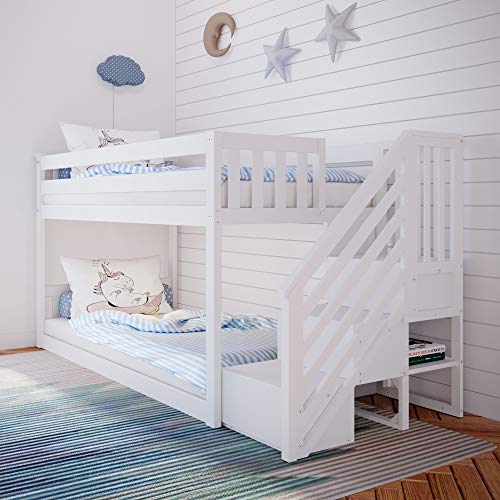
White Twin Bunk Beds with Stairs: The Complete Buyer's Guide
Everything you need to know about choosing a safe, stylish, and space-saving white twin bunk bed with stairs — from safety standards and dimensions to storage options and design ideas.
START READINGWhy white twin bunk beds with stairs? A white finish brightens any room and pairs beautifully with nearly every decor style, while the staircase design adds safety, accessibility, and often valuable storage. This guide walks you through the key factors — frame construction, staircase placement, guardrail requirements, and long-term durability — so you can make a confident buying decision.
What Makes a Great White Twin Bunk Bed with Stairs?
A white twin bunk bed with stairs combines three important benefits: a clean, timeless aesthetic, a space-saving vertical layout, and a safer climbing solution than a traditional ladder. Whether you are furnishing a shared kids' room, a guest room, or a vacation property, the right model balances safety, build quality, and everyday usability.
The white finish is not just about looks. Modern finishes are typically applied with low-VOC, child-safe paints or powder coatings that resist chipping and yellowing. When paired with solid wood, engineered wood, or reinforced metal frames, a white bunk can remain a long-term centerpiece for years. For parents comparing layouts, our guide to twin size bunk beds with stairs offers additional configuration ideas that complement this article.
Key Benefits at a Glance
Space-Saving Layout
Two sleeping areas stack vertically, freeing up floor space for play, study, or storage — ideal for shared bedrooms and small rooms.
Safer Stair Access
Wide, stable steps with integrated handrails reduce slip risk compared to ladders, making the top bunk more accessible for younger children.
Bright, Versatile Style
White finishes reflect light, make rooms feel larger, and blend seamlessly with coastal, farmhouse, modern, and Scandinavian interiors.
Built-In Storage Potential
Many staircase designs include drawers or cubbies, turning dead space into practical organization for bedding, toys, or clothing.
Convertible Options
Select models separate into two standalone twin beds, extending the bed's useful life as children grow or room layouts change.
Long-Term Durability
Quality frames with reinforced joints, solid slats, and robust hardware stand up to daily use and provide steady support.
How to Choose: A Step-by-Step Buying Guide
1. Frame Material and Construction
The frame determines safety, lifespan, and how the bed feels day to day. Consider these common constructions:
- Solid wood (pine, birch, oak): Heavy-duty and repairable, with a warm look. Look for kiln-dried wood and reinforced corner joints.
- Engineered wood (MDF, particleboard): Typically more entry-level, but quality varies widely. Choose models with thick panels, sturdy metal-to-wood connectors, and sealed edges.
- Metal frames: Often powder-coated white. Check for high-grade steel, welded joints, and anti-slip treads on stairs. Heavy-duty models are excellent for adult use.
If durability for older children or adults matters, compare construction notes in our guide to heavy-duty bunk beds with storage, which explains load ratings and reinforcement features in more depth.
2. Staircase Design and Placement
The staircase is the defining feature of this bunk style. Key questions to answer:
- Left or right side? Stair placement determines how the bed fits against walls and windows. Measure your room and plan the layout before ordering.
- Step width and depth: Wider, deeper treads are easier for small feet. Look for anti-slip surfaces.
- Handrail quality: A continuous handrail on at least one side provides confident climbing.
- Integrated storage: Many staircase designs include drawers. Our article on bunk beds with storage stairs compares drawer and cubby configurations.
3. Safety Standards and Guardrails
Safety should never be an afterthought. Prioritize these features:
- Guardrail height: Top bunk guardrails should extend at least 5 inches above the mattress surface, with no gaps wider than 3.5 inches.
- Mattress support: Solid slats or a sturdy bunkie board prevent sagging and keep the mattress in place.
- Weight capacity: Check published limits per bunk. For children and teens, a top bunk rated for 200 pounds and a bottom bunk rated for 300 pounds is a reasonable baseline.
- Certifications: Look for compliance with recognized juvenile furniture safety standards and non-toxic finish certifications.
For families with low ceilings, review our guide to bunk beds for low ceilings to confirm sufficient headroom above the top bunk.
4. Size, Dimensions, and Room Fit
A white twin bunk bed with stairs typically measures approximately 100–110 inches long and 42–45 inches wide when assembled, depending on stair placement. Always confirm:
- Assembled length and width, including the staircase footprint
- Height from floor to top guardrail
- Recommended ceiling height for comfortable use
- Doorway and stairwell clearance for delivery and assembly
If the bed will share space with other furniture, our small bedroom decor guide offers practical layout strategies that keep the room functional and uncluttered.
5. Storage and Functional Extras
Staircase bunks naturally lend themselves to storage. Common options include:
- Drawers built into each stair step
- Under-bed drawers or trundle space
- Open cubbies for books and toys
- Convertible designs that split into two beds
If you want maximum flexibility, explore bunk beds that separate into twin beds — a smart long-term choice for growing families.
White Finish: Style and Care
White bunk beds work in virtually any interior. Popular pairings include:
- Coastal: White frames with light wood accents, striped bedding, and soft blues
- Farmhouse: White bunks with shiplap walls, woven baskets, and warm textiles
- Modern minimalist: Clean white lines with neutral bedding and simple wall art
- Scandinavian: White frames with pale wood floors, soft throws, and greenery
To keep the finish looking fresh, dust weekly with a soft cloth, wipe spills promptly with a damp cloth and mild soap, and avoid abrasive cleaners. Touch-up paint pens are useful for minor scuffs.
Comparison: Common Configurations
| Configuration | Best For | Key Considerations |
|---|---|---|
| Twin over twin with stairs | Shared kids' rooms, guest rooms | Balanced footprint; staircase adds safety and storage |
| Twin over full with stairs | Mixed-age siblings, teens | Larger lower bunk; verify overall length |
| Convertible bunk with stairs | Long-term flexibility | Separates into two beds; check conversion hardware |
| Heavy-duty steel bunk with stairs | Adults, teens, high-traffic use | Higher load ratings; commercial-grade construction |
Assembly and Maintenance Tips
- Assemble on a soft surface to protect the finish, and follow the manufacturer's sequence closely.
- Use the provided hardware and check all bolts after the first week, then every few months.
- Place the bed against a wall where possible and use anti-tip straps if included.
- Keep the staircase clear of clutter and teach children to use the handrail.
- Inspect slats and guardrails periodically for loosening or damage.
Planning a longer-term setup? Our guide to when to replace a mattress helps you time mattress upgrades alongside the bed purchase.
Frequently Asked Questions
Are white twin bunk beds with stairs safe for children?
Yes, when properly assembled and used according to the manufacturer's guidelines. Staircase designs are generally safer than ladders because they offer wider, more stable steps with handrails, reducing the risk of slips and falls. Always verify guardrail height, mattress support, and weight capacity before use.
What are the benefits of stairs over a ladder on a bunk bed?
Stairs provide a wider, more stable climbing surface, are easier for younger children and seniors to use, and often include built-in storage drawers. They take up more floor space than a ladder but offer superior safety and convenience.
How much space do I need for a white twin bunk bed with stairs?
A standard twin bunk bed with stairs typically requires a footprint of roughly 100 to 110 inches in length and 42 to 45 inches in width, though stair placement on the left or right side affects the exact dimensions. Always check the specific product's assembled dimensions.
Can white twin bunk beds with stairs be separated into two beds?
Many models are designed as convertible bunks that can be separated into two standalone twin beds. Check the product specifications for a "convertible" or "separable" feature if this flexibility matters to you.
What weight capacity should I look for?
Look for a top bunk capacity of at least 200 pounds and a bottom bunk capacity of at least 300 pounds for children and teens. For adult use, seek heavy-duty models rated for 400 pounds or more per bunk.
Ready to Find Your Perfect White Bunk Bed?
Explore our hand-picked selection of white twin bunk beds with stairs below — chosen for safety, durability, and smart storage design.
VIEW RECOMMENDED MODELS