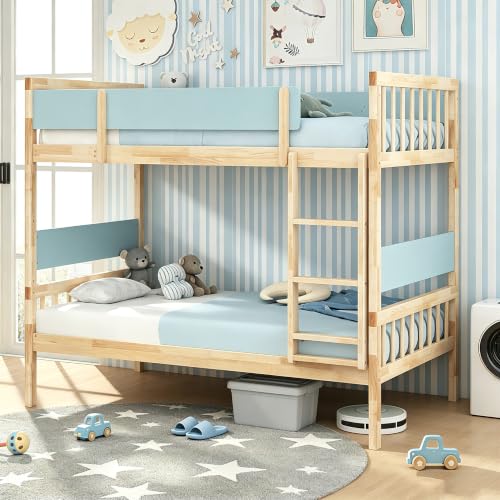
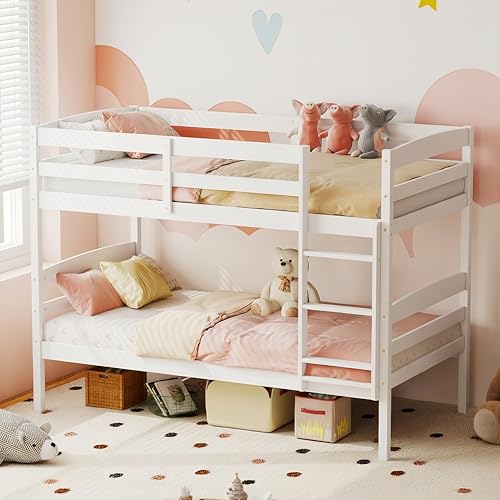
Bunk Beds That Can Be Two Single Beds: The Complete Guide
Need one room to serve two purposes? Learn how separable bunk beds work, what separates a smooth conversion from a frustrating one, and how to choose a design that adapts as your space and household change.
Why this guide matters: A bunk bed that can be split into two single beds is one of the most practical furniture investments for guest rooms, kids' rooms, and multi-use spaces. But not every "convertible" bunk bed separates the same way — and some designs are far easier to disassemble, move, and reassemble than others. This guide walks you through the mechanics, the trade-offs, and the specifications that actually matter before you commit.
How Separable Bunk Beds Actually Work
A bunk bed that can be two single beds is, at its core, a pair of freestanding bed frames that happen to be stacked and joined when configured as a bunk. The conversion happens by reversing that process: detach the connecting hardware, lift off the upper frame, and reposition both frames side by side as standalone beds. The quality of that experience depends almost entirely on three design details.
1. The joining hardware
Most convertible bunk beds use one of three connection systems. Bolted connectors pass through both frames and require tools to remove — very secure, but slower to convert. Bracket-and-slot systems let the upper frame seat into keyed slots on the lower frame, which is faster but demands precise alignment. Interlocking pin systems sit in between, offering tool-free or minimal-tool separation with strong holding power. If you plan to convert frequently — say, for seasonal guests — prioritize a system you can operate confidently without instructions.
2. Whether both frames are structurally independent
This is the detail buyers miss most often. Some bunk beds that separate into single beds rely on the lower bunk's tall corner posts for stability even when the upper bunk is removed. When split, the lower frame can feel less rigid than intended. Look for designs where each frame has its own complete leg set, side rails, and cross supports — essentially two finished beds that were designed to stack. A bunk bed that turns into two beds cleanly should not leave either half relying on the other for structural integrity.
3. The footboard and headboard geometry
On a standard bunk bed, the upper frame often has shortened guard rails and no full footboard. When that frame becomes a standalone single bed, it may look unfinished or lack a proper headboard. Many well-designed separable models include symmetrical headboards and footboards on both frames so that each bed looks intentional once separated. Check product photos of the separated configuration, not just the bunked setup.
Quick test for shoppers: Search the product listing or manual for the phrase "separates into two beds" or "can be used as two single beds." If the listing only says "convertible" without clarifying whether both halves stand alone, treat that as an open question and verify with the manufacturer's specification sheet. You can also compare models directly in our bunk bed buying guide.
The Main Types of Convertible Bunk Beds
Not all bunk beds that can be two single beds are built the same way. The four categories below cover the vast majority of designs on the market, and each suits a different household.
Twin-over-twin separable bunks
The most common configuration. Two identical single beds stack vertically with the help of a ladder and guard rail, then split into two matching singles. This is the sweet spot for siblings sharing a room, guest rooms that occasionally host two people, and small apartments where the second bed is only needed sometimes. Browse examples in our twin-over-twin bunk beds for adults collection.
Bunks that separate into single beds with storage
These models add drawers or under-bed storage to one or both frames. Storage survives the conversion — the lower bed keeps its drawers when it becomes a standalone single — which makes this category especially useful for rooms that cannot accommodate separate dressers. Our bunk beds for small rooms with storage roundup includes several separable options.
Twin-over-full convertible bunks
A larger lower bed with a single upper bed. When separated, you get one single and one full-size bed rather than two identical singles. This suits rooms that sometimes host an adult and sometimes a child, and it is a popular choice for teen bedrooms. Compare configurations in our twin-over-full bunk beds guide.
Loft-style beds with a detachable lower section
Some convertible designs are sold as a loft bed with a removable lower single bed. The loft portion is fixed, but the lower bed pulls out and becomes an independent single. These are worth considering when ceiling height rules out a true bunk but floor space is still tight. See bunk beds for rooms with low ceilings for related options.
| Tier | Typical Build | Best For |
|---|---|---|
| Entry-level | Lightweight metal frames, simple bolt connectors, basic guard rails | Occasional guest use, temporary setups, first apartment |
| Mid-range | Reinforced steel or solid wood, keyed bracket connections, full headboards on both frames | Regular conversion, kids' rooms, shared bedrooms |
| Premium | Hardwood or high-grade steel, tool-free or quick-release hardware, finished on all sides | Frequent reconfiguration, multi-use rooms, long-term ownership |
| Top-tier | Commercial-grade joinery, independent structural certification for each frame, premium finishes | Rental properties, vacation homes, heavy daily use |
Benefits of a Bunk Bed That Converts to Two Singles
Flexibility is the headline benefit, but the practical advantages go further than that.
- One purchase, two room layouts. A bunk bed that separates into single beds lets you switch between a compact shared-room setup and a more spacious layout without buying new furniture. That is especially valuable for growing children whose space needs change every few years.
- Better resale and hand-me-down potential. Separable bunks remain useful when the bunk phase ends. A single bed is easier to place in a guest room, a teenager's room, or a first apartment than a fixed bunk.
- Simpler moving. Because the frames are designed to come apart, they are easier to carry through doorways and up stairwells than one-piece bunk beds. This matters more than most buyers expect.
- Guest room efficiency. Keep the beds bunked for everyday use, then split them when two guests prefer privacy or when the room needs to function as a home office. Our bunk beds that can be separated overview covers more layout scenarios.
- Long-term investment. A well-built separable bunk bed with quality joinery is efficient in the long run because it adapts instead of being replaced.
What to Check Before You Buy
Use this checklist to evaluate any bunk bed that can be two single beds. It is organized by the questions buyers most often forget to ask.
Conversion mechanics
- Does the manufacturer explicitly state that both frames work as standalone beds?
- How many tools are required to separate and rejoin the frames?
- Is there a locking mechanism that prevents accidental separation while bunked?
- Does the upper frame have its own full leg set when removed?
Dimensions and fit
- Measure the footprint of each bed in both configurations. Two singles side by side need roughly double the width of one bunk footprint plus clearance.
- Confirm mattress sizes — a twin-over-twin separable bunk needs two identical twin mattresses, and both frames should support standard thickness. See our guide to bunk beds for thick mattresses if you plan to use deeper mattresses.
- Check ceiling height clearance for the upper bunk and ladder placement.
Safety and compliance
- Look for guard rails on the upper bunk and a secure ladder attachment.
- Verify the weight capacity of each frame independently, not just the bunked total.
- Check for rounded edges, lead-free finishes, and compliance with relevant bunk bed safety standards.
- Confirm the lower frame does not become top-heavy or unstable once separated.
Finish and aesthetics
- Are all visible sides of both frames finished, so each bed looks complete when standalone?
- Do both frames include matching headboards and footboards?
- Will the separated beds match the rest of your room decor? Our black bunk beds twin over twin collection is a good reference for how a single finish carries across configurations.
Materials and Build Quality Tiers
The material determines how well a convertible bunk bed survives repeated disassembly and reassembly. Conversion is hard on hardware and joints, so build quality matters more here than on a fixed bunk.
Metal frames
High-grade steel with a rust-proof finish is the most common choice for entry-level and mid-range separable bunks. Metal frames are typically lighter and easier to move, and welded joints hold up well if the steel gauge is adequate. Thin tubular frames can flex over time; look for reinforced corner joints and a stated weight capacity for each bed. Our black metal bunk beds twin over twin selection shows the range of build quality within this category.
Solid wood frames
Hardwood frames — pine, rubberwood, or oak depending on tier — offer a warmer look and excellent screw-holding strength, which matters when connectors are repeatedly removed. Solid wood bunks tend to be heavier, which is a plus for stability and a minus for moving. Check that the manufacturer uses kiln-dried wood and metal-on-metal bolt fittings rather than wood screws alone for the bunk connectors.
Engineered wood and composite frames
Engineered wood is common in entry-level convertible designs and can look excellent, but repeated disassembly can wear out fastener holes. If you plan to convert often, either choose a design with metal threaded inserts or accept that conversions should be infrequent. For a broader comparison of frame styles, see our bunk bed frames guide.
Build-quality shortcut: A separable bunk bed should feel solid with zero wobble in both configurations. If the showroom model wobbles when bunked, it will wobble more when separated. Reinforced, heavy-duty connectors and solid build are the clearest signals of a frame designed to convert repeatedly.
Safety Essentials for Convertible Designs
Bunk beds already carry specific safety considerations. Separable designs add a few more, because the structural integrity of each bed changes when the bunk connection is removed.
- Independent stability. Once separated, each bed must stand stable on its own. Test this in person if possible, or rely on independent weight ratings from the manufacturer.
- Guard rails and ladder. While bunked, the upper bed needs a guard rail on all open sides and a ladder that hooks or bolts securely. Check that the rail height is appropriate for the mattress thickness you plan to use.
- Connector integrity. Inspect the joining hardware periodically. Loose bolts on a bunk bed are a red flag; on a convertible model, they can also make separation harder later.
- Mattress foundation. Each frame needs its own slat or platform base. Slats should be closely spaced and screwed down, not just resting in place, so the bed remains safe after conversion.
- Age suitability. Top bunks are generally recommended for children six and older. Separable bunks that become two single beds are a good long-term choice for younger children, because the lower bed becomes a safe standalone single as soon as the bunk phase ends. See bunk beds for kids for age-specific guidance.
Setup, Moving, and Reassembly Tips
The conversion process is where separable bunk beds earn or lose their reputation. A few habits make it much easier.
- Keep the manual and spare hardware. Convertible bunks use specific bolts and brackets. Store them in a labeled bag attached to the frame so they are not lost between conversions.
- Convert with two people. Even lightweight upper frames are awkward to lift alone. Two people also make alignment of connectors much faster.
- Work on a protected floor. Lay down a blanket or cardboard before separating frames to avoid scratches during the lift-off step.
- Recheck tightness after reassembly. Re-torque all connectors after the first week of use in either configuration; joints can settle.
- Plan the separated layout first. Confirm the two beds fit side by side with clearance for nightstands and walking space before you separate them. If space is tight, our bunk beds for small rooms guide has layout ideas that keep both configurations workable.
Frequently Asked Questions
Can any bunk bed be split into two single beds?
No. Many bunk beds are built as a single rigid structure and cannot be safely separated. Only models specifically designed with independent frames, standalone leg sets, and proper connectors should be converted. Always confirm with the manufacturer before attempting to split a bunk bed.
How long does it take to convert a separable bunk bed?
With two people and a tool-free or minimal-tool connector system, conversion typically takes 20 to 45 minutes, including repositioning the frames. Bolted systems take longer. Frequent converters should prioritize quick-release or keyed bracket designs.
Do separable bunk beds need special mattresses?
They use standard single or twin mattresses, but thickness matters. The upper bunk needs a mattress thin enough to keep the guard rail effective, and both frames should support the mattress depth you choose. Check our guide to bunk beds for 12-inch mattresses if you prefer a thicker mattress.
Are bunk beds that convert to two singles sturdy enough for adults?
Many are, provided each frame has an independent weight rating suitable for adults. Mid-range and premium separable bunks commonly support adult sleepers. Check the individual frame ratings rather than the combined bunk rating. Our bunk beds that can hold adults overview covers capacity details.
What is the difference between a separable bunk bed and a bunk bed with a trundle?
A separable bunk bed splits into two full-size standalone beds. A trundle bunk keeps the bunk structure intact and adds a pull-out lower bed, usually for occasional use. If you need two permanent beds, choose separable; if you need occasional extra sleeping space, a trundle may be more space-efficient. Compare the two in our bunk beds and trundle beds guide.
Can I separate a bunk bed and later put it back together?
Yes — that is the main advantage of this design. Keep the original hardware and manual, and reassemble using the same sequence in reverse. Recheck all connectors after reassembly and again after the first week of use.
Final Buying Checklist
Before you commit to any bunk bed that can be two single beds, run through this short list one more time:
- Manufacturer confirms both frames are standalone-ready
- Connector system matches how often you plan to convert
- Each frame has an independent weight rating
- Guard rails and ladder meet safety expectations
- Both beds are finished on all sides with matching headboards
- Separated footprint fits your room with clearance
- Mattress thickness is compatible with the guard rails
- Hardware is stored and documented for future conversions
If a listing is vague on any of these points, compare it against a model that states them clearly. For a broader comparison across frame styles and configurations, our bunk bed that turns into two beds guide and the bunk beds that convert to single beds overview are good next reads.