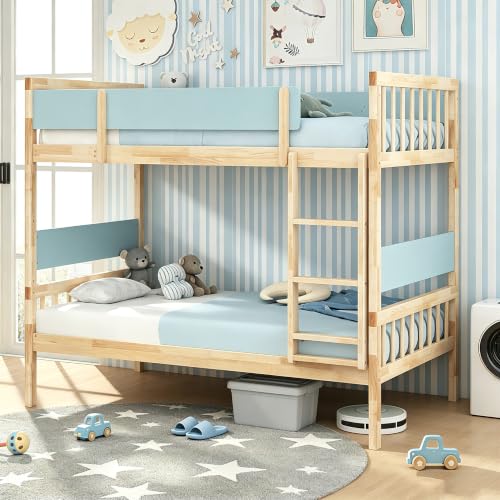
Bunk Beds That Separate Into Single Beds
One purchase, two configurations. Learn how convertible bunk beds give you a space-saving sleep solution today and two independent beds tomorrow — without compromising on comfort or durability.
Explore Top PicksWhy convertible bunk beds matter: A bunk bed that separates into single beds adapts to your changing needs. Whether you are furnishing a shared kids' room, a guest bedroom, or a vacation rental, this dual-purpose design delivers flexibility that a fixed bunk simply cannot match.
What Are Bunk Beds That Separate Into Single Beds?
A bunk bed that separates into single beds is exactly what it sounds like: a stacked sleeping system where the upper and lower units can be detached and used as two standalone beds. Unlike a traditional bunk bed that is welded or permanently fastened into a single frame, a convertible bunk bed uses bolted brackets, interlocking posts, or modular joinery so each section becomes fully independent.
This category is sometimes described with similar phrases — bunk beds that convert to two singles, bunk beds that can be separated, or bunk beds that can be two single beds. They all refer to the same core idea: a modular design that maximizes sleeping capacity in one phase of life and transitions to standard single beds in another.
Most convertible bunk beds fall into the twin-over-twin category, but you will also find twin-over-full and full-over-full configurations. The separation mechanism is the defining feature — the individual beds are complete, self-supporting units with their own headboards, footboards, and mattress platforms.
Types of Convertible Bunk Beds
1. Twin-Over-Twin Separable Bunks
The most common configuration. Two twin-sized beds stack vertically and separate into two independent twin beds. This is the go-to choice for siblings sharing a room who may eventually need separate spaces. Many models in this class are reviewed in our bunk beds separate into twin beds guide.
2. Twin-Over-Full Separable Bunks
A twin bed on top and a full bed on the bottom. When separated, you get one twin and one full — useful for a guest room that occasionally hosts couples or older children. See our twin over full bunk beds section for configuration details.
3. Detachable Bunk Beds With Storage
Some convertible models include built-in drawers, shelving, or under-bed storage that stays with each unit after separation. These are practical for small rooms where every square foot counts. Explore bunk beds that can be separated for storage-focused options.
4. Convertible Bunks With Trundle or Desk
Premium configurations may add a trundle bed or a desk attachment that can be used in either the bunk or single-bed setup. These designs are more complex and typically sit in the mid-range to premium tier.
Why Choose a Separable Bunk Bed?
- Long-term flexibility: Use it as a bunk while children share a room, then split it into two single beds as they grow and need privacy.
- Space efficiency: A bunk configuration saves floor space in compact bedrooms, dorm rooms, and cabins. When separated, each bed fits a standard room layout.
- Guest room adaptability: Keep it bunked for sleepovers and separate it when guests prefer independent beds.
- Moving and relocation: Modular beds are easier to disassemble, transport, and reassemble than one-piece frames.
- Resale and repurposing: A convertible design stays useful across multiple life stages, which makes it a sound long-term investment.
If you are comparing this category to fixed bunks, our bunk bed buying guide covers the broader decision framework, including room size, ceiling height, and mattress thickness.
Key Features to Evaluate
Separation Mechanism
The quality of the bracket and bolt system is the single most important factor. Look for reinforced steel brackets, locking pins, or interlocking post joints. A well-engineered mechanism stays rigid when bunked and separates cleanly without wobble in single-bed mode.
Frame Rigidity and Weight Capacity
Convertible bunks must maintain structural integrity in both configurations. Check the stated weight capacity for each bed individually, not just the combined bunk. Models rated for adults typically use heavier-gauge steel or solid hardwood.
Mattress Compatibility
Top bunks usually require a thinner mattress (often 6–8 inches) to keep the guardrail effective. Bottom bunks and single-bed configurations can accommodate standard thickness. Confirm the recommended mattress height before pairing with a bunk bed for a 12-inch mattress if you already own a deep mattress.
Guardrails and Ladder
Guardrails should be securely attached and tall enough to prevent roll-off. A sturdy ladder with wide, textured steps improves safety. Some separable models let you remove the ladder once the beds are separated.
Headboard and Footboard Design
Because each separated unit needs a finished look, check that both beds have complete headboards and footboards. Some entry-level models leave the bottom unit with a plain frame, which looks unfinished in single-bed mode.
Frame Materials and Build Quality
The material determines durability, weight, and how well the bed holds up through repeated conversions.
Metal Frames
High-grade steel with a rust-proof finish is the most common choice for convertible bunks. Metal frames are heavy-duty, resist warping, and hold their shape across bunk and single configurations. Look for reinforced corner joints and a powder-coated finish. Our black metal bunk beds twin over twin page highlights several metal options.
Solid Wood Frames
Solid hardwood — pine, oak, or rubberwood — offers a warmer look and excellent rigidity. Wooden convertible bunks need precise joinery because the separation points are under more stress than fixed joints. Avoid particle board or MDF for load-bearing components. For wood-focused designs, see bunk beds twin over full solid wood.
Upholstered Accents
Some premium convertible bunks add upholstered panels to the headboard or guardrail. These are comfortable but require more maintenance and are less common in high-traffic kids' rooms.
Comparison by Tier and Best Use
The table below classifies separable bunk beds by market tier and intended use. Tier descriptors reflect relative positioning, not absolute figures.
| Tier | Typical Build | Best For | Separation Mechanism |
|---|---|---|---|
| Entry-level | Light-gauge steel, simplified brackets | Occasional guests, light use, starter rooms | Basic bolt-and-nut |
| Mid-range | Reinforced steel or solid wood, quality hardware | Shared kids' rooms, daily use, growing families | Locking brackets or interlocking posts |
| Premium | Heavy-duty steel or hardwood, precision joinery | Adult use, long-term setups, guest suites | Tool-free or quick-release systems |
| Luxury | Flagship materials, integrated storage or desk | Multi-function rooms, vacation properties | Engineered modular connection |
When comparing models, focus on the mechanism and weight capacity rather than the tier label alone. A well-specified mid-range model often outperforms an entry-level design in rigidity and longevity.
Safety and Assembly Considerations
- Follow the manufacturer's bunk-to-single instructions: Reconfiguration steps vary by model. Using the wrong bracket orientation can compromise stability.
- Re-check fasteners after conversion: Bolts and locking pins should be re-tightened after the first week and periodically thereafter.
- Respect weight limits: Each separated bed has its own rating. Do not exceed it, especially for adult use.
- Use the correct mattress height: A top bunk with an over-thick mattress reduces guardrail effectiveness.
- Anchor where possible: Some single-bed configurations benefit from wall anchoring, particularly in households with young children.
- Keep the ladder secure: If the ladder remains attached in bunk mode, verify it hooks firmly and does not shift.
If ceiling height is a concern, review bunk beds for 8-foot ceilings and bunk beds for rooms with low ceilings before choosing a tall convertible model.
Practical Tips Before You Buy
- Measure twice: Confirm the footprint in both bunk and separated layouts. Remember that two single beds side by side need more total floor width than one bunk.
- Plan the separation space: Decide where each single bed will go before you buy. A convertible bunk is only useful if your room can accommodate the split layout.
- Check the hardware kit: Ensure all brackets, bolts, and tools are included and that replacement parts are available from the manufacturer.
- Consider mattress thickness early: If you already own thick mattresses, check compatibility with bunk beds for thick mattresses.
- Review the finish: A rust-proof finish on metal and a sealed finish on wood extend the life of the frame through repeated assembly.
- Think about future use: A twin-over-full separable bunk offers more long-term versatility than twin-over-twin if adult guests are likely.
For related configurations, you may also want to explore bunk beds that turn into 2 singles and bunk bed that turns into two beds for naming variations and model roundups.
Ready to Compare Convertible Bunk Beds?
Browse our curated selection of bunk beds that separate into single beds and find the configuration that fits your room, your family, and your long-term plan.
View Recommended ModelsFrequently Asked Questions
What are bunk beds that separate into single beds?
They are convertible bunk bed designs where the top and bottom units detach and function as two independent single beds. The separation is typically achieved with bolted brackets or interlocking posts, allowing the same furniture to serve as a space-saving bunk and as two standalone beds.
Are convertible bunk beds safe for adults?
Many models are rated for adult use, provided the frame is heavy-duty and the stated weight capacity is respected. Look for reinforced steel or solid hardwood construction and check the per-bed weight rating, not just the combined bunk rating.
How difficult is it to separate a bunk bed into two singles?
Most convertible bunks use simple bolt-and-bracket systems that can be separated in under an hour with basic hand tools. Premium models may offer tool-free or quick-release mechanisms. Always follow the manufacturer's instructions and re-tighten fasteners after conversion.
Can I use a thick mattress on a separable bunk bed?
The top bunk usually requires a thinner mattress to keep the guardrail effective, while the bottom bunk and separated single beds can often accommodate a standard or thicker mattress. Confirm the recommended mattress height for your specific model before pairing it with a deep mattress.
Do separated single beds need their own headboards?
Quality convertible bunks are designed so each unit has a finished headboard and footboard. Entry-level models sometimes leave the bottom unit with a plain frame, so check the product details if a finished look in single-bed mode matters to you.