
Bunk Beds With Dressers Built In: The Complete Space-Saving Guide
Two beds and a full dresser in one footprint. Learn how integrated-dresser bunk beds work, which configurations suit shared bedrooms and guest rooms, and what to check before you buy.
Explore Recommended PicksWhy this guide matters: If you are researching bunk beds with dressers built in, you already know you need more than just a place to sleep. You need a complete bedroom system that keeps clothing organized, frees up floor space, and holds up to daily use. This guide walks through every decision point so you can buy with confidence.
What Are Bunk Beds With Dressers Built In?
Bunk beds with dressers built in are stacked sleeping systems that combine two sleeping surfaces with integrated drawer storage. Instead of placing a separate dresser beside the bed, the drawer unit is engineered into the bed frame itself — usually beneath the lower bunk, along the side of the frame, or inside a staircase that leads to the top bunk.
The core idea is footprint efficiency. A conventional bunk bed plus a standalone dresser can consume most of a small bedroom's usable wall space. An integrated-dresser bunk bed condenses both functions into one vertical structure, leaving more room for play, study, or circulation. This is why these beds are especially popular in shared children's rooms, small bedroom layouts, dorm-style setups, and vacation properties where every square foot counts.
Beyond space savings, integrated dressers keep clothing storage within arm's reach of the sleeper. Children can access their own clothes without crossing the room, and the bedroom stays visually tidier because storage is part of one coordinated piece of furniture rather than a collection of mismatched items.
Main Configurations of Bunk Beds With Built-In Dressers
Not all integrated-storage bunk beds are designed the same way. The configuration you choose should match who sleeps in the bed, how much storage you need, and how much floor area the room can spare.
Under-Bunk Drawer Base
The most common layout: a row of drawers built into the base beneath the lower mattress platform. Typically three to four drawers, ideal for one child's folded clothing and small accessories. Simple, sturdy, and the easiest to integrate into low-ceiling rooms.
Side-Mounted Dresser Column
A vertical drawer column attached to the side of the frame, offering taller drawer stacks and sometimes a small open shelf on top. This layout suits rooms with extra wall length but limited depth, and it keeps the drawer faces accessible from the room rather than the bed.
Staircase Dresser Unit
Storage stairs replace a ladder and convert each step into a deep drawer or cubby. This is the safest and most storage-rich option, and it works especially well in twin-size bunk beds with stairs for younger children who need a secure climb.
Full Loft With Dresser Wall
A lofted top bunk with a full dresser and desk wall beneath. This configuration maximizes vertical space and is often chosen for teenagers or adult rooms. Pair it with a bunk bed with desk underneath for a complete live-work-sleep zone.
Each configuration carries different trade-offs. Under-bunk drawers are the least intrusive but offer limited capacity. Staircase units add safety and storage but require more floor length. Side columns increase drawer count but can crowd the entry side of the bed. A loft with a dresser wall delivers the most storage but needs higher ceilings and a robust frame — see our notes on bunk beds for low ceilings if headroom is tight.
Comparing Tiers: What You Get at Each Level
Rather than shopping by numbers, think in terms of build tier. The tier determines frame rigidity, drawer glide quality, finish durability, and safety detailing. The table below compares typical characteristics across tiers — no figures, just relative positioning.
| Tier | Typical Frame & Drawer Build | Best For | Drawer Capacity |
|---|---|---|---|
| Entry-Level | Basic metal or engineered-wood frame; standard drawer slides; simpler finishes | Guest rooms, seasonal use, first bunk bed for young children | 3–4 drawers |
| Mid-Range | Reinforced frame; smoother ball-bearing glides; laminated or painted finishes | Daily use in shared kids' rooms; long-term family setups | 4–6 drawers plus shelving |
| Premium | Solid-wood construction; dovetail or reinforced drawer boxes; soft-close hardware | High-traffic family bedrooms; rooms that need to age well | 6+ drawers, sometimes with cubbies |
| Luxury | Hardwood, custom-grade joinery, premium finishes, design-matched hardware | Primary residences, design-led interiors, adult loft conversions | Full dresser wall configurations |
As a rule, mid-range models deliver the best balance of durability and drawer smoothness for daily family use. Entry-level options are a sensible fit for rooms used occasionally, while premium and luxury tiers make sense when the bed is a long-term investment in a heavily used space.
Safety Checks Before You Buy
Integrated storage adds weight and moving parts, so safety deserves more attention than it does with a plain bunk bed. Run through these checks for every model you shortlist.
Pre-Purchase Safety Checklist
- Upper-bunk guardrails: full-length rails on both long sides and at least one end, with no gap wide enough for a child to slip through.
- Weight ratings: confirm the rated capacity for each bunk separately. Heavy-duty frames are essential if adults or teens will use the top bunk.
- Staircase or ladder security: stairs should have handrails and non-slip treads; ladders should hook firmly and sit flush.
- Drawer stops: drawers should stop before pulling fully out, and should not create a tipping hazard when open.
- Wall anchoring: every bunk bed, especially one with a tall dresser column, should be anchored to the wall using the supplied hardware.
- Entrapment compliance: check that the model meets current bunk-bed safety standards for the market it is sold in.
- Finish safety: low-emission finishes and rounded edges matter in children's rooms.
If the bed will be used by adults, cross-reference our guide to queen-size bunk beds for adults and heavy-duty options before committing. Weight rating and headroom are the two factors most often overlooked.
Room Planning: Will an Integrated Dresser Bunk Fit?
Measure before you order. Integrated storage changes the bed's footprint compared with a standard bunk, and the drawer faces need clear swing room.
- Floor length: staircase models run longer than ladder models — often by the depth of two or three stair treads.
- Drawer clearance: allow enough space in front of each drawer bank to open it fully. A partially blocked dresser defeats the purpose.
- Ceiling height: the top bunk needs comfortable headroom for its sleeper. If the ceiling is low, prioritize a low-profile bunk bed design.
- Door and stairwell width: integrated dressers usually ship in multiple boxes and some arrive assembled. Confirm delivery access.
- Adjacent furniture: a bunk with a built-in dresser may let you remove a freestanding dresser and a bedside table, which can actually open up circulation.
For tight rooms, sketch a simple floor plan with the bed's dimensions plus drawer clearance. If the room is genuinely small, our small bedroom decor guide covers placement strategies that complement storage bunk beds.
Mattress Sizing and Fit
Bunk beds with built-in dressers are not universal in mattress compatibility. Most use twin or twin-over-full configurations, but the upper bunk typically requires a thinner mattress to stay safely below the guardrail.
- Upper bunk: check the maximum mattress thickness stated by the manufacturer. Exceeding it reduces guardrail protection.
- Lower bunk: usually accepts standard twin or full/double mattresses, depending on the model.
- Mattress support: confirm whether the frame uses slats, a platform, or a box-spring requirement.
- Replacement timing: bunk mattresses take focused wear. See our guide on when to replace a mattress before reusing an old one.
If the bed is a twin-over-full design, our twin-over-full bunk bed overview explains the space implications of that mixed-size layout.
Who Should Choose Bunk Beds With Dressers Built In?
These beds solve a specific set of problems. They are a strong fit if any of the following describe your situation:
- Shared children's bedrooms where two sleepers need separate clothing storage without doubling the furniture footprint.
- Guest and vacation rooms that need to sleep multiple people while keeping linens and spare clothing on-site.
- Teen and young-adult rooms where a loft with a dresser wall replaces both a bed and a dresser.
- Rooms with limited floor area where vertical storage is the only practical option.
They are a weaker fit if the room has very low ceilings, if the bed must be disassembled and moved frequently, or if a single sleeper needs only light storage. In those cases, a standard bunk bed plus a trundle bed with storage or a storage-equipped bed frame may be more practical.
How to Choose the Right Model
Work through the decision in this order to avoid a purchase you regret:
- Sleepers first. How many people, what ages, and what weight capacities are needed? This sets the frame tier and bunk sizes.
- Storage second. Count the drawers you actually need. A student with a capsule wardrobe needs far fewer than a shared room with two growing children.
- Layout third. Match the configuration to the room's usable wall length and drawer clearance.
- Access fourth. Stairs are safer for younger children; ladders suit older sleepers and tighter footprints.
- Finish last. Match the frame finish to the existing room palette. Neutral woods and painted whites age well; bold tones should be a deliberate choice.
If the room is shared by adults, review queen-size bunk beds for adults and heavy-duty bunk beds with storage for frames rated to adult use. For children, white twin bunk beds with stairs pair integrated storage with a friendly, classic look.
Recommended Bunk Beds With Dressers Built In
⚠️ AFFILIATE DISCLOSURE: This website contains affiliate links. As an Amazon Associate, we earn from qualifying purchases. If you make a purchase through these links, we may receive a small commission at no additional cost to you. Read our full affiliate policy.

Low Loft Bed Twin Size with 7 Storage Drawers, Desk and LED Lights, Heavy Duty Metal Kids Loft Bed with 12" H Safety Guardrail, Anti-Collision Pad, Private Play Curtain, Under-Bed Play Space (Black)
Check price on Amazon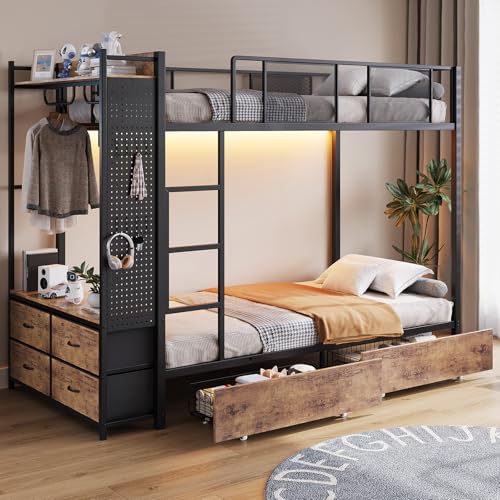
Cozynome Bunk Bed Twin Over Twin with Open Shelf, LED Lights & Charging Station, Metal Bunk Bed with 6 Storage Drawers, Hanging Rod & Ladder, No Box Spring Needed, for Kids Teens, Rustic Brown
Check price on Amazon
ADORNEVE Loft Bed Full Size with U-Shaped Desk, 6 Storage Drawers,White | Metal Loft Bed with Power Outlet, LED Light, 2 Storage Shelves, Safety Guardrail & Ladders, No Box Spring Needed
Check price on Amazon
BTHFST Bunk Bed Twin Over Twin with 14 Storage Drawers & Bookshelf, Black | Twin Bunk Beds with RGB LED Lights & Metal Grid Panel, Metal Bunk Beds for Kids with Safety Guardrails & Ladder
Check price on Amazon
DICTAC Loft Bed Twin Size with Storage Stairs,Desk & Power Strips,Metal Twin Loft Bed with LED Lights,8 Storage Drawers & Open Shelves,Loft Beds for Kids,Teens,Adults with Safety Guardrail,Black+Grey
Check price on Amazon
KEIKI Full Size Metal Loft Bed Frame with Storage Staircase & Built-in Desk & Wardrobe, Loft Bed with Pegboard & Mesh Storage Baskets & Slats, No Box Spring Required, Easy Assembly, for Bedroom, White
Check price on Amazon
Bunk Bed Twin Over Twin with Stairs, Bunk Bed with LED Lights and Storage | 8 Drawers, Hanging Area & Full-Length Guardrails, Space-Saving Design Keeps Kids Bedroom Organized
Check price on AmazonReady to Plan Your Storage Bunk Bed Setup?
Use the recommended picks above as your research shortlist. Compare the tier, configuration, and safety details against your room measurements and sleeper needs, then choose the model that fits your bedroom.
Compare Recommended OptionsFrequently Asked Questions
What are bunk beds with dressers built in?
They are stacked sleeping systems that include integrated drawer storage, usually beneath the lower bunk or built into the staircase. They combine two sleeping surfaces with clothing storage in a single footprint, which makes them well suited to shared and small bedrooms.
Are bunk beds with built-in dressers safe for children?
Yes, when the bed meets current safety standards and is assembled correctly. Look for full-length guardrails on the upper bunk, a secure ladder or staircase, and a design that can be anchored to the wall. Drawers should have stops that prevent them from pulling all the way out.
How much storage does a built-in dresser provide?
Most integrated dressers offer three to six drawers, depending on the model. Staircase storage units often add several deep compartments. The capacity is usually enough for one child's clothing, or for shared linens and off-season items in a guest room.
Can adults use bunk beds with dressers built in?
Some models are rated for adult weight capacities, particularly heavy-duty and queen-size bunk beds. Always check the manufacturer's weight rating for each bunk, and confirm the upper bunk has adequate headroom for the intended sleeper.
Do built-in dressers make bunk beds harder to move?
They can. Integrated storage adds weight and often means the bed ships in more than one box. Check whether the dresser unit is detachable, and measure doorways and stairwells before delivery so the assembled or boxed pieces will fit.