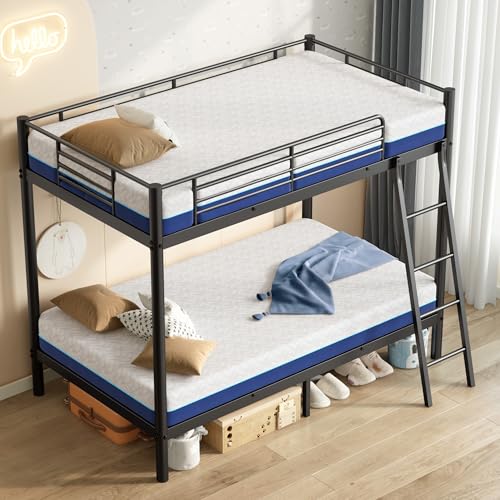
Bunk Beds with Mattresses: The Complete Buyer's Guide
Everything you need to know about choosing bunk beds with mattresses included — from mattress types and safety features to space-saving configurations that fit your family's lifestyle.
EXPLORE TOP PICKSWhy bunk beds with mattresses included? Buying a complete bunk bed set eliminates the guesswork of matching frame dimensions with mattress sizes. It also ensures the mattresses meet the manufacturer's safety and fit requirements — a critical detail for top-bunk guardrail effectiveness. Whether you're furnishing a children's room, a guest bedroom, or a vacation property, this guide will walk you through every consideration before you commit.
Why Choose Bunk Beds with Mattresses Included?
Bunk beds are a smart solution for maximizing floor space, but the mattress component is often overlooked. When you purchase a bunk bed that includes mattresses, you benefit from a coordinated system designed to work together. Here's why this matters:
- Perfect fit guaranteed: Included mattresses are sized to match the frame precisely, eliminating dangerous gaps between the mattress and guardrails.
- Simplified shopping: No need to research separate mattress dimensions, thickness limits, or compatibility — everything arrives as a complete package.
- Safety compliance: Manufacturers design included mattresses to meet thickness requirements for top-bunk safety rails, which typically accommodate mattresses up to 6–8 inches thick.
- Convenience: One delivery, one assembly process, and one set of instructions for the entire sleep system.
If you're exploring broader options for space-saving sleep solutions, our guide to bunk beds covers the full spectrum of configurations, from twin-over-twin classics to modern loft designs.
Types of Bunk Beds with Mattresses
Bunk beds come in several configurations, each suited to different room sizes and sleeping needs. Understanding these types will help you narrow down the best choice for your home.
Twin-over-Twin Bunk Beds
The most classic configuration, featuring two twin-size mattresses (38" × 75" each). Ideal for children's rooms and sibling sharing. These beds are compact and fit comfortably in rooms with limited floor space. Many models include built-in ladders and full-length guardrails on the top bunk.
Full-over-Full Bunk Beds
Two full-size mattresses (54" × 75" each) stacked vertically. This configuration offers significantly more sleeping surface per bunk, making it suitable for teens, adults, and guest rooms. Full-over-full models are heavier and require more ceiling height, but they provide a comfortable sleep experience comparable to standard beds. Explore our selection of full-over-full bunk beds for spacious sleeping arrangements.
Twin-over-Full Bunk Beds
A versatile combination with a twin mattress on top and a full mattress on the bottom. This asymmetric design is popular for families with children of different ages or for guest rooms where flexibility is valued. The bottom full bunk can accommodate two younger children or one adult comfortably.
Loft Beds and Bunk Beds with Storage
Many modern bunk beds integrate storage solutions such as under-bed drawers, shelving, or trundle units. These designs maximize vertical space while keeping the room organized. If storage is a priority, consider models from our bunk beds with storage collection, which combine sleeping space with practical organization.
Choosing the Right Mattress for Your Bunk Bed
The mattress is arguably the most important component of any bunk bed system. A poor-quality or improperly sized mattress can compromise comfort, safety, and durability. Here's what to evaluate:
Mattress Thickness and Safety
Top-bunk safety rails are designed to prevent falls, but their effectiveness depends on mattress thickness. A mattress that extends above the guardrail creates a fall hazard. Most manufacturers recommend a maximum mattress thickness of 6 to 8 inches for the top bunk. When mattresses are included with the bed, this specification is typically pre-matched, removing the guesswork.
Mattress Support and Firmness
Bunk bed mattresses should provide adequate support without being excessively soft. A medium-firm to firm mattress is generally recommended because it maintains its shape and provides consistent support across the sleeping surface. Memory foam and hybrid mattresses are popular choices for bunk beds due to their motion isolation and durability.
Materials and Durability
Included mattresses vary widely in quality. Entry-level models often use basic foam or innerspring construction, while mid-range and premium options may feature gel-infused memory foam, pocketed coils, or breathable covers. For families with children, consider mattresses with removable, washable covers and water-resistant properties.
| Tier | Typical Construction | Best For |
|---|---|---|
| Entry-Level | Basic foam or traditional innerspring, 5–6 inch profile | Young children, occasional guest use, starter bunk sets |
| Mid-Range | Memory foam or hybrid construction, 6–8 inch profile | Daily use by children and teens, primary bedroom setups |
| Premium | Gel-infused foam, pocketed coils, breathable covers, 7–8 inch profile | Adults, teens requiring superior comfort, long-term daily use |
| Luxury | High-density foam, individually wrapped coils, cooling technologies | Guest rooms, vacation properties, adults seeking hotel-quality sleep |
Pro Tip: Always verify the mattress thickness limit for the top bunk before purchasing a replacement mattress. Even if the bunk bed originally included a mattress, wear and tear may necessitate a replacement after several years. Check the frame's documentation or measure the guardrail height to determine the safe maximum thickness.
Safety Features to Look For in Bunk Beds with Mattresses
Safety should be the top priority when selecting a bunk bed, especially for children's rooms. Here are the key features to verify:
Full-Length Guardrails
The top bunk should have guardrails on all four sides, with no more than a 3.5-inch gap between the rail and the mattress surface. This prevents entrapment and falls.
Sturdy Ladder with Non-Slip Steps
The ladder should be securely attached to the frame, with wide, textured steps to prevent slipping. Some models include angled ladders for easier climbing.
Solid Frame Construction
Look for beds made from high-grade steel, solid wood, or reinforced engineered wood. Avoid flimsy frames that wobble or show signs of weakness.
Weight Capacity Ratings
Each bunk should have a clearly stated weight capacity. Entry-level models typically support 200–250 lbs per bunk, while premium and commercial-grade models may support 400 lbs or more.
Slat Support System
Adequate slats (typically 10–14 per bunk) prevent mattress sagging and extend the life of the mattress. Metal slats with center supports are common in mid-range and premium models.
Safety Certification
Reputable manufacturers comply with safety standards such as ASTM F1427 and CPSC regulations. Look for certification labels on the product.
For families with younger children, consider bunk beds with rails on top and bottom for added security on both levels. Beds designed with full guardrails on both bunks offer the highest level of safety, particularly for restless sleepers.
Space-Saving Configurations and Smart Layouts
Bunk beds are inherently space-efficient, but certain designs take this further by incorporating additional functionality:
- Bunk beds with stairs: Instead of a traditional ladder, stairs provide safer access to the top bunk and often include built-in storage drawers. Explore bunk beds with stairs for a more accessible and family-friendly design.
- Bunk beds with slides: Adding a slide transforms the bunk bed into a playful element, particularly popular in children's rooms. Our bunk beds with slide collection combines fun and function.
- Bunk beds with desks underneath: For older children and teens, a desk-integrated bunk bed creates a dedicated study area without consuming additional floor space. See our bunk beds with desk options for productive bedroom setups.
- Bunk beds with trundle beds: A trundle adds a third sleeping surface that can be rolled out when needed. This is ideal for sleepovers and guest rooms. Browse bunk beds with trundle underneath for versatile sleeping arrangements.
- Bunk beds with storage drawers: Under-bed drawers maximize storage without requiring extra furniture. Our bunk beds with storage drawers provide practical organization for clothing, toys, or bedding.
When selecting a configuration, consider the ceiling height of your room. The top bunk should have at least 30 to 36 inches of clearance above the mattress to allow comfortable sitting and safe movement. Additionally, factor in the height of any ceiling fans or light fixtures.
Bunk Beds for Kids vs. Adults: What Changes?
The core design principles remain the same, but the priorities shift depending on who will use the bed:
For Children
Safety features take precedence. Look for lower bunk heights for younger children, full-length guardrails, wide non-slip ladder steps, and rounded edges on the frame. Mattresses should be firm enough to support growing bodies and resistant to moisture and spills. Fun designs — such as bunk beds with slides or themed finishes — can make the transition to a big-kid bed more exciting.
For Adults and Teens
Weight capacity, mattress quality, and frame stability become more important. Full-over-full and queen-over-queen configurations are popular choices. Adults may prefer premium or luxury mattresses with cooling properties, pressure relief, and motion isolation. The frame should be constructed from heavy-duty materials with reinforced joints to support adult weight comfortably over time.
For families with mixed-age children, a twin-over-full bunk bed offers flexibility — a twin on top for a younger child and a full on the bottom for an older sibling or guest.
Assembly, Placement, and Room Preparation
Before your bunk bed arrives, take these steps to ensure a smooth setup:
- Measure your space: Confirm the bed's footprint (length, width, and height) fits your room, leaving adequate clearance for doors, windows, and closets.
- Check ceiling height: Ensure sufficient headroom above the top bunk. A minimum of 30–36 inches of clearance is recommended.
- Prepare the floor: Bunk beds are heavy — especially full-over-full models — so place them on a level, solid surface. Use furniture pads to protect flooring.
- Assemble with care: Follow the manufacturer's instructions precisely. Use all provided hardware and tighten bolts securely. Periodically check and re-tighten connections after initial use.
- Position away from hazards: Avoid placing the bed directly under ceiling fans, near windows with blinds or cords, or adjacent to radiators and heaters.
Maintenance and Longevity Tips
To get the most from your bunk bed and included mattresses:
- Rotate or flip mattresses every 3–6 months (if the mattress is flippable) to promote even wear.
- Use mattress protectors to guard against spills and stains, especially in children's rooms.
- Clean the frame regularly with a damp cloth and mild detergent. Avoid harsh chemicals that may damage finishes.
- Inspect hardware and joints every few months and tighten as needed.
- Encourage children not to jump on the top bunk, as this can damage the frame and mattress over time.
Ready to Find Your Perfect Bunk Bed?
Explore our curated selection of top-rated bunk beds with mattresses included, hand-picked for quality, safety, and value across every tier.
View Top Recommendations