Bunk Beds With Storage: The Complete Buying Guide
Maximize every square foot of your bedroom with smart storage bunk beds. Compare drawer options, staircase storage, under-bed compartments, and space-saving designs built for kids, teens, and adults.
Why storage bunk beds make sense: If you are researching bunk beds, you already know they double your sleeping capacity in the same footprint. Adding storage transforms that footprint again — turning wasted vertical and under-bed space into drawers, shelves, and hidden compartments. This guide walks you through every storage configuration so you can match a bed to your room, your family, and your long-term needs.
What Are Bunk Beds With Storage?
A bunk bed with storage is a stacked sleeping system where one or more components — the base, the staircase, the side rails, or the space beneath the lower bunk — is engineered to hold clothing, toys, books, bedding, or seasonal items. Instead of buying a separate dresser, toy chest, or shelving unit, you consolidate furniture into a single footprint.
Storage bunk beds are especially valuable in rooms shared by siblings, guest rooms that double as home offices, small apartments, and vacation homes where every inch counts. The storage element is not an afterthought — on well-designed models it is integrated into the frame's structural logic, so the bed remains stable and safe while providing genuinely usable capacity.
If you are still deciding between a standard bunk and a storage-equipped model, browsing the full range of bunk beds first will help you see how storage versions compare in proportion, height, and assembly complexity.
The Main Storage Configurations Explained
Storage bunk beds are not a single category. The storage type determines how much you can hold, how easily you can access it, and how the bed affects the rest of your room layout. Here are the configurations you will encounter most often.
Under-Bed Drawers
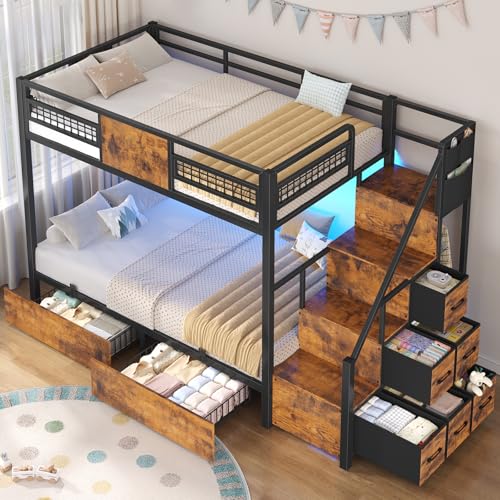
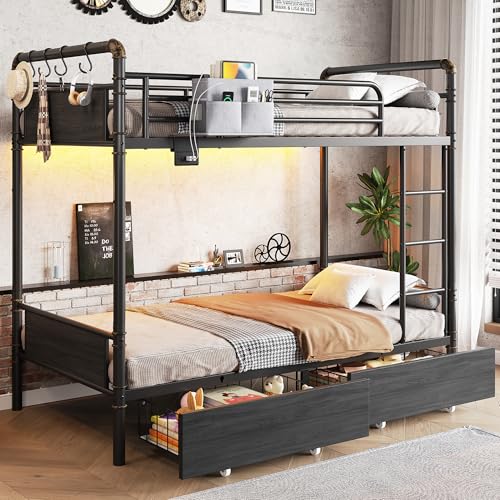
The most common option. One to four drawers slide out from beneath the lower bunk, typically on smooth metal runners. Ideal for clothing, linens, and everyday items that need quick access.
Staircase Storage
Each step doubles as a compartment or a full drawer. Staircase storage adds significant capacity and often improves safety by replacing a ladder with wide, graded steps.
Open Shelving Units
Built-in shelves at the end of the bed or beneath the lower bunk. Great for books, display items, and baskets, though contents stay visible so tidiness matters.
Combination Storage
Drawers plus shelves, or drawers plus a staircase. These models offer the most flexibility and are the best fit for families with varied storage needs.
Drawer-Based Storage
Drawers are the workhorse of storage bunk beds. Look for models with metal glides rather than plastic tracks — metal runners hold up far better under daily use and prevent the sticking and sagging that plagues entry-level hardware. If you need dedicated clothing capacity, compare bunk beds with storage drawers where drawer depth and count are the primary design focus.
Staircase and Step Storage
A staircase does two jobs at once: it makes the top bunk safer to reach, and each step can hide a compartment. For younger children, wide stairs with a handrail are generally safer than a vertical ladder. Models with integrated steps and compartments are covered in detail under bunk beds with stairs, and combination layouts are explored in bunk beds with slides and stairs if you also want a play element.
Underneath and Multi-Zone Storage
Some designs push storage further: full under-bed storage volumes, corner shelving, or a hybrid layout where the lower level includes a desk or seating area. If maximizing capacity is your priority, bunk beds with lots of storage showcases the highest-capacity configurations, while bunk beds with storage underneath focuses specifically on what can be reclaimed below the lower bunk.
Quality Tiers: How to Read the Market
Storage bunk beds fall into recognizable quality tiers. Instead of shopping by number, use these descriptors to understand what level of construction and hardware you are considering. The tier you choose should match how long you plan to keep the bed and how heavily it will be used.
| Tier | Typical Construction | Best For |
|---|---|---|
| Entry-level | Engineered wood or thinner metal tubing; plastic or basic metal drawer glides; straightforward assembly | Guest rooms, occasional use, first bunk bed for a growing child |
| Mid-range | Solid wood or reinforced metal frame; full-extension metal glides; better hardware and finish quality | Everyday use in shared kids' rooms and teen bedrooms |
| Premium | Hardwood construction or heavy-duty steel; dovetailed or reinforced drawer boxes; smooth, quiet mechanisms | Long-term family use, frequent daily access, adult bunk setups |
| Luxury / professional-grade | Solid hardwood joinery, commercial-grade hardware, hand-finished surfaces, modular storage systems | Primary residences, vacation properties, high-frequency households |
A useful rule of thumb: mid-range models usually offer noticeably smoother drawer action and sturdier frames than entry-level builds, while premium tiers are worth the investment if the bed will serve multiple children over many years. The storage mechanism is the first component to show wear, so prioritize hardware quality over cosmetic details.
Sizing and Configuration: Matching the Bed to Your Room
Storage adds bulk, and bulk affects clearance. Before choosing a model, measure the room's ceiling height, the available wall length, and the swing space needed for drawers to open fully. A drawer that cannot extend past a nearby door or wardrobe is effectively useless.
Twin Over Twin and Full Configurations
Twin-over-twin remains the classic choice for siblings, while full-size lower bunks suit teens and adults who need more sleeping room. If you want a larger lower bed without giving up storage, explore bunk beds with full on bottom and twin on top or bunk beds with full on bottom and trundle for added guest capacity. Families who want two generous sleeping surfaces can compare bunk beds with full on top and bottom and bunk beds with two full size beds.
Storage Plus Extra Sleeping Space
Some storage bunk beds incorporate a third sleeping surface. A trundle slides out from beneath the lower bunk, adding a bed without adding footprint. Options include bunk beds with trundle underneath, bunk beds with trundle bed underneath, and for adult-sized guests, bunk beds with trundle for adults. These layouts are particularly practical for sleepovers and multi-child households.
Safety and Structural Considerations
Storage bunk beds carry more load and more moving parts than simple frames, so safety deserves careful attention. Use the following checklist as a buying filter.
Storage Bunk Bed Safety Checklist
- Guardrails on the top bunk — at least two rails, with the gap between rail and mattress no wider than a small child's body. Models with rails on top and bottom provide the most complete protection.
- Weight ratings — check the stated limit for each bunk, not just the total. Storage drawers and their contents add load that many shoppers forget to account for.
- Drawer glides and stops — full-extension glides with positive stops prevent drawers from pulling out accidentally and reduce the chance of pinched fingers.
- Stable staircase or ladder — a staircase with a handrail is generally safer for younger children than a vertical ladder. See bunk beds with ladder and bunk beds with ladder and slide for comparisons.
- Corner stability and anti-tip anchoring — tall storage bunks should be anchored to the wall where the manufacturer provides hardware.
- Mattress fit — the top bunk mattress must sit flush with or below the guardrail. If the bed does not include mattresses, confirm the exact thickness range the frame accommodates.
If the bed does not ship with mattresses, plan that purchase separately. Models sold with bedding included are listed under bunk beds with mattress included, and if you want both storage and included mattresses in one order, see bunk beds with mattresses and storage.
Materials and Long-Term Durability
Storage bunk beds live in high-traffic rooms. Wood frames offer warmth and repairability, while metal frames resist warping and typically support higher weight ratings. Whichever you choose, inspect the drawer boxes — thin, stapled panels are the first failure point on entry-level models.
For rooms where the bed will stay in place for years, a solid build with reinforced joinery is the smarter long-term investment. If you are outfitting a full bedroom set, coordinating pieces such as a bunk bed with matching dresser or bunk beds with dresser keep the storage strategy consistent across the room.
Choosing Based on Room and Lifestyle
The right storage configuration depends on who sleeps in the room and how it is used during the day.
- Shared kids' room: Drawer storage plus a staircase is the most practical combination — clothing and toys stay organized and the top bunk is safer to reach.
- Teen bedroom: Open shelving paired with deep drawers suits books, devices, and clothing. Consider a full-size lower bunk for growing teens.
- Guest or vacation room: A trundle plus under-bed drawers adds sleeping capacity and storage without permanent furniture.
- Small apartment or studio: Multi-zone storage under the lower bunk reclaims the most floor area. See bunk beds with space underneath for layouts that leave room for seating or a study corner.
If the room doubles as a study, a hybrid layout with a desk beneath the top bunk may be a better fit than drawer-only storage. Compare bunk beds with desk and bunk beds with table underneath for workspace-friendly designs.
Assembly, Placement, and Maintenance
Storage bunk beds take longer to assemble than standard frames because every drawer and compartment adds hardware. Set aside a full afternoon, sort parts by step, and follow the manufacturer's sequence — installing drawers before the upper frame is fully tightened usually saves adjustment work later.
During placement, verify that every drawer opens without obstruction and that the staircase has clear access. Leave a small gap between the bed and the wall to avoid scuffing and to allow for minor frame movement. For maintenance, tighten hardware quarterly, lubricate metal glides lightly, and vacuum drawer interiors to prevent dust buildup that accelerates wear on runners.
If you eventually reconfigure the room, many storage bunk beds can be split into separate beds. Check the product documentation for this capability before you buy, since not every model supports it.
Mistakes to Avoid When Buying
- Ignoring drawer clearance. Measure door swings, wardrobe fronts, and rug edges before finalizing placement.
- Choosing storage count over storage quality. Two well-built drawers outperform four flimsy ones that jam within a year.
- Overlooking ceiling height. The top bunk plus a mattress plus a standing child needs comfortable headroom; measure before committing.
- Forgetting the mattress thickness. Guardrail height is calculated for a specific mattress range. A too-thick mattress defeats the safety rail.
- Assuming all storage is equal. Open shelves collect dust and clutter; drawers hide mess. Match the storage type to the room's habits.
Frequently Asked Questions
Are storage bunk beds safe for young children?
Yes, provided the model includes full guardrails on the top bunk, a stable staircase or ladder, and is anchored to the wall. Children under six should generally use the lower bunk only, and the top bunk mattress must sit below the guardrail line.
How much weight can storage drawers hold?
Capacity varies by hardware. Mid-range and premium models with metal full-extension glides typically support heavier loads than entry-level plastic-track drawers. Always follow the manufacturer's stated drawer limit and avoid overloading with dense items like books.
Can a storage bunk bed be separated into two beds?
Many can, but not all. Models designed as convertible bunks include the necessary hardware and instructions. Check the product documentation before purchase if you plan to split the beds later.
What is the best storage type for a small room?
Combination storage — drawers plus a staircase with compartments — usually reclaims the most space because it uses both the under-bed volume and the vertical footprint of the stairs. Open shelving is useful but requires tidier habits.
Do storage bunk beds require special mattresses?
Most take standard twin or full mattresses within a specified thickness range. If mattresses are not included, confirm the recommended thickness so the top bunk guardrail remains effective. Models sold with bedding included are listed under bunk beds with mattress included.
Final Thoughts: Buy for the Room You Have
Storage bunk beds solve two problems at once — sleeping capacity and organization — but only if the configuration matches the room. Measure clearances, prioritize hardware quality over drawer count, and treat safety rails and staircase design as non-negotiable. With those filters in place, a mid-range model with combination storage will serve most families for years, while premium builds are the better choice for heavy daily use.
Ready to compare specific layouts? Browse the full storage bunk bed collection, review under-bunk storage options, or explore high-capacity storage designs to find the model that fits your bedroom and your daily routine.
Editor's note: Storage hardware — drawer glides, hinges, and step compartments — is the first component to wear out. When comparing two models at the same tier, choose the one with metal runners and reinforced drawer boxes. That single decision often determines whether the bed lasts five years or fifteen.