
Bunk Beds with Two Full Size Beds: The Complete Buying Guide
Two full size beds stacked in one footprint give you adult-grade sleeping space without doubling the floor area. This guide explains sizing, safety, layout planning, materials, and the features that matter most when choosing a full over full bunk bed.
What Defines a Bunk Bed with Two Full Size Beds
A bunk bed with two full size beds, often called a full over full bunk bed, places one full size mattress directly above another full size mattress on a single integrated frame. A full size mattress measures roughly 54 inches wide by 75 inches long, which is wider than a twin and only five inches shorter than a queen. Stacking two of them creates sleeping capacity for two adults or two older children in the floor space normally required for one bed.
The design differs from a full bottom and twin top configuration in one important way: both sleepers get identical, adult-proportioned space. That symmetry is the main appeal. Nobody has to negotiate for the larger berth, and the frame stays balanced because the load is distributed evenly across the top and bottom decks.
Most full over full models use a fixed ladder or an angled stair unit for access to the upper deck. The lower bed typically sits on a solid platform or slat base near floor level, while the upper deck is supported by corner posts rated for the combined weight of a mattress and a sleeper. Because both decks carry the same mattress size, the frame is usually taller and heavier than a twin over twin bunk, which is worth factoring into delivery and assembly planning.
Who a Full Over Full Bunk Bed Suits Best
This configuration works well in a specific set of situations. Before you commit, match your household against these use cases:
- Teen siblings sharing a room. A full size gives each teenager room to stretch out, which a twin often cannot provide once they approach adult height.
- Guest rooms and vacation homes. Two full beds accommodate two couples or a family of four without consuming the room's entire floor area.
- Multi-generational homes. An adult child, an aging parent, or a visiting relative can each have a proper full size sleeping surface.
- Small apartments with shared bedrooms. When square footage is tight but occupants are adults, a full over full bunk maximizes usable sleeping capacity.
- Dormitories and bunkhouses. Institutional settings that need durable, standardized sleeping space for older occupants benefit from the uniform sizing.
It is generally not the right choice for very young children. The upper deck of any bunk bed should be reserved for occupants who can safely climb and descend a ladder, and most safety guidance suggests the top bunk is unsuitable for children under six. For younger families, a full bottom with trundle layout often makes more sense because the sleeping surfaces stay low.
Room height is the other deciding factor. A full over full bunk needs enough vertical clearance for a sleeper to sit up on the top deck without hitting the ceiling, plus safe headroom on the bottom deck. Measure your ceiling height before ordering.
Sizing and Room Planning
Full over full bunks are larger than they look in product photos. The mattress is 54 by 75 inches, but the frame adds several inches on every side for posts, rails, and guardrails. Plan for a footprint that is meaningfully bigger than the mattress dimensions.
| Measurement | Typical Figure | Why It Matters |
|---|---|---|
| Mattress size (each deck) | 54" W x 75" L | Standard full size; both decks accept the same mattress |
| Overall frame footprint | Approx. 58"–62" W x 80"–84" L | Posts and rails extend beyond the mattress edges |
| Overall height | Approx. 60"–72" | Driven by bottom clearance plus upper guardrail height |
| Clearance between decks | Approx. 30"–38" | Must allow a sleeper to sit up on the lower bunk |
| Upper guardrail height above mattress | At least 5" | Prevents rolling out of the top bunk |
Beyond the bed itself, leave at least 24 to 30 inches of walking space on the sides you use to get in and out. The ladder or stair unit also needs a clear landing zone. If the room has a sloped ceiling, a ceiling fan, or a low window, check the top bunk's guardrail and occupant headroom against those obstacles.
For rooms where the full over full footprint is too generous, a full size on the bottom only configuration preserves one adult-sized berth while shrinking the overall structure. Conversely, if you need even more capacity, look at queen and twin combinations or full bottom with trundle designs that add a third sleeping surface.
Safety and Weight Ratings
Because a full over full bunk supports two adults, structural integrity is the single most important purchase criterion. Look for explicit weight ratings per deck rather than vague claims of sturdiness.
- Per-deck weight rating. Reputable frames publish a rating for the upper and lower decks separately. A high-end tier frame typically supports more weight per deck than an entry-level model, and the difference usually comes down to post thickness and joint design.
- Guardrails on the top bunk. The upper deck needs guardrails on both long sides and at least part of the ends, with a gap no wider than a few inches so a sleeper cannot slip through. The rail should sit at least five inches above the top of the mattress.
- Secured ladder or stairs. The access unit must attach firmly to the frame and hook over the top rail rather than resting loosely against it.
- Slat or platform support. Closely spaced slats or a solid platform prevent mattress sag and distribute weight evenly. Check the maximum slat spacing the manufacturer allows.
- Wall anchoring. Many full over full frames include anti-tip hardware. Use it. A tall, heavy bunk is more stable when secured to a wall stud.
- No substitutions. Use full size mattresses of the thickness the frame specifies. An overly thick mattress can raise the sleep surface above the guardrail, defeating its purpose.
Frame Materials and Build Quality
The material determines how the bunk ages, how much it moves when someone climbs, and how much assembly effort it demands.
Solid Wood
Hardwood frames such as pine, rubberwood, or oak offer a warm look and generally handle heavy loads well when the posts are thick and the joints are reinforced. Entry-level solid wood bunks can develop squeaks over time if the joinery is basic; mid-range and premium models typically add corner blocks, dowels, or metal reinforcement plates that keep the structure tight.
Metal
Steel frames are common in this category because metal handles the higher loads of two full size decks efficiently. Look for high-grade steel with a rust-proof finish, reinforced corner brackets, and welded rather than purely bolted joints at stress points. A heavy-duty metal frame is often the most stable option for adult occupants, though it can be heavier to move and may show scratches more readily than wood.
Engineered Wood and Composites
Particle board and MDF frames sit at the entry-level tier. They can look polished and cost less to produce, but they are more sensitive to moisture and repeated stress. If you choose this material, verify the weight ratings carefully and keep the bunk in a dry, stable environment.
| Material | Typical Tier | Best For |
|---|---|---|
| Engineered wood / MDF | Entry-level | Light use, older children, occasional guest sleeping |
| Solid softwood (pine) | Mid-range | Everyday family use with a classic look |
| Solid hardwood (rubberwood, oak) | Premium | Adult occupants, long-term daily use |
| High-grade steel | Mid-range to commercial-grade | Maximum stability, rentals, bunkhouses |
Features That Matter in a Full Over Full Bunk
Once the frame material and safety specs check out, the accessory features determine daily livability. These are the options worth weighing:
- Stairs versus ladder. An angled stair unit with handrails is easier and safer for adults and is a common upgrade on premium models. A basic ladder takes less floor space. Compare bunk beds with stairs against simpler ladder designs before deciding.
- Built-in storage. Drawers under the lower deck or shelves integrated into the stair unit recover floor space in small rooms. See bunk beds with storage for layouts that combine sleeping and organization.
- Desk integration. A study or work surface tucked beneath the lower bunk turns the structure into a live-work unit, useful for teens and students. Explore bunk beds with a desk if that fits your room.
- Convertibility. Some frames split into two separate full beds, which extends their useful life when the household layout changes.
- Guardrail design. Full-length rails on both sides of the upper deck are safer than partial rails, especially for restless sleepers.
- Slat spacing. Tighter slat spacing protects the mattress and spreads load. Check whether the manufacturer specifies a maximum mattress thickness.
If you need additional sleeping capacity rather than storage, a trundle underneath adds a third bed without widening the footprint. For rooms with very generous ceilings and a playful brief, a ladder and slide configuration is an option, though it suits children more than adults.
Popular Variants Around the Full Over Full Layout
The full over full core design has several close relatives. Understanding the differences helps you confirm you are choosing the right one.
- Two full size beds — the subject of this guide: equal full size decks top and bottom.
- Full on top and bottom — essentially the same configuration described with different phrasing; confirm deck dimensions when comparing listings.
- Full bottom, twin top — saves some vertical and structural load, but the sleepers get unequal beds.
- Full size on bottom only — a smaller upper deck keeps the footprint and height down.
- Queen and twin — a larger lower deck for couples or primary sleepers, with a smaller upper berth.
- King on bottom — maximum lower-deck space, typically for primary bedrooms rather than shared rooms.
- Full bottom with trundle — adds a pull-out third bed for sleepovers.
- Storage underneath — prioritizes drawers and shelving over a second full deck.
If you are still weighing bunk beds in general, the broader bunk beds overview covers size pairings, frame types, and room planning from the ground up.
Setup, Assembly, and Placement
A full over full bunk is a substantial piece of furniture, and assembly is a two-person job in most cases. Plan the process before the boxes arrive.
- Measure the delivery path. Doorways, stairwells, and hallway turns must accommodate the longest boxed component. Check the box dimensions on the listing.
- Clear the installation area. Assemble the frame in the room where it will live if possible; moving a fully built full over full bunk through a doorway is difficult.
- Sort hardware first. Lay out bolts, washers, and brackets by step. Missing or misused hardware is the most common assembly problem.
- Tighten in stages. Snug all connections before fully torquing them, so the frame squares up evenly. Re-check the joints after the first week of use.
- Anchor to the wall. Install anti-tip hardware into wall studs, not drywall alone.
- Place the ladder or stairs. Confirm the access unit hooks over the top rail securely and lands on a flat, unobstructed floor area.
- Add mattresses last. Use full size mattresses within the manufacturer's thickness range so guardrails remain effective.
Place the bunk away from ceiling fans, light fixtures, and windows that open inward. Keep the upper deck clear of heavy items that could fall, and avoid pushing the frame tight against a radiator or heating vent.
Buying Checklist
Run through these points before you finalize a purchase decision:
- Ceiling height allows a sleeper to sit up on the top deck with clearance to spare.
- Room footprint accommodates the frame plus walking space and the ladder landing zone.
- Per-deck weight ratings are published and suit your intended occupants.
- Upper guardrails run the full length on both sides and sit high enough above the mattress.
- Ladder or stair unit attaches firmly and is rated for the occupants' weight.
- Frame material matches your durability expectations: solid hardwood or high-grade steel for daily adult use.
- Slat spacing and maximum mattress thickness are specified by the manufacturer.
- Anti-tip wall anchoring hardware is included.
- Assembly instructions are clear and the hardware count is complete.
- Optional features — storage, desk, stairs, convertibility — match how the room will actually be used.
Frequently Asked Questions
Is a full over full bunk bed suitable for adults?
Yes, provided the frame is rated for adult weight on both decks. Look for published per-deck weight ratings, a high-grade steel or solid hardwood build, and reinforced joints. Adult occupants should also confirm ceiling clearance for sitting up on the top bunk.
What mattress thickness works best on a full over full bunk?
Follow the manufacturer's stated maximum thickness. As a general rule, the mattress should not rise above the top guardrail by more than a small margin, because the rail's job is to keep the sleeper contained. Thicker mattresses on the upper deck reduce effective rail height.
How much floor space does a full over full bunk save?
It provides two full size sleeping surfaces in roughly the footprint of a single full bed plus frame clearance. That is the core advantage: the second sleeper is accommodated vertically rather than horizontally. Exact savings depend on the frame's overall dimensions and the room layout.
Are stairs better than a ladder for this bunk size?
Stairs are generally easier and safer for adults and for anyone carrying items to the upper deck. Ladders take up less floor space and suit tighter rooms. Both must attach securely to the frame; choose based on who will use the bunk most often.
Can a full over full bunk be separated into two beds?
Some models are designed to split into two standalone full beds. This is a useful feature for households whose layout may change. Check the product description explicitly, because not every frame offers this convertibility.
What ceiling height do I need?
You need enough height for the frame itself plus sitting clearance on the top deck. Measure the frame's overall height, add the mattress thickness, then add clearance for a seated occupant. If the result approaches your ceiling height, the room is too low for this configuration.
How do I reduce squeaking and wobble?
Assemble carefully, tighten joints in stages, and re-check hardware after the first week of use. Wall anchoring with anti-tip hardware significantly improves stability. If the frame still moves, confirm it is rated for the load and sitting on a level floor.
Is this bunk style safe for younger children?
Most safety guidance reserves upper bunks for older children who can climb safely, commonly age six and above. For younger families, a lower-profile layout such as a full bottom with a trundle keeps sleeping surfaces low and avoids the climbing risk entirely.
Recommended Bunk Beds with Two Full Size Beds
⚠️ AFFILIATE DISCLOSURE: This website contains affiliate links. As an Amazon Associate, we earn from qualifying purchases. If you make a purchase through these links, we may receive a small commission at no additional cost to you. Read our full affiliate policy.

Full over Full Bunk Bed, Separates into 2 Beds, Heavy Duty 400lbs Bed Frame | Metal Bunk Bed, Full-Length Guardrails, EVA Padded Ladder, Noise-Free
Check price on Amazon
Merax Full Size Bunk Bed with Two Built-in Gaming Desks, USB Desktop Ports & Pegboard Organizer, Gaming Bunk Frame for Gamer, Green
Check price on Amazon
SogesHome Metal Bunk Beds Twin Over Full Size,Heavy Duty Bunk Bed for Teens Adults with Ladder & Guardrails, Space-Saving Metal Bunk Bed for Dorm, Apartment & Small Room, Black, No Box Spring Needed
Check price on Amazon
Mixcous Full Over Full Metal Bunk Bed with Desk and Storage | Full-Length Guardrails, Heavy Duty Steel Bed Frame with Two Desks, Space-Saving, No Box Spring Needed, Black
Check price on Amazon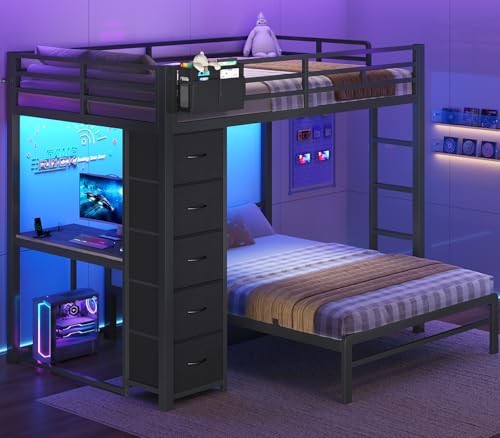
BTHFST Full Size Bunk Bed with Desk, 5 Drawers, Charging Station, Black | Full Over Full Bunk Beds with LED Lights, Storage Pockets, Safety Guardrails, Metal Bunk Beds for Kids/Teens, Space-Saving
Check price on Amazon
FJTJBSI Solid Wood Bunk Bed with Charging Station and LED Lights Detachable Bunk Bed Twin Over Full with 2 Storage Drawers Full Size Bed Frame with Guardrail and Ladder for Kids Adults Bedroom
Check price on Amazon
Harper & Bright Designs Convertible Wood Twin Over Full Bunk Bed with 2 Storage Drawers and Ladder - Can Be Divided Into Two Daybeds, Espresso
Check price on Amazon
Merax Full Size Bunk Bed with Two Built-in Gaming Desks, USB Desktop Ports & Pegboard Organizer, Gaming Bunk Frame for Gamer, Cloud Blue
Check price on AmazonDisclaimer
The information provided on SleepWisePicks is for educational and informational purposes only. We are not medical professionals, and our content should not replace professional medical advice, diagnosis, or treatment. Always consult with your physician or sleep specialist regarding sleep disorders or chronic pain. Some content may use AI assistance. Always check product safety standards and certifications before purchasing. If you do not agree, please do not use this website. Read the full disclaimer.