Children's Bunk Beds That Separate: A Complete Buying Guide
If you are researching bunk beds that can split into two independent beds, this guide explains how separable bunk beds work, the safety details that matter, and how to choose the right configuration for growing children and changing bedrooms.
Why this guide matters: A bunk bed that separates is one of the most flexible furniture purchases you can make for a child's room. It stacks today for sleepovers and shared rooms, then splits into two standalone beds when children want their own space. This guide walks you through the mechanics, materials, safety standards, and long-term planning so you can buy with confidence.
What Are Children's Bunk Beds That Separate?
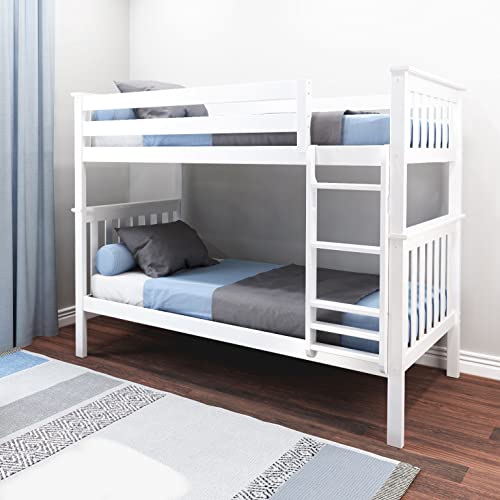
A separable bunk bed — sometimes called a convertible or split bunk bed — is a two-tier bed built so the top and bottom units can be unbolted and used as two independent beds. The upper bunk typically rests on a sturdy frame with guard rails and a ladder, while the lower bunk acts as the base. When separated, each piece becomes a freestanding bed that can be placed side by side or in different rooms.
This design is especially practical for families in transition. A younger child may share a room at first, then want a private setup later. Instead of replacing the furniture, you simply separate the bunk into two beds. The same concept appears in children's bunk beds twin over full configurations, where the lower bed is a larger full-size mattress for an older sibling or a guest.
How Separable Bunk Beds Work
Most separable bunk beds use one of two mechanical approaches. Understanding the difference helps you evaluate build quality and long-term durability.
Stacked Frame With Bolt-On Connections
In this design, the lower bed frame is the foundation. The upper bed frame sits on top and is secured with heavy-duty bolts, brackets, or interlocking posts. When you separate the beds, you remove the connecting hardware and each frame stands on its own four legs. This is the most common approach for wooden and metal convertible bunks.
Modular Post-and-Leg Systems
Some premium and high-end tier models use shared posts that lock together with a keyed connection. The upper bunk's legs slot into the lower bunk's posts. Separation requires lifting the upper unit off and attaching separate legs or feet that often ship with the bed. These systems tend to feel more solid when stacked but can be heavier to disassemble.
Key takeaway
Always confirm that the separable configuration is officially supported by the manufacturer. Some bunk beds look modular but are not designed to be used as two independent beds. Only separate a bunk bed when the product documentation explicitly allows it.
Why Choose a Bunk Bed That Separates?
Separable bunk beds solve several common family problems at once. They are a long-term investment rather than a short-term fix.
- Adapts to growing children: What starts as a shared-room bunk can become two single beds as siblings get older.
- Supports moving and rearranging: If you move to a home with separate bedrooms, the bunk splits to fit each room.
- Better for sleepovers and guests: Keep the beds stacked for sleepovers, then separate them when guests leave.
- Reduces furniture replacement: One purchase covers multiple room layouts over several years.
- Easier cleaning and mattress changes: Separated beds are simpler to move, vacuum under, and rotate mattresses on.
Families who need extra flexibility often pair a separable bunk with children's beds with pull-out bed underneath options for sleepovers, or with children's bunk beds with storage stairs when floor space is limited.
Safety Standards and Structural Checks
Bunk beds carry specific safety requirements because of the elevated sleeping surface. When shopping for a separable model, verify these points before purchase.
Guard Rails and Fall Protection
The upper bunk must have guard rails on both sides, with at least one side running the full length of the mattress. Check that the rail height is sufficient for the mattress thickness you plan to use. A mattress that sits too high above the rail reduces protection.
Ladder and Access
The ladder should attach firmly to the frame with hooks, bolts, or a locking bracket. Avoid ladders that simply lean against the bed. For younger children, consider models with children's bunk beds with stairs for a more stable climb.
Weight Capacity and Frame Rigor
Look for published weight limits for both the upper and lower bunks. A separable bed must maintain its structural integrity in both stacked and separated modes. Reinforced corner joints, metal-to-metal connections, and center support slats are signs of durable construction.
Entrapment and Gap Checks
Ensure the gaps between the guard rail and the mattress, and between the bunk and the wall, are within recognized safety ranges. Many regions require bunk beds to meet specific standards for entrapment hazards. Always check the manufacturer's compliance statement.
| Checkpoint | What to Verify | Why It Matters |
|---|---|---|
| Guard rails | Full length on one side, partial on the other | Prevents falls from the upper bunk |
| Ladder attachment | Bolted or hooked, not leaning | Stable access for children |
| Weight limits | Published for upper and lower bunks | Ensures structural safety |
| Separation hardware | Included bolts, brackets, or legs | Confirms split mode is supported |
| Slat support | Close-spaced slats or solid platform | Mattress support and frame rigidity |
Materials and Build Tiers
Separable bunk beds are available across several market tiers. Instead of focusing on numbers, compare construction quality and the hardware that holds the beds together.
Entry-Level Tier
These models typically use lighter wood or tubular metal frames. They work well for younger children and lighter use. Check that the separation hardware is included and that the frame remains stable when split. Entry-level bunks are a reasonable starting point for a first bedroom setup.
Mid-Range Tier
Mid-range models often use solid wood or thicker metal with better corner bracing. The separation mechanism is usually more refined, with pre-drilled holes and clearly labeled parts. This tier is a solid choice for families who plan to separate and reassemble the beds more than once.
Premium and High-End Tier
Premium bunk beds use hardwood, reinforced joinery, and heavier hardware. They tend to feel more solid when stacked and are designed for frequent reconfiguration. If you expect the bed to move between rooms or homes, this tier is a worthwhile long-term investment. For families with very limited space, children's bunk beds for small rooms often come in premium compact designs that still separate.
Size and Configuration Options
Separable bunks are available in several size combinations. The right choice depends on the age gap between children, room dimensions, and how you plan to use the beds after separation.
- Twin over twin: The most common separable configuration. Both beds are the same size, which makes separation simple and symmetrical.
- Twin over full: A larger lower bed suits an older child or guest. When separated, you get one twin and one full bed.
- Loft-style convertible: Some designs start as a loft with a lower play or study area and later convert into two beds. See children's bedroom furniture loft beds for related layouts.
- Stair-access models: Storage stairs add safety and organization. Explore children's bunk beds with storage stairs for space-saving setups.
Always measure the room in both stacked and separated layouts before buying. Separated beds need more floor space, and you will want clearance for doors, closets, and walkways.
How to Separate and Reassemble Safely
Separating a bunk bed is straightforward when you follow the manufacturer's instructions. These steps apply to most models.
- Clear the area: Remove mattresses, bedding, and any items stored on or under the bed.
- Identify the hardware: Locate the bolts, brackets, or locking posts that connect the upper and lower units.
- Work with a helper: The upper bunk is heavy. Two adults should lift and lower it together.
- Attach the separate legs or feet: Many models include dedicated legs for standalone use. Fit them before lowering the bed fully.
- Check stability: Once separated, test each bed for wobble and tighten all connections. Re-check the guard rails if they remain on the upper unit.
- Store hardware safely: Keep the separation hardware in a labeled bag so reassembly is easy.
Do not improvise
Never separate a bunk bed that is not designed to split, and never remove safety rails to make a bed fit. Structural modifications can create serious hazards. If the manufacturer does not explicitly support separation, keep the bed in its original configuration.
Mattress and Bedding Considerations
The right mattress matters more in a bunk bed than in a standard bed. A mattress that is too thick can rise above the guard rail, reducing safety. A mattress that is too thin may not provide adequate support.
Check the manufacturer's recommended mattress thickness and use a mattress that fits snugly without gaps. Many families choose children's bunk beds with mattresses bundles to ensure compatibility. For separated beds, standard twin or full mattresses work well, and you can refresh the look with comforters and coordinated bedding.
If you are setting up a full bedroom, pair the bed with a children's bedside table and consider children's beds guides for related room planning.
Room Planning for Separated Beds
Before you commit to a separable bunk, plan for both layouts. In stacked mode, the bed footprint is compact. In separated mode, you need two bed footprints plus walking space.
- Measure the wall length and leave at least a small gap between the beds if placing them side by side.
- Keep the separated beds away from windows and radiators, and secure tall furniture to the wall.
- Plan storage: separated beds free up vertical space but may reduce under-bed storage depending on the frame.
- Consider lighting and outlets in both layouts so each bed has a usable bedside area.
For compact rooms, children's beds for small rooms and children's beds for small spaces offer additional layout ideas that pair well with separable bunks.
Common Mistakes to Avoid
- Assuming every bunk separates: Many fixed bunks are not designed for split use. Check the manual first.
- Ignoring the mattress thickness: A thick mattress can compromise guard rail safety.
- Separating without the right hardware: Some beds need extra legs or brackets that are not included by default.
- Skipping wall anchoring: Even separated beds should be anchored or placed with stability in mind, especially in children's rooms.
- Buying without measuring: Separated beds need more floor space than most people expect.
- Overlooking ladder placement: The ladder position should not block doors, closets, or walkways when the bed is stacked.
Frequently Asked Questions
Can all bunk beds be separated into two beds?
No. Only bunk beds specifically designed as convertible or separable models can be split. Always check the product documentation and hardware before attempting separation.
How do I know if a bunk bed is separable?
Look for terms like "convertible," "separable," or "splits into two beds" in the product description. Confirm that the package includes the hardware or legs needed for standalone use.
Are separable bunk beds safe for young children?
Yes, when assembled correctly and used with the recommended mattress thickness. Pay attention to guard rails, ladder attachment, and weight limits, and follow the manufacturer's age guidance.
What size are separated bunk beds?
Most separable bunks split into two twin beds. Twin-over-full models split into one twin and one full bed. Measure the room to confirm both beds fit comfortably after separation.
Do I need special tools to separate a bunk bed?
Most models require only common hand tools such as a wrench or Allen key. Check the assembly manual for the exact tools and have a helper available for lifting the upper bunk.
Related Guides on SleepWisePicks
- Children's Bunk Beds for Small Rooms
- Children's Bunk Beds Twin Over Full
- Children's Bunk Beds with Mattresses
- Children's Bunk Beds with Stairs
- Children's Bunk Beds with Storage Stairs
- Children's Bedroom Furniture: Bunk Beds
- Children's Bedroom Furniture: Loft Beds
- Children's Beds with Pull-Out Bed Underneath
- Children's Beds for Small Rooms
- Children's Beds for Small Spaces
- Children's Beds
- Children's Bedside Table
- Comforters