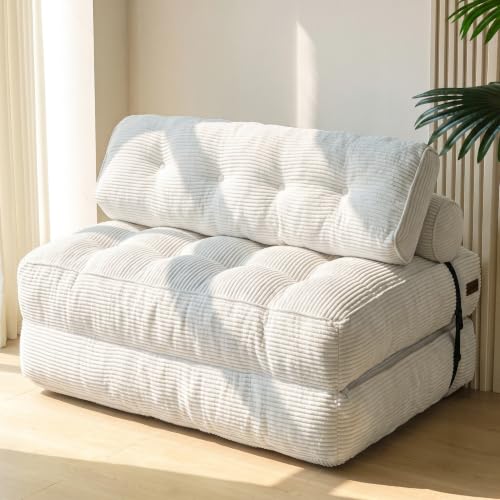
Double Sofa Bed & Sofa Beds: The Complete Buying Guide
A double sofa bed is one of the most versatile pieces of furniture you can own. By day, it serves as comfortable seating in a living room, home office, or studio. By night, it converts into a full-sized sleeping surface for guests, family members, or occasional overnight stays.
Whether you are furnishing a small apartment, preparing a guest room, or looking for a convertible couch that earns its footprint, this guide breaks down everything you need to know about double sofa beds and the broader category of sofa beds — from frame construction and mattress types to mechanisms, sizing, and long-term durability.
What Exactly Is a Double Sofa Bed?
A double sofa bed is a sofa that unfolds or pulls out to create a sleeping surface large enough for two people. In most markets, the sleeping surface corresponds roughly to a full or double mattress size, making it a practical choice for couples or two overnight guests. The term "double sofa bed" is sometimes used interchangeably with "sofa sleeper" or "pull-out couch," though the underlying mechanisms can differ significantly.
Unlike a standard sofa, a double sofa bed is engineered around a hidden or fold-out sleep system. That system determines comfort, durability, and how easy the conversion is to perform. Understanding those components is the single most important step before you buy.
If you are exploring the wider category of convertible seating, our guide to comfortable sofa beds covers additional models and ergonomic considerations. For a broader look at sleeper options, see our overview of sofa sleepers and convertible couches.
Types of Sofa Beds: Mechanisms and Designs
Not all sofa beds are built the same. The conversion mechanism is the heart of the piece, and each design suits a different room layout and usage pattern. Below are the most common types you will encounter.
Pull-Out Sofa Bed (Sleeper Sofa)
The classic design: a folded metal frame with a mattress stored inside the sofa. It pulls out and unfolds into a flat sleeping surface. Simple and widely available, with quality varying by frame gauge and mattress thickness.
Click-Clack Sofa Bed
The backrest folds flat to create the sleeping surface. No separate mattress is involved — the seat cushions become the bed. Lightweight and easy to operate, making it a strong fit for occasional use and compact rooms.
Futon Sofa Bed
A wooden or metal frame with a thick, foldable mattress. Futons offer a firmer sleep surface and a minimalist look. They convert by folding rather than pulling, and quality depends heavily on the frame joinery and mattress density.
Chair Bed & Twin Sofa Bed
Smaller convertible seating that unfolds into a single sleeper. Useful in tight corners or as a secondary option, though a double sofa bed remains the better choice for two regular sleepers.
If space is a primary constraint, the principles in our guide to guest beds for small spaces apply directly to sofa bed selection. For heavy-use settings or larger occupants, the durability standards in our heavy-duty furniture guide are a useful benchmark.
Mechanism Comparison: Which Conversion Suits You?
Use this comparison to match a mechanism to your room, your guests, and how often the bed will be used. Descriptors reflect relative market positioning, not absolute figures.
| Mechanism | Tier | Best For | Sleep Comfort | Space Needed |
|---|---|---|---|---|
| Pull-Out Sleeper | Entry to Mid-Range | Guest rooms and regular overnight use | Good with a thicker mattress | Requires clearance to extend |
| Click-Clack | Mid-Range | Occasional guests and studio apartments | Moderate — cushion-based | Minimal — folds in place |
| Futon | Mid-Range to Premium | Firm-sleep preferences and minimalist rooms | Firm and supportive | Moderate — reclines backward |
| Premium Sleeper with Air or Gel Mattress | Premium to Luxury | Frequent guests and primary sleeping use | High — closest to a real bed | Requires clearance to extend |
A useful rule: the more often the bed will be slept on, the more you should prioritize the mattress and frame over the mechanism's convenience features. An entry-level click-clack is fine for a few nights a year; a mid-range or premium sleeper with a supportive mattress is a better long-term investment for regular guests.
Frame Construction: The Hidden Determinant of Durability
The frame is what separates a sofa bed that lasts a decade from one that sags within a year. Look for these signals of solid build:
- High-grade steel or reinforced hardwood frames. Metal sleeper mechanisms should use thick-gauge steel with a rust-proof finish; wooden frames should use kiln-dried hardwood rather than particle board at stress points.
- Welded or bolted joints at pivot points. The hinge and pivot areas take the most stress during conversion. Reinforced joints reduce wobble and premature failure.
- Even weight distribution. A well-designed sleeper spreads load across the frame rather than concentrating it at the center. This matters most for double sofa beds, where two sleepers share the surface.
- Stable legs and a low center of gravity. Solid build and a stable base prevent tipping and rocking during conversion.
If the sofa bed will double as a primary bed, the construction standards in our heavy-weight capacity bunk beds guide offer a useful parallel for evaluating reinforced frames and load ratings.
Mattress and Comfort: What Separates a Good Night from a Bad One
The mattress inside a sofa bed is often the weakest link. Many entry-level models ship with a thin, low-density foam pad that feels acceptable for one night but breaks down quickly. When evaluating a double sofa bed, consider:
- Mattress thickness and density. Thicker, higher-density foam holds up better and prevents the bar-through-the-back sensation common in thin sleepers.
- Mattress type. Memory foam, gel-infused foam, and air mattresses each offer different support profiles. Air and gel options tend to land in the premium tier; standard foam dominates entry and mid-range models.
- Replaceability. A sofa bed with a replaceable mattress is a long-term investment — you can refresh the sleep surface without replacing the frame.
- Bar placement. On pull-out models, check whether the support bar sits under the mattress or intrudes into the sleep surface. Well-specified models keep the bar clear of the hip and shoulder zones.
Comfort expectations also depend on the sleeper. Side sleepers need more cushioning at the shoulders and hips, while back sleepers benefit from firmer, more even support. A double sofa bed with a medium-firm surface tends to satisfy the widest range of guests.
Sizing a Double Sofa Bed for Your Room
Double sofa beds come in several sleeping-surface sizes, and the sofa footprint matters as much as the bed dimensions. Before you commit, measure:
- The sofa's closed footprint — width, depth, and height — against your wall space and doorways.
- The extended footprint — pull-out models need clear floor space in front of the sofa, often close to the length of the bed itself.
- Circulation space — leave room to walk around the extended bed and to operate the mechanism comfortably.
- Ceiling and window clearance — relevant for futons that recline and for rooms with low windowsills.
For rooms where floor space is genuinely tight, the layout strategies in our twin beds for small rooms guide translate well to sofa bed placement. If you are comparing a sofa bed against a dedicated guest bed, our daybeds with storage drawers and trundle beds with storage guides show how convertible furniture can add both sleeping capacity and storage.
Double Sofa Bed Buying Checklist
Use this checklist during product research and, where possible, before purchase. It is organized around the factors that most affect long-term satisfaction.
- Measure twice: confirm both the closed and extended dimensions fit your room and doorways.
- Check the mechanism: test the conversion if you can, or read detailed reviews of the hinge and pull-out system.
- Prioritize the mattress: confirm thickness, density, and whether it is replaceable.
- Inspect the frame: look for high-grade steel or kiln-dried hardwood and reinforced joints.
- Match usage to tier: occasional use suits entry-level to mid-range; regular sleeping use justifies premium or luxury construction.
- Confirm the sleeping surface size: a true double should comfortably fit two adults.
- Review warranty and support: frame and mechanism coverage matters more than fabric coverage.
- Plan the room layout: position the sofa bed so the extended bed does not block walkways or doors.
Care and Maintenance for Long-Term Performance
A double sofa bed is a mechanical piece of furniture, and a little maintenance goes a long way:
- Lubricate the mechanism periodically according to the manufacturer's guidance to keep conversion smooth.
- Rotate and flip the mattress where the design allows, to distribute wear evenly.
- Vacuum under and inside the sofa to prevent debris from interfering with the pull-out track.
- Avoid jumping or standing on the sleep surface — concentrated load is the most common cause of frame fatigue.
- Store bedding separately rather than compressing it inside the sofa, which can strain the mechanism.
Ready to Choose Your Double Sofa Bed?
Browse our recommended double sofa beds and sofa bed models below. Each selection is chosen for solid construction, comfortable sleep surfaces, and practical conversion mechanisms — so your guests sleep well and your living space works harder.
Explore Recommended ModelsFrequently Asked Questions
Is a double sofa bed comfortable enough for nightly sleeping?
It can be, provided you choose a model with a supportive, replaceable mattress and a reinforced frame. Mid-range and premium sleepers with thicker foam or gel mattresses come closest to a dedicated bed. Entry-level models are generally better suited to occasional use.
What is the difference between a sofa bed and a sofa sleeper?
The terms are often used interchangeably. "Sofa sleeper" typically refers to pull-out models with a hidden mattress, while "sofa bed" is a broader term that includes click-clack and futon designs. When shopping, the mechanism description matters more than the label.
How much floor space does a double sofa bed need when extended?
Pull-out models need clear floor space roughly equal to the bed's length in front of the sofa, plus room to walk around. Click-clack and futon models need less extension space but still require clearance for the backrest to recline. Always measure before buying.
Can I replace the mattress in a double sofa bed?
Many models allow mattress replacement, especially higher-tier sleepers. Check the manufacturer's specifications before purchase — a replaceable mattress significantly extends the useful life of the sofa bed and is a strong signal of long-term value.
What frame material should I look for?
High-grade steel with a rust-proof finish for metal mechanisms, and kiln-dried hardwood for wooden frames. Reinforced joints at pivot points are essential, particularly for double sofa beds that will be converted frequently.