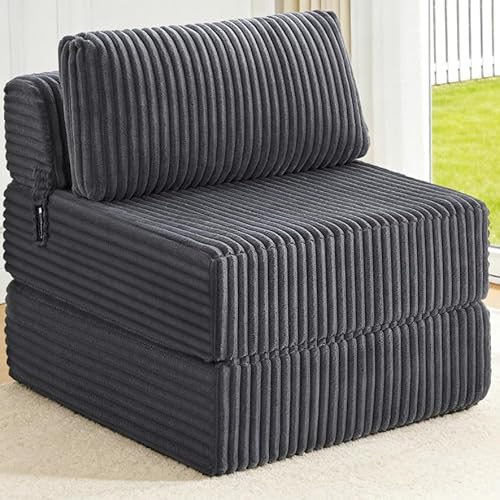
Folding Chair Beds for Adults: The Complete Buying Guide
Turn a single seat into a comfortable guest bed without sacrificing your living space. Learn how to choose a folding chair bed that suits adult sleepers, small rooms, and multi-purpose living.
Folding chair beds for adults solve a very specific problem: how to offer a real place to sleep in a room that cannot accommodate a permanent guest bed. Unlike children's convertible chairs, adult-oriented models are built with reinforced frames, thicker cushioning, and wider sleeping surfaces. They function as everyday seating and transform into a temporary bed in seconds. For households that host occasional guests, live in apartments, or manage a home office that doubles as a spare room, a folding chair bed can be a smart, space-efficient choice.
This guide explains the frame types, cushion constructions, and design trade-offs you should weigh before buying. It is written for research-stage shoppers who already know they want a convertible chair bed but need clear, trustworthy information to make a confident decision. Every recommendation below uses tier-based descriptors rather than numerical pricing, so the guidance stays useful regardless of when you read it.
What Exactly Is a Folding Chair Bed?
A folding chair bed is a piece of furniture that serves as a chair during the day and unfolds into a flat sleeping surface at night. The mechanism is usually a simple hinge system: the seat and backrest fold outward or lay flat, and in some designs a hidden third panel extends to create a full-length bed. Adults should look for models specifically labeled for adult use, because children's versions are shorter, narrower, and built for much lighter loads.
Most adult folding chair beds unfold to roughly twin-bed dimensions, making them suitable for one adult sleeper. They differ from a fold out chair bed mainly in terminology; the two phrases are often used interchangeably, though "folding chair bed" tends to emphasize the folding mechanism while "fold out" emphasizes the opening action. They also differ from a full folding sofa bed, which typically seats two or more and unfolds to a wider sleeping surface.
Because the furniture must perform two jobs, the quality of the hinge, the density of the foam, and the strength of the frame matter far more than they would in a single-purpose chair. A well-built model will feel solid as a seat and supportive as a bed; an entry-level model may feel fine in one mode and compromised in the other.
How Folding Chair Beds Work: Mechanisms and Frame Types
The conversion mechanism is the heart of any folding chair bed. Understanding it helps you judge durability and ease of use before you buy.
Hinge and Fold Systems
Most adult models use one of three systems. The bi-fold design folds the backrest down onto the seat and then opens the whole unit flat, creating a two-panel bed. The tri-fold design adds a third panel that tucks under or behind the seat, producing a longer sleeping surface. A pull-out design keeps the seat fixed and slides a hidden platform forward. Bi-fold and tri-fold models are the most common in the folding chair bed category, while pull-out mechanisms are more typical of foldable sofa beds.
Frame Materials
Frame construction determines how much weight the bed can handle and how stable it feels. Entry-level models often use thin tubular steel or engineered wood. Mid-range models typically use thicker steel tubing, welded joints, and reinforced corner brackets. High-end tier models may use powder-coated high-grade steel with a rust-proof finish, or solid hardwood frames with metal hinge plates. For adult use, prioritize frames described as heavy-duty or reinforced, especially if the bed will be opened and closed frequently.
Cushion and Mattress Construction
The sleeping surface is usually high-density foam, sometimes layered with memory foam or supported by sinuous springs. Foam density is the key variable: low-density foam compresses quickly under adult weight and creates pressure points, while high-density foam holds its shape and distributes weight more evenly. Mid-range and top-tier chair beds frequently combine a firm foam base with a softer comfort layer. Some premium models use pocketed coils inside the seat cushion for a more mattress-like feel.
Key Features to Evaluate Before Buying
Beyond the mechanism, several features separate a chair bed that works for adults from one that frustrates them.
Sleeping Surface Dimensions
Adult sleepers need length and width. Measure the opened dimensions carefully, not just the folded footprint. A sleeping surface under 70 inches long will feel cramped for taller adults. Width matters too: a surface under 30 inches is closer to a cot than a bed. Many adult models open to approximately twin size, which is the practical minimum for comfortable solo sleeping.
Weight Capacity and Frame Rating
Check the manufacturer's stated weight limit and treat it as a hard ceiling, not a suggestion. Average adult use calls for a frame rated at 250 pounds or more. Heavy-duty and commercial-grade frames are rated higher and are a better fit for guest rooms, rental properties, or shared use. A frame that flexes or creaks when you sit down is a warning sign.
Upholstery and Easy Maintenance
Folding chair beds live in living rooms, offices, and guest spaces, so they see daily wear. Look for tightly woven fabrics, performance weaves, or leather-like materials that wipe clean. Removable, washable covers are a significant advantage. Light colors show stains faster; medium tones and textured weaves hide everyday wear better.
Comfort in Both Modes
The best chair beds are comfortable as chairs and acceptable as beds. Sit-test criteria include back support, seat depth, and armrest height. Sleep-test criteria include surface flatness, pressure relief at the hips and shoulders, and whether the hinge creates a noticeable ridge in the middle of the bed. Tri-fold designs usually produce a flatter sleeping surface than bi-fold designs.
Comparing Folding Chair Beds by Market Tier
The table below groups adult folding chair beds into three broad tiers based on construction quality and intended use. It uses neutral descriptors instead of numbers so the comparison remains valid over time.
| Tier | Frame & Mechanism | Cushion Quality | Best For |
|---|---|---|---|
| Entry-level | Thin tubular steel or engineered wood; basic hinge | Lower-density foam; thinner seat | Occasional overnight guests, light use, tight spaces |
| Mid-range | Reinforced steel with welded joints; smoother folding action | High-density foam with a comfort layer; flatter sleeping surface | Regular guest use, home offices, apartments, dual-purpose living rooms |
| Premium / high-end tier | Heavy-duty powder-coated steel or hardwood; precision hinges; rust-proof finish | Layered memory foam or pocketed coil support; upholstery-grade fabrics | Frequent use, guest rooms, rental properties, adults who want mattress-like comfort |
As a rule, mid-range models offer a noticeable step up in hinge smoothness and cushion support compared with entry-level options, while premium models focus on long-term durability and a more mattress-like sleep experience. If the chair bed will be used more than a few times a month, the mid-range or premium tier is the more sensible long-term investment.
Sizing, Placement, and Room Planning
Folding chair beds are a space-saving tool, but they still need room to operate. Before buying, mark the opened footprint on your floor with painter's tape and walk around it. You need clearance on all sides of the mechanism so it can fold and unfold without hitting walls, furniture, or doors.
In a living room, place the chair bed where it can remain as seating and convert without rearranging other furniture. In a home office, position it against a wall opposite the desk so the opened bed does not block the workspace. If your room is genuinely tight, compare the chair bed against other compact options such as fold out beds for small spaces and folding beds for small spaces. For a broader overview of the category, the folding beds guide covers the full range of collapsible sleep furniture.
Storage matters too. Even when folded, a chair bed occupies real floor area, so it should replace a chair you would have bought anyway. Measure the folded dimensions and confirm the piece fits the spot where you plan to keep it.
Comfort and Sleep Quality for Adult Sleepers
Adults sleep differently from children, and a folding chair bed is a compromise by design. Setting realistic expectations is part of a good buying decision.
Who Sleeps Well on a Chair Bed
Side sleepers generally do best on chair beds with a thicker comfort layer, because hip and shoulder pressure is concentrated. Back sleepers benefit from a flatter, firmer surface. Stomach sleepers should avoid surfaces with a pronounced hinge ridge. Guests staying one to three nights are the ideal use case; adults using a chair bed as a primary bed for weeks at a time should consider a dedicated folding bed or a sleeper sofa instead.
Improving the Sleep Surface
A mattress topper can transform a mid-range chair bed into a genuinely comfortable guest bed. A two-inch memory foam or latex topper smooths hinge ridges and adds pressure relief. Proper bedding also matters: use fitted sheets sized to the opened dimensions, and consider a mattress protector if the bed will be used by different guests. If you eventually upgrade to a permanent guest bed, our foldable beds for camping and foldout beds guides cover other portable sleep solutions.
Safety, Durability, and Long-Term Care
A folding mechanism is a moving part, and moving parts wear out. Check that the hinge has a locking position so the bed cannot collapse unexpectedly. Look for rounded edges on the frame, non-slip feet, and a mechanism that requires deliberate effort to fold rather than a light bump. If children or pets share the household, confirm the folded chair is stable and will not tip.
Care is straightforward. Vacuum upholstery regularly, wipe frames with a damp cloth, and tighten any bolts every few months. Lubricate metal hinges sparingly with a dry lubricant if they begin to squeak. Store the bed folded only when dry, and avoid leaving it unfolded in direct sunlight for long periods, which can fade fabric and degrade foam.
A Practical Buying Checklist
- Confirm adult sizing. Opened length of at least 70 inches and width of at least 30 inches.
- Check the weight rating. 250 pounds minimum for average use; higher for shared or frequent use.
- Inspect the hinge. Look for a locking position, smooth action, and reinforced mounting plates.
- Evaluate cushion density. High-density foam or coil-supported cushions hold up better over time.
- Measure your room. Tape out both the folded and opened footprints before ordering.
- Consider the fabric. Performance weaves and removable covers simplify maintenance.
- Plan for bedding. Factor in a topper and correctly sized sheets for guest comfort.
Related Guides for Small-Space Sleepers
If you are furnishing a compact home, a guest room, or a multi-purpose office, these related guides can help you compare alternatives:
Frequently Asked Questions
Are folding chair beds comfortable enough for adults to sleep on nightly?
Folding chair beds are generally designed for occasional or temporary sleeping rather than nightly use. Models in the mid-range and high-end tier with thicker foam or spring-supported cushions can offer reasonable comfort for several consecutive nights, but adults seeking a permanent primary bed should consider a dedicated sleeper sofa or a standard folding bed instead.
What weight capacity should I look for in a folding chair bed for adults?
Look for a frame rated for at least 250 pounds for average adult use, and consider heavy-duty or commercial-grade frames rated for 300 pounds or more if the bed will be shared, used frequently, or placed in a guest room. Always check the manufacturer's stated weight limit before purchasing.
How much floor space does a folding chair bed need when opened?
Most adult folding chair beds open to roughly the footprint of a twin-size bed, so you should allow at least 75 inches in length and 38 inches in width of clear floor space. Measure your room carefully and account for clearance to open the mechanism fully without obstruction.
Do folding chair beds require assembly?
Many folding chair beds arrive partially assembled and require only attaching legs or securing the backrest. Some models are fully assembled out of the box. Check the product listing for assembly requirements and whether tools are included.
Can a folding chair bed be used as a permanent living room chair?
Yes, many adults use folding chair beds as everyday seating in living rooms, home offices, and studios. The best dual-purpose models feature supportive backrests, durable upholstery, and a design that looks like a standard accent chair when folded.
A folding chair bed for adults is a practical answer to a common space problem, provided you choose a model built for adult weight, adult dimensions, and real-world use. Prioritize a reinforced frame, a high-density cushion, and a smooth locking hinge. Measure your room before you order, plan for a mattress topper, and be honest about how often the bed will be used. With those boxes checked, a folding chair bed can serve as comfortable daily seating and a dependable guest bed for years.