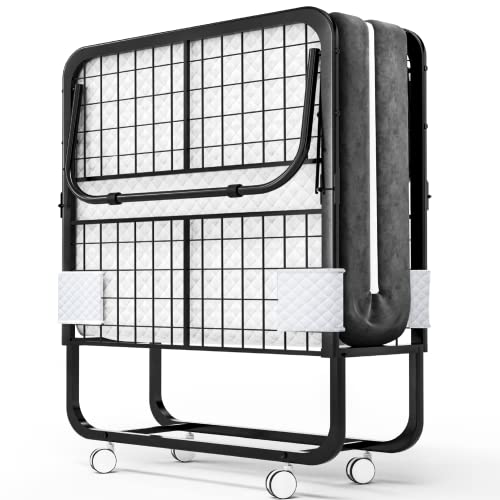
Folding Beds for Small Spaces: The Complete Space-Saving Guide
Learn how to choose a folding bed that reclaims your floor space without compromising on comfort — covering wall beds, fold-out sofas, chair beds, and foldable floor beds for studios, guest rooms, and compact apartments.
Why this guide matters: If you live in a studio, a small apartment, or a home where the guest room doubles as an office, a folding bed is one of the most practical investments you can make. This guide explains the main types, how each one saves space, what to check before buying, and how to match a bed to your room and routine — so you can make a confident decision before you buy.
Why Folding Beds Are a Smart Choice for Small Spaces
Small rooms come with a simple arithmetic problem: a conventional bed permanently claims a large portion of the floor. A full-size bed, for example, occupies a significant block of floor area every hour of every day — even when no one is sleeping. A folding bed changes that equation by letting the sleeping surface disappear when it is not needed, turning a bedroom into a living area, a home office, or a workout corner within minutes.
This flexibility is why folding beds have become a standard solution for studio apartments, guest rooms, dorms, and multi-purpose rooms. The benefits go beyond floor area:
- Multi-purpose rooms: A single room can serve as a bedroom at night and a workspace or lounge during the day.
- Guest readiness: A fold-out bed or chair bed gives visitors a proper place to sleep without dedicating a permanent room.
- Cleaner visual space: Folding a bed away reduces visual clutter, which can make a small room feel calmer and larger.
- Better furniture layout: With the bed out of the way, you can position a desk, seating, or storage where the bed would otherwise sit.
If you are still deciding between folding solutions and other compact sleeping options, our guide to fold-out beds for small spaces compares the broader category, while this page focuses specifically on folding beds and how to pick one for a compact room.
The Main Types of Folding Beds
Folding beds are not a single product — they are a family of space-saving designs. Each type folds differently, serves a different primary purpose, and suits a different kind of room. The four most common categories for small spaces are wall beds, fold-out sofa beds, folding chair beds, and foldable floor beds.
Folding Wall Beds
A mattress platform that folds up into a cabinet or wall unit. Best when you can dedicate a wall and want a permanent, nightly-use sleeping solution that disappears by day.
Fold-Out Sofa Beds
A sofa that converts into a flat sleeping surface. Ideal for living areas that need to host guests, combining seating and sleeping in one footprint.
Folding Chair Beds
A chair-sized seat that folds flat into a bed. The most compact option for occasional guests, small home offices, and rooms with very limited floor area.
Foldable Floor Beds
A low-profile bed frame that folds down for sleeping and collapses for storage. Suits occasional use, guest rooms, and rooms where furniture must be moved often.
Folding Wall Beds (Murphy-Style Beds)
Folding wall beds — often called Murphy beds — are the most space-efficient option for rooms that need a full-time sleeping solution. The bed platform is mounted to the wall or built into a cabinet, and the entire assembly folds up vertically when not in use. When closed, the unit can look like a wardrobe or a piece of built-in furniture, which makes it a natural fit for studio apartments and home offices that need to convert into a bedroom.
Wall beds are available across the full range of quality tiers. Entry-level models typically use a simpler spring or piston mechanism and a thinner mattress, while premium and luxury tiers offer smoother counterbalanced mechanisms, integrated shelving, and thicker mattress support. If you are exploring wall-mounted solutions more broadly, our guide to folding wall beds covers mounting options and design styles in more detail.
Key considerations for wall beds in small spaces:
- They require a clear wall area wide enough for the bed plus clearance for the folding motion.
- Professional installation is strongly recommended, since the unit must be anchored to wall studs.
- They work best when the room has a dedicated "bedroom wall" that is not needed for other furniture.
Fold-Out Sofa Beds
A fold-out sofa bed is the classic dual-purpose folding bed: it serves as seating during the day and folds out into a sleeping surface at night. For small living rooms and studio apartments, this is often the most natural choice because the room needs a sofa anyway — the bed function comes at effectively no additional floor cost.
Modern fold-out sofa beds range from essential-tier models with a simple fold-out mechanism to high-end and luxury tiers with memory foam mattresses, reinforced frames, and premium upholstery. The trade-off is that the mattress in a sofa bed is usually thinner than a standalone mattress, so it suits guest use and shorter stays better than nightly sleeping — although top-tier models close that gap significantly.
For a deeper comparison of this category, including sleeper-sofa mechanisms and upholstery options, see our guide to folding sofa beds and the more space-focused folding sofa beds for small spaces.
Folding Chair Beds
Folding chair beds are the smallest folding option. They look like an armchair or a small loveseat and unfold into a single sleeper. They are designed for occasional use — a guest staying for a night or two, a teenager's room, or a home office that occasionally hosts visitors.
Because they use a compact folding frame, chair beds have the smallest open footprint of the major types. They are easy to move, require no wall mounting, and can be stored against a wall when not in use. The trade-off is that the sleeping surface is shorter and narrower than a standard bed, so they suit children and average-height adults better than tall sleepers. Our article on folding chair beds for adults covers weight capacity and length considerations in detail.
Foldable Floor Beds
Foldable floor beds sit low to the ground and fold down or collapse for storage. They are a practical middle ground between a conventional bed and a camping cot: more comfortable and stable than an air mattress, but far easier to store than a standard bed frame. They work well in guest rooms, dorms, and small rooms where the bed is only needed part of the time.
Quality varies widely in this category. Essential-tier models use a simple folding frame and a thin mattress, while mid-range and premium models offer thicker foam, better hinge mechanisms, and sturdier support. If you are interested in low-profile sleeping in general, our guide to floor beds for adults explains the ergonomics and frame options.
Folding Bed Types Compared
The table below summarizes how each type performs on the factors that matter most in a small space. Use it as a starting point, then read the detailed sections above for nuance.
| Type | Best For | Space Saved When Folded | Typical Use Level | Installation |
|---|---|---|---|---|
| Folding Wall Bed | Studios and home offices needing nightly sleep | Near-total footprint reclaimed | Daily to nightly | Wall-mounted, professional recommended |
| Fold-Out Sofa Bed | Living areas that host guests | Moderate — becomes a sofa | Occasional to regular guest use | Freestanding assembly |
| Folding Chair Bed | Very small rooms and occasional guests | High — chair-sized footprint | Occasional | Freestanding, minimal assembly |
| Foldable Floor Bed | Guest rooms and flexible layouts | High when collapsed | Occasional to regular | Freestanding, minimal assembly |
How to Choose the Right Folding Bed for Your Space
Choosing well comes down to matching the bed to your room and your routine. Work through these five questions before you compare specific models.
1. Measure the room, not just the bed
Record the open dimensions of the bed you are considering, then measure the wall or floor area it will occupy. Critically, also measure the clearance needed for the folding motion — wall beds need room to swing down, and sofa beds need space in front to extend. A bed that fits when open but cannot fold out is worse than useless.
2. Decide how often the bed will be used
Frequency drives everything else. A bed used every night should prioritize mattress quality and mechanism durability — look at premium and luxury tiers with counterbalanced mechanisms and thicker mattresses. A bed used a few times a month for guests can be a mid-range fold-out or chair bed. A bed used only occasionally can be an entry-level or essential-tier model, provided the frame is solid.
3. Match the type to the room's primary function
If the room is primarily a living space, a fold-out sofa bed or chair bed blends in. If the room is primarily an office or studio, a wall bed keeps the working area clear. If the room is primarily a guest room, a foldable floor bed or wall bed gives guests the most comfortable surface. For more inspiration on rooms with a single wall available, see our guide to fold-out beds for small spaces.
4. Check weight capacity and build quality
Weight capacity is not just about the sleeper — it reflects the strength of the frame, hinges, and mounting hardware. Look for reinforced frames, heavy-duty hinges, and solid build quality. For wall beds, confirm the mounting system is rated for the bed's full weight plus a sleeper. Our article on foldable beds for camping is a useful reference for evaluating folding frame construction, since the same principles of hinge strength and frame rigidity apply.
5. Plan storage for bedding and the folded bed
Folding beds still need somewhere for pillows, duvets, and the mattress itself when folded. Wall beds with integrated cabinets solve this elegantly; chair beds and floor beds usually need a storage ottoman or a closet shelf. Factor storage into your layout before you commit.
Mattress and Comfort Considerations
The mattress is where most folding-bed compromises show up, and it is the single biggest factor in how well you sleep. A few principles apply across types:
- Thickness matters: Thinner mattresses (common in entry-level chair beds and sofa beds) suit occasional use; thicker, higher-density foam suits nightly sleeping.
- Folding mattresses are engineered, not just thin: Premium folding mattresses are designed with hinge zones and layered foam so the bed folds cleanly without creating a hard ridge in the middle.
- Support beats softness for daily use: A medium-firm folding mattress with a supportive base generally holds up better over time than a very soft one.
- Consider a topper: If a folding bed's mattress is firm, a mattress topper can add comfort without replacing the mattress. Our guide to mattress toppers explains how to choose one that works with a folding bed.
If you are comparing folding beds with other compact mattress systems, our overview of foam beds in a box explains how compressed foam mattresses perform and how they pair with folding frames.
Safety and Installation Tips
Folding beds are mechanical furniture, and a few safety habits keep them reliable for years:
- Anchor wall beds properly: Wall beds must be secured to wall studs with the hardware specified by the manufacturer. Do not rely on drywall anchors alone. If you are not confident in your DIY skills, hire a professional installer.
- Keep the folding path clear: Never place furniture or rugs in the path of a folding mechanism. A blocked wall bed can be damaged or can fall.
- Check hinges and hardware periodically: Tighten bolts and inspect hinges every few months, especially on beds used daily.
- Follow the weight limit: Exceeding the rated capacity stresses the frame and mechanism and is a common cause of failure.
- Use the correct mattress: A mattress that is too thick can prevent a wall bed from closing properly; one that is too thin can make the sleeping surface uncomfortable and unstable.
Related Space-Saving Guides
If you are furnishing a compact home, these guides pair naturally with this article:
- Folding beds — the broader category overview, including mechanisms and materials.
- Foldout beds — how foldout designs differ from folding beds and where each excels.
- Foldable sofa beds — seating-first solutions for living rooms.
- Foam couches that turn into beds — a lightweight, flexible alternative for guest seating.
- Fold-down beds for enclosed trailers — folding beds adapted for mobile and trailer spaces.
Frequently Asked Questions
What is the best type of folding bed for a small apartment?
The best type depends on your daily routine and available wall space. A folding wall bed is ideal if you can dedicate a wall and want a permanent sleeping solution that disappears by day. A fold-out sofa bed or folding chair bed works well for multi-use living areas. For occasional guests in a very compact room, a foldable floor bed with a sturdy frame is the most space-efficient option.
How much floor space does a folding bed save compared to a regular bed?
A folding bed can free up roughly the entire footprint of a conventional bed when folded away. For example, a full-size folding wall bed can reclaim the floor area it occupies when open, turning a bedroom into a home office or living space during the day. Foldable floor beds and chair beds also collapse into a much smaller footprint, though the exact savings depend on the model and mechanism.
Are folding beds comfortable for everyday sleeping?
Yes, many modern folding beds are designed for nightly use. Wall beds and high-quality folding sofa beds use standard mattresses or specially engineered folding mattresses that provide proper support. Entry-level models may have thinner mattresses suited to occasional use, while premium and luxury tiers typically include thicker, higher-density foam or hybrid mattresses for consistent comfort.
Do folding beds require professional installation?
Wall-mounted folding beds should be installed by a professional or by someone with solid DIY experience, because they must be securely anchored to wall studs to support the bed's weight and the sleeper. Freestanding folding beds, chair beds, and fold-out sofa beds generally require only basic assembly and no wall mounting.
What should I check before buying a folding bed for a small space?
Measure the open and folded dimensions, confirm the clearance needed for the folding mechanism, check the weight capacity, and verify the mattress type and thickness the frame supports. Also consider how often the bed will be used, whether it needs to double as seating, and whether the mechanism is rated for daily operation.
Ready to Reclaim Your Space?
Explore recommended folding beds and space-saving sleep products selected for small spaces. Compare features, read the details, and choose the bed that fits your room and your routine.
See Recommended Folding Beds